Books vs. film · what the 2017 film took, changed and dropped
Books vs. Film
Twelve moments the books spent seven volumes building, set beside what ninety-five minutes made of them.
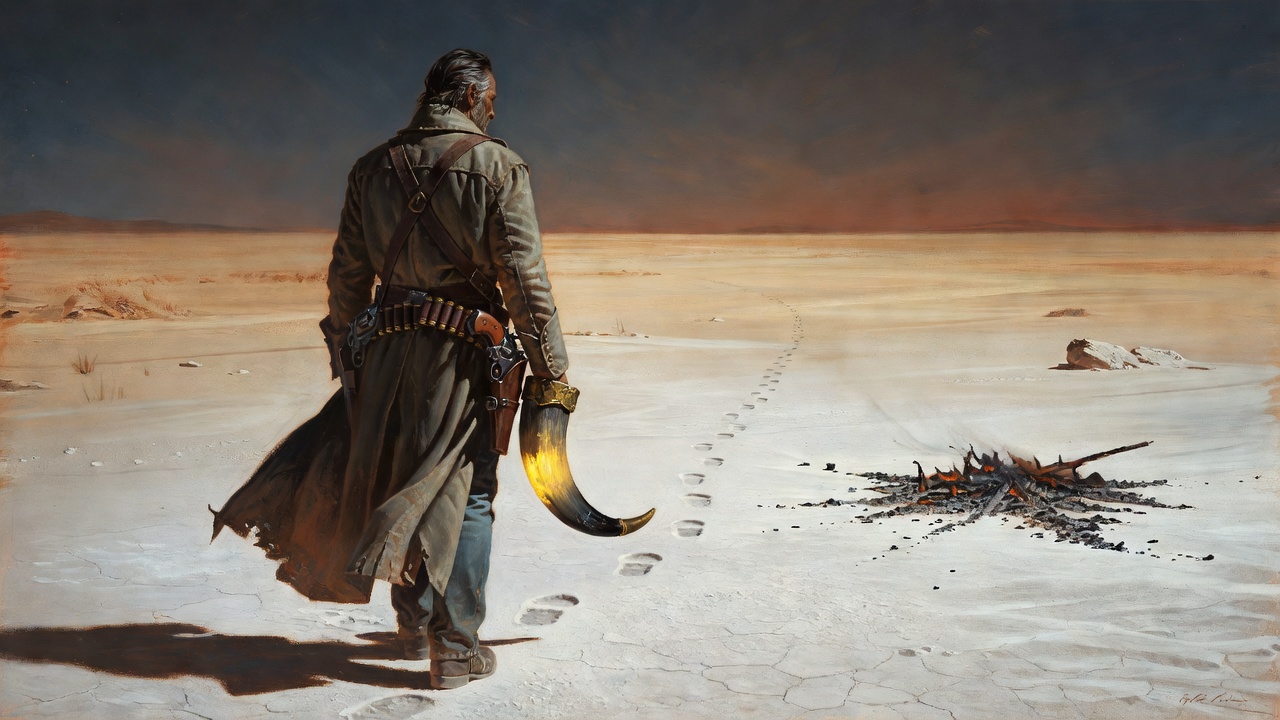
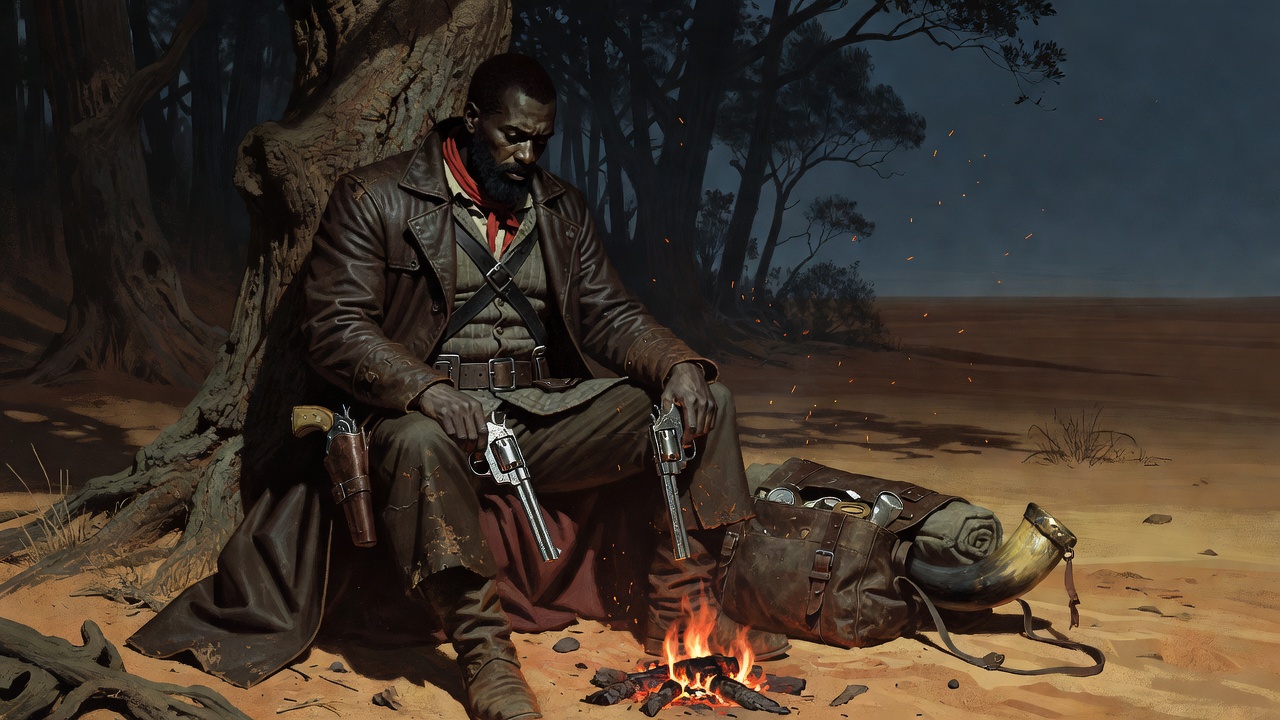
The film does not open where Book I opens. It opens after Book VII closes. The Horn of Eld, which Roland left in the dust at Jericho Hill and gets back only on the last page of the saga, when the Tower sends him round again, is already in his gunna, by the makers’ account and the set photographs, when the film begins. Akiva Goldsman proposed the device to King; King agreed, cut Roland’s dialogue down himself, and in May 2016 tweeted a photo of the Horn lying in ash captioned “LAST TIME AROUND”. The director, Nikolaj Arcel, called the result “not so much an adaptation as a continuation”. On that reading, which fans have numbered the nineteenth turn of the wheel, every departure from the page is a difference the loop allows.
What the framing buys is licence. A Jake who walks into Mid-World alive instead of falling into a chasm, a Roland with ten fingers, a man in black who is shot rather than eaten: none of it contradicts the books if this is a new cycle. What it costs is that the film never says so. No line mentions the loop, Gan, the Beams’ Guardians or a previous Roland, and the Horn itself is so hard to find on screen that a careful reviewer never saw it. A viewer who has not read the books (King put them at “about 3,000 pages”) sees a ninety-five-minute Western that skips the West; a reader sees a sequel to a story the audience has not been shown.
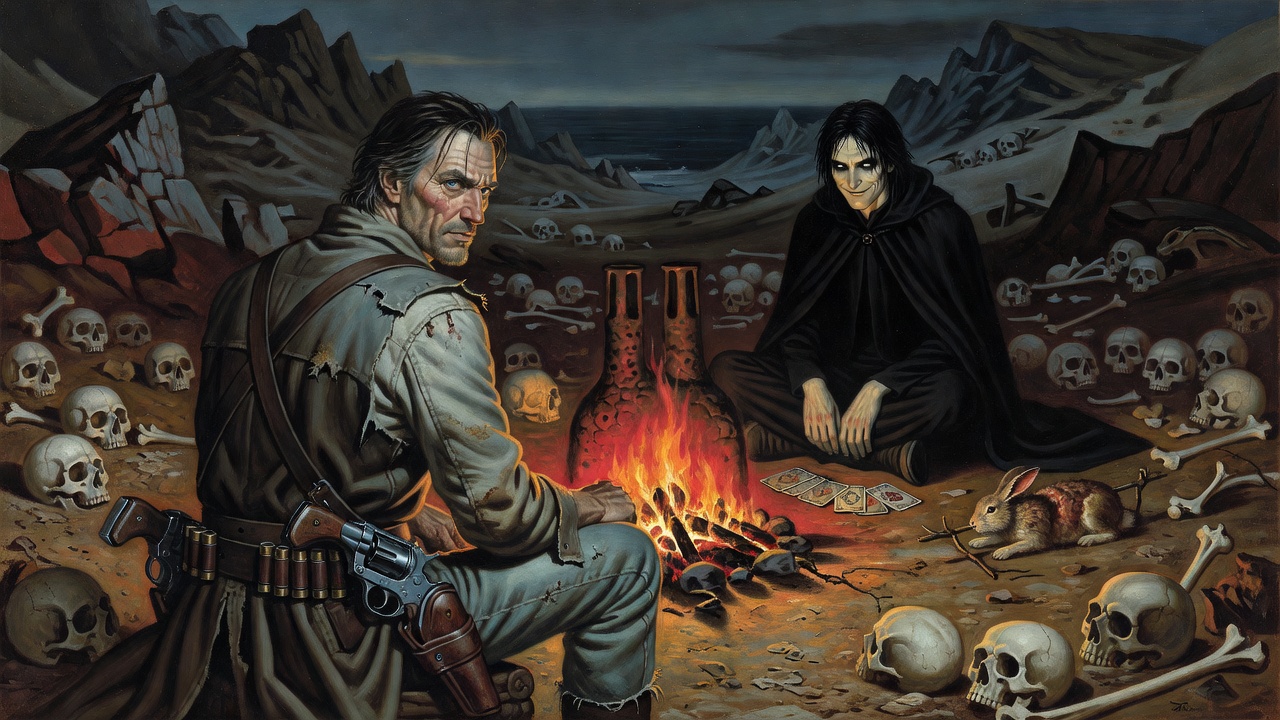
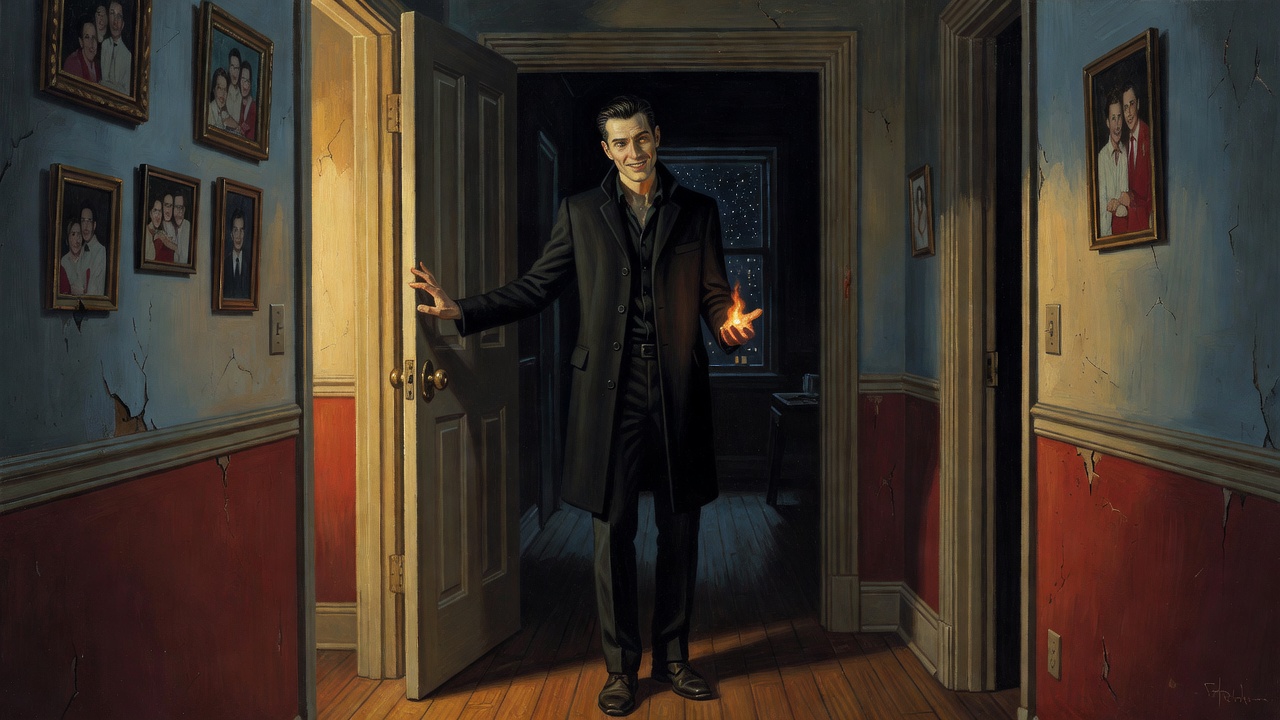
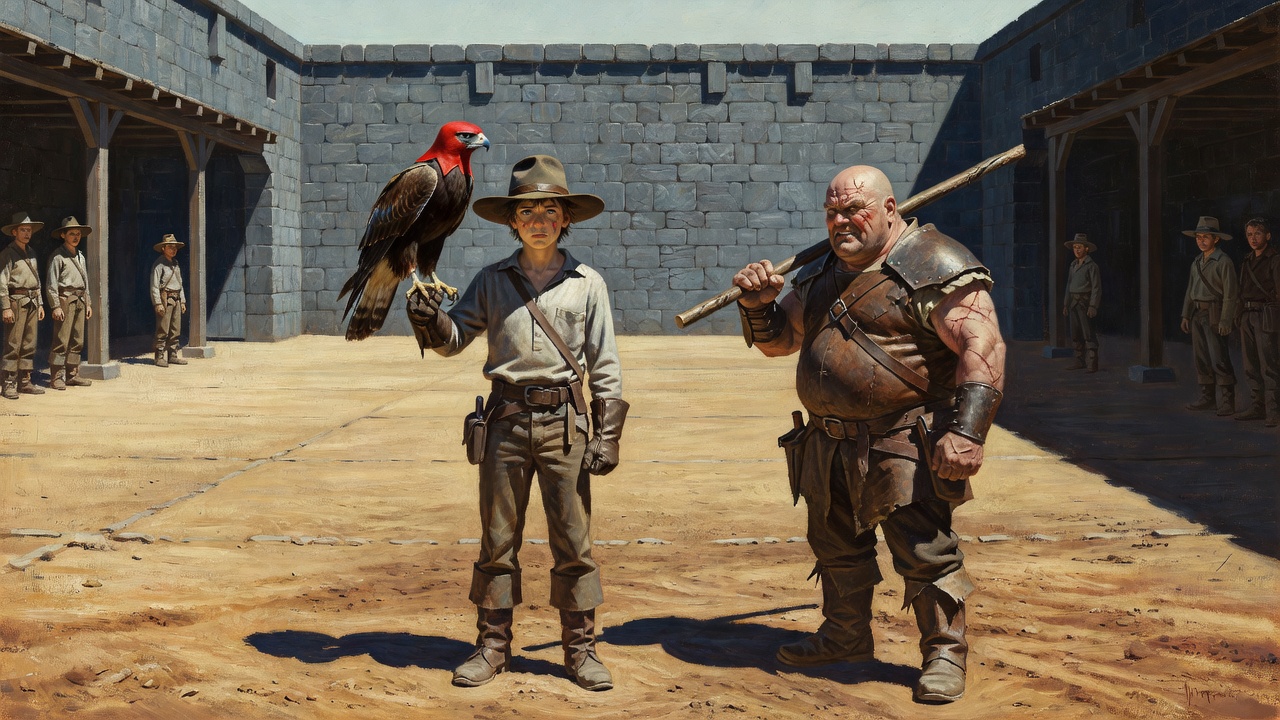
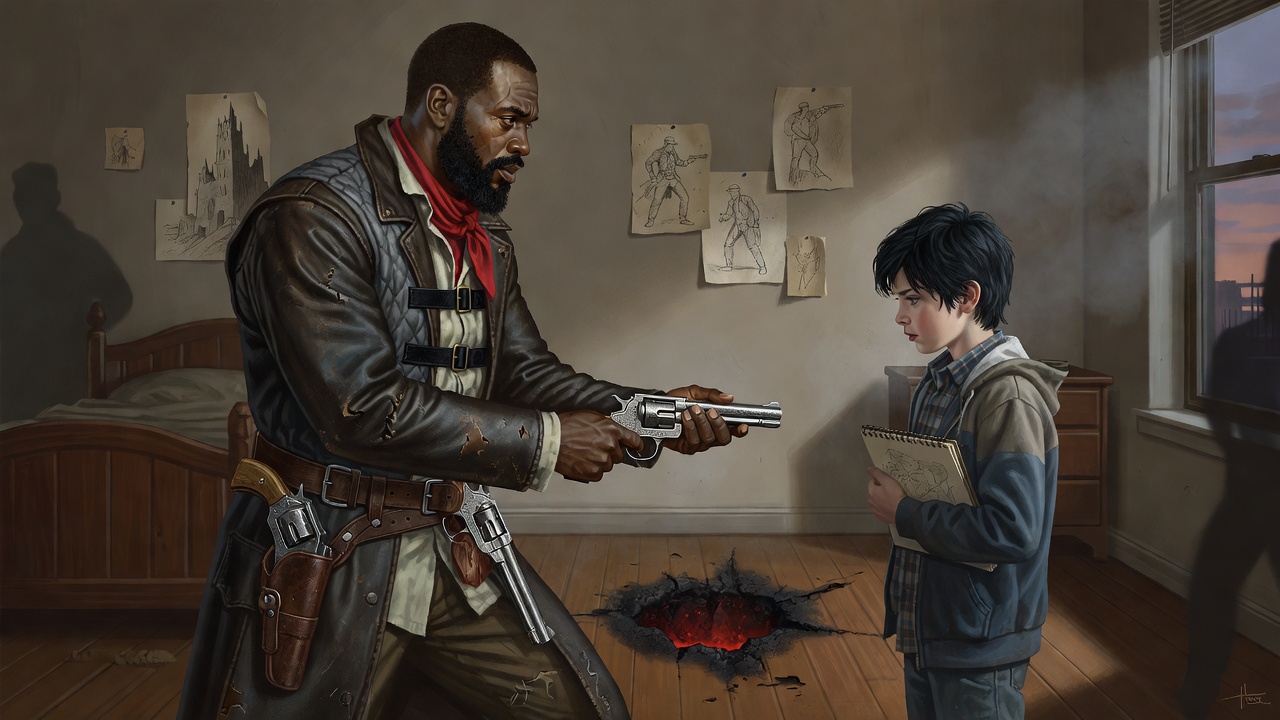
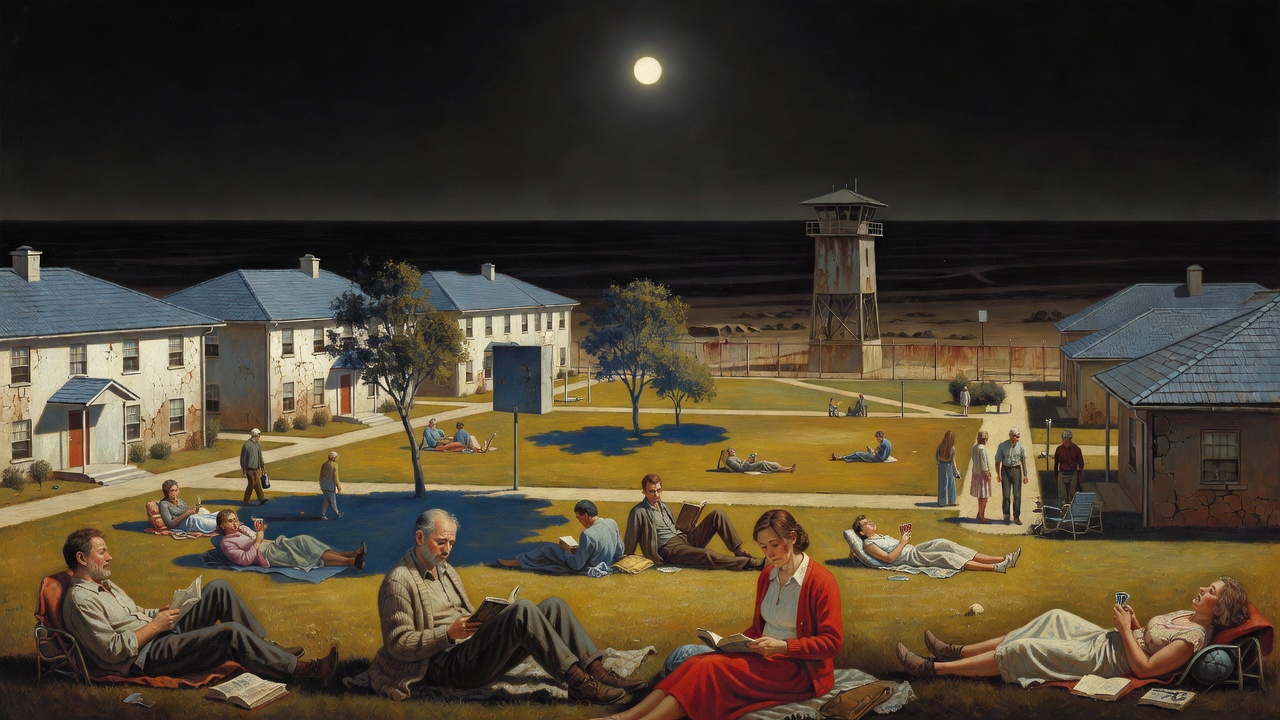
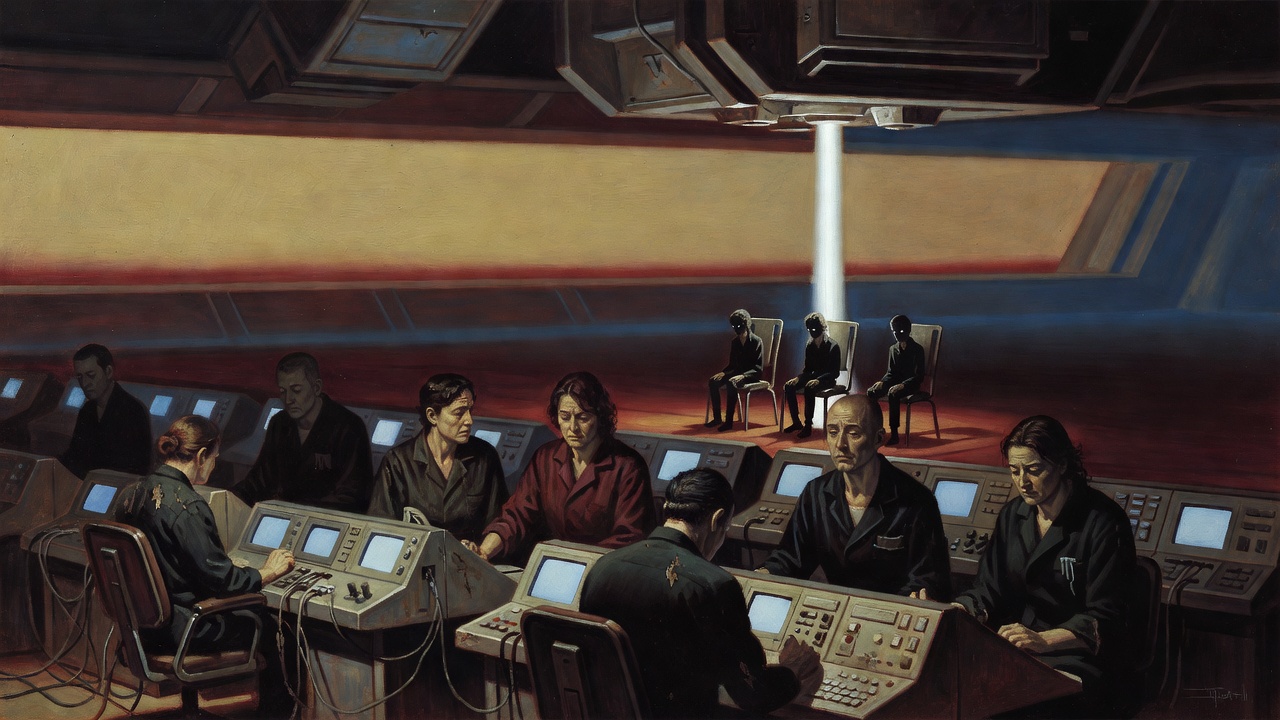
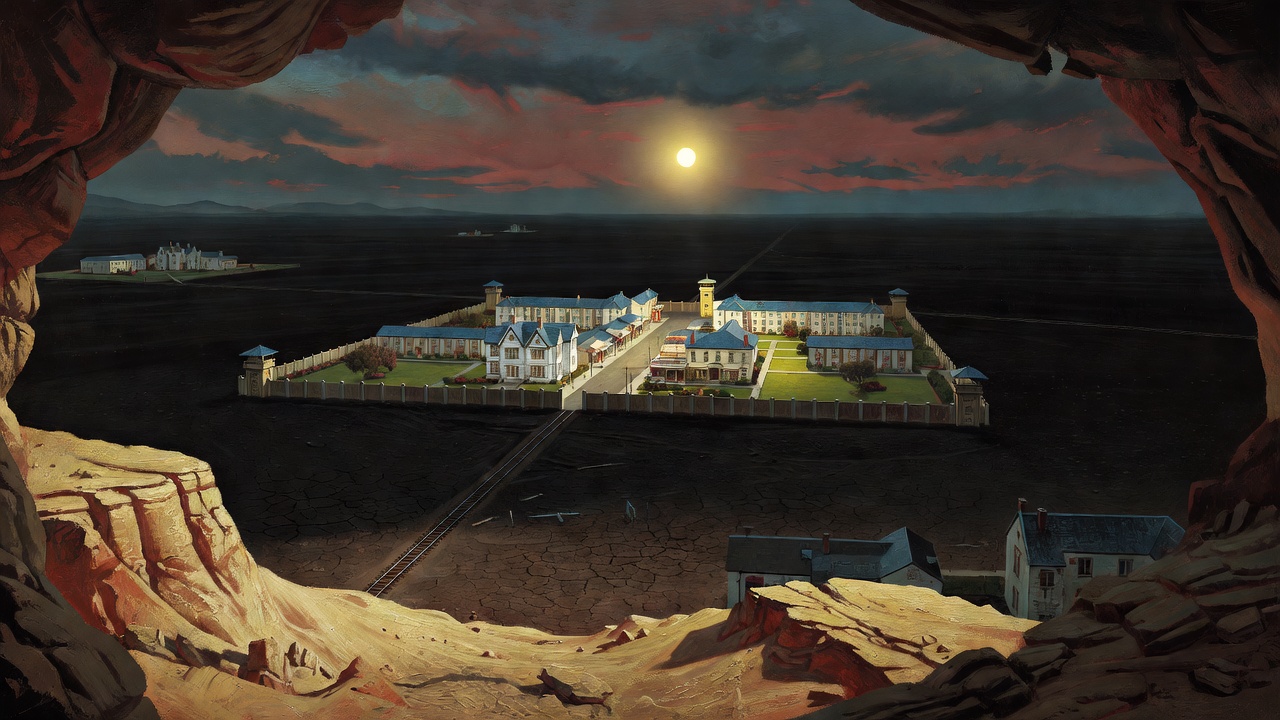
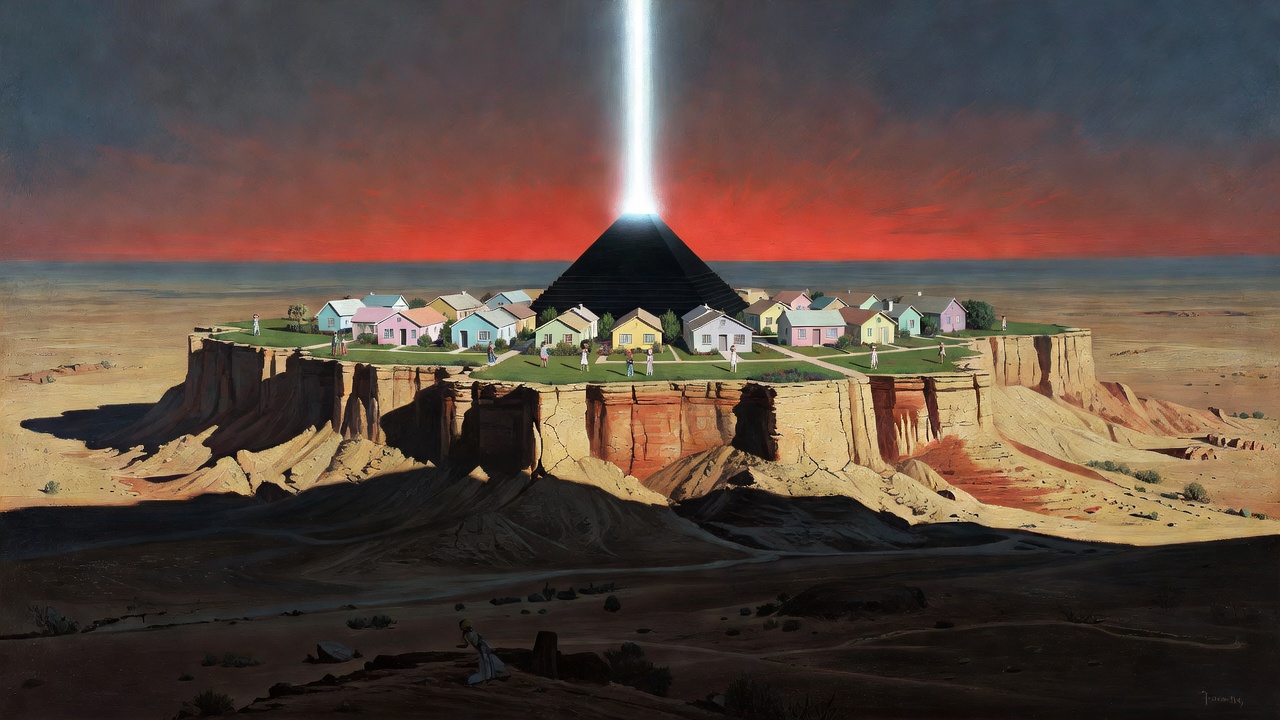
The table below lists thirty things the film does and names the book and part each comes from, with what changed and why it matters. The twelve pairs that follow set the page beside the screen: the book’s version on the left is painted from King’s text, the film’s version on the right from the production’s designs, never from any performer’s face. Where the film changed something, the caption says so; where it kept something, the caption says that too.
What it kept
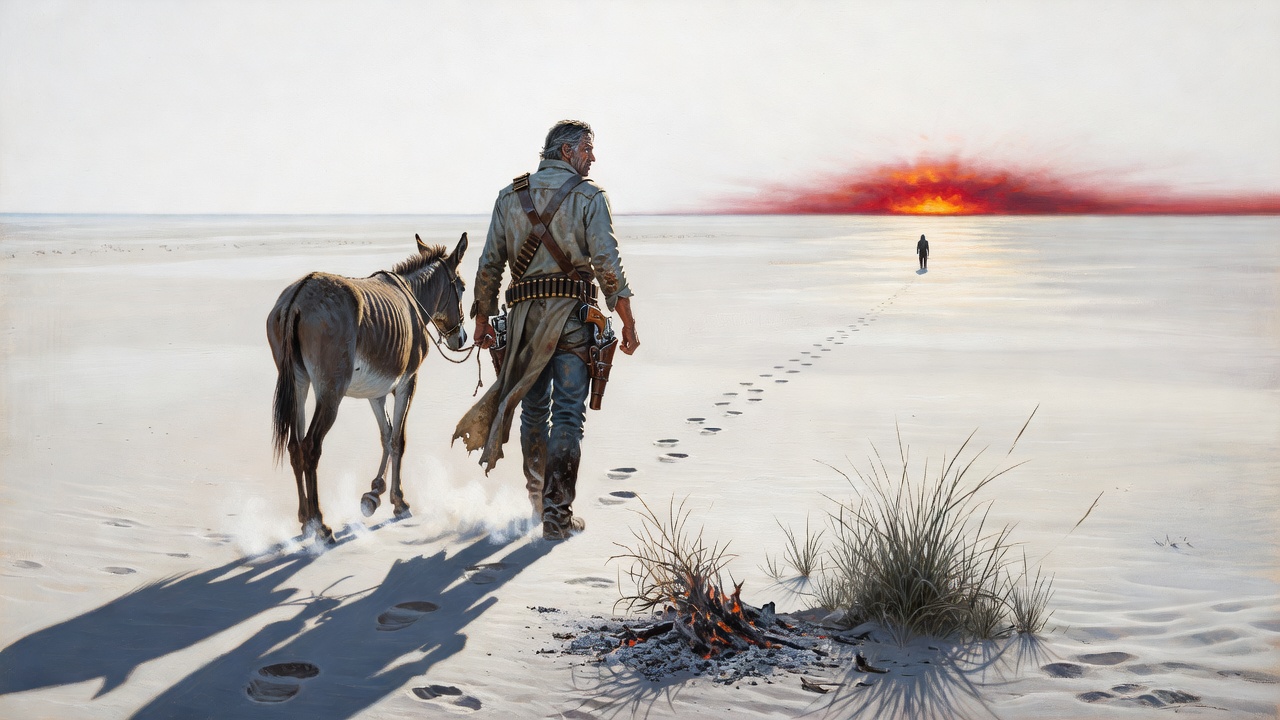
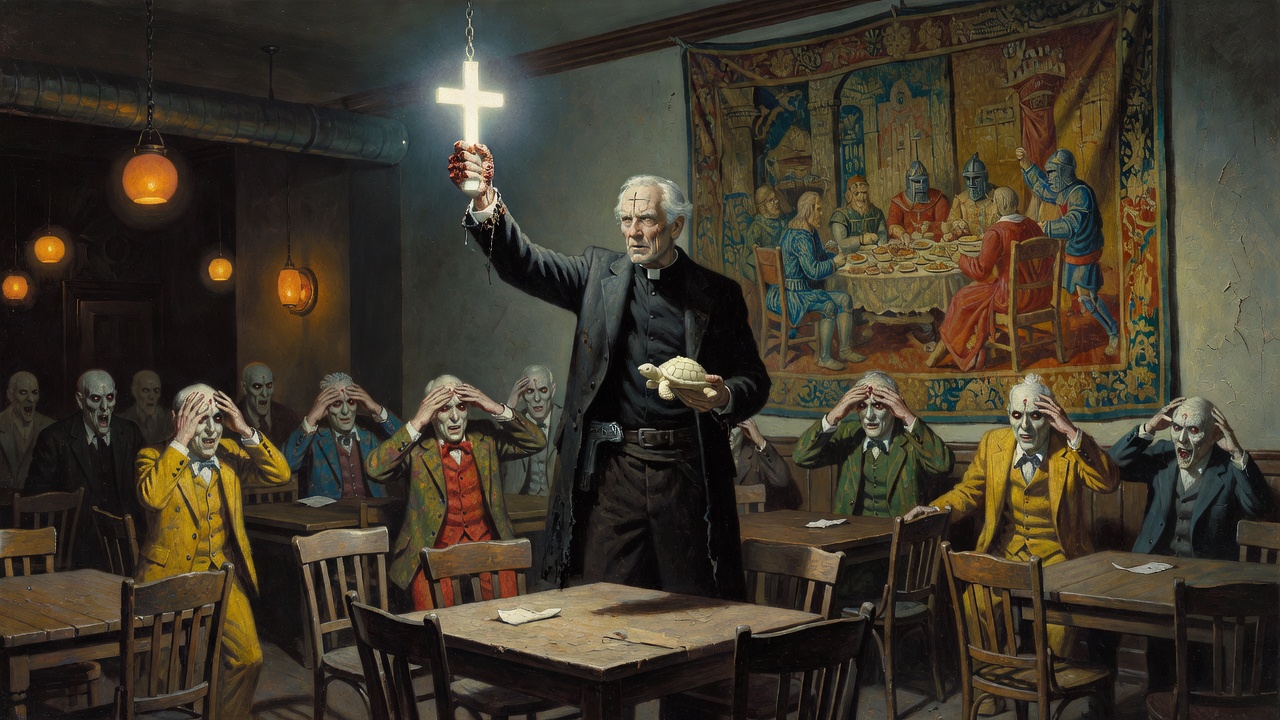
The nouns survive. Roland Deschain, last gunslinger of Gilead, carrying two revolvers and a dead father’s creed; Jake Chambers, eleven, of New York, who draws what he dreams; Walter, called Padick and o’Dim, the man in black. Mid-World, the Beams, the Tower at the centre of everything. A Devar-Toi, taheen, a Dixie Pig, a Sayre, a Pimli, a Tirana, a Manni village. The number nineteen on Jake’s bedroom wall. And the opening line, spoken over Jake’s dream, word for word: “The man in black fled across the desert, and the gunslinger followed.” King insisted on it; apart from the creed, it is the one sentence of the books the film speaks whole.
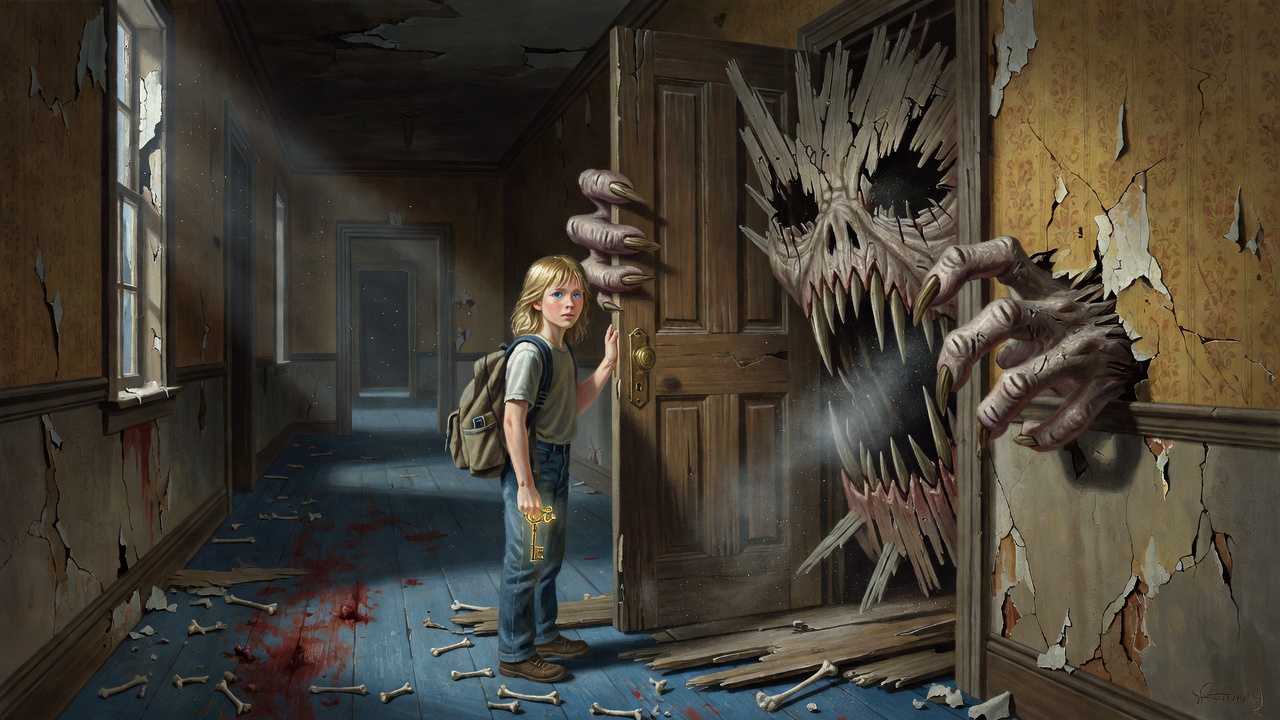
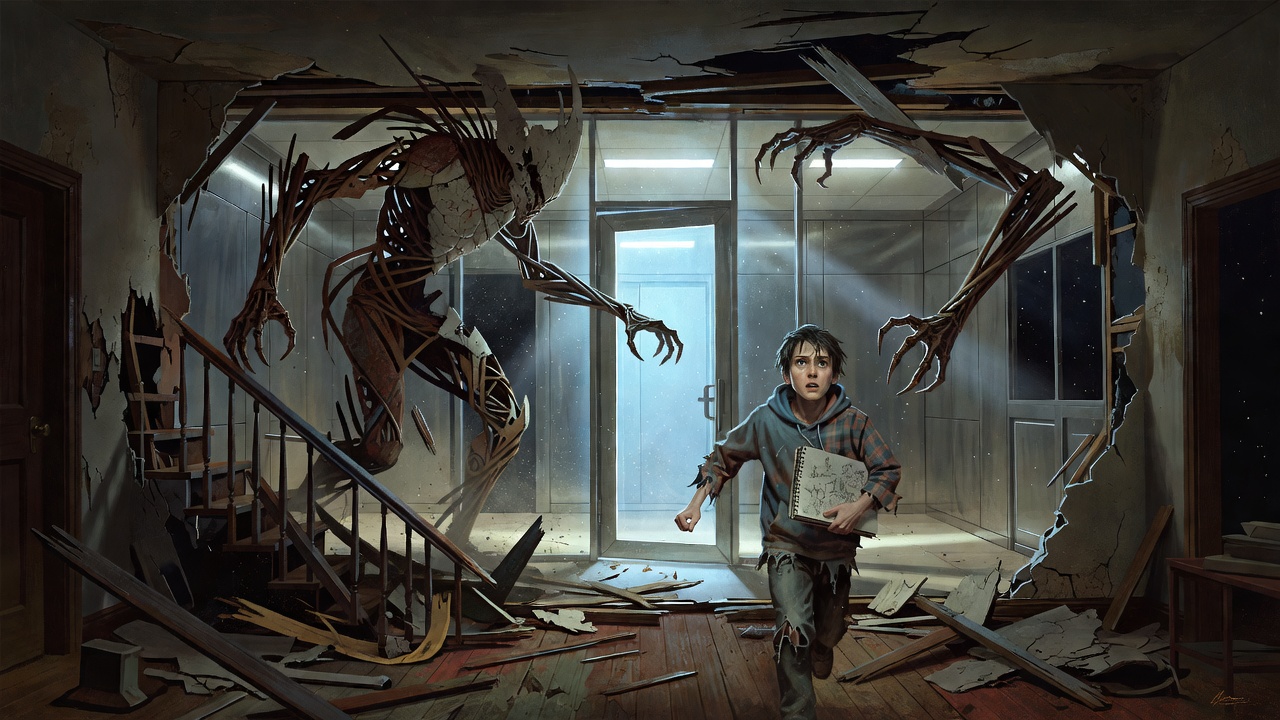
Three shapes survive too. From Book I: a man in black, a gunslinger behind him, a desert between, and a boy from New York who turns up in the sand. From Book III: a boy in New York whose drawings and dreams the adults explain away, and a condemned house in Brooklyn that is really a door, guarded by a thing made of the house. From Books V and VII: children taken for their minds, a facility where that power is turned against the Beams, a restaurant in Manhattan full of things wearing human faces, and a door in its basement.
And the creed survives, in full. Cort’s catechism, which Roland recites to Susannah in Book III and Jake gives back in Book V, is the film’s spine: Roland and his father speak it together in Jake’s dream of the battlefield, Roland teaches it to Jake in New York, and Jake recites it into Roland’s mind in the climax. It is the film’s main use of King’s language, and its best idea.
What it changed
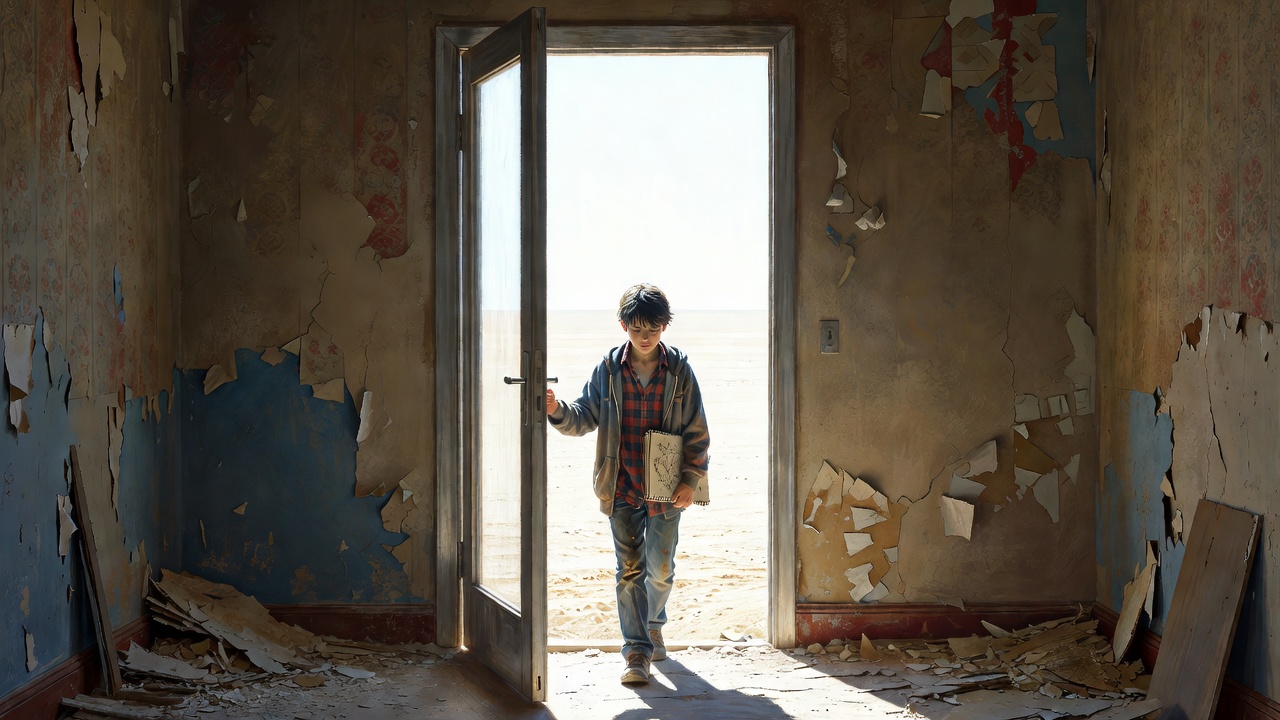
Jake lives. In Book I he dies under a car in 1977 and wakes at the way station; in Book III he is drawn back through a door marked THE BOY, with a key, while a plaster demon tries to eat him. The film sends him through a keypad portal in the same house, alive, with no key, no death and no fall, so Roland never chooses the Tower over the boy. His family goes with it: Elmer the network executive and the housekeeper Greta Shaw become a fireman father dead a year and a stepfather, and his mother Laurie, a minor adulteress in Book III, is burned by Walter so nothing holds Jake in New York. His “touch” becomes “shine”, a word carried in from The Shining.
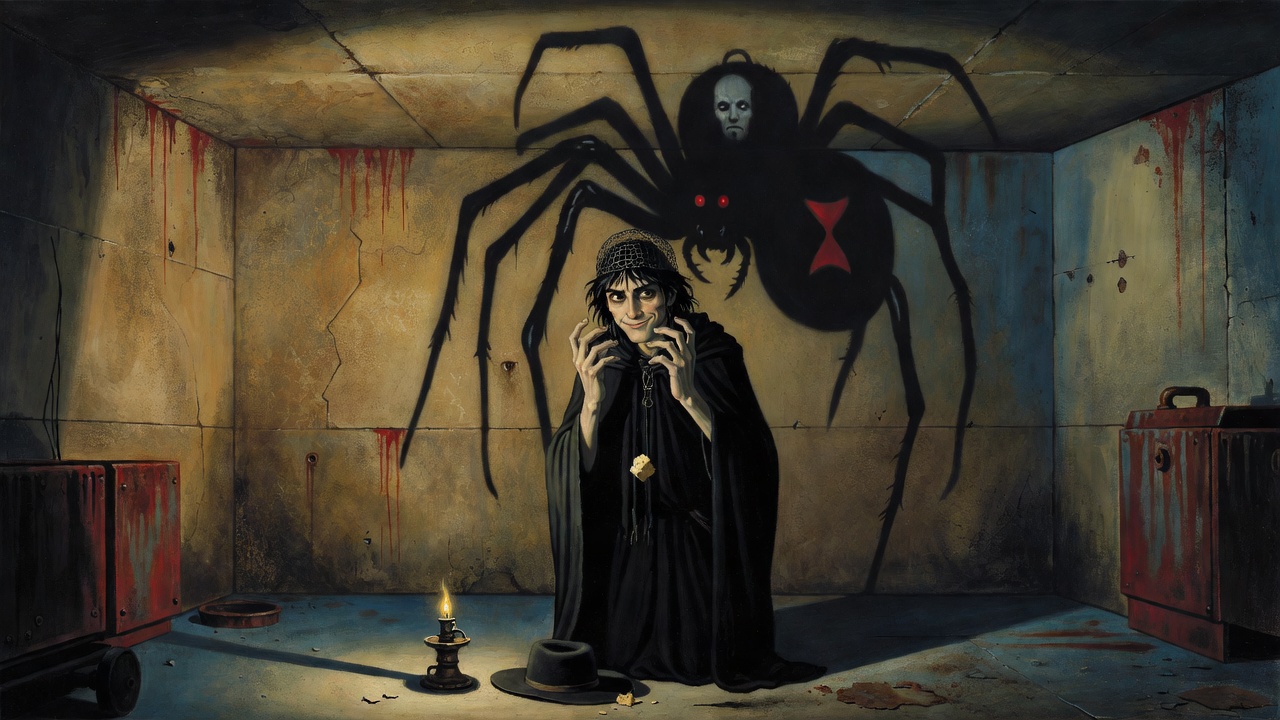
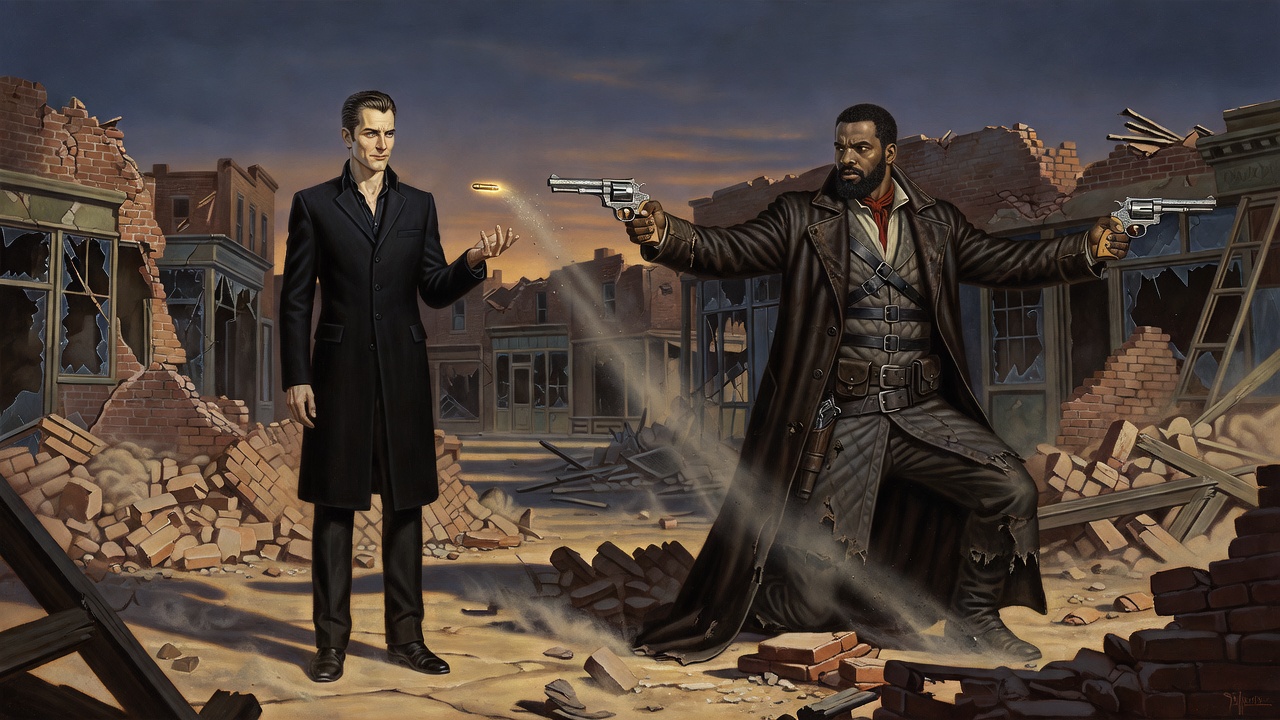
Walter changes genus. The books’ man in black talks: he deals cards at the golgotha, raises Nort in Tull, comes to Roland’s mother as Marten, and dies in Book VII when Mordred makes him tear out his own eyes. The film’s Walter kills with two words, “Stop breathing”, catches bullets, suffocates Steven Deschain in Roland’s arms, and dies, if he dies, by a trick shot in which a second bullet strikes the first and bends its path. Palaver becomes a duel.
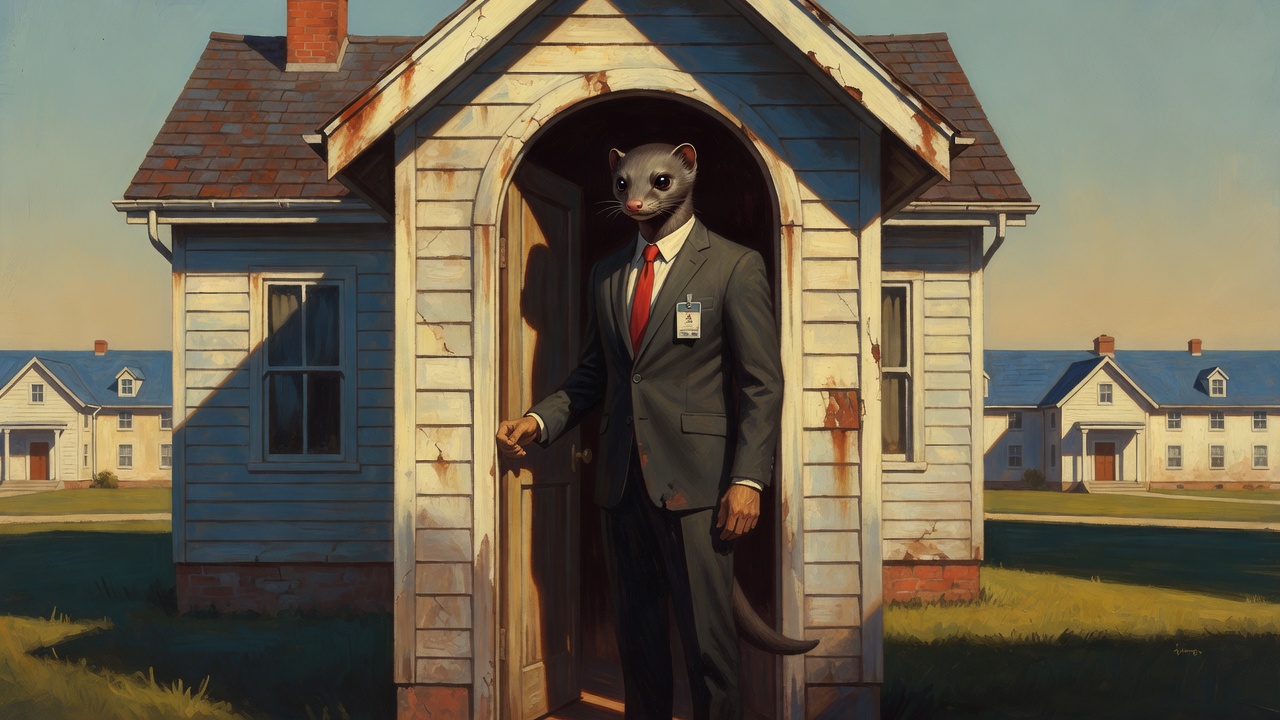
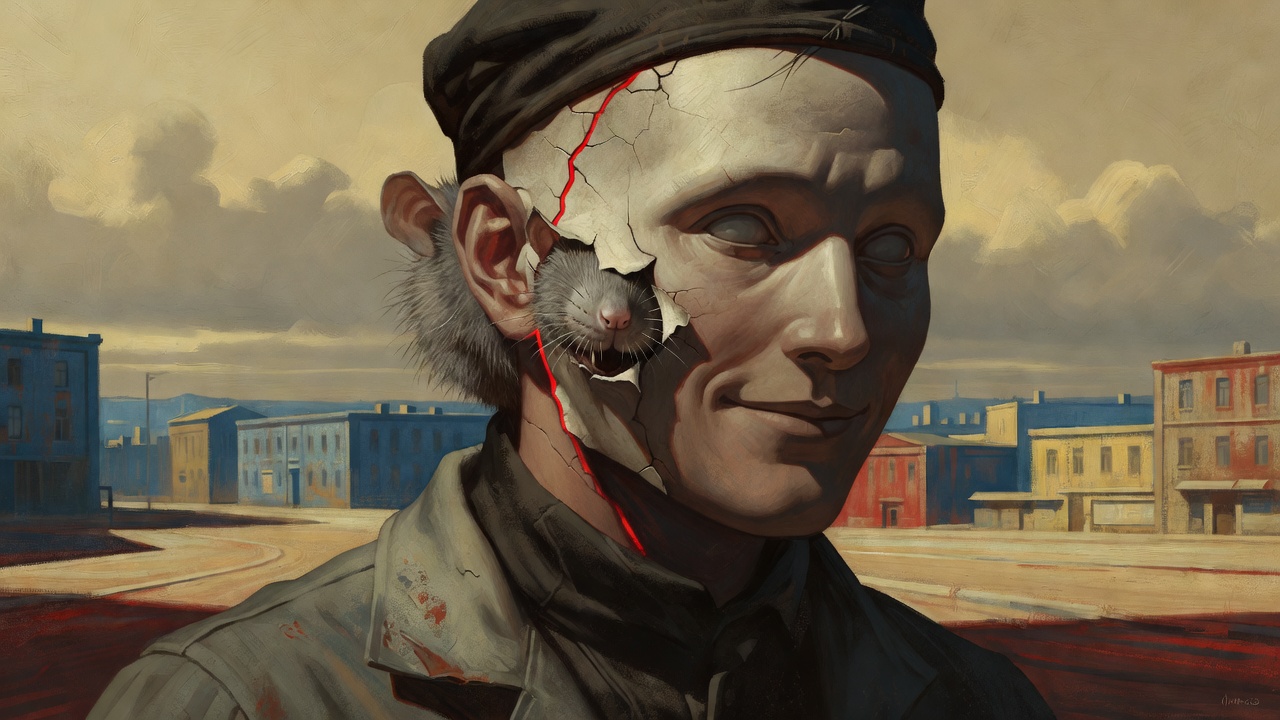
The machinery changes scale. The Devar-Toi of Book VII is a college town under a false sun where some three hundred adult telepaths take their pills and erode the Beams by thinking; the pills are refined from the brains of the Calla’s children, which is the horror of Book V. The film folds those two into one image, children strapped into a chair inside a black pyramid on a mesa, firing a visible column of light at a visible Tower. Taheen, who have animal heads in the books, are merged with the can-toi, who wear living masks, so the guards wear a seam behind the ear. Sayre, who runs Sombra and dies to Susannah’s gun in Fedic, becomes Walter’s lieutenant and dies to Roland’s.
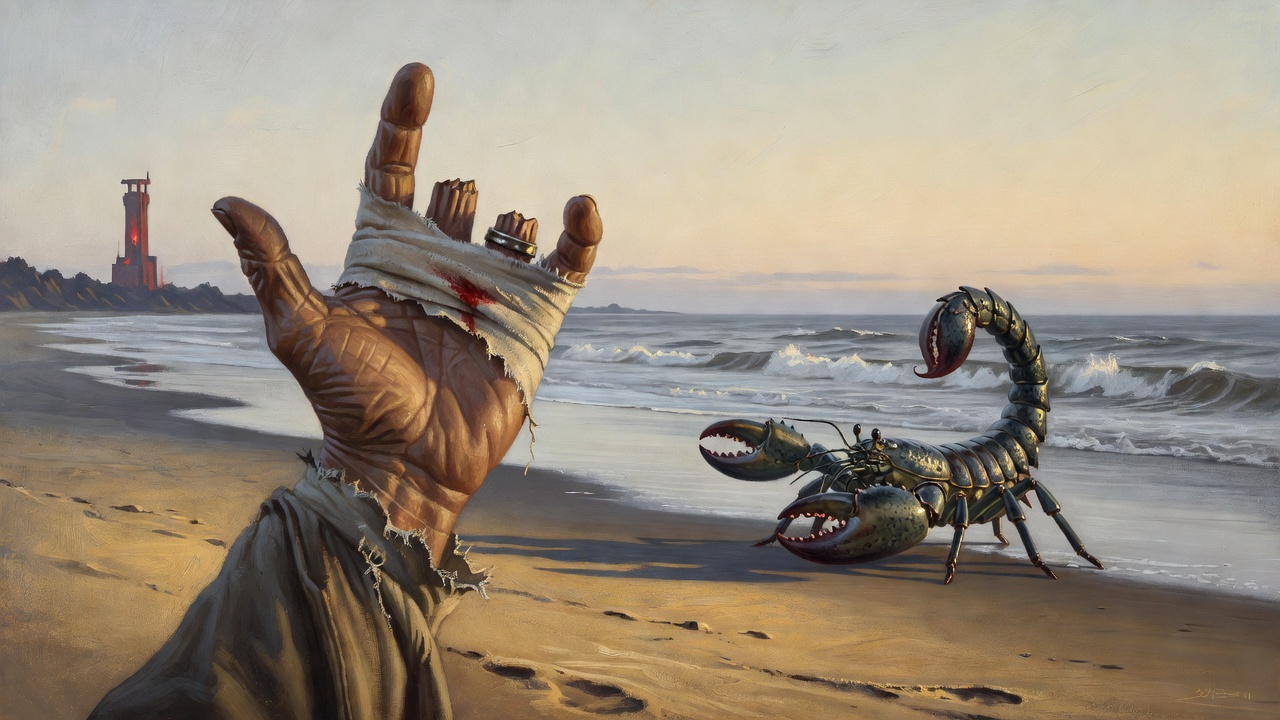
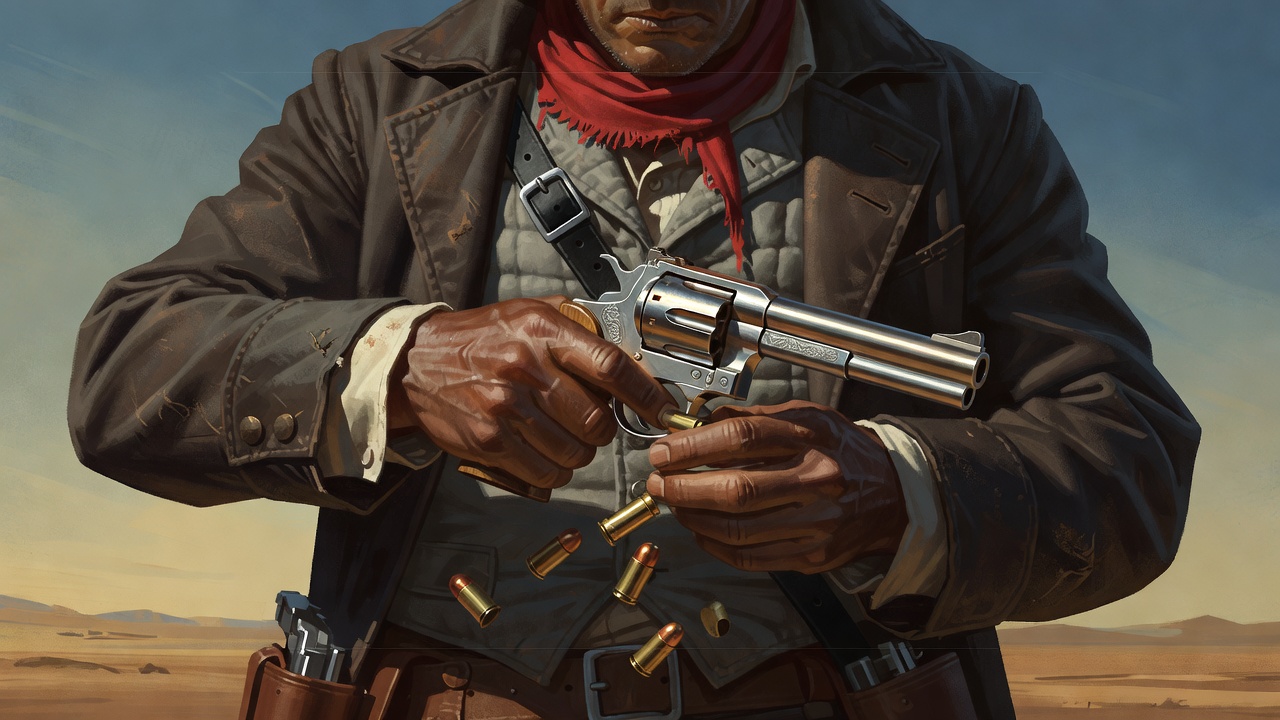
Roland changes least and most. Both hands whole, the beach of Book II being wanted for a sequel; no hat because, King said, the studio believed hatted Westerns underperform; two bright engraved revolvers with light wood grips instead of sandalwood and, by the books’ lore, steel from Arthur Eld’s own sword. The Tower, which he reaches and climbs in Book VII, is a spire on the horizon he never walks toward.
What it dropped
Most of the cast. Eddie Dean and Susannah, drawn through the doors of Book II and promised for a sequel never made. Oy, replaced by a raccoon in a television commercial. Blaine the Mono and the riddling that ends Book III and opens Book IV. Mejis and Susan Delgado, Cort and Cuthbert and Alain, Gilead and its fall, all of which were to be a television series. Father Callahan, the Calla and the Wolves. Mordred. Patrick Danville. Stephen King, a character in Books VI and VII. The Crimson King, reduced to a slogan on a wall and an employer never seen.
Most of the first book. Tull, the way station, the oracle, the slow mutants, the palaver at the golgotha and the boy’s fall are all gone; the Mohaine Desert stays, but Jake crosses it rather than Roland.
And the ending. Book VII sends Jake to his third death on a Maine road, Susannah through a drawn door into a New York where Eddie never touched heroin, and Roland alone through the Tower’s door and back to the desert. The film ends with the Tower mended, the children freed, and Roland and Jake stepping through a portal to Mid-World together, which is on no page of the books, and which the Horn, if you can find it, is meant to excuse.
Thirty things the film did, and where each came from
| Film element | Source book | What changed | Why it matters |
|---|---|---|---|
| The Horn of Eld in Roland’s gunna | VII, Coda | Books: dropped at Jericho Hill, regained only for the next turn of the wheel. Film: carried from the first scene, and barely visible. | The whole “continuation” claim hangs on one prop. |
| The loop | VII, Coda | Implied by the Horn and the “LAST TIME AROUND” marketing; never stated on screen. | Readers see loop nineteen; everyone else sees a reboot. |
| The opening line | I, Part I | Spoken as narration over Jake’s dream; then Jake, not Roland, crosses the desert. | King’s sentence survives; the book it opens does not. |
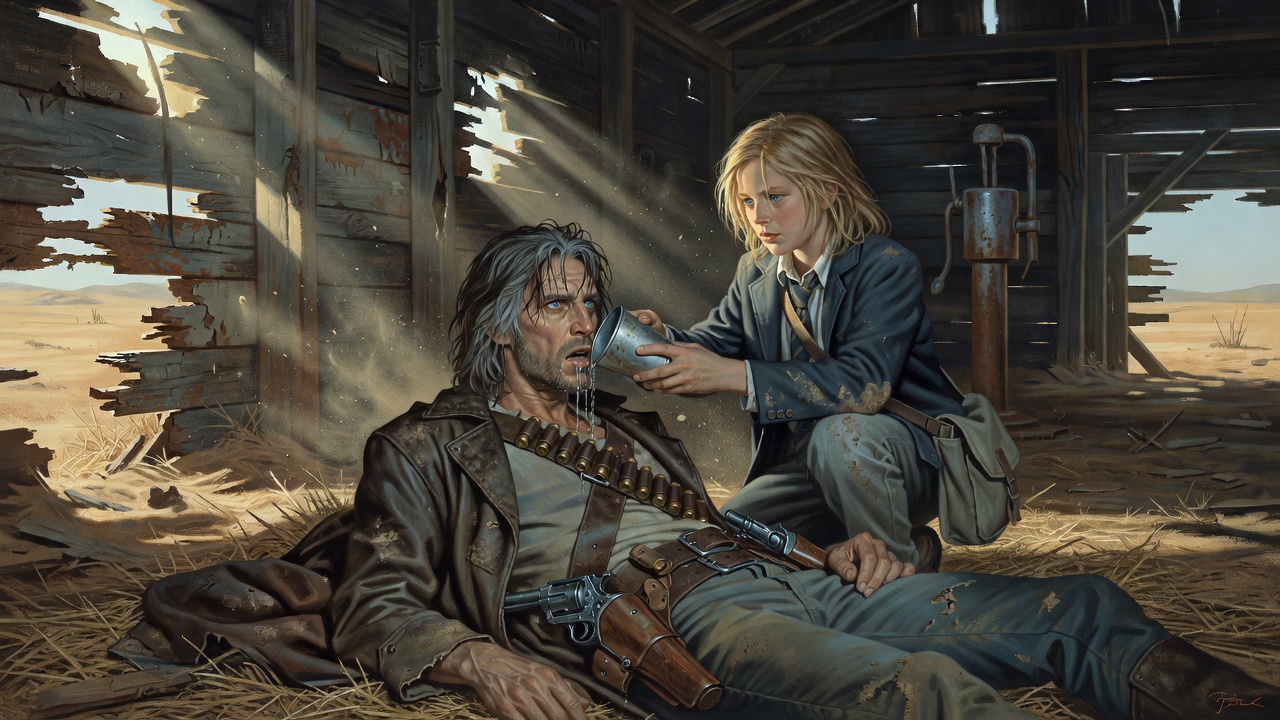
| Jake as the way in | I, Part II; III, Book One | Books: Jake dies into Mid-World, then is drawn through a magic door with a key. Film: walks through a machine portal, alive. | No sacrifice at the trestle, no paradox, no “other worlds than these.” |
| Jake’s family | I, Part II; III, Book One | Books: Elmer the network executive, Laurie, the housekeeper Greta Shaw. Film: a fireman father dead a year, a stepfather, a mother Walter burns. | Grief replaces neglect; Laurie’s death frees Jake to leave. |
| Jake’s gift | III–VII | “The touch” becomes “shine”, a word borrowed from The Shining. | Ties Jake to the Breakers plot by renaming King’s own device. |
| The Dutch Hill house | III, Book One | Books: a plaster demon that is the house guards a door marked THE BOY. Film: the demon guards a keypad portal said to be Walter’s. | Magic becomes machinery; the key is gone. |
| Walter’s name | VII, Part Two | The film uses “Walter Padick”, the birth name Book VII reveals, alongside “o’Dim”; no Marten, no Flagg. | A deep-cut signal aimed at readers. |
| Walter’s magic | I, Parts I and V; IV; VII | Books: a trickster who deals cards, raises the dead and talks. Film: kills with “Stop breathing”, catches bullets, throws Roland about a gun shop. | Palaver becomes a duel. |
| Steven Deschain’s death | IV (recalled); the comics | Books: off the page, and not at Walter’s hand. Film: suffocated by Walter in Roland’s arms. | Invents a revenge motive for a quest that was never about revenge. |
| The creed | I; III, Book One; V | Roland and his father recite Cort’s catechism; Roland teaches it to Jake; Jake gives it back in the climax. | The film’s main use of King’s language. |
| Roland’s revolvers | I; IV | Books: sandalwood grips and, by the books’ lore, steel from Arthur Eld’s sword. Film: engraved bright-steel revolvers with light wood grips, no origin given. | Faithful in silhouette, not in lore. |
| Roland’s right hand | II, Prologue | Books: a lobstrosity takes two fingers on the first morning. Film: both hands whole; the beach was wanted for a sequel. | The maiming shapes how book-Roland shoots for six volumes. |
| Roland’s hat | I–VII, by King’s own account | Gone; King said the studio believed hatted Westerns underperform, and hoped a sequel would put one on him. | The most visible costume departure. |
| Gilead and its fall | IV; VII | Reduced to an unnamed battlefield and Steven’s death; no Cort, Cuthbert or Alain, and Jericho Hill never named. | Held back for a television series that never came. |
| The Mohaine Desert | I, Part I | Jake crosses it, dying of thirst; no Tull, no way station, no mule. | The book’s landscape with the wrong traveller in it. |
| The Breakers | VII, Part Two; V | Books: adult telepaths pampered in a campus prison, dosed with pills made from Calla children. Film: children strapped into a machine. | One scene explains the threat; the moral texture goes with it. |
| The Devar-Toi | VII, Part Two | Books: a college town under a false sun in Thunderclap. Film: a black pyramid on a mesa firing a visible beam. | Visual shorthand for an invisible process. |
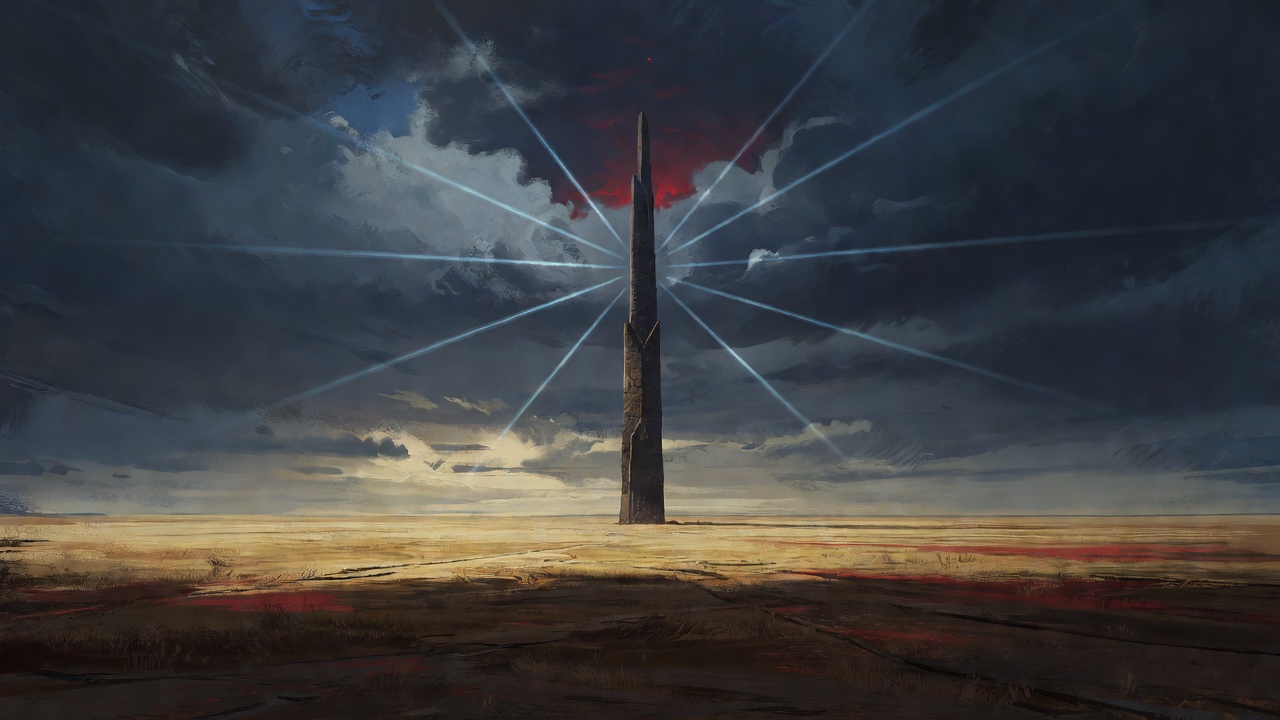
| The Beams | III, Book One; VII | Books: six Beams with named Guardians, failing over centuries. Film: six spokes of light on a spire that is struck from a pyramid. | The cosmology survives as an emblem. |
| Pimli and Tirana | VII | Books: Pimli Prentiss is the Devar-Toi’s Master, the man who kills Eddie; Tirana a low woman at the Dixie Pig. Film: two technicians at the machine. | Names kept, roles shrunk. |
| Sayre | V–VII | Books: Richard Sayre of Sombra, who presides over Mordred’s birth and is shot by Susannah in Fedic. Film: Walter’s enforcer, shot by Roland. | Promoted to henchman, demoted in menace. |
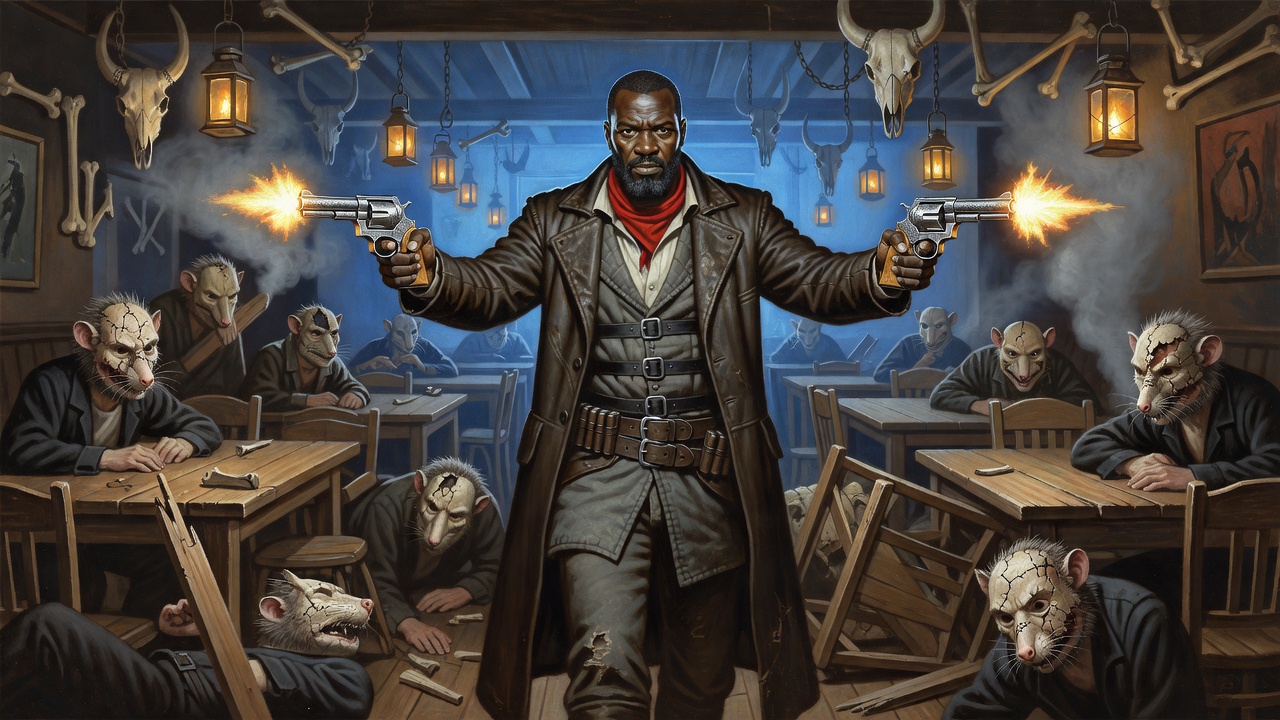
| Taheen and can-toi | VI–VII | Books: animal-headed taheen and rat-headed low men in living masks. Film: one race, called taheen, wearing the low men’s seam. | The ear seam is the film’s tell. |
| The Dixie Pig | VI; VII, Part One | Books: a Manhattan restaurant of vampires and low men with a door to Fedic, and Callahan’s last stand. Film: Walter’s base, a portal to the Devar-Toi, and still full of vampires. | Kept nearly intact; the priest is missing. |
| Walter’s death | VII, Part Two | Books: Mordred makes him tear out his own eyes and eats him. Film: a trick shot with no counterpart in the novels. | The director later said that, for him, Walter did not die. |
| The Crimson King | VII, Part Five | Books: on the Tower’s balcony, erased by Patrick save his eyes. Film: graffiti and an unseen master. | The saga’s last enemy reduced to a slogan. |
| The Manni and Arra | V; VI | Books: Henchick’s clan in blue cloaks, with plumb bobs and magnets; “Arra” is a name from the comics. Film: a grass-valley village with a seer. | The film’s clearest borrowing from Book V. |
| The number nineteen | I (Tull); V–VII | Books: Tull’s trigger word, then the tet’s omen. Film: a bedroom wall of 19s, a darts total, a portal code. | King’s motif becomes a keypad password. |
| The red tear in the sky | IV; V | Books: thinnies that sing, and todash darkness. Film: a red breach over the city, never named. | Shown, not explained. |
| The Tower itself | VII, Part Five; Coda | Books: reached, climbed, a door marked FOUND. Film: a distant spire, struck and then mended; nobody travels toward it. | The quest without the destination. |
| Oy | III–VII | Replaced by a raccoon in a television commercial and a joke. | The one cut the books would resent most. |
The book’s version, the film’s version
The opening
Jake’s entry
The man in black
The creed
Roland’s hand
The doorkeeper
The Breakers
The Devar-Toi
The Dixie Pig
The taheen
Walter’s end
The Horn of Eld
The verdict in bullets
- A continuation by one prop and an adaptation of nothing: the film borrows nouns from Books I, III, V, VI and VII and the plot of none of them.
- Its best decision is the creed, spoken three times and made to matter; its worst is the chair, which turns the books’ slowest horror into a laser.
- Its gunslinger is intact-handed, hatless, dark-eyed and heavier than the page; the lead performance and the score were the exceptions most reviews allowed.
- Walter talks less and kills more. The saga’s trickster becomes a boss fight, and the director later said that, for him, Walter survived it.
- Jake’s survival is the quietest big change: without the fall there is no sacrifice, and without the sacrifice Roland is not the man the books are about.
- Ninety-five minutes, PG-13, “about 3,000 pages”: King named the two problems himself.
- Rotten Tomatoes’ consensus line put it best: “Go then, there are other Stephen King adaptations than these.”
What the film dropped
- Eddie Dean and Susannah — drawn through the doors of Book II, promised for a sequel, never cast.
- Oy — replaced by a raccoon in a television commercial and a line about whether the animals here still speak.
- Blaine the Mono — no riddles, no Lud, no Topeka; the end of Book III and the start of Book IV go unused.
- Mejis and Susan Delgado — the five hundred pages at the heart of Book IV, held back for a television series that was never made.
- Gilead — Cort, Cuthbert, Alain, the fall and Jericho Hill reduced to an unnamed battlefield and one invented death.
- The Crimson King — a slogan on a wall and an employer never seen.
- Mordred — no spider, no son; Roland takes over Walter’s death.
- Stephen King — not a character; nobody is saved on a Maine road.
- Father Callahan and the Calla — the Dixie Pig stays, its priest and the Wolves do not; Tull, the way station and the palaver go with Book I’s chase.
- Roland’s maiming — both hands whole; the lobstrosities were wanted for a sequel.
- The hat — the studio, King said, believed hatted Westerns underperform.
- The Tower as a place reached — seen from a distance, struck and mended; nobody walks the field of roses or opens the door marked FOUND.