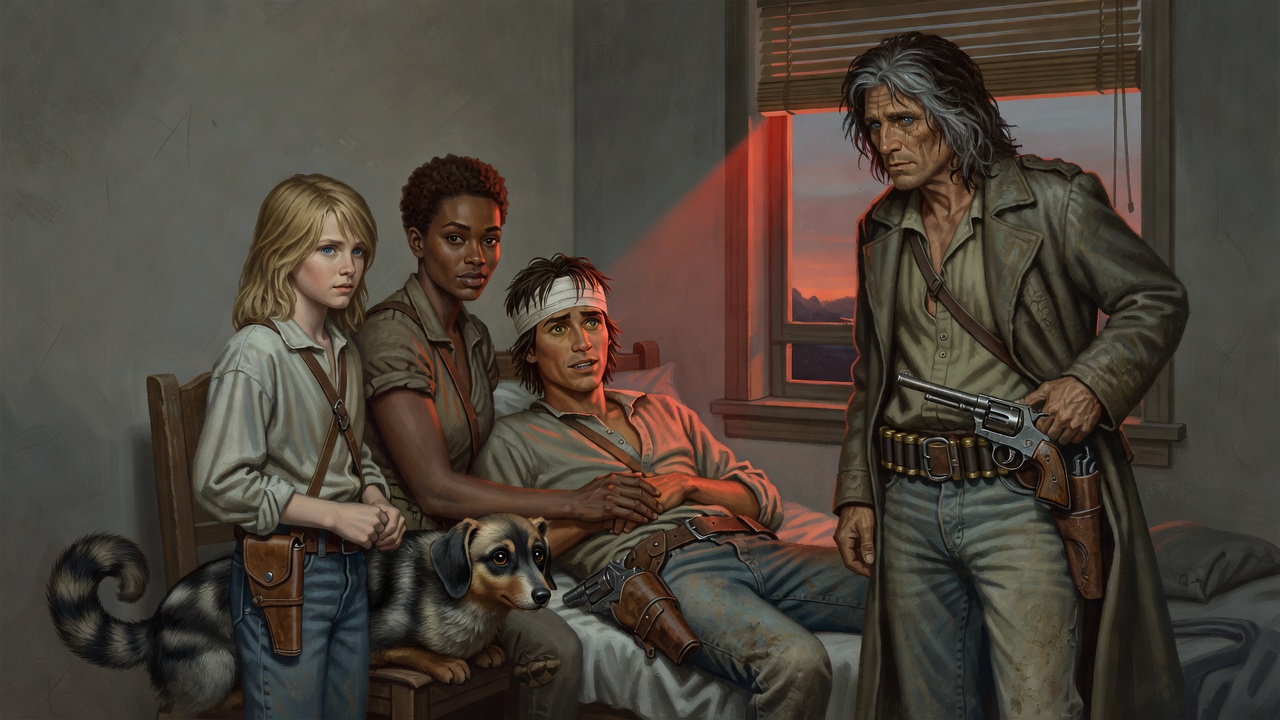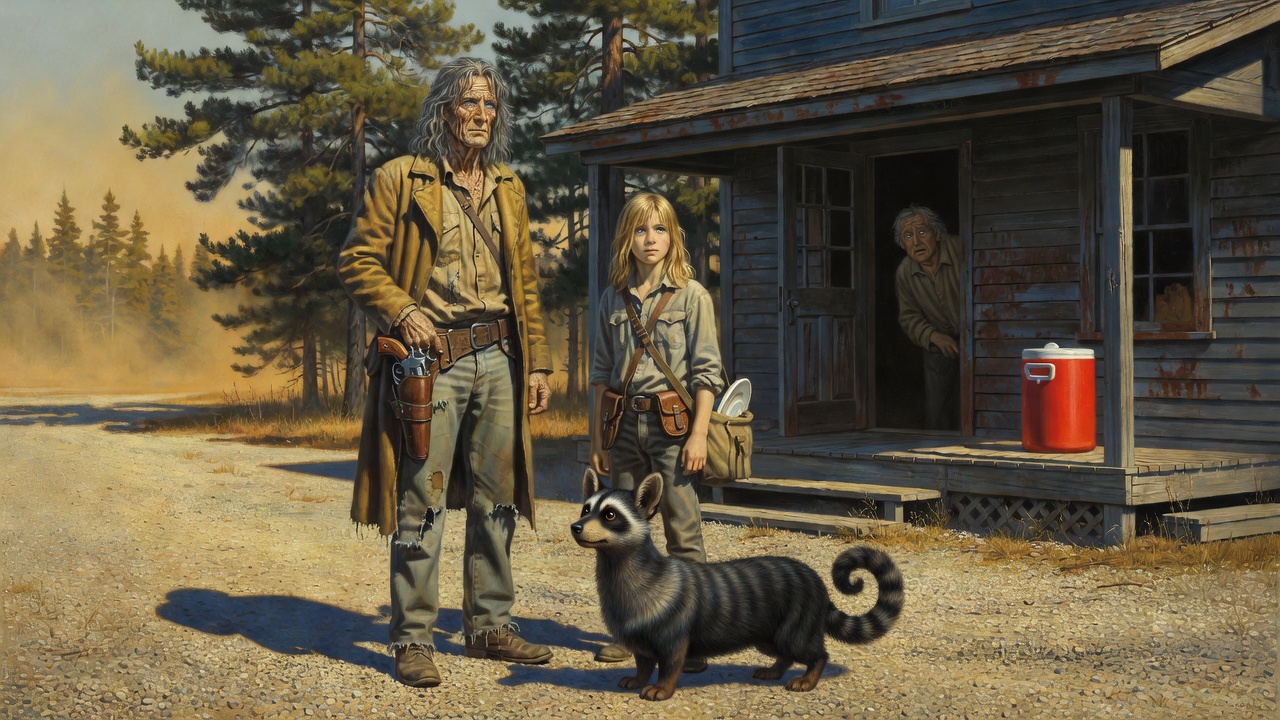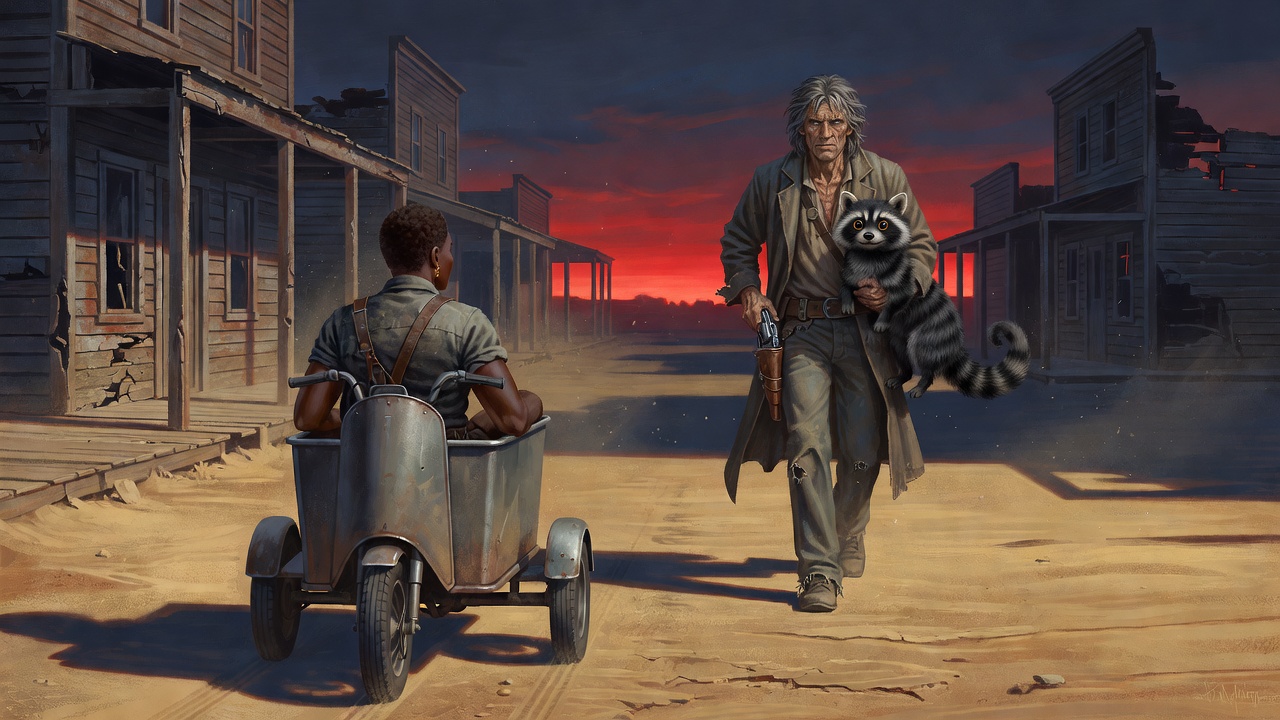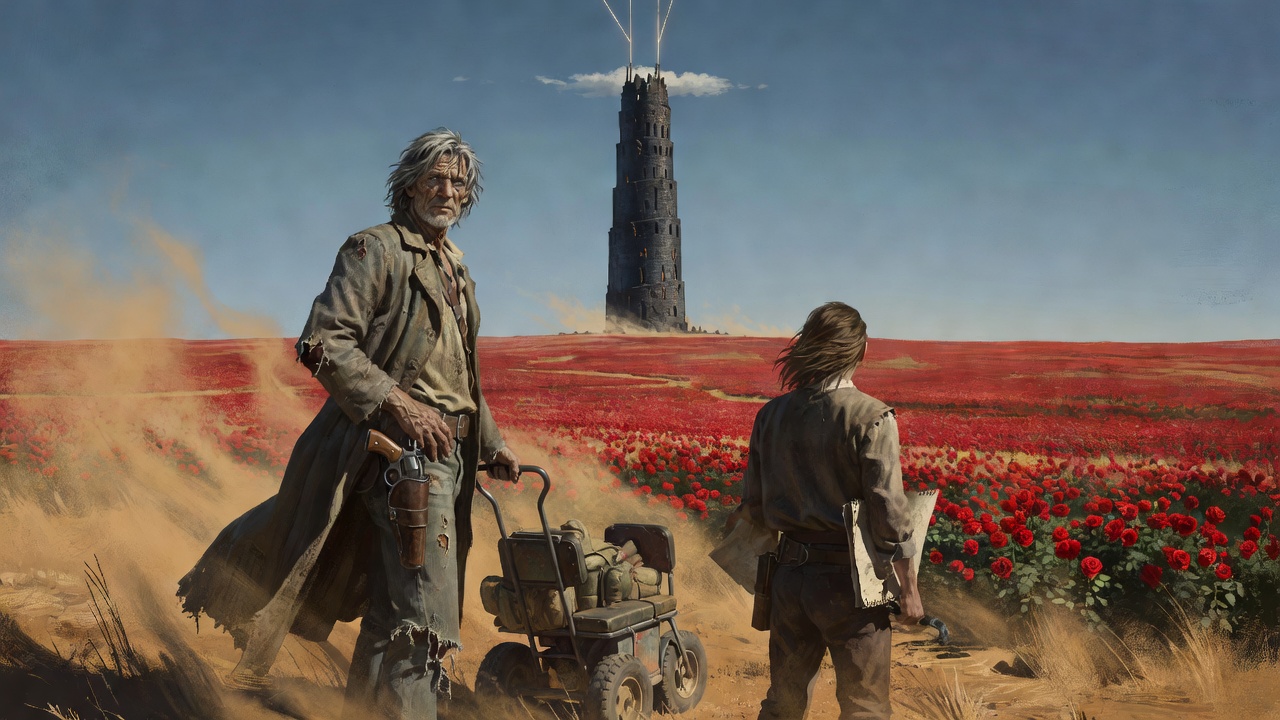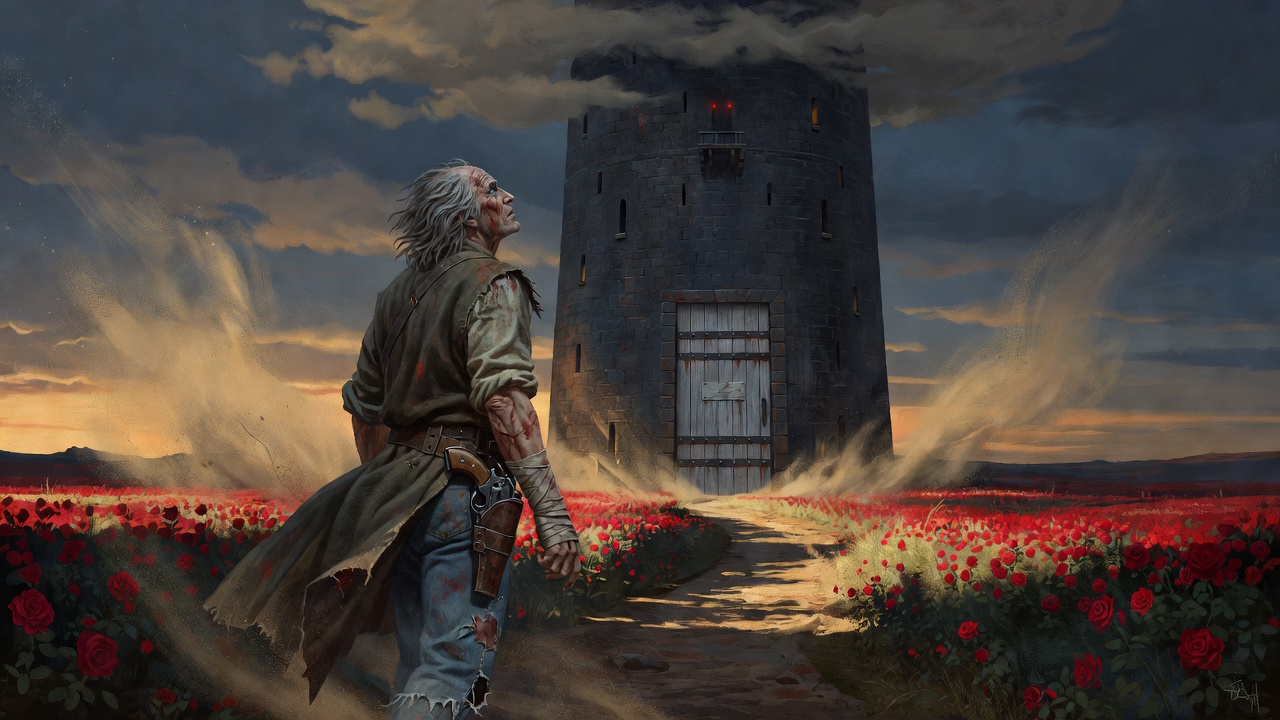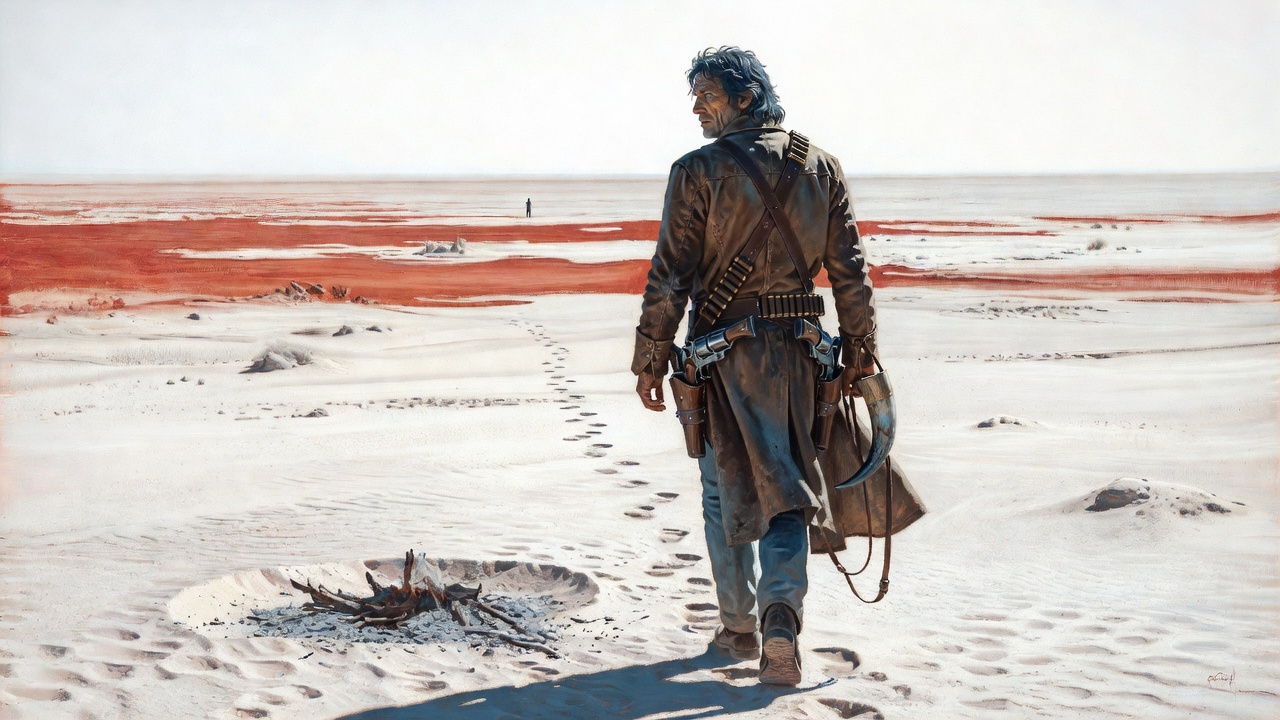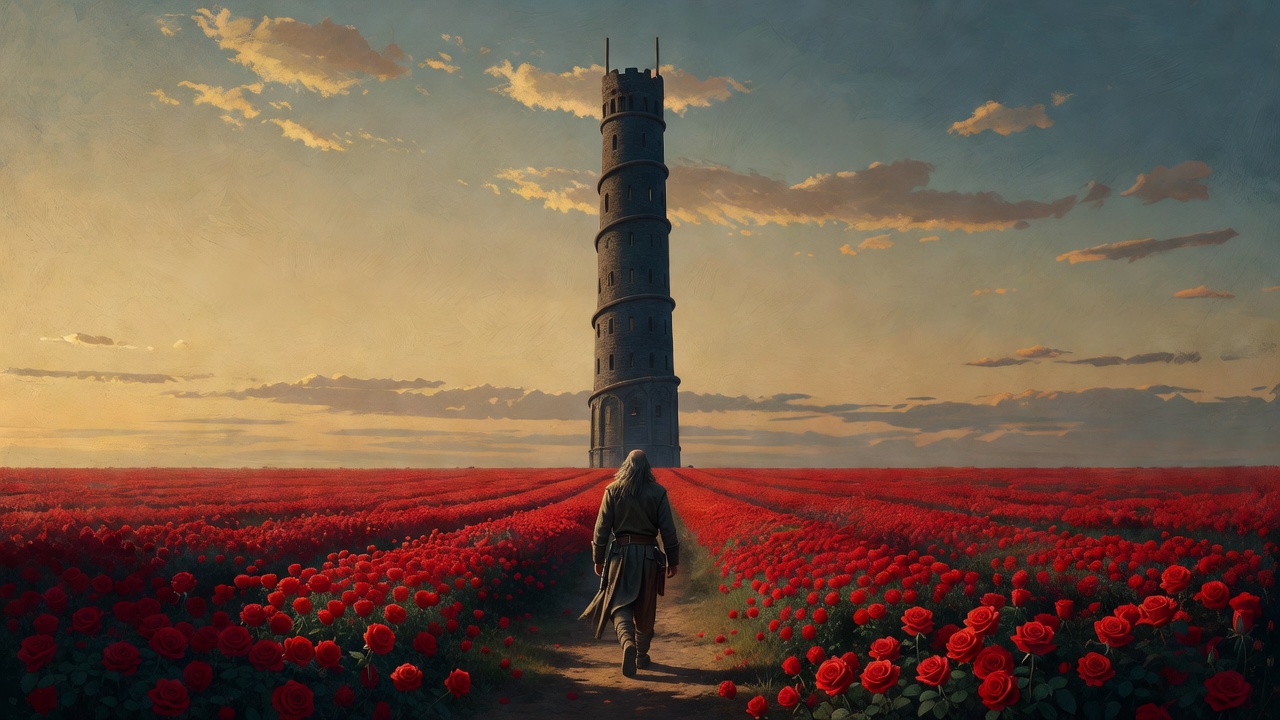
The Dark Tower rising from a field of red roses at sunset, with a single tiny figure of the gunslinger walking toward it.
Can’-Ka No Rey at sunset: the Tower in its field of roses, and one old man walking the last mile toward it alone.

The Dark Tower · Book VII · 2004

The Dark Tower

Everything is paid for, nearly everyone is lost, the Tower is reached, and the last line is the first.

The Dark Tower is the seventh and last novel of the cycle, published on September 21, 2004 — Stephen King’s fifty-seventh birthday — by Donald M. Grant, 845 pages, with paintings by Michael Whelan, who had painted the first book twenty-two years earlier. Its four sub-titles are REPRODUCTION, REVELATION, REDEMPTION and RESUMPTION, one for each thing the book does.

It takes the ka-tet apart one at a time, in order of how much it will hurt. It puts the author in the road as a character who has to be saved so the books can be finished, and lets him leave a note for his heroine in a monster’s bathroom. Then it gives two endings: a door for Susannah, where King tells you to stop, and a Coda he warns you not to open.

The Coda is the part everyone argues about. Roland reaches the Tower, climbs it, and is sent back to the desert of the first page with his memory gone and one thing changed. The 2017 film was built on that one thing: its makers had their Roland already carrying the Horn of Eld, so that the film begins where the books end.

Part 1

Part One: The Little Red King


The book opens with the ka-tet in three places and three times. Susannah is in Fedic, hooded on a bed in the Dogan while Mia labors beside her. Jake, Father Callahan and Oy stand on a Manhattan sidewalk in June 1999 outside the Dixie Pig, where the ivory turtle Susannah dropped still lies on the pavement. Roland and Eddie are in Maine in 1977, having just bought the vacant lot and its rose.

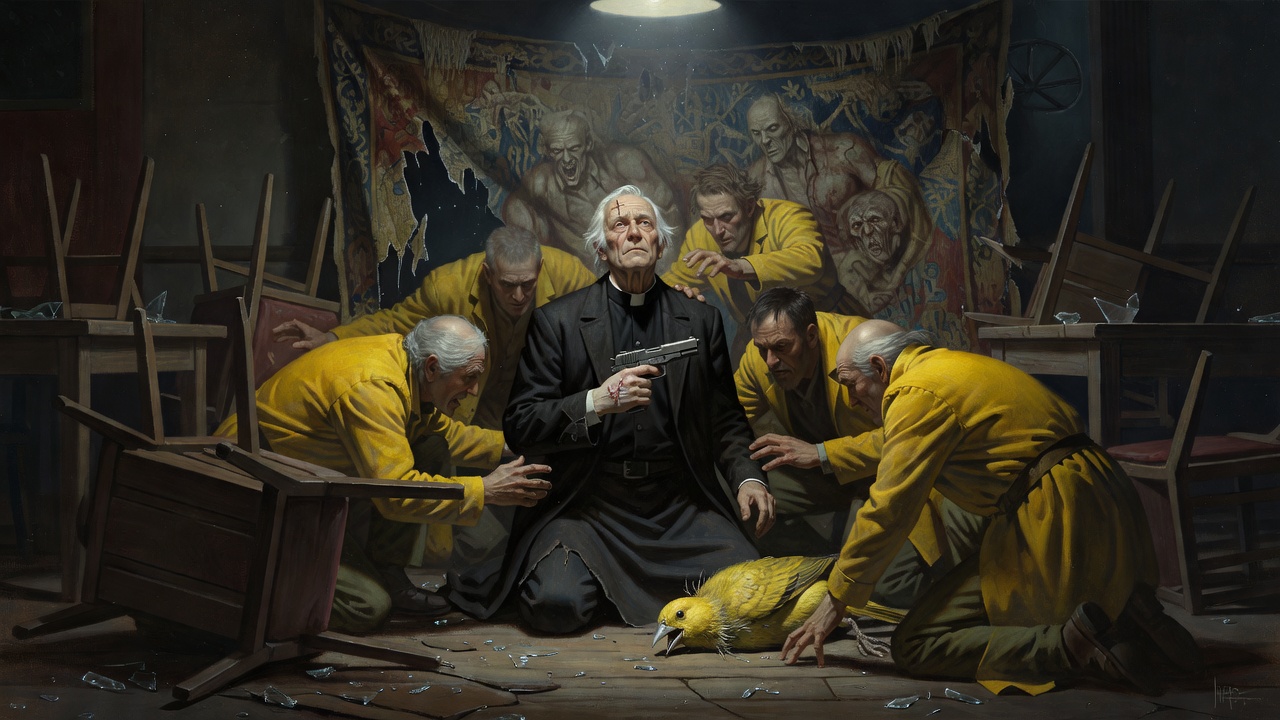
Callahan and Jake go in. The front room is low men, taheen and lesser vampires; behind a tapestry the Grandfathers, the Type One vampires, eat long pork off a rotisserie, and Jake knows the smell. Callahan climbs onto a table with the turtle raised and the lesser creatures freeze. Roland’s voice, across worlds, tells Jake to go find Susannah, and the boy runs for the kitchen. Then the Grandfathers come out, and the turtle means nothing to them. Callahan’s cross blazes, light pours from his bare hands, and he understands what he missed with Barlow in ’Salem’s Lot: the power was never in the objects. Overrun, he shoots the canary-headed taheen Meiman, puts the gun under his own chin and says “Hile, Roland. Hile, gunslinger.” Roland, lifted with Eddie on a wave along the Beam, sees it happen.

In Fedic the birth goes as Sayre planned. The child has black hair, a full set of teeth, Roland’s blue eyes and a red mark on his left heel, the sigul of Eld. Within moments he flashes red, becomes a spider with a baby’s face on its back, and drinks his mother dry. Susannah breaks the hood’s trance, takes Dr. Scowther’s gun and kills Scowther, Straw, the taheen and the rat-headed nurse, shoots out the blue eyes of Nigel, the butler robot who looks too much like Andy, and gives Sayre two bullets, once for Mia and once for Callahan. The spider takes a bullet in one leg and escapes into the tunnels.

Jake kills the Pig’s chef with an Oriza and goes down a hundred-odd steps into a corridor rigged as a mind-trap: the dinosaurs of a film that terrified him as a child, projections that can still kill. Oy sees only a hallway, so boy and bumbler swap bodies and Oy, upright and clumsy in Jake’s skin, walks them through. The Fedic door asks for its word; Susannah gives it, “chassit,” and pulls them through.

Roland and Eddie drive John Cullum’s Ford to Turtleback Lane, walk through a door behind the house called Cara Laughs, and come out under the Pig behind the posse, whom they kill. Eddie reaches through the door for Susannah’s hands; Jake calls Roland father, and Roland opens his arms. “My father has come for me.”
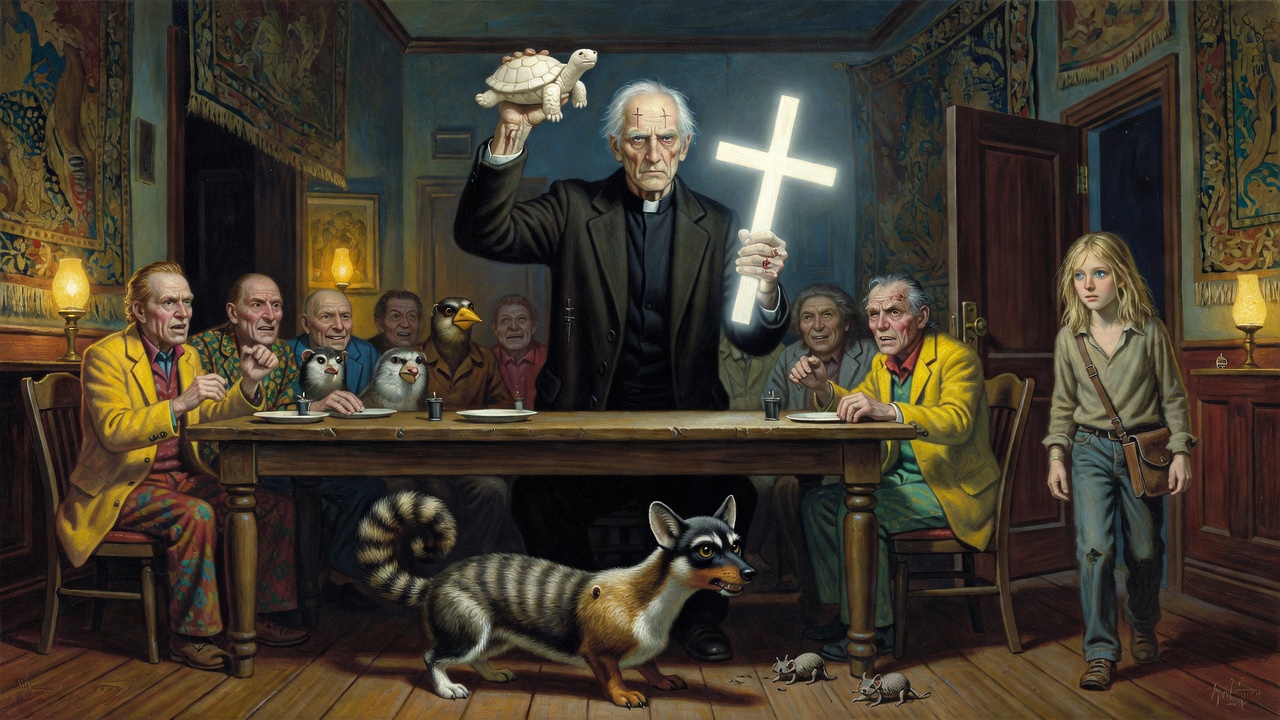
Father Callahan standing on a restaurant table holding up a small ivory turtle while a crowd of low men and taheen stand frozen around him.
VII · 1 Callahan’s Stand Part One, chapter one. Callahan climbs onto a table in the Dixie Pig with the sköldpadda, Susannah’s ivory turtle, held high, and the low men and taheen in the front room stop where they stand. Under the tables Oy tears into the Grandfather fleas. Roland’s voice, from another world, tells Jake to go find Susannah, and the boy runs for the kitchen. The priest from ’Salem’s Lot has minutes left, and they are the best of his life.
Father Callahan on his knees among overturned tables, ringed by low men, holding a pistol against his chest with his face lifted.
VII · 2 Hile, Gunslinger The Grandfathers, the Type One vampires behind the tapestry, are not stopped by the turtle. Callahan’s cross blazes, light pours from his bare hands, and he understands what he got wrong with Barlow years ago: the power was never in the objects. Overrun by low men, he shoots Meiman, then turns the gun on himself with “Hile, Roland. Hile, gunslinger.” Roland, lifted on a wave along the Beam in Maine, sees it happen.
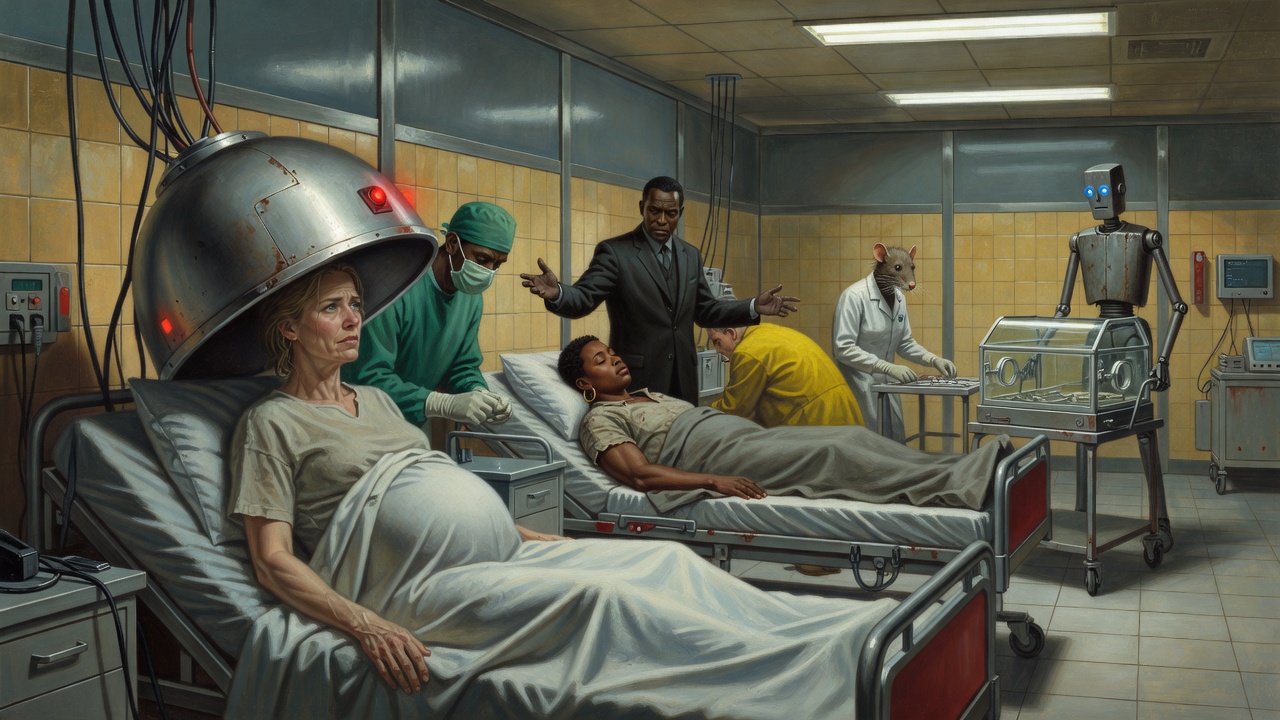
A cold tiled room where a pregnant woman labors under a steel hood on a hospital bed, attended by a doctor, a man in a suit and a tall steel robot wheeling an incubator.
VII · 3 The Extraction Room Fedic, under Castle Discordia, in the room where the Calla’s children were drained. Mia labors under a steel hood; Susannah lies hooded on the next bed, her mind pinned. Dr. Scowther shouts push, Richard Sayre watches, a low man called Straw and a rat-headed nurse stand by, and Nigel, a seven-foot butler robot, wheels in an incubator that nobody will need. Part One, chapter four, titled for the child: Dan-Tete, the little red king.
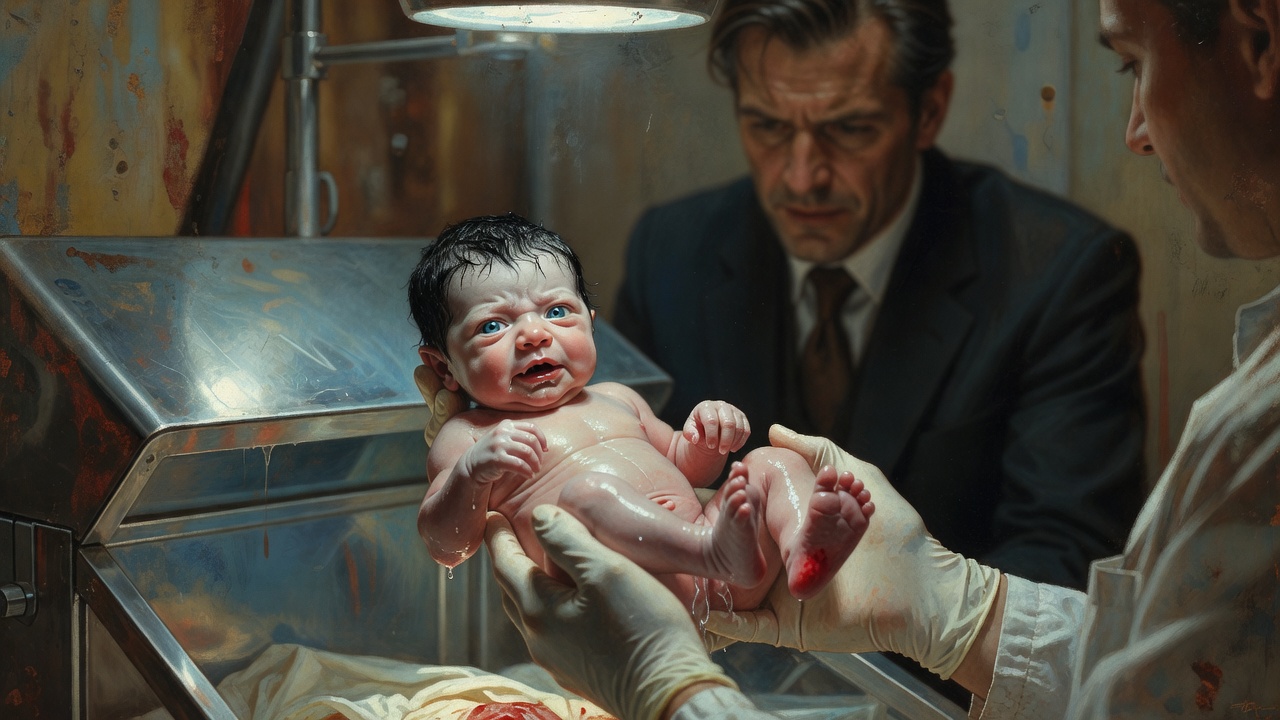
Close view of a newborn held up in gloved hands, with dark hair, visible teeth and a red birthmark on one heel.
VII · 4 The Birth of Dan-Tete Mordred Deschain is born with a full head of black hair, a complete set of small teeth, Roland’s blue eyes and a crimson birthmark on his left heel, the sigul of Eld. He has two fathers, the gunslinger and the Crimson King, and he is the only creature in the cycle who can say so. For a few seconds he is a baby. Then he flashes red.
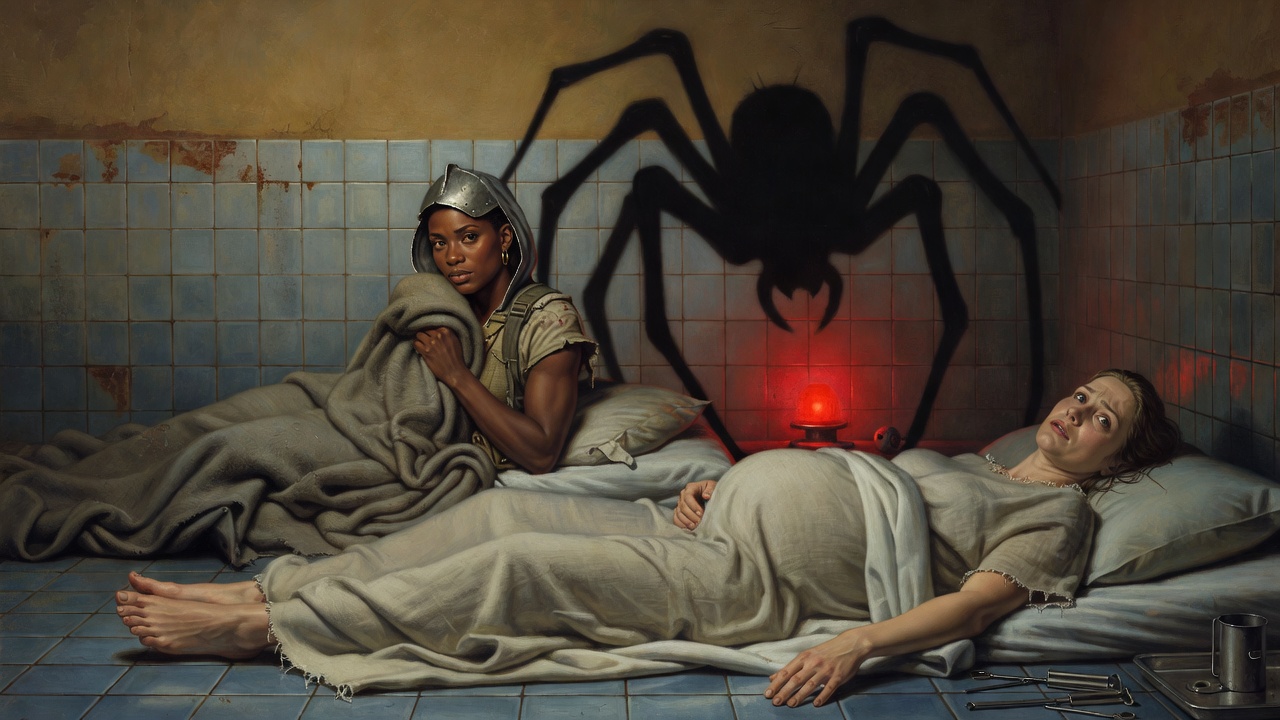
A woman lying on a hospital bed with her face turned outward while the huge shadow of a spider falls across the wall above her.
VII · 5 Mother and Chap The change: a red flash, and the infant is a hairy spider with a distorted baby’s face on its back. He bites Mia and drinks her, and the body of the woman who hijacked Susannah’s and called the child her chap goes dry on the bed. Mia, daughter of none, wanted one thing in two books, and this is how it is paid for. On the next bed, the hood still holds Susannah.
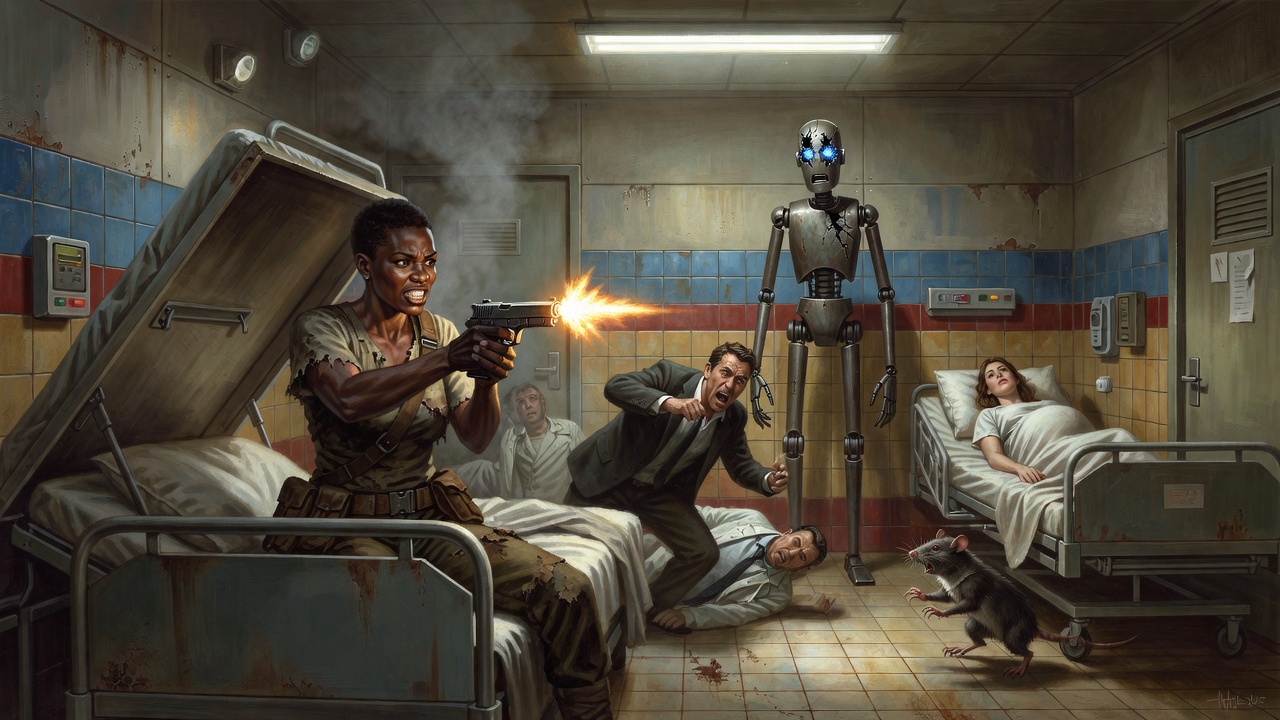
Susannah sitting up on a hospital bed firing a pistol while a man in a suit falls and a steel robot stands with its eyes shattered.
VII · 6 Once for Mia, Once for Callahan Susannah breaks the hood’s trance, takes Scowther’s gun and empties the room: Scowther, Straw, the taheen, the nurse. She shoots out Nigel’s electric-blue eyes because he looks too much like Andy. Sayre she gives two bullets, one for Mia and one for Callahan. The spider loses part of a leg to her and gets away into the tunnels. Then she has the blind robot walk her to the New York door, and waits.
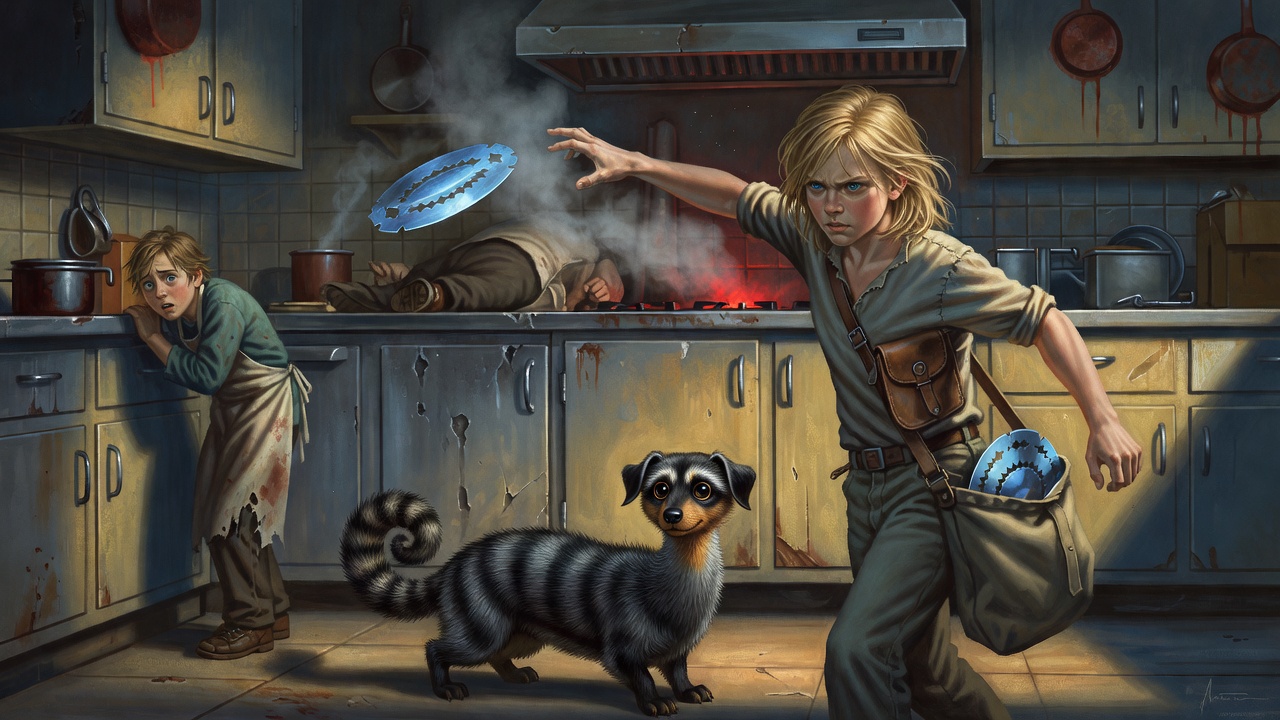
Jake throwing a sharpened steel plate across a steaming restaurant kitchen while a kitchen boy cowers and a billy-bumbler stands at his heel.
VII · 7 The Kitchen Escape Through the swinging door Jake meets the Dixie Pig’s chef and kills him with an Oriza, the sharpened plate of the Calla’s women. A kitchen boy, Jochabim of Ludweg, confirms that Susannah went below and warns him of the mind-trap on the way. Part One, chapter five: a boy with a bag of throwing plates, doing a gunslinger’s work in a kitchen that cooks people.
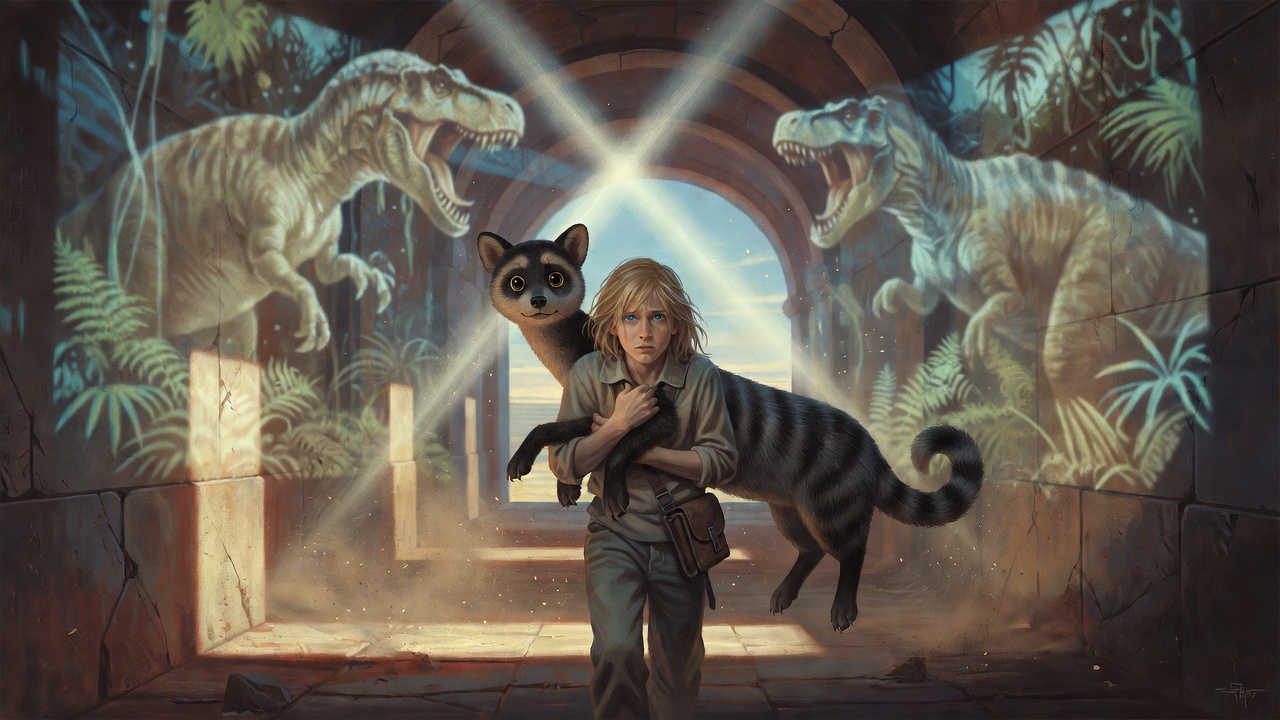
A boy walking stiffly through a stone corridor overlaid with projected dinosaurs, carrying a billy-bumbler in his arms.
VII · 8 The Mind-Trap A hundred-odd steps down, the corridor turns into the jungle of a dinosaur film that terrified Jake as a child. The projections can kill. Oy sees only a hallway, so boy and bumbler trade bodies, and Oy, upright and clumsy in Jake’s skin, carries them both through. Behind them come Flaherty, a Boston man twenty years in the King’s service, and a stoat-headed taheen who shoots out the projectors.
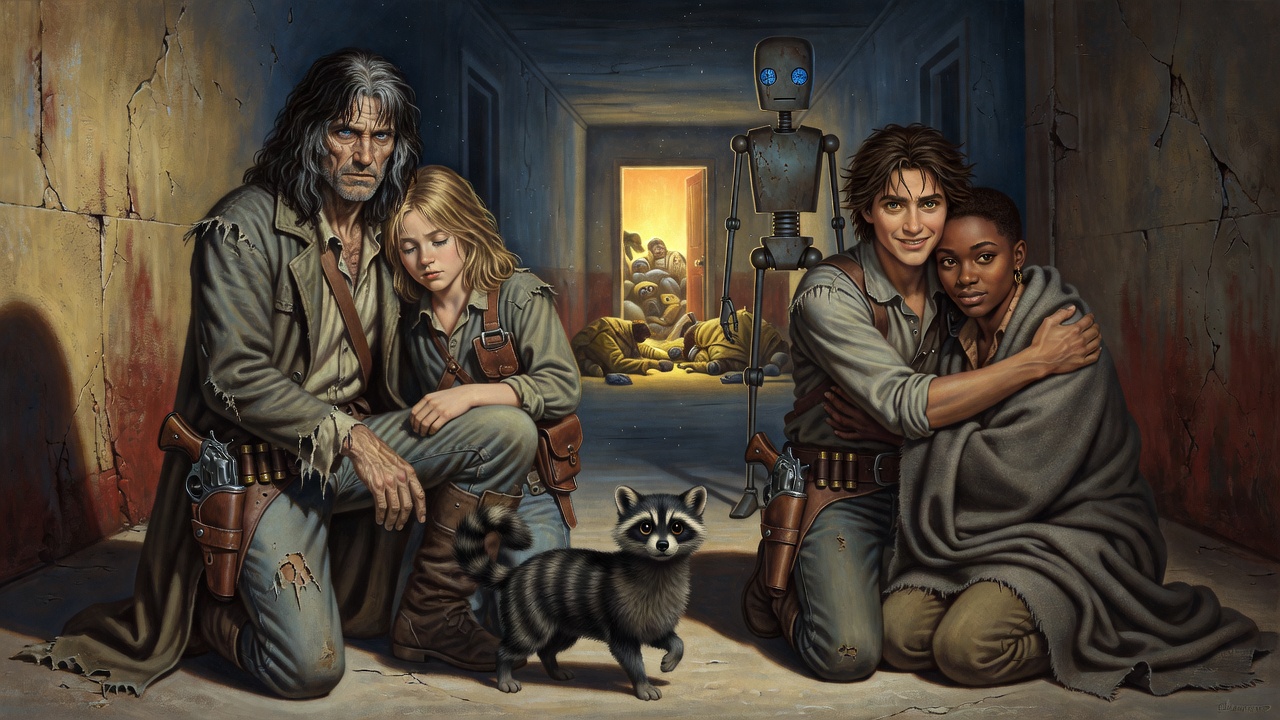
Roland kneeling to embrace Jake while Eddie holds Susannah and a billy-bumbler dances at their feet beside a glowing doorway.
VII · 9 My Father Has Come Roland and Eddie reach Fedic the long way: through a door behind the Maine house called Cara Laughs and out into the corridor under the Pig, behind Flaherty’s posse, whom they kill. The door’s word is “chassit.” Eddie reaches through for Susannah’s hands, and Jake, in the gunslinger’s arms with his eyes shut, thinks: “My father has come for me.”
Part 2

Part Two: Blue Heaven


Four levels below Nigel’s quarters, Mordred feeds on what the robot brings him. Walter o’Dim arrives in a thinking cap of woven wire, eating peanut-butter crackers, meaning to kill the baby and take the heel-mark as his key to the Tower. He never gets the chance. Mordred has already slipped past the wire; he runs Walter like a puppet, makes him put out his own eyes and tear out his tongue, and eats him. The man in black who fled across the desert in the cycle’s first sentence ends as an infant’s meal.

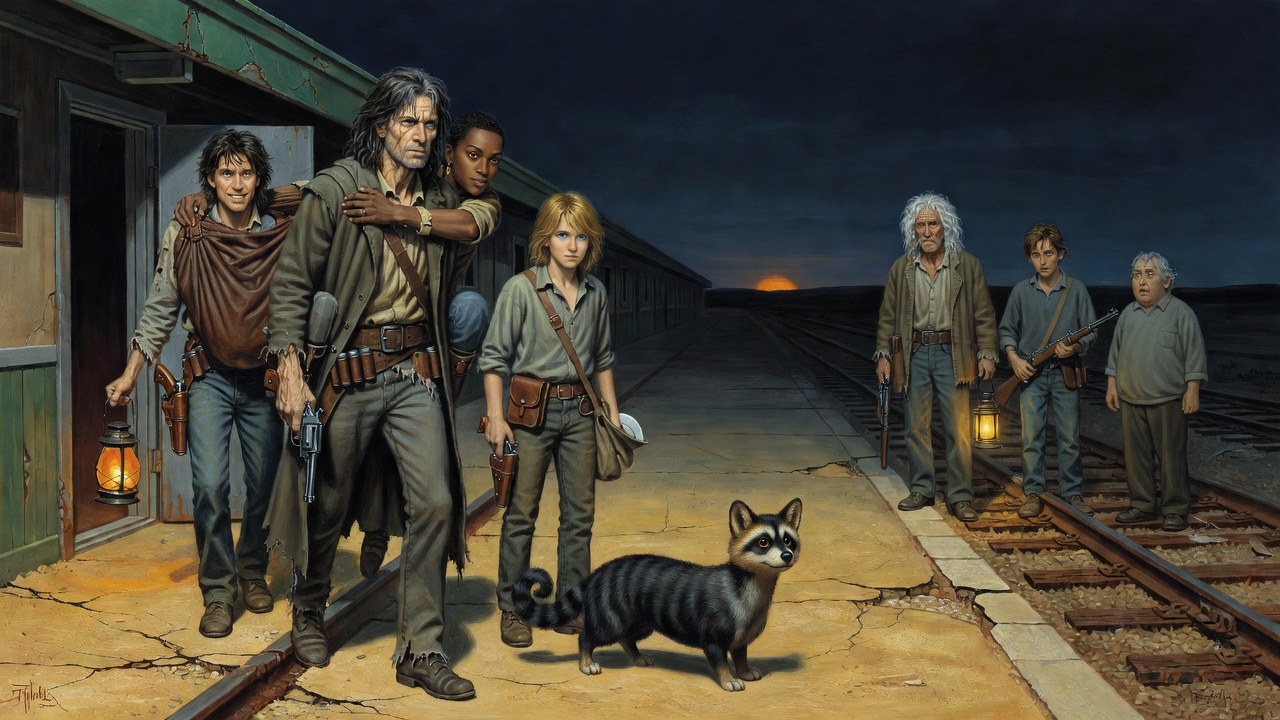
The tet goes through a steel door, Susannah riding a kitchen cart, into Thunderclap: a dark, poisoned country whose one light is an artificial sun on a timer. Three armed men meet them at the station: Ted Brautigan, Dinky Earnshaw and a silent man introduced as Stanley. In a cave on the butte Steek-Tete, Roland looks at him and asks whether he is Sheemie that was. The tavern boy from Mejis, now a middle-aged Breaker who can teleport, breaks down; he has carried Susan Delgado’s death for decades.

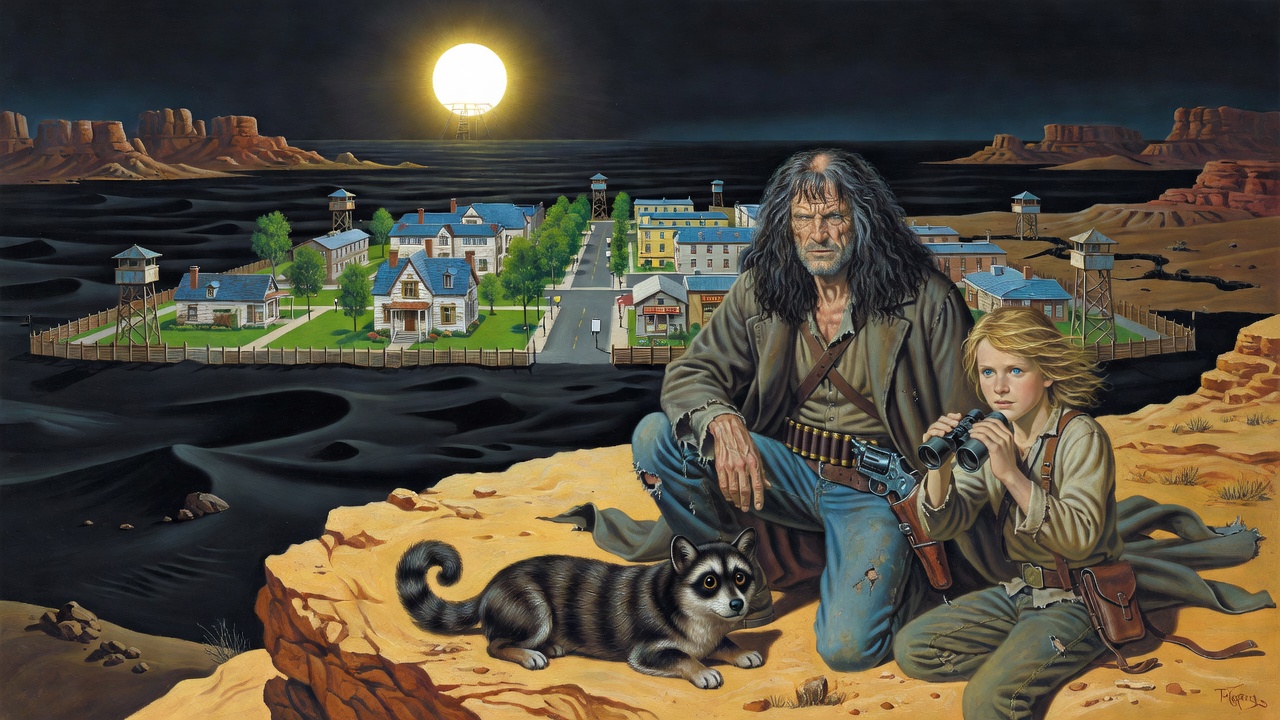
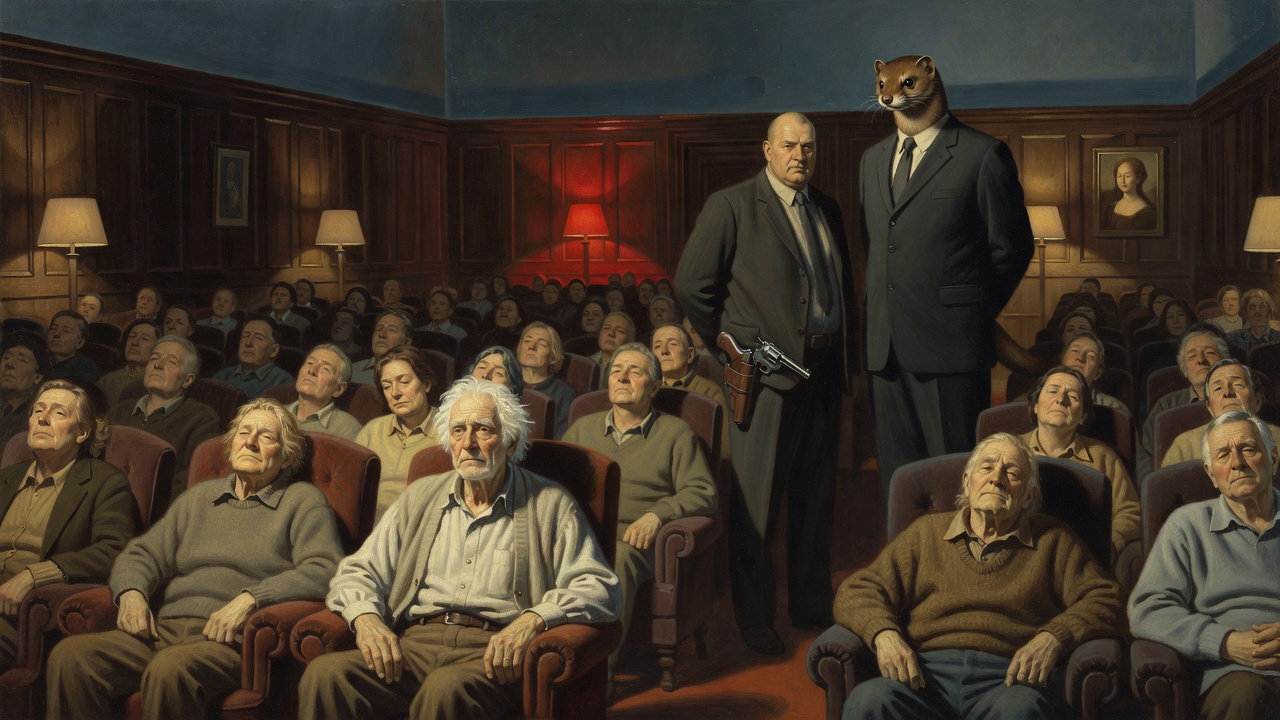
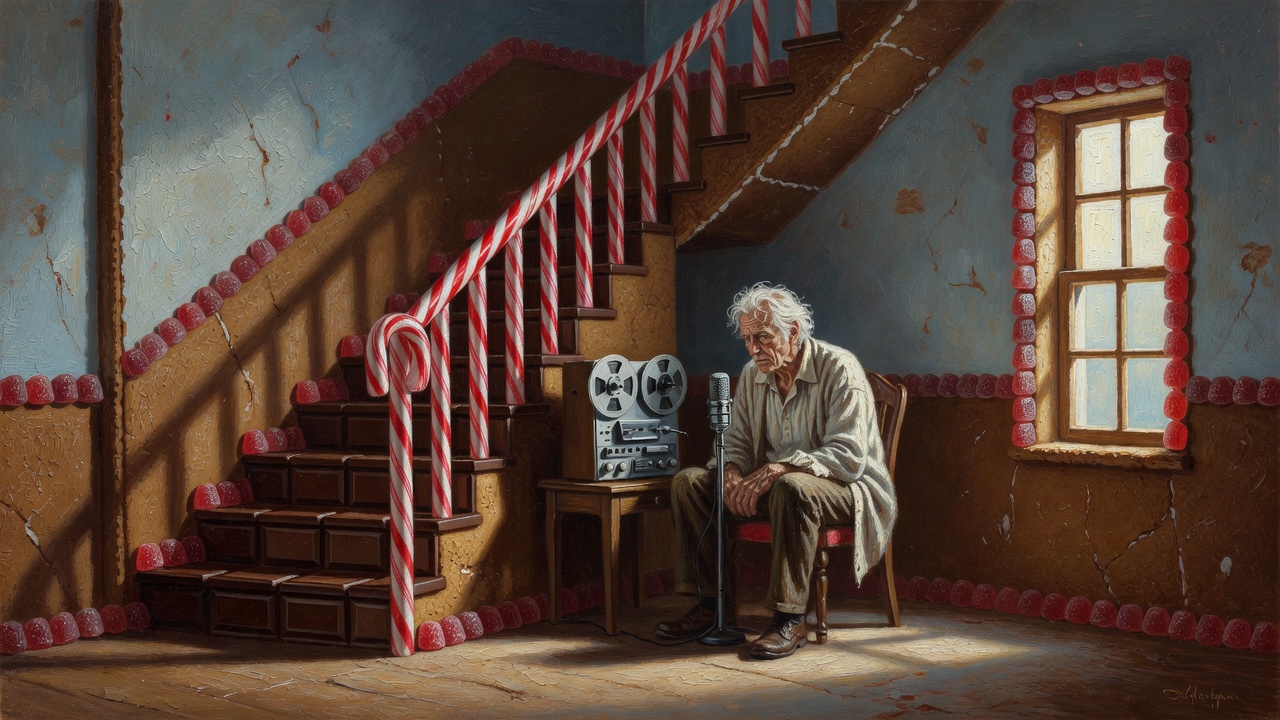
Below them is Algul Siento, Blue Heaven, the Devar-Toi: a fenced college town with blue-tiled roofs and green lawns in a black desert, and some three hundred Breakers dosed with pills refined from the brains of the Calla’s children. In the Study they sit in armchairs and chew at the Beam. Four of the six Beams are gone; the Bear-Turtle is visibly bending; perhaps a month remains. The Master is Pimli Prentiss, once a guard at Attica, who prays on his knees in his bathroom; his security chief is Finli o’ Tego, a seven-foot taheen with a weasel’s head. Ted’s tapes, recorded in a pocket outside time called the Gingerbread House, carry a guard’s leaked secret: a mortal guardian of Gan’s Beam named Stephen King is to be killed by a minivan near Lovell, Maine, in June 1999.

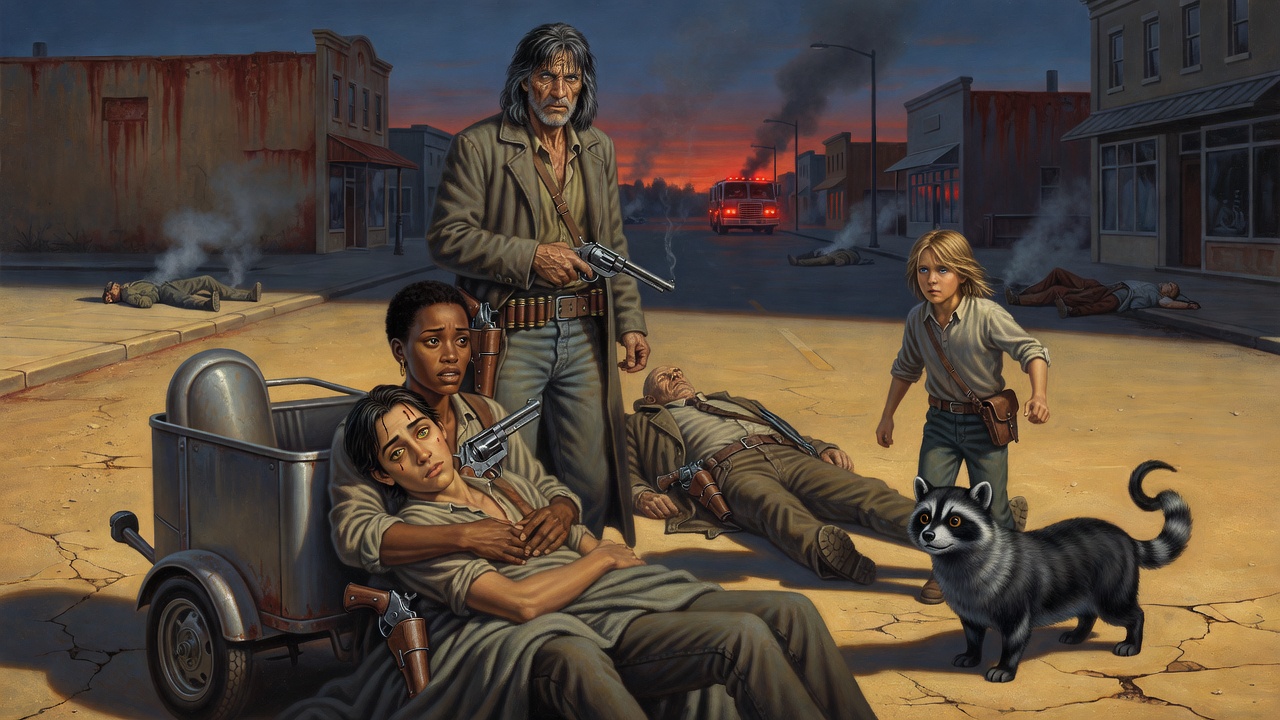
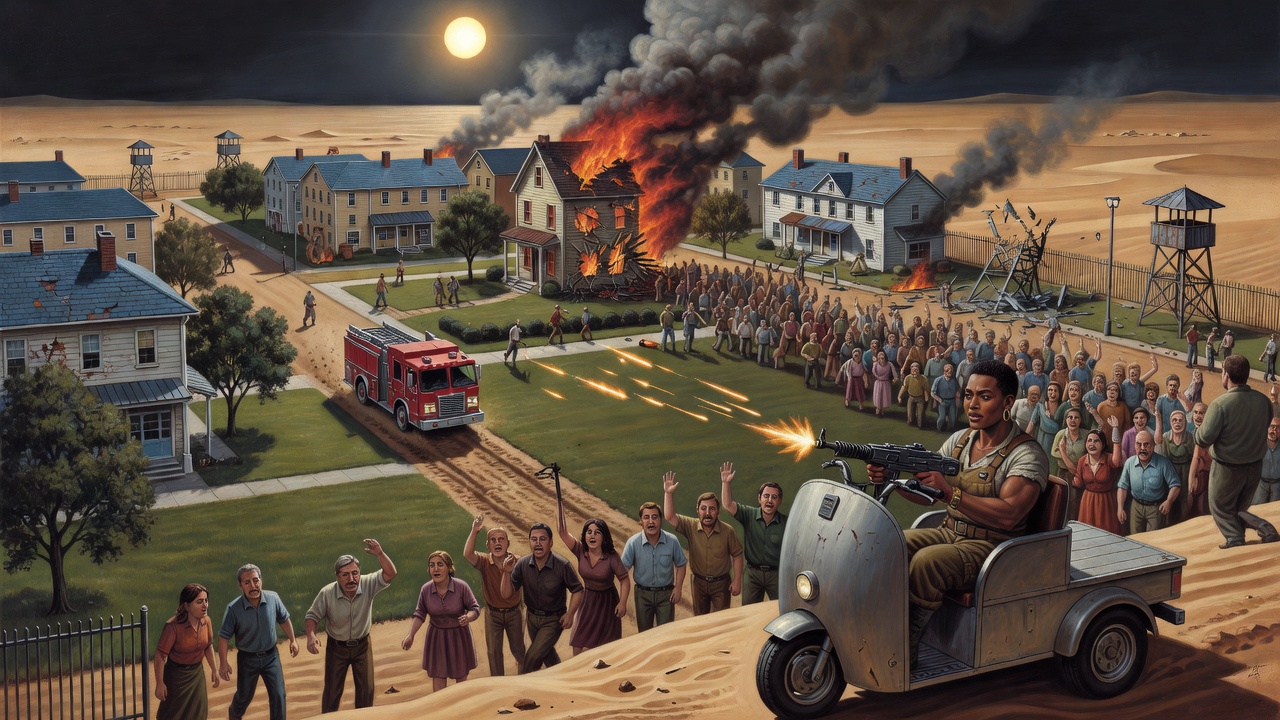
Before the fight Roland gives each of the others water and a kiss, and every one of them feels ka-shume, the foreknowledge of a breaking. At shift change the sneetches planted under Damli House and the Master’s house go off together; Dinky tells the Breakers to go south with their hands up; Susannah strips the watchtowers from her Cruisin Trike; Roland, Eddie and Jake shoot from the shops. Roland puts a bullet in Pimli’s head, but a drunk’s stagger spoils the shot. Eddie finishes Finli, and Pimli, up on one elbow, shoots Eddie above the eye.

Eddie dies slowly that evening in Corbett Hall with Susannah beside him. To her, the clearing at the end of the path; to Jake, watch for Mordred and for someone called Dandelo; to Roland, “Thank you for my second chance” — and then “Father.” Susannah dresses him in white. Sheemie opens one more door, and Roland, Jake and Oy step out into the afternoon of June 19, 1999, at the East Stoneham General Store.
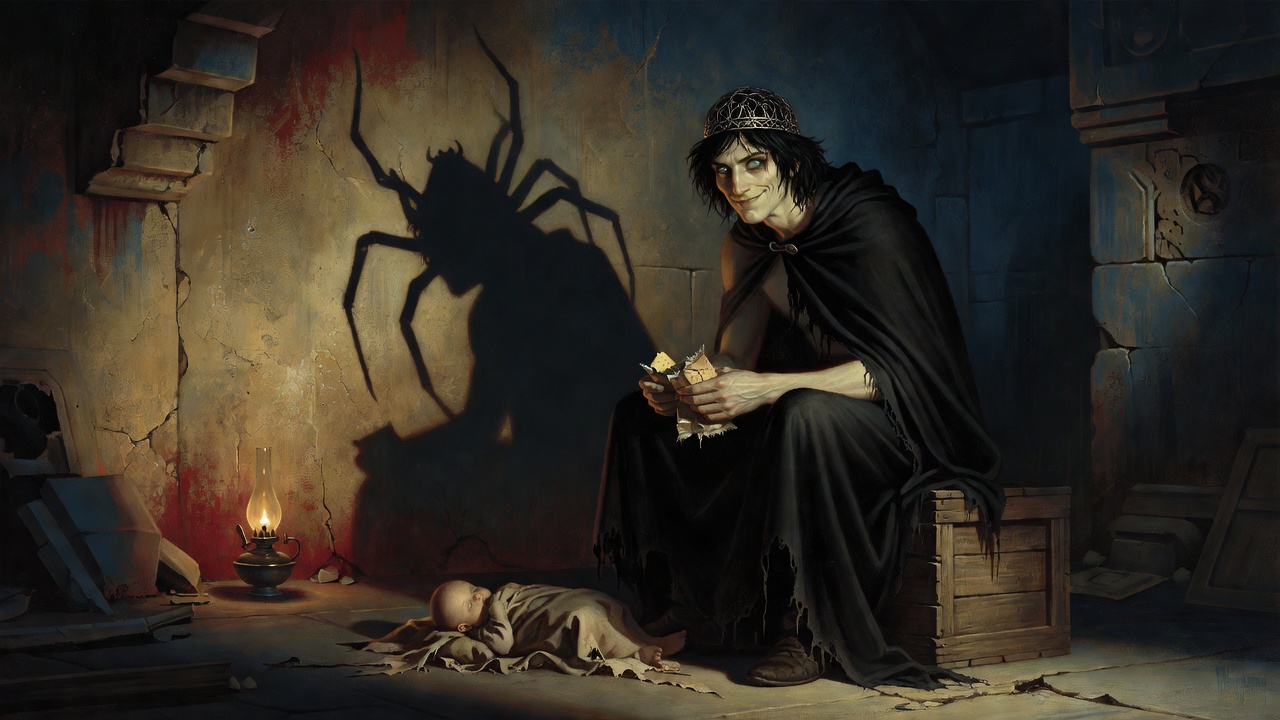
Walter in black, a cap of woven wire on his head, smiling at a bundled infant by lamplight while a huge spider’s shadow rises on the wall behind him.
VII · 10 The Shining Wire Walter o’Dim arrives in Fedic in a thinking cap of woven wire, eating peanut-butter crackers, meaning to kill the baby and take the heel-mark, his key to the Tower. The cap does nothing. Mordred has already slipped past it and runs Walter like a puppet. The man in black who fled across the desert on the cycle’s first page ends as an infant’s meal, and the book gives him, in passing, a birth name: Walter Padick.
The ka-tet stepping out of a steel door onto a dark railway platform where three men with lanterns and rifles wait.
VII · 11 Thunderclap Station Oy leads the tet to a door on Fedic’s lower level, and they come out at Thunderclap Station, in a lightless, poisoned country whose only sun is artificial and six miles off. Three armed men meet them: Ted Brautigan, Dinky Earnshaw and a silent third introduced as Stanley. One of them asks Jake whether he is Bobby Garfield. He is not. Part Two, chapter four: The Door into Thunderclap.
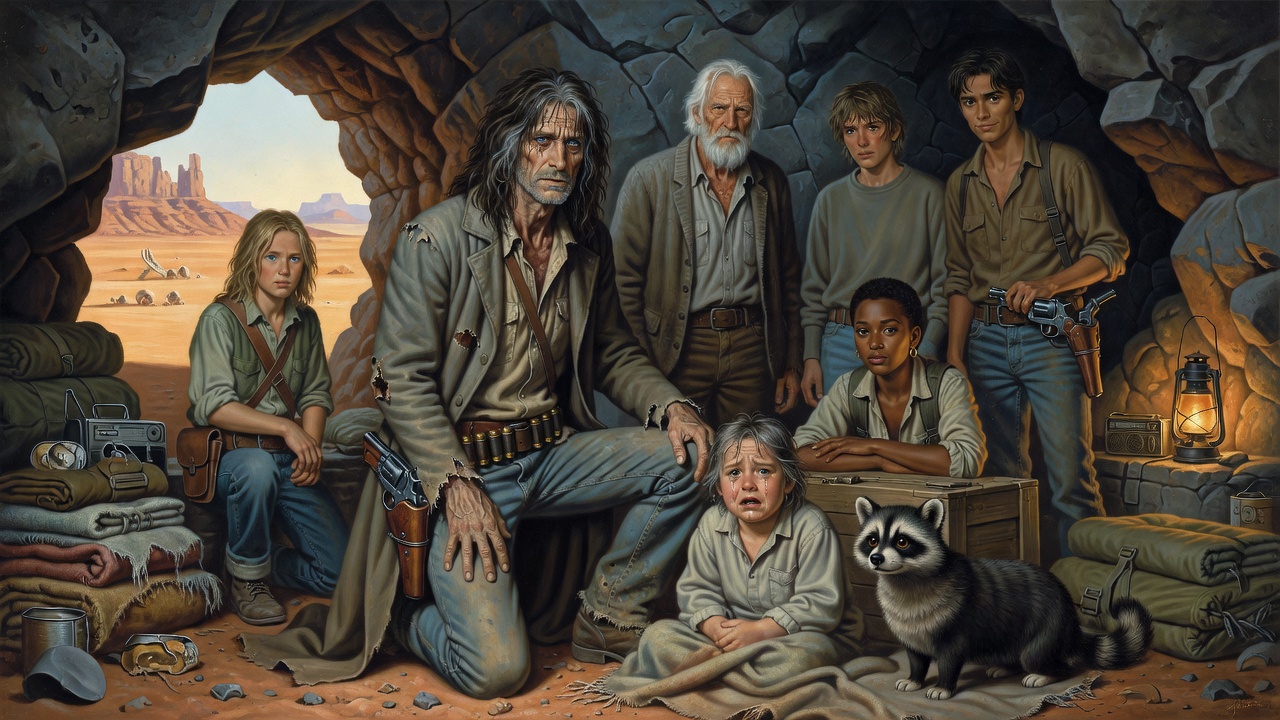
Roland kneeling with his hands on the shoulders of a weeping middle-aged man in a cave lit by a lantern, with the rest of the ka-tet watching.
VII · 12 Sheemie That Was In the cave on the butte Steek-Tete, among blankets, army sleeping bags and a tape recorder, Roland looks at the silent man and asks if he is Stanley, son of Stanley — Sheemie that was. The tavern boy from Mejis, who hero-worshipped three young gunslingers there, is now a middle-aged Breaker who can open doors between worlds. He has carried Susan Delgado’s death the whole time.
A fenced green college town under a glaring artificial sun in the middle of a black desert, seen from a high butte where two small figures watch.
VII · 13 Blue Heaven Algul Siento, Blue Heaven, the Devar-Toi: one place under three names, a fenced American college town in a black desert, blue-tiled roofs and green lawns under a sun on a timer. Five dormitories hold some three hundred Breakers who take dozens of pills a day. From here they are chewing through the last Beams. Four of the six are already gone, the Bear-Turtle is bending, and by its keepers’ reckoning perhaps a month remains.
A panelled reading room full of people in armchairs with their eyes closed while a balding man and a weasel-headed figure watch from the back.
VII · 14 The Study The Study in Damli House, where the Breakers sit in armchairs and do their work by thinking, Ted’s presence multiplying their force; on the wall hangs the real Mona Lisa. Their keepers are the Master of Blue Heaven, Pimli Prentiss, once an Attica guard who answered a newspaper ad, and his security chief Finli o’ Tego, seven feet of taheen with a weasel’s head. They are the most reasonable villains in the cycle, which does not help them.
An old man speaking into a tape recorder at a small table inside a room made of gingerbread and candy.
VII · 15 Notes from the Gingerbread House Ted’s tapes, which the tet plays in the cave, were recorded in the Gingerbread House, a candy-walled room Sheemie can open outside of time. Born in 1898, Ted killed a man in Ohio with a thought in 1935, answered an ad for the job of a lifetime, and took a one-way trip to Thunderclap in 1955. The tapes also carry a leaked secret: a writer named Stephen King is to die under a minivan near Lovell, Maine, in June 1999.
A wide dawn scene of a burning gabled house, a collapsing watchtower, a crowd running with raised hands and a woman firing a machine gun from a three-wheeled cart.
VII · 16 The Attack on Algul Siento Shift change. The sneetches under Damli House and the Master’s house go off together, Dinky tells the Breakers to go south with their hands up, and Susannah opens up from the north fence on her Cruisin Trike while Roland, Eddie and Jake shoot from a dress shop, a box office and a dead Ford. A robot fire engine kills guards and Breakers alike. A window shot out in Corbett Hall leaves a splinter of glass in Sheemie’s foot, and that splinter will kill him.
Susannah holding a wounded Eddie across her lap on a smoky street while Roland stands over a fallen man with a smoking revolver.
VII · 17 The Shot Nobody Saw Roland shoots Pimli in the head, but a drunk’s stagger spoils it, and the Master lies still while the ka-tet embraces in the smoke for the last time. Eddie finishes Finli, who has called them yellowback dogs. Then Pimli rises on one elbow and shoots Eddie above the eye. Eddie takes three steps and falls. Roland kills Pimli properly. Part Two, chapter eleven, and the breaking the whole tet has felt coming.
Eddie lying bandaged on a dormitory bed at dusk with Susannah holding his hand, Jake and a billy-bumbler at the foot of the bed and Roland at the window.
VII · 18 In the Clearing Eddie Dean dies slowly that evening in a room in Corbett Hall, reciting the gunslinger’s creed in his delirium and lucid at the end. To Susannah he says where he is going: “In the clearing, the one at the end of the path.” To Jake, watch for Mordred and for someone called Dandelo. To Roland, thanks for his second chance, and then one more word: Father.
Roland, Jake and a billy-bumbler standing in the gravel lot of a Maine general store in a gold haze.
VII · 19 Sheemie’s Door Susannah dresses Eddie in white. Roland tells the Breakers they may stay in comfort or walk to the Callas and beg pardon for what they fed on, and leaves orders that Susannah be put on the train to Fedic if he and Jake are not back in two days. Then Sheemie opens one more door, and the gunslinger, the boy and the bumbler step out into 3:41 p.m. on June 19, 1999, in front of the East Stoneham General Store.
Part 3

Part Three: In This Haze of Green and Gold


Roland commandeers a summer visitor, Irene Tassenbaum, to drive him, and calms her with the hypnotic eye that makes her hear singing. On Route 7, Bryan Smith’s minivan, two rottweilers aboard and its driver on pills and out for candy bars, climbs toward the blind crest of Slab City Hill. Stephen King is walking on the far side, thinking about the Dark Tower book he keeps not writing. Roland learns that one of them must die for King and means it to be himself. Then his hip fails as he leaves the truck. Jake vaults him, tackles the writer, and takes the van. His chest is crushed. King goes down with a broken leg.

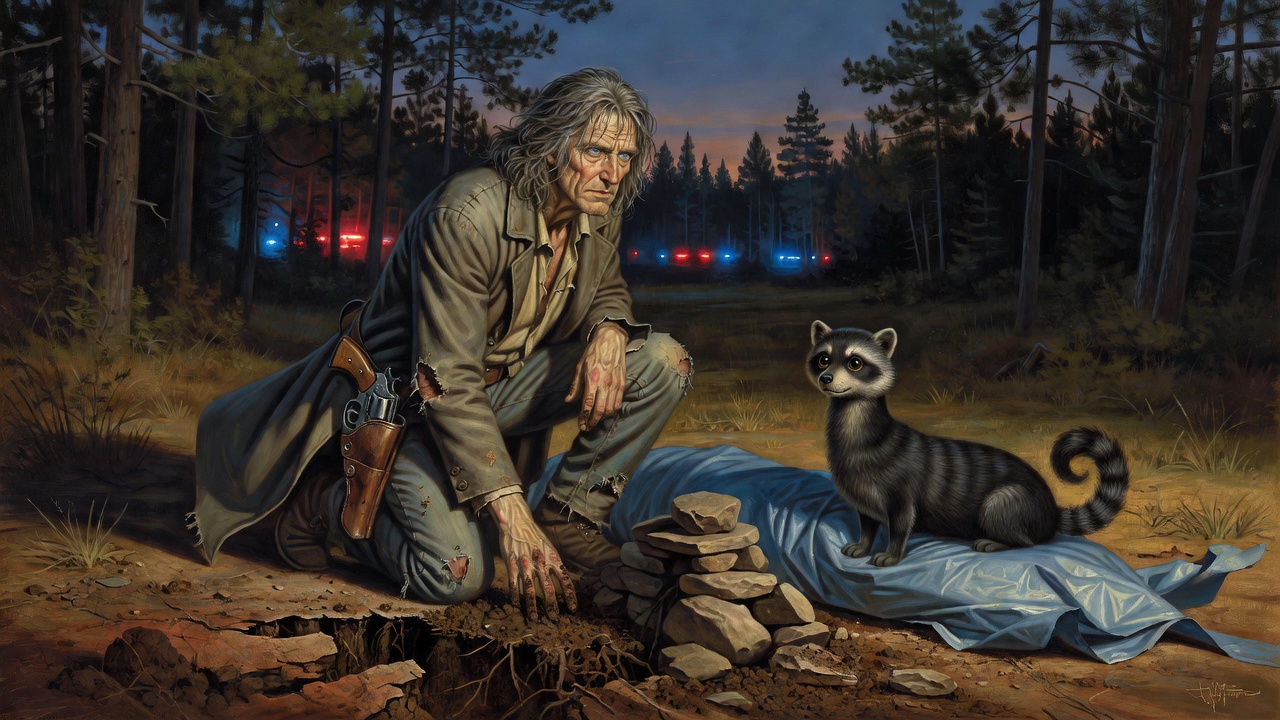
Irene picks up the gun Roland dropped and makes Smith back off the writer. Roland kneels to the broken man, hypnotizes him, and orders him to sing until the song is done. Jake dies while Roland is doing this; his message, through Irene, is that he loves his father. Roland weeps for the first time in years, carries the boy into the pines, digs with his hands as the sirens come, wraps him in a blue tarp under a cairn of stones and says Cuthbert’s prayer: “Each man owes a death. This is Jake. Give him peace.” He asks Irene to come back and plant something. A rose.

She drives him and Oy south, two nights on the road. At 2 Hammarskjöld Plaza the Tet Corporation has built a black tower around the rose, which grows in a lobby garden floored in rose marble. Moses Carver, his daughter Marian and Nancy Deepneau receive him; he shows his ID by unwrapping a revolver. Carver returns Aunt Talitha’s cross; Nancy gives him King’s Insomnia. Forehead to forehead with Oy, Roland hears Jake one last time with a message from Eddie: watch for Dandelo. Then back past the crime-scene tape at the Dixie Pig to the one-way door.

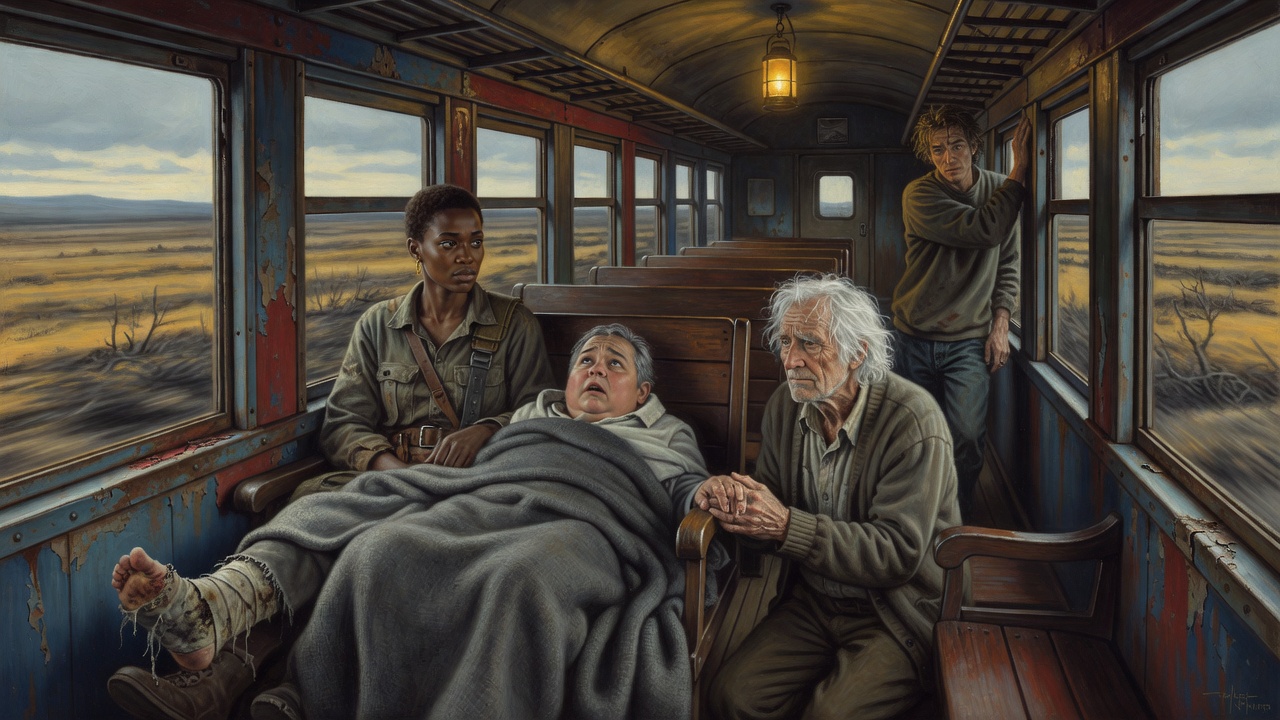
In Fedic, Susannah’s train has shed cars on a rotten trestle and Sheemie has died on the way of a foot cut by battle glass and poisoned by Thunderclap’s air. She waits three days outside the Gin-Puppy Saloon on her Trike; then Roland comes down the empty street with Oy in his arms, and she kisses him on the mouth, not the cheek.
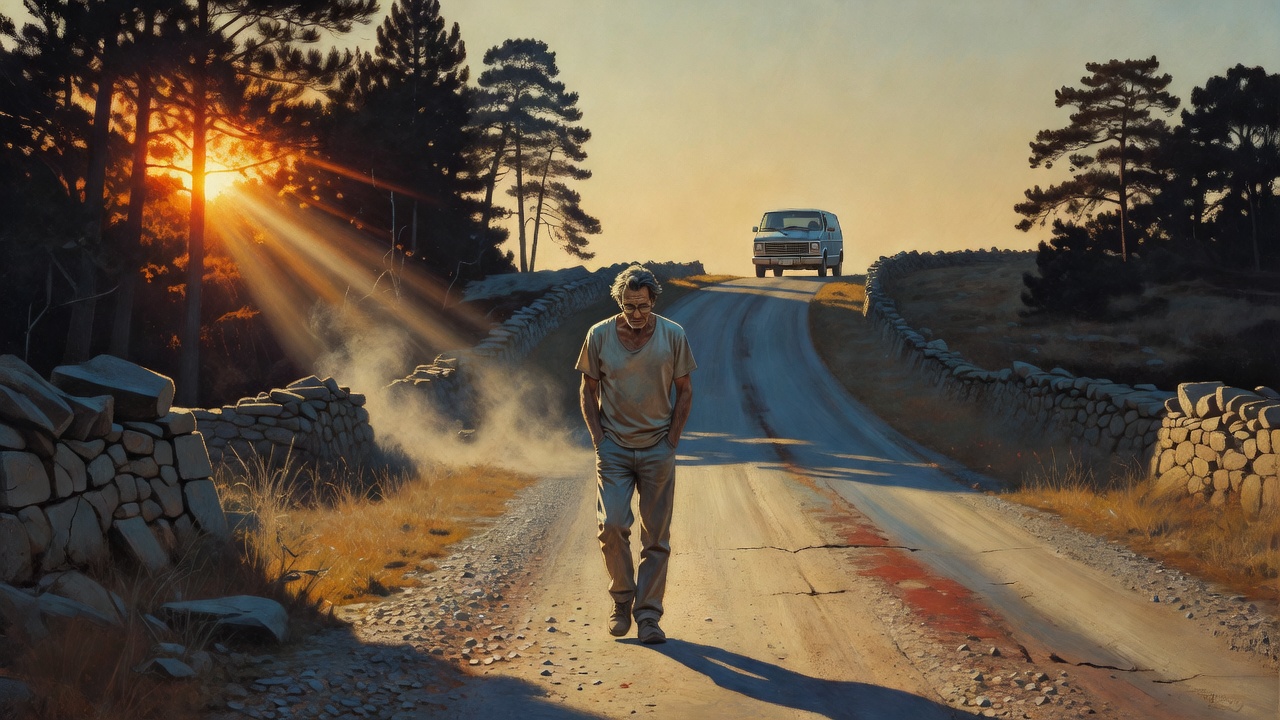
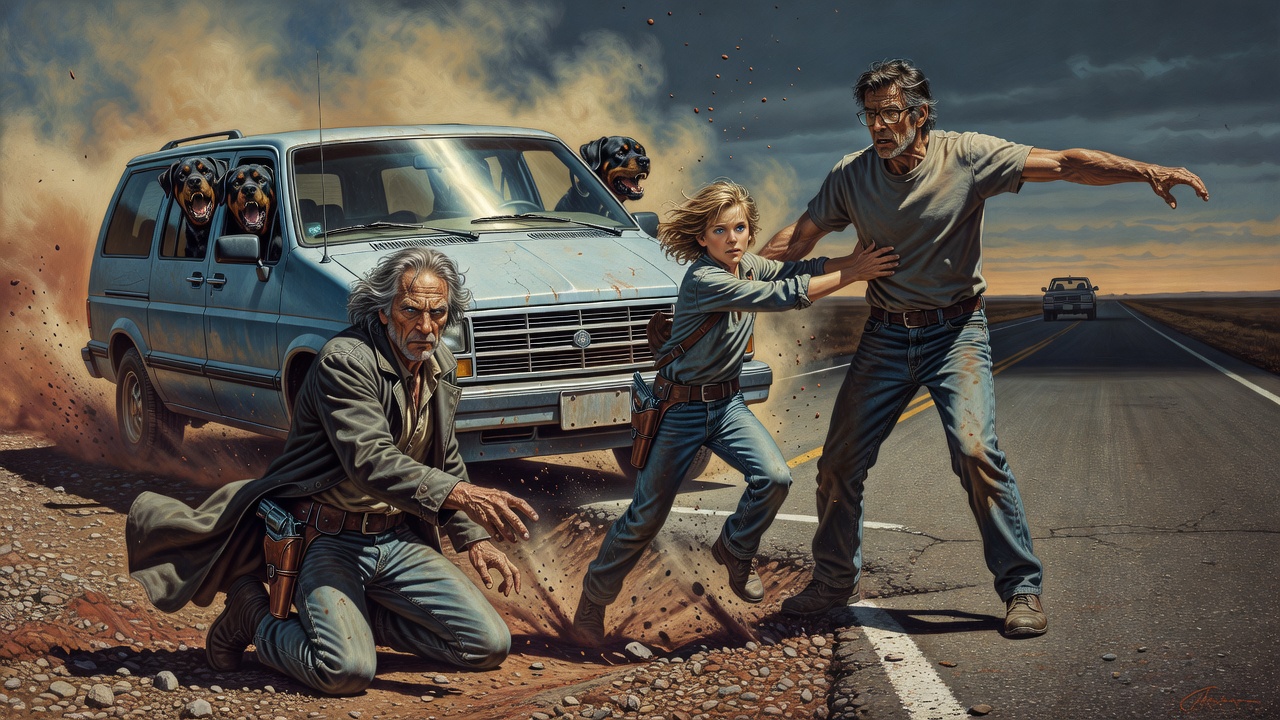
A tall man with glasses walking alone on the shoulder of a country road while the roof of a light-blue minivan appears over the hill behind him.
VII · 20 The Writer on the Road Route 7, the blind crest of Slab City Hill by Turtleback Lake. Stephen King is out for his afternoon walk, thinking about the Dark Tower book he keeps not writing. Headed for the same crest is Bryan Smith’s minivan, with two rottweilers aboard, a cooler of meat behind the seat and a driver on pills who has already nearly hit two women picking raspberries. The real accident happened on Route 5; the book moves it to Route 7.
A boy in mid-leap knocking a tall man sideways as a light-blue minivan swerves onto the road shoulder, with Roland fallen on the asphalt behind.
VII · 21 Slab City Hill Roland has learned that one of them must die for the writer, and has decided it will be himself. Then his hip goes out from under him as he leaves the truck. Jake vaults him, tackles King, and takes the van: chest crushed, bleeding from the ears and mouth. King goes down with a broken leg. Jake’s first order, lying in the grass, is that Roland see to the writer.
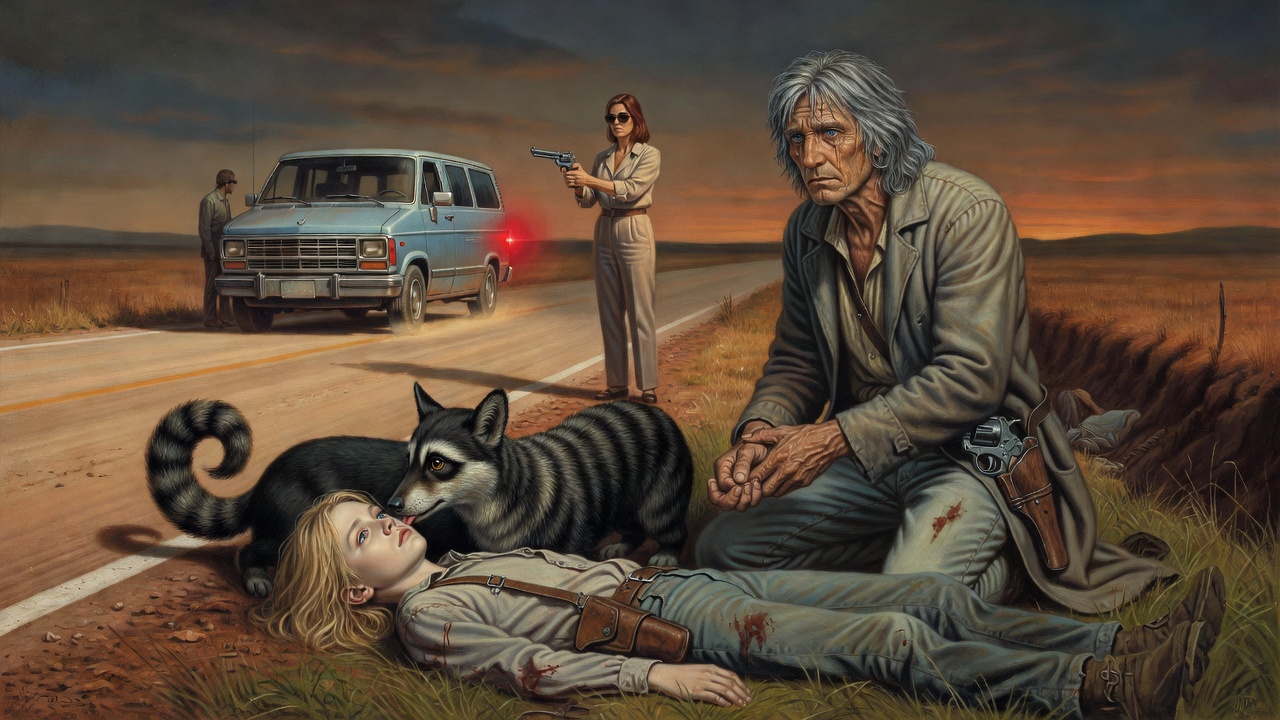
Jake lying still in roadside grass with a billy-bumbler licking his face and Roland kneeling beside him, while a woman in the distance holds a revolver on a man by a van.
VII · 22 Tell My Father Irene picks up the gun Roland dropped and makes Smith back the van off King. Roland kneels to the broken man, who is not Gan but a singer of Gan, hypnotizes him and orders him to listen for the Song of the Turtle and sing until it is done. Jake dies while he is doing it. His message, through Irene: “Tell my father I love him.” Oy licks the blood from his face. Roland weeps for the first time in years.
Roland digging in the earth with his hands in a dusk clearing beside a tarp-wrapped body and a half-built cairn, watched by a billy-bumbler.
VII · 23 Each Man Owes a Death He carries the boy into the pines off Route 7 and digs with his hands while the sirens arrive, wraps him in a blue tarp and covers him with stones. The prayer is Cuthbert’s: “Each man owes a death. This is Jake. Give him peace.” Oy says the only thing he can, which is that he aches. When Irene comes back in her car Roland asks her to plant something here. A rose. Jake has now died three times in the cycle, and this is the one that holds.
A middle-aged man lying along a train seat with his head in Susannah’s lap, one foot bandaged, while two men kneel and stand beside them in a rocking carriage.
VII · 24 The Spirit of Topeka While Roland is in New York, Susannah rides the Spirit of Topeka toward Fedic, shedding cars on a rotten trestle at three hundred miles an hour. Sheemie dies on the way of the cut in his foot, septic in Thunderclap’s air, lucid at the end about Roland and Susan Delgado. Ted and Dinky set out on foot for Calla Bryn Sturgis and the Doorway Cave. The splinter from Corbett Hall has done its work.
Susannah on a three-wheeled cart in an empty western street at dusk as Roland walks toward her carrying a billy-bumbler in his arms.
VII · 25 No Halfway Thing Roland shows his ID at 2 Hammarskjöld Plaza by unwrapping a revolver, takes back Aunt Talitha’s cross from Moses Carver, is handed King’s Insomnia, hears Jake one last time through Oy with Eddie’s warning about Dandelo, and goes back down past the crime-scene tape at the Dixie Pig. Susannah has waited three days outside the Gin-Puppy Saloon on her Trike. She kisses him on the mouth, not the cheek.
Part 4

Part Four: The White Lands of Empathica


Under Castle Discordia the passage is a tunnel of doors onto bad whens, the lights dying one by one, and something comes out of the dark: a segmented worm with a face of eyes, four pincered arms and a mouth of tentacles. Roland carries Susannah; she holds it off with burning Sterno and old bones. Beyond the castle, in a Quonset hut, they find tinned food and the dogcart she saw in Mia’s visions. Roland tears out its dead motor and pulls it himself. It is christened Ho Fat’s Luxury Taxi.

The Badlands take nearly a month: bare rock, forty-five degrees in summer clothes, Roland thin as a whip and sulky, Susannah dreaming that Mordred’s a-hungry. At Le Casse Roi Russe, the Crimson King’s red castle, three identical Stephen Kings wait on the bridge with baskets and a story: the King, learning the Beams would heal, had his court kill themselves, smashed what was left of the Wizard’s Rainbow, killed himself with a sharpened spoon and went on to the Tower undead. The baskets hold rotting limbs and snakes. Roland and Susannah kill two of the three; the last drops his glamour and is Austin Cornwell, an old ad man from upstate New York, spared to carry a message to Mordred. Mordred, now a boy of about nine and starving, lets the rooks have Cornwell’s eyes and eats the rest.

A sore opens at the corner of Susannah’s mouth. Oy drives deer to her guns, and three days of brain-tanning make coats, leggings and mittens. Mordred follows them with no coat, drinking his own blood. Then three weeks of five-foot snow on home-made snowshoes, a plowed road, two signposts — Odd’s Lane and Tower Road — and a limping, one-eyed old man called Joe Collins with a blind horse named Lippy and a cottage with electricity and a Polaroid of the Tower. After roast chicken Roland asks for his act. Collins kills. Roland laughs until he cannot breathe. Susannah’s sore bursts and she escapes to the bathroom, where a note on the towel shelf tells her to relax, the deus ex machina is coming, and spells out that Odd Lane is Dandelo. She comes out to a host growing younger with every laugh, his face sliding toward a clown’s, and shoots him with Roland’s gun. The cottage drops its glamour and is a shabby, dirty hut. In a cell under the trapdoor sits a scrawny mute boy with sketch pads and pencils whose erasers have been cut off: Patrick Danville, from Insomnia. A robot plowman called Stuttering Bill shelters them through a three-day blizzard.
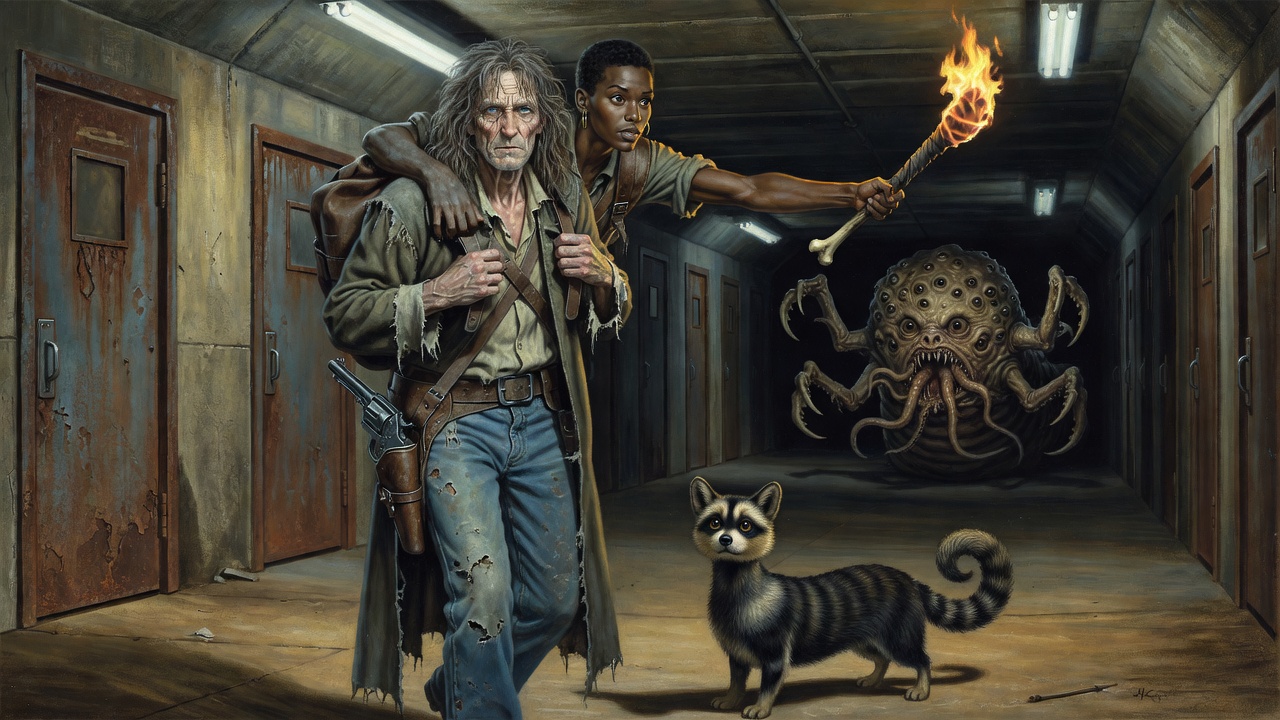
Roland carrying Susannah on his back through a dark tunnel while she thrusts out a burning bone at a huge segmented creature with a face of eyes.
VII · 26 Under Castle Discordia The passage under Castle Discordia is a tunnel of doors onto bad whens, with the ceiling lights dying one by one. Out of the dark comes a todash thing, a segmented worm with a lumpy face crowded with eyes, four pincered arms and a mouth of tentacles, which shies from light. Carried by Roland, Susannah burns three cans of Sterno and some old bones to hold it off, and teases it until Roland asks whether her mother never told her not to tease the animals.
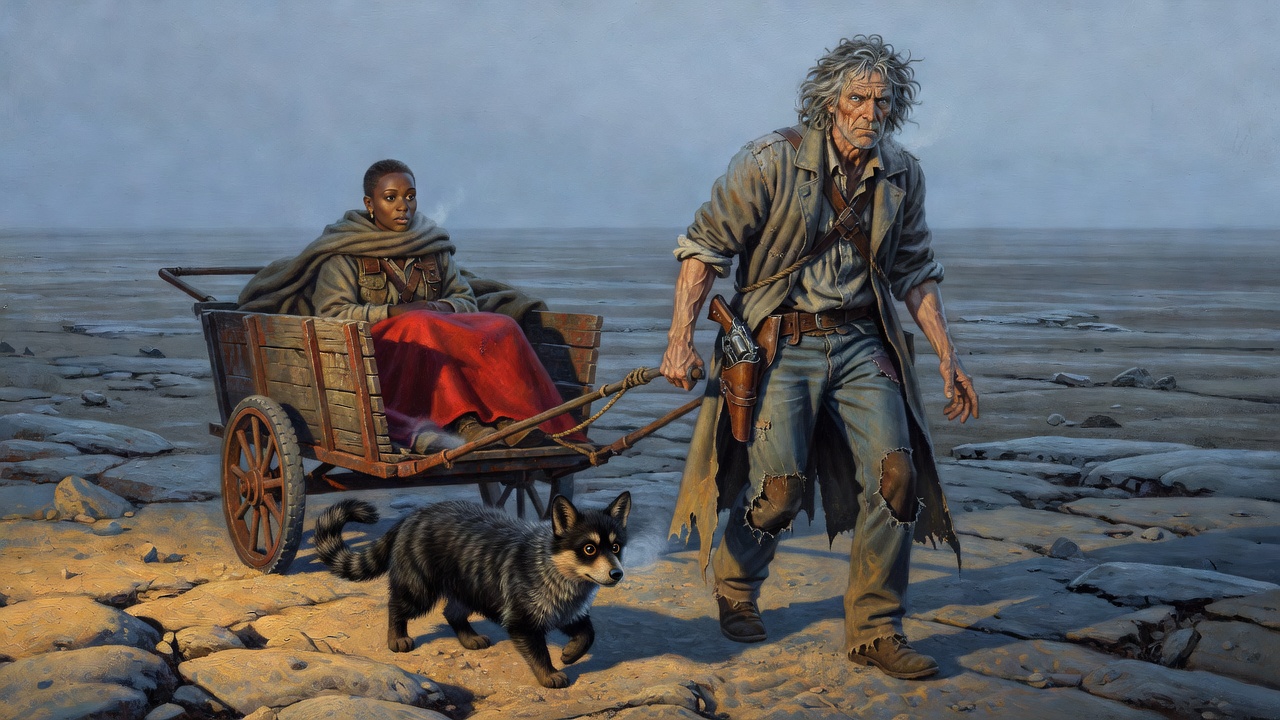
Roland in a rope harness pulling a small two-wheeled cart with Susannah bundled in it across an empty grey rock plain, a billy-bumbler trotting beside.
VII · 27 Ho Fat’s Luxury Taxi In a Quonset hut past the castle they find tinned food and the dogcart Susannah saw in Mia’s visions. Roland rips out its dead motor and pulls it himself. It is christened Ho Fat’s Luxury Taxi, and will go through three editions before the roses. The Badlands take nearly a month: bare rock, forty-five degrees in summer clothes, no devil grass, Roland thin as a whip and uncharacteristically sulky, Susannah dreaming that Mordred’s a-hungry.
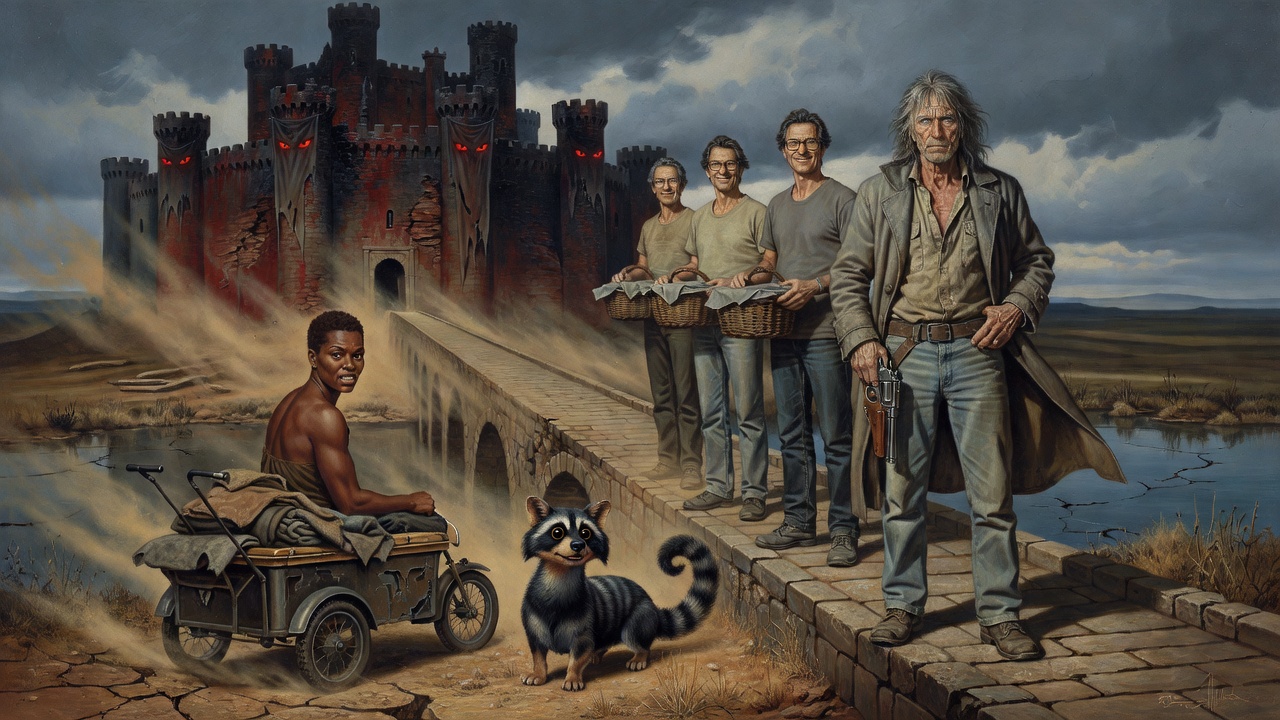
Three identical tall men with glasses and wicker baskets standing on a castle bridge under banners painted with red eyes, facing Roland, Susannah in her cart and a billy-bumbler.
VII · 28 Le Casse Roi Russe Castle Town wears old campaign posters and painted red eyes, and a banner welcoming Roland and Susannah, Oy too. On the bridge of Le Casse Roi Russe three identical Stephen Kings offer baskets and a story: the King, learning the Beams would heal, made his court kill themselves, smashed the Wizard’s Rainbow, killed himself with a sharpened spoon and went on to the Tower undead. The baskets hold limbs and snakes. Two of the three die; the third is an old ad man, spared to carry a message to Mordred.
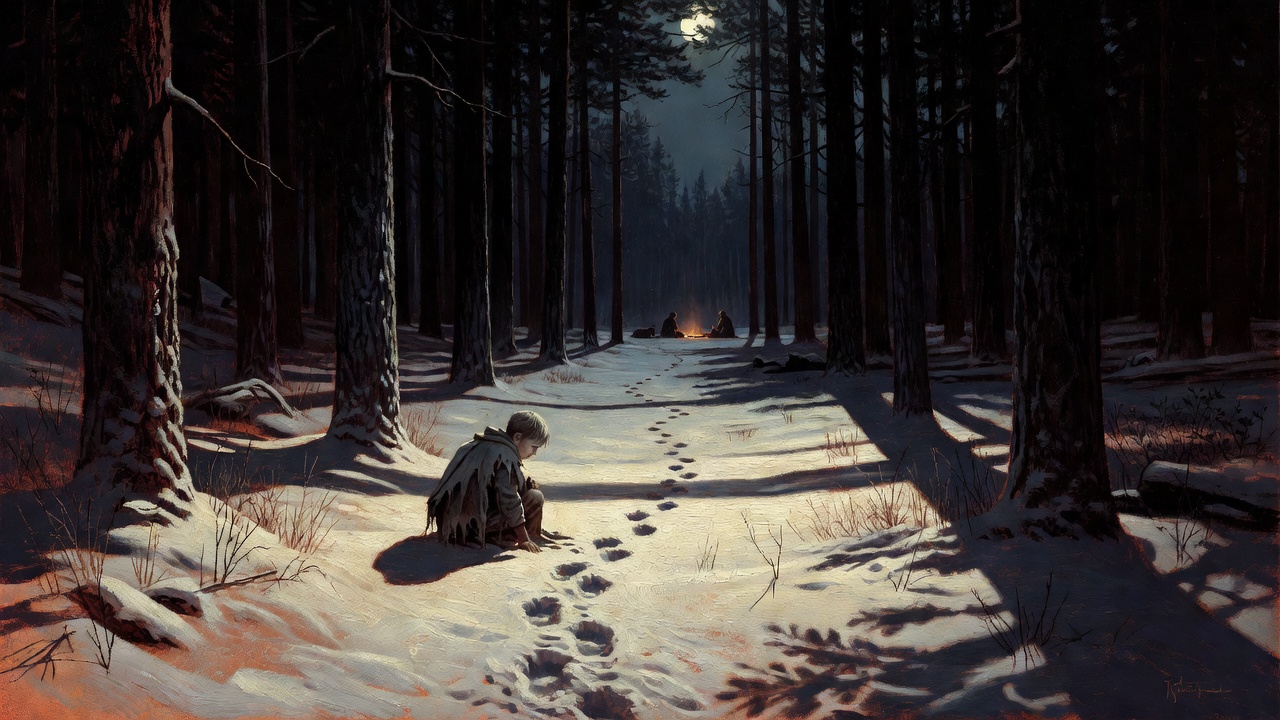
A ragged boy crouched in moonlit snow with his mouth to his own wrist, a small campfire with two figures far off through the trees.
VII · 29 Mordred’s a-Hungry Mordred follows them out of the Badlands and into the snow with no coat, nothing to eat but the limbs he carried from the castle, and his own blood to drink. He is about nine now, grown by what he has eaten, and his father has sent word by the ad man that he is old and crafty while the boy is but young. The book keeps cutting to him, cold and furious and pitiable, which is the most generous thing it does for anybody on the red side.
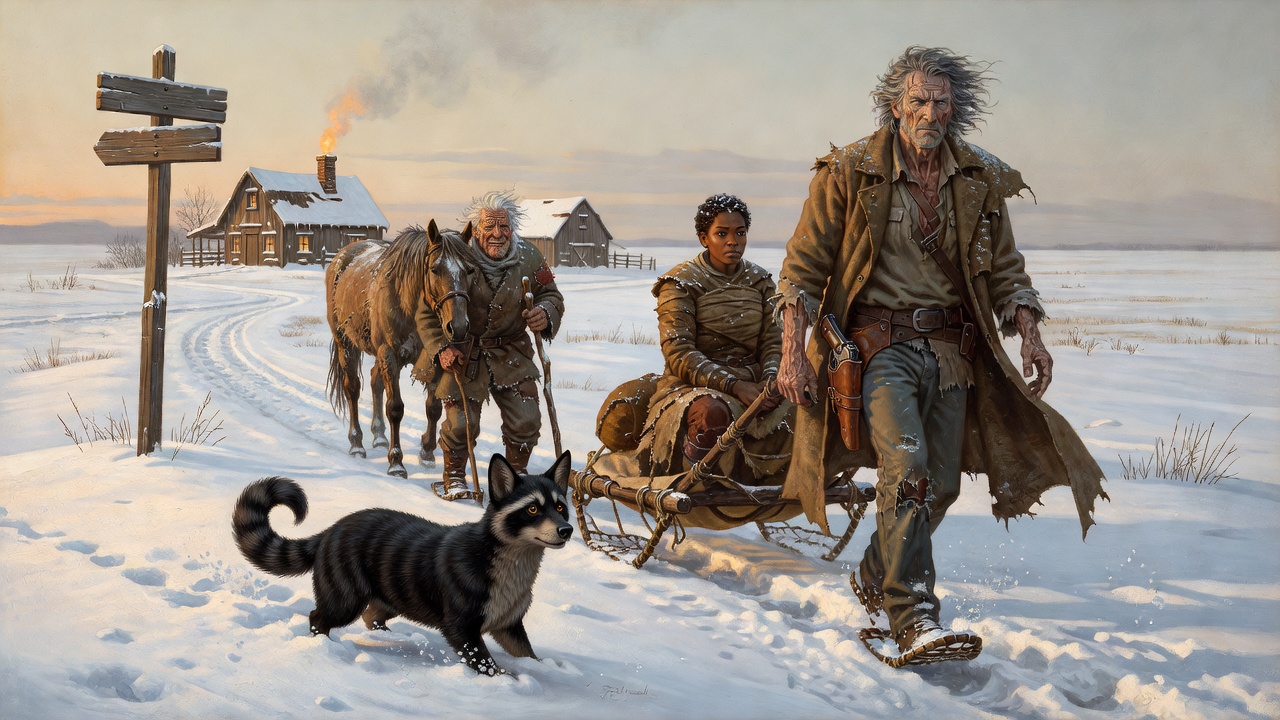
A snowbound crossroads with a signpost and a cottage, where a limping old man with a blind horse meets Roland on snowshoes hauling Susannah behind him.
VII · 30 Odd’s Lane Three weeks of five-foot snow on home-made snowshoes, and then a plowed road and two signs where Odd’s Lane meets Tower Road. A limping, one-eyed old man called Joe Collins, with a blind, mangy horse named Lippy, knows them for gunslingers on pilgrimage. His cottage has electricity, recliners, a VCR and a Polaroid of the Tower, nineteen days’ walk on, he says. He was a stand-up comic in Cleveland, he says.
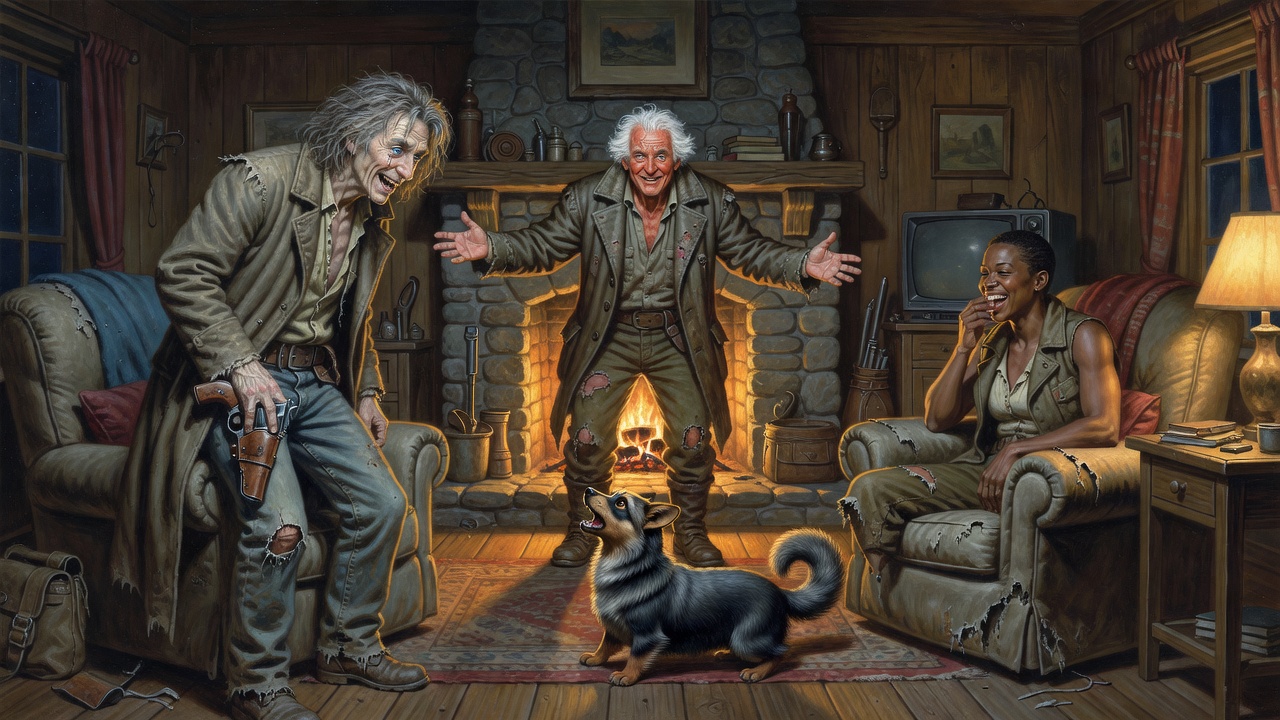
An old man performing with his arms wide before a fireplace while Roland weeps with laughter in a recliner, Susannah laughs with a hand to her mouth and a billy-bumbler barks.
VII · 31 The Act After roast chicken and eggnog Roland asks for the act. Collins kills. Roland laughs until he cannot breathe, and keeps laughing, and the thing in the cottage grows younger with every gasp, because it feeds on emotion. Susannah’s mouth sore bursts and she escapes to the pink bathroom with Oy barking. Part Four, chapter five, in which the deadliest creature in Empathica does his act.
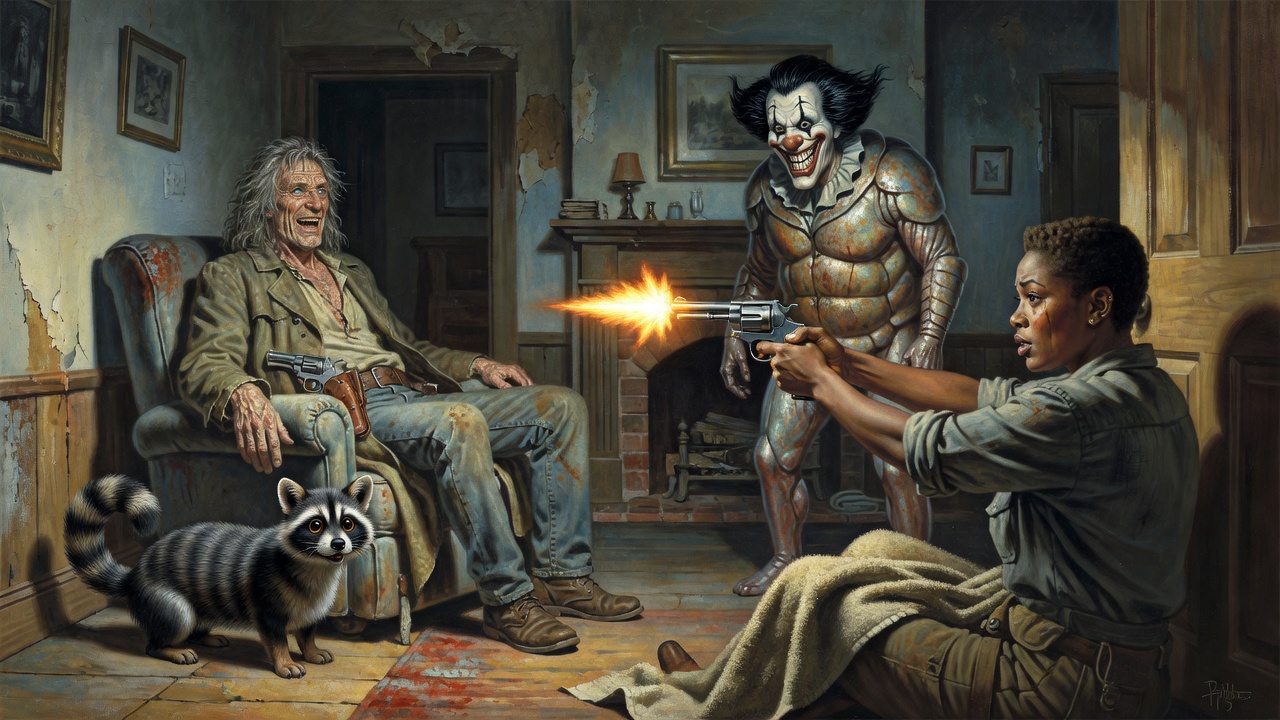
Susannah on a parlor floor firing a revolver at a man whose face is stretching into a clown’s grin while Roland chokes with laughter in a chair.
VII · 32 Deus ex Machina On the towel shelf is a note: “Relax! Here comes the Deus ex Machina!” On its back, the letters of Odd Lane rearranged into DANDELO. Susannah comes out to a host whose white hair has gone black and whose face is sliding into a psychotic clown’s, takes Roland’s gun and shoots him before he finishes turning into something like a huge cockroach. The glamour drops; the cottage is a shabby, dirty hut. The author has just reached in and saved his characters, and tells you so.
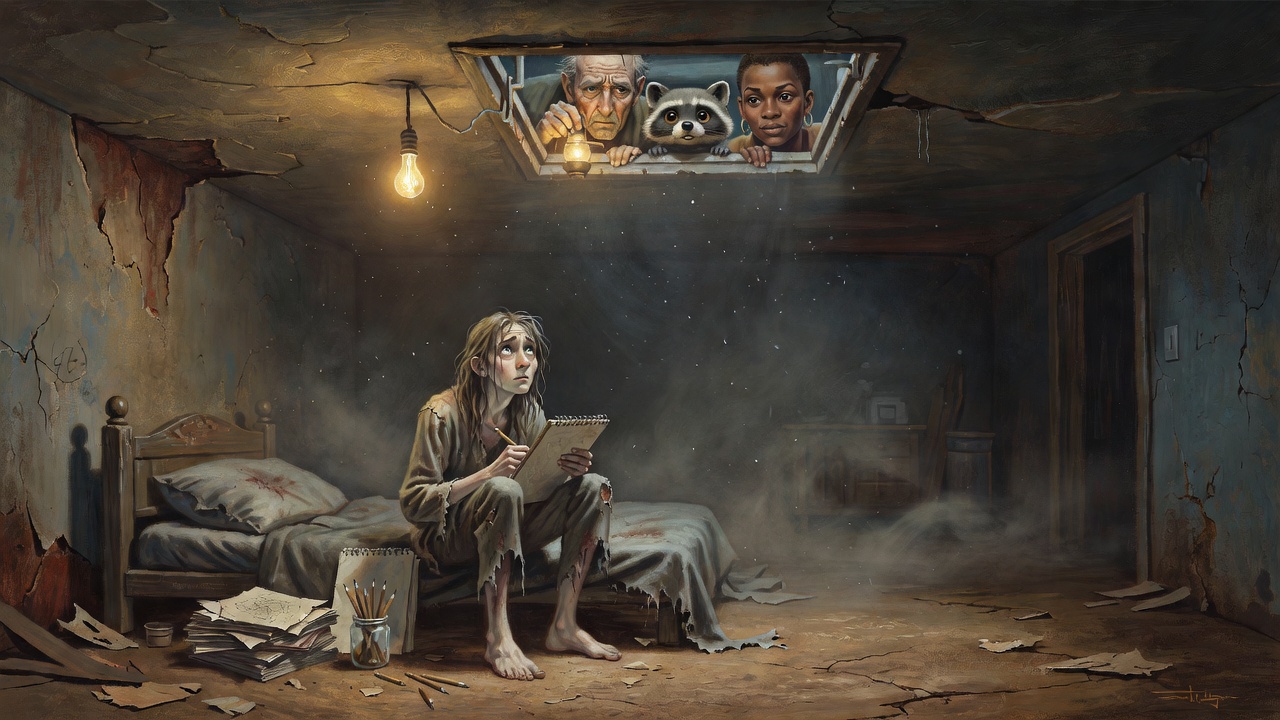
A thin young man on a cot in a bare cellar under one light bulb, looking up at three faces in an open trapdoor: an old gunslinger with a lamp, a billy-bumbler and Susannah.
VII · 33 Patrick Danville Under a trapdoor, in a cell lit by one bulb, sits a scrawny mute young man with sketch pads and pencils whose erasers have been cut off. His tongue has been torn out. This is Patrick Danville, the child from Insomnia, grown. With him come a robot plowman called Stuttering Bill and a three-day blizzard, which they ride out in Dandelo’s barn.
Part 5

Part Five: The Scarlet Field of Can’-Ka No Rey


Bill offers the Tower in under three days by sled; Roland refuses. On foot, five or six days, to arrive at sunset. The roses begin. Susannah dreams of Eddie and Jake in Central Park behind a door marked with crossed pencils, and knows she has to go. Patrick draws her portrait, erases the sore, and it is gone from her face; then he draws a door beside the cart and it stands there on the road, hinged on nothing. At dawn she takes one of Roland’s revolvers and goes through. Oy starts after her until she tells him there are other worlds than these; he turns back to Roland. “Olan.”

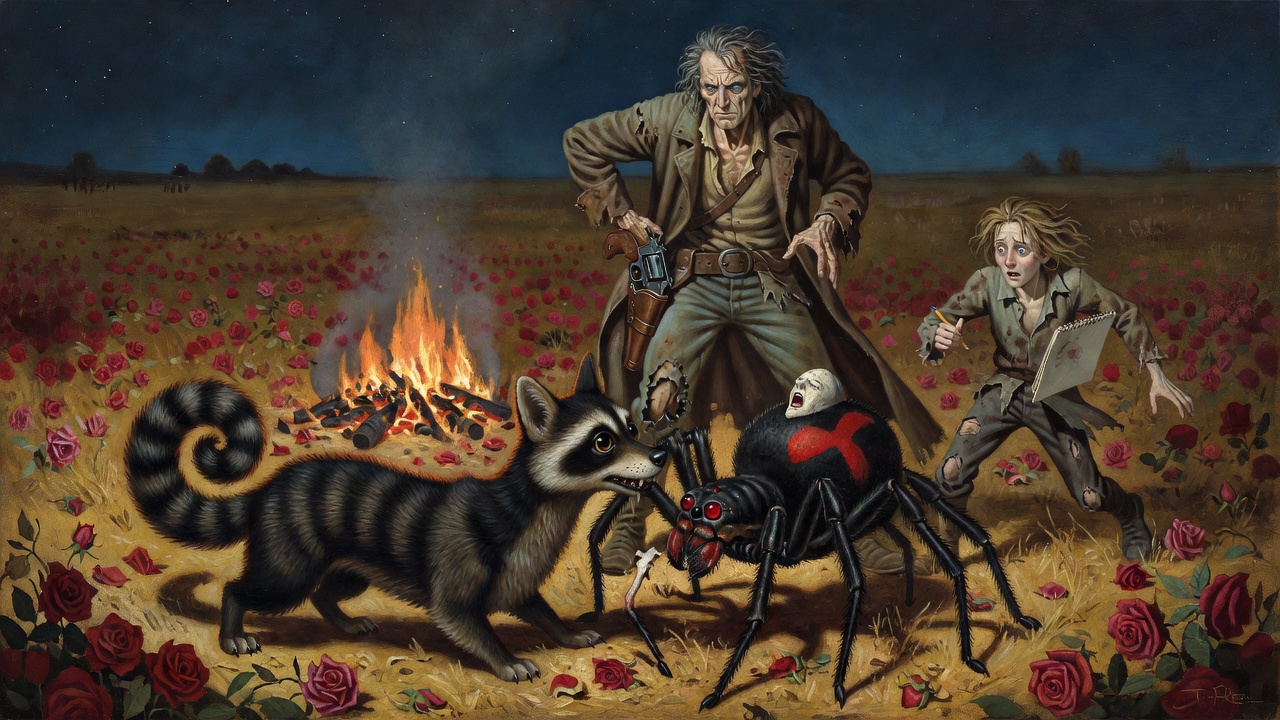
Mordred comes on the last night among the roses, in Dandelo’s clothes and poisoned by the horse he ate. Oy takes a leg in his jaws and will not run; Mordred breaks his back and flings him into a tree. Roland wakes and empties his gun into his son, who topples into the fire. Oy licks his hand, says the gunslinger’s name as best he can, and dies. Roland buries him at first light.

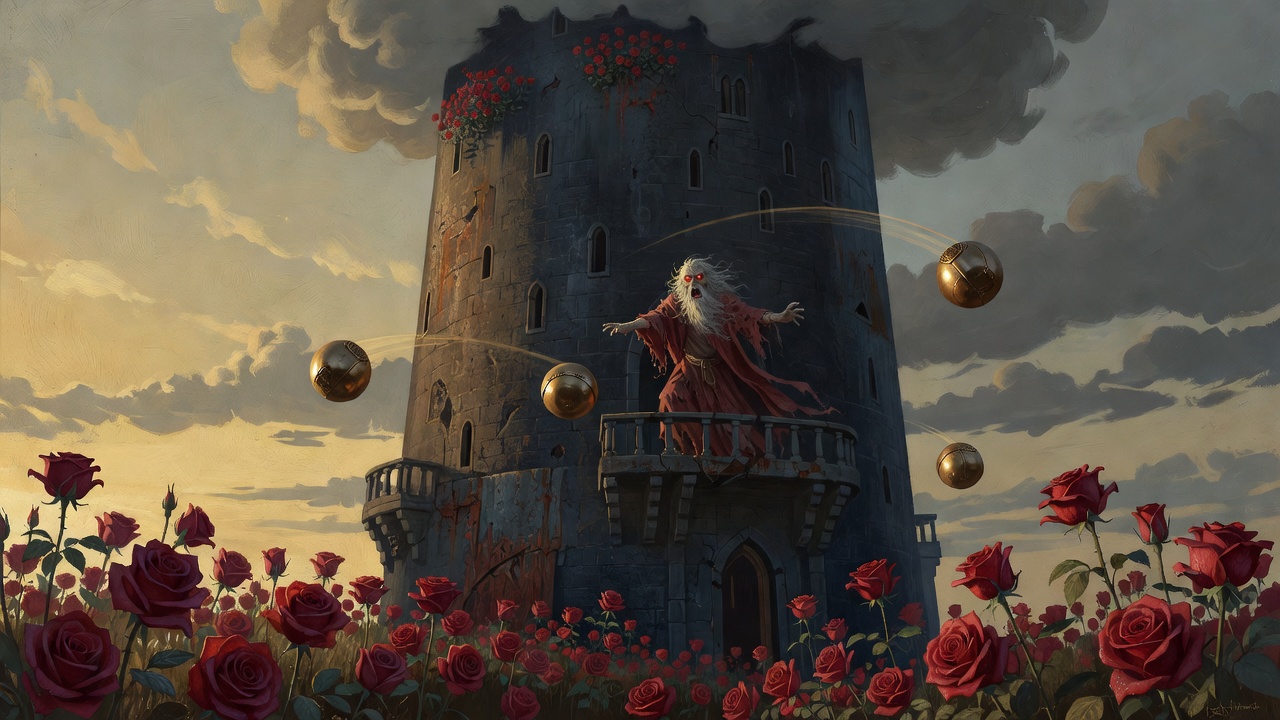
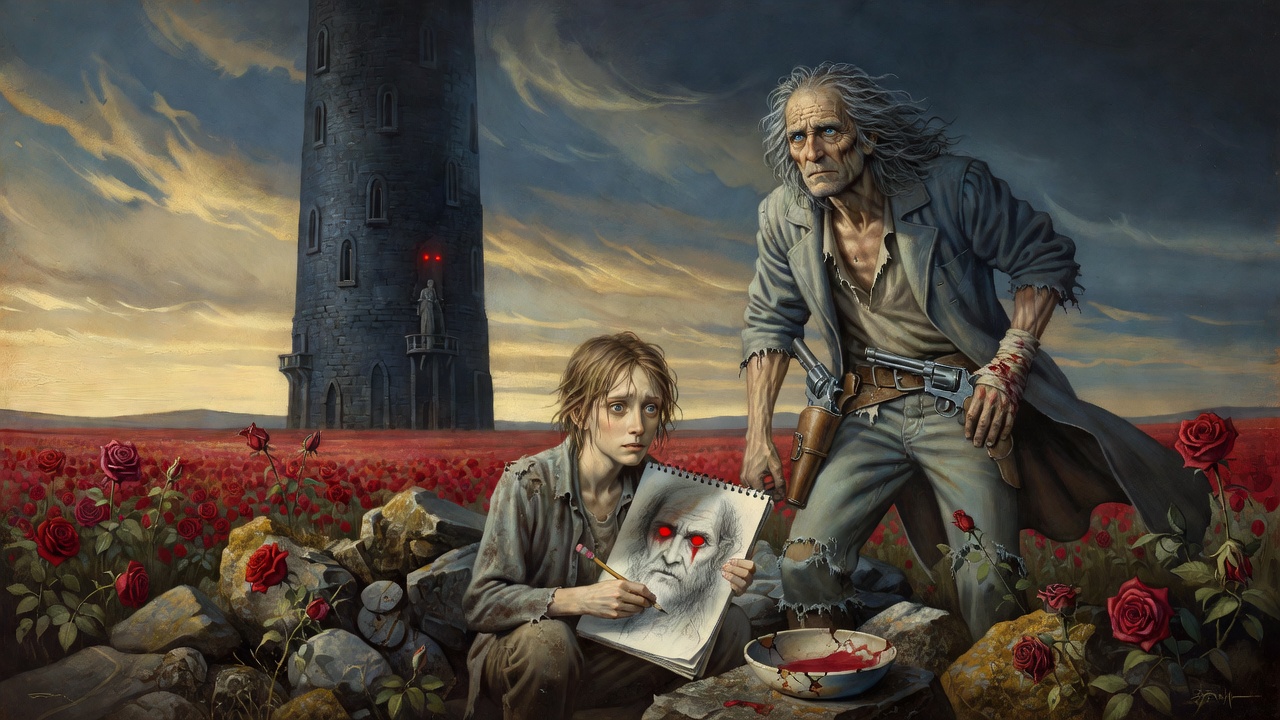
Then the Tower, from the hills: dark stone, three windows spiraling up, two steel posts at the summit from which the last two Beams seem to flow, and a voice made of every world’s names. On a balcony two levels up the Crimson King, white-bearded and red-eyed, screams and throws golden sneetches; Roland shoots them out of the air from behind a pile of rocks, for hours. He cannot cross. So he sets Patrick to draw the King, and when the portrait wants only its eyes, he picks a rose in a deerskin glove; the thorns go through as if through cobweb and leave a finger of his maimed hand hanging by a tendon. Patrick chews petals to paste, mixes it with the blood, paints the eyes, and erases the King: body, hands, mouth. The eyes will not go. They stay on the balcony, two red lights, for good. At sunset Roland sends Patrick back with the tins and walks in alone, calling the roll of names, the dead and the living, ending with Jake Chambers of New York. A horn sounds. Something booms like a door closing.
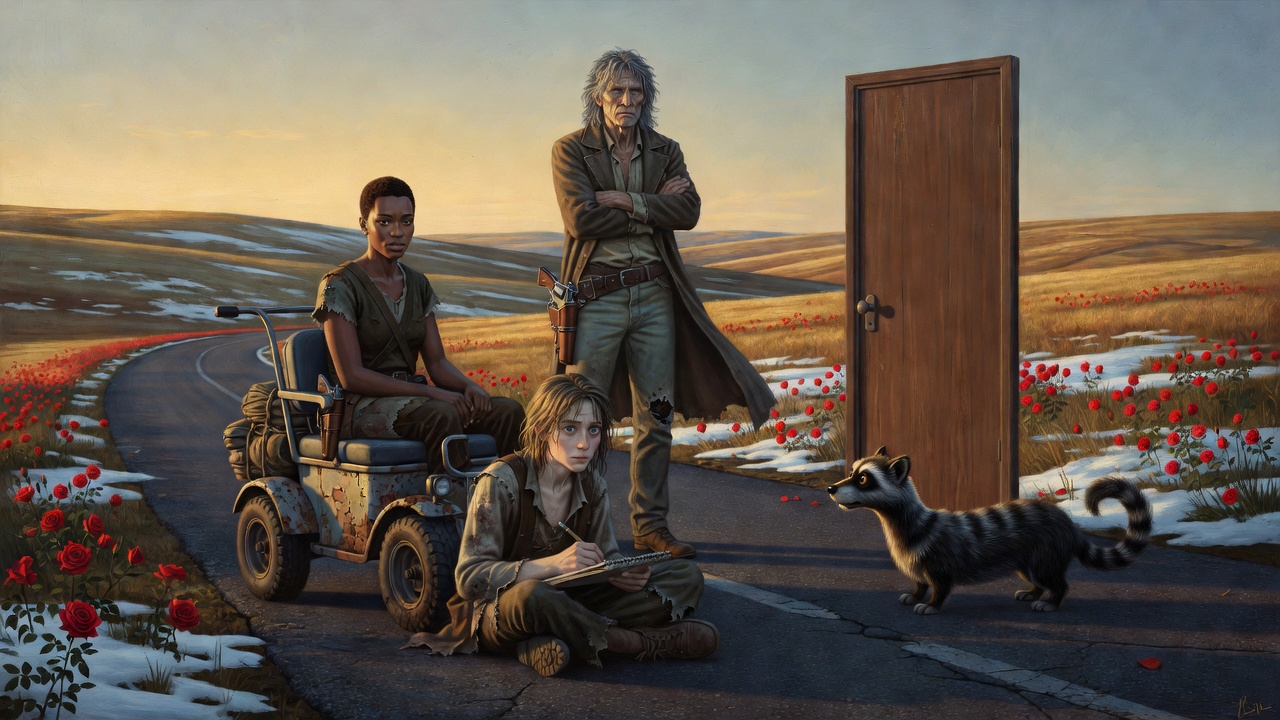
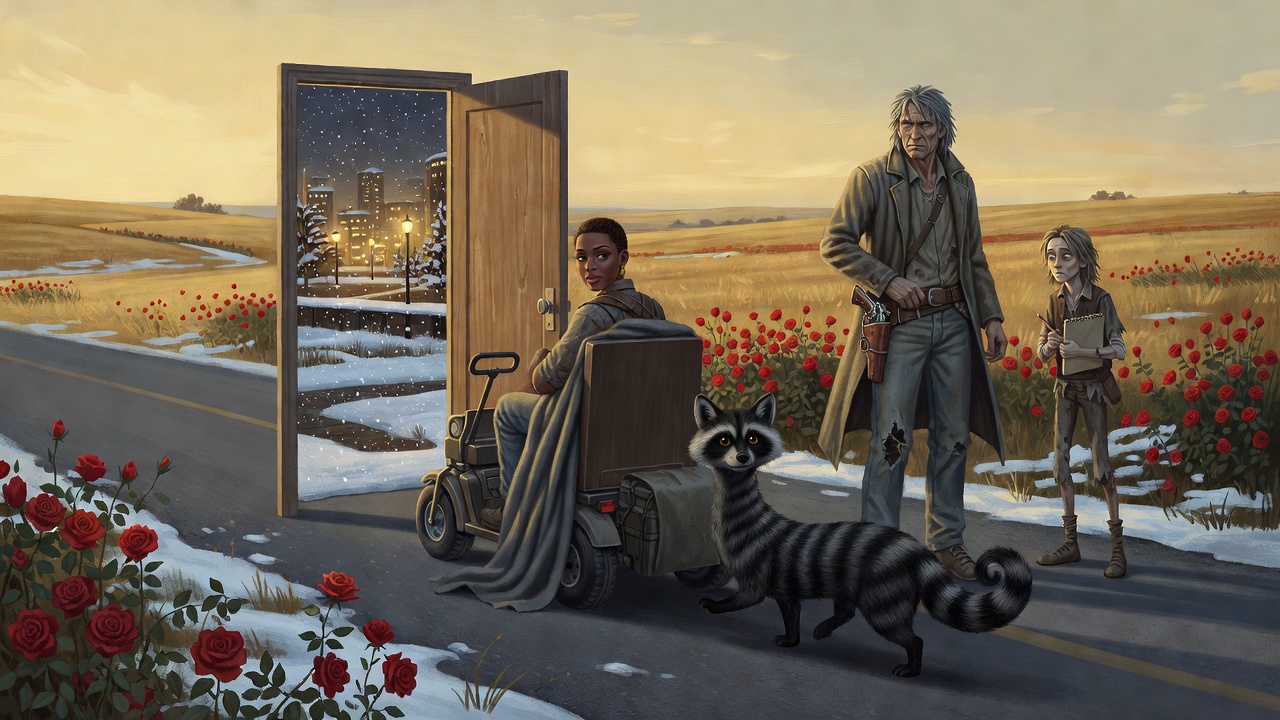
A young man drawing on a pad beside a plain wooden door standing by itself on a dawn road, watched by Susannah on a cart, Roland and a billy-bumbler.
VII · 34 The Artist Draws a Door The roses begin, and so does Patrick’s gift: he draws buffalo nearer than they are and the buffalo come nearer. He draws Susannah’s portrait, sore and all, then erases the sore, and it is gone from her face. She has dreamed Eddie and Jake in Central Park behind a door marked with crossed pencils, and knows she has to go. Patrick draws it beside her cart. It stands up on the road, plain metal knob, hinged on nothing.
Susannah seen from behind on a cart crossing the threshold of a lone door that opens on a snowy city park at night, while Roland and a billy-bumbler stand on the dawn road.
VII · 35 Goodbye, My Dear Roland will not let Detta do the leaving for her, or say goodbye like that after all this time. She takes one of his revolvers and goes through on her cart. Oy starts after her until she tells him there are other worlds than these; he stops, turns back to the gunslinger and says the name he has for him, “Olan.” Part Five, chapter one, subtitled Goodbye, My Dear.
A billy-bumbler with its jaws clamped on the leg of a huge spider rearing over it by firelight, with Roland rising from his blanket behind.
VII · 36 Oy’s Stand Mordred comes in the small hours of the last night, in Dandelo’s clothes and sick from the horse he ate. Oy takes a spider’s leg in his jaws and will not run. Mordred breaks his back and flings him into a tree, where he hangs impaled. Oy has been with the tet since the Great Road in Book III. This is his end, and he chooses it.
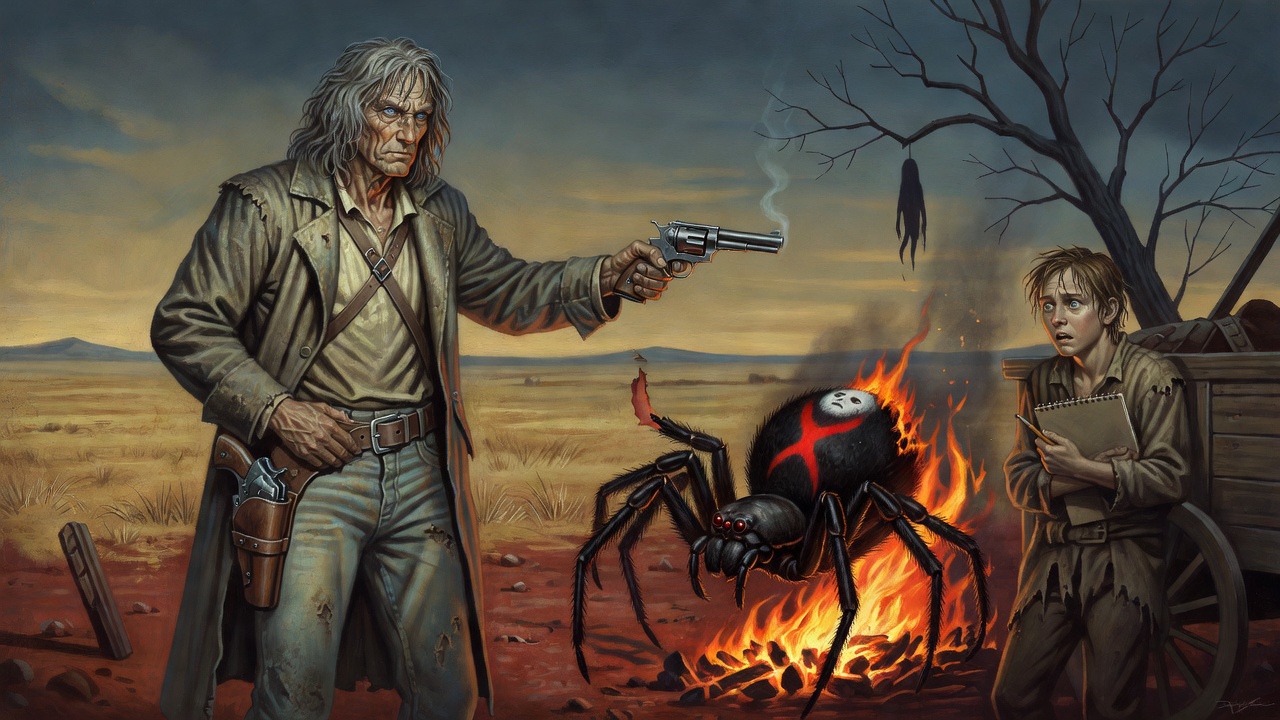
Roland standing with a smoking revolver as a huge spider topples backward into a campfire, a small limp shape hanging in a bare tree beyond.
VII · 37 I Only Kill My Family Roland wakes and empties his one remaining gun into his son, who topples into the fire and burns. He only kills his family, he thinks. Oy licks his hand, says “Olan” and dies. At first light Roland buries him among the roses: “The body was far smaller than the heart it had held.” He is now alone with a mute boy and a cart, which is more company than he started the cycle with.
A wide view of red roses to the horizon with a single dark tower at their center, and two small figures with a cart on the near hill.
VII · 38 Can’-Ka No Rey From the last hill, the red fields of none: roses to the horizon, each one singing, and the sooty Tower standing in them with three windows spiraling up and two steel posts at the summit from which the last two Beams seem to flow. The voice of it is every world’s names. Roland takes the cart’s handles himself to keep from running. He has walked toward this since the first page of the first book.
Looking up from the roses at an old man with a white beard shrieking from a stone balcony on the Tower and hurling golden spheres.
VII · 39 The King on the Balcony On a balcony two levels up, the Crimson King — white beard, blood-red eyes, locked out of the Tower — shrieks down at the gunslinger and throws golden sneetches, the seeking grenades of the Wolves. Roland shoots each one out of the air from behind a pile of rocks, for hours, while the Tower’s pull becomes pain and the King wheedles for palaver. The cycle’s great villain, finally in person, turns out to be an old man throwing things.
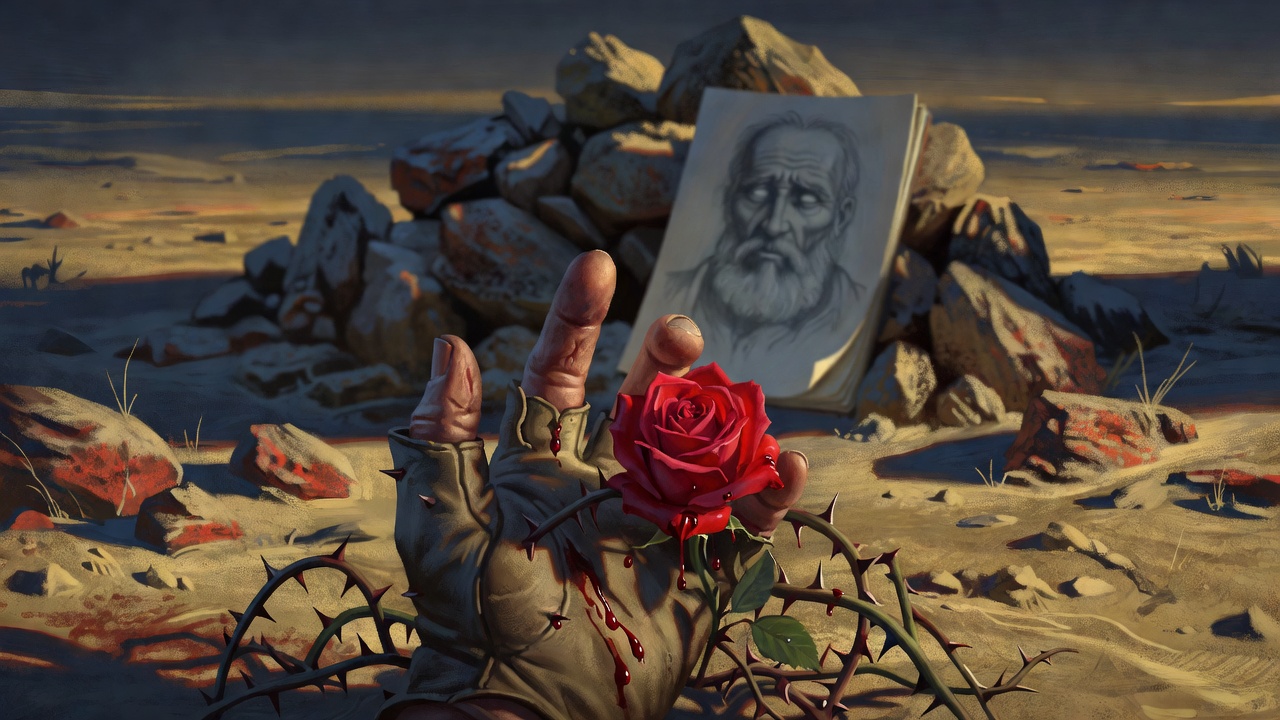
Close view of a gloved right hand missing two fingers picking a single red rose, blood coming through the leather.
VII · 40 A Rose for the Eyes Patrick draws the King, and the drawing is right but for the eyes. He mimes a rose. Roland reaches into the nearest bush in a deerskin glove and the thorns go through it as if through cobweb; when he pulls back, a finger of the hand that lost two to a lobstrosity in Book II hangs by a tendon. The hand has paid for everything since the beach. This is its last installment.
A young man erasing a drawing of a bearded old man whose red-painted eyes remain, while above him on the Tower’s balcony the real figure fades to two red points.
VII · 41 Make Him Gone Patrick chews rose petals to a red paste, mixes it with Roland’s blood and paints the eyes. On the balcony the King screams that his eyes burn. Then Patrick erases him: hands, mouth, body. The eyes will not blur. Two red lights stay on the balcony for good, the Crimson King’s whole remaining estate. The Tower is cleared by an eraser, which is either the worst idea in the cycle or the point of it.
Roland walking the last steps through roses toward a tall grey door banded with black steel at the Tower’s base, two red points of light on the balcony above.
VII · 42 The Names He sends Patrick back the way they came with the tinned food, and walks the last of the path alone, calling the names: Steven and Gabrielle Deschain, Cuthbert, Alain, Jamie, Susan, Sheemie, Pere Callahan, Ted, Dinky, Stephen King, Oy the brave, Eddie, Susannah, and last, “I come in the name of Jake Chambers, he of New York,” his own true son. A horn sounds. Something booms like a door closing. Then silence.
Part 6

Epilogue and Coda


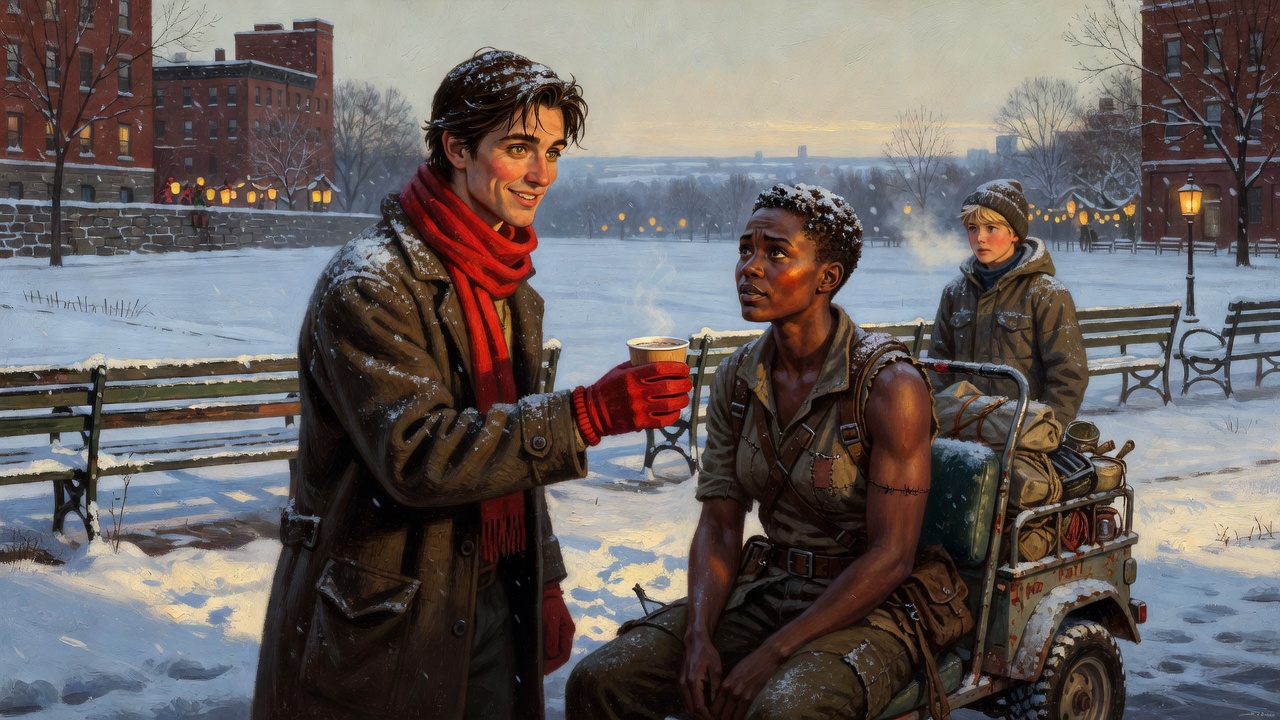
The Epilogue is Susannah’s. She comes through on her cart into Central Park in falling snow, 1987, carolers singing, and drops Roland’s revolver, which has arrived plugged and faded, into a trash can. A young man holding a paper cup of hot chocolate turns around. He is Eddie, healthy, never an addict, Eddie Toren of White Plains, in the city to show his brother Jake the polar bears; he has dreamed her and knows her name. The narrator refuses happily-ever-after but allows “But there was happiness.” Then King stops the book and speaks to the reader: this is the ending he recommends, and the Coda is a door nobody is obliged to open.

Endings are heartless. Ending is just another word for goodbye.

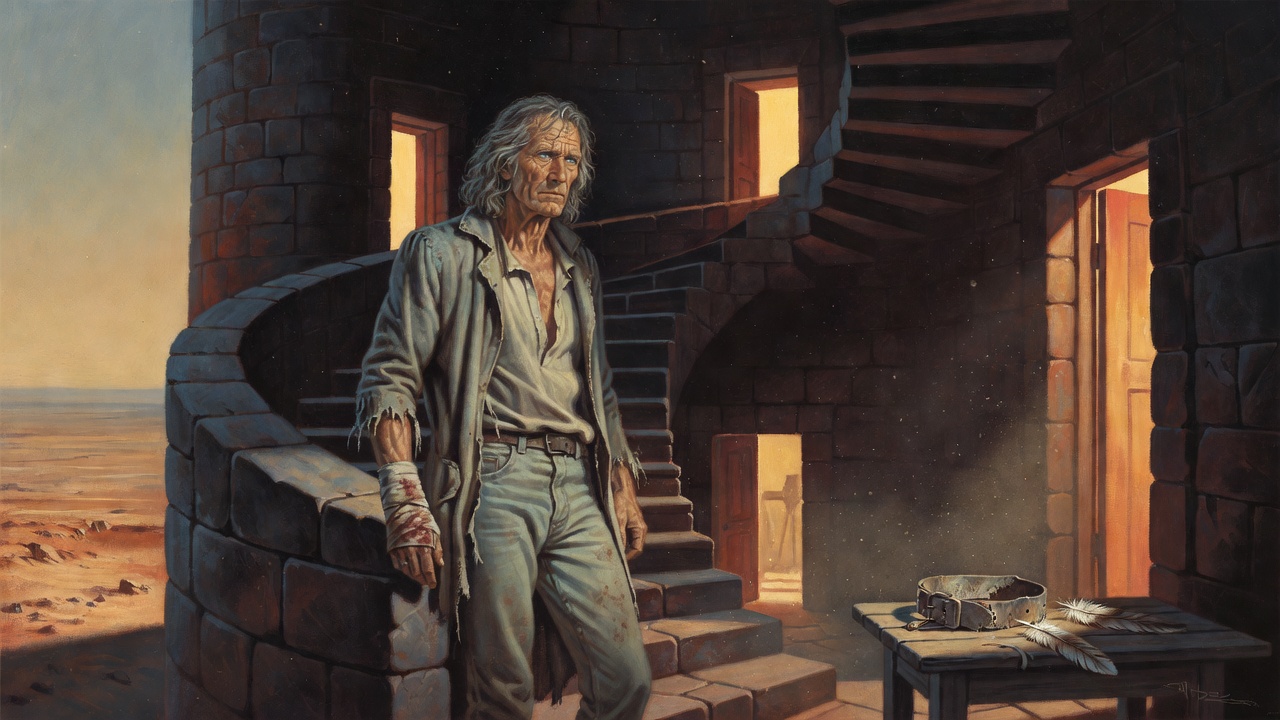
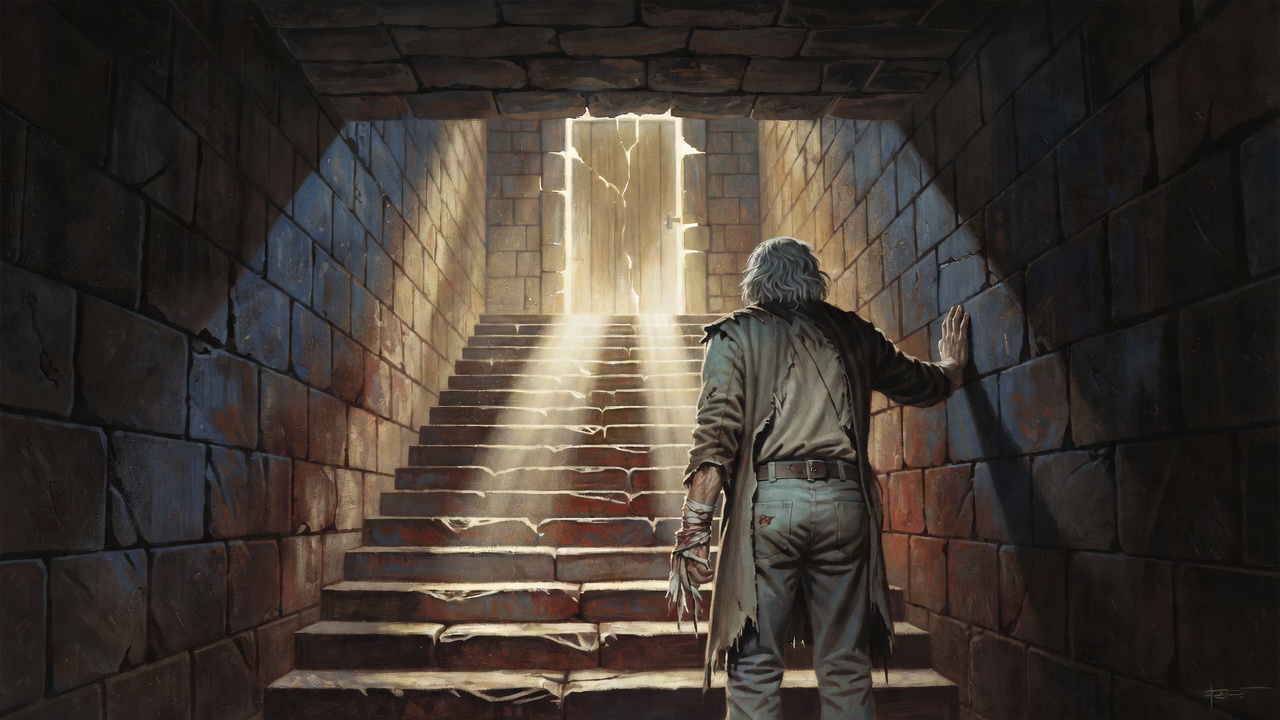
The Coda. Roland lays Aunt Talitha’s cross and his last gun at the Tower’s foot; the sigul on the ghostwood door changes from UNFOUND to FOUND, and it opens on the smell of the pine sachet of his childhood. A spiral stair, and a room at every landing holding one piece of his life: a cord tied with blue ribbon, his father’s young face, the collar of his first dog, the feathers of his hawk. He climbs past some two hundred rooms to nineteen last steps and a door with his own name on it. Sunlight. He has been here before, countless times, and is being sent back — not to a beginning where things might be changed, but to the Mohaine Desert, with his memory gone. One thing is different. At his hip hangs the Horn of Eld, which this time he stopped to pick up at Jericho Hill, and a voice tells him “there may yet be rest. Even salvation. If you stand. If you are true.” Then the last line is the first.

The man in black fled across the desert, and the gunslinger followed.
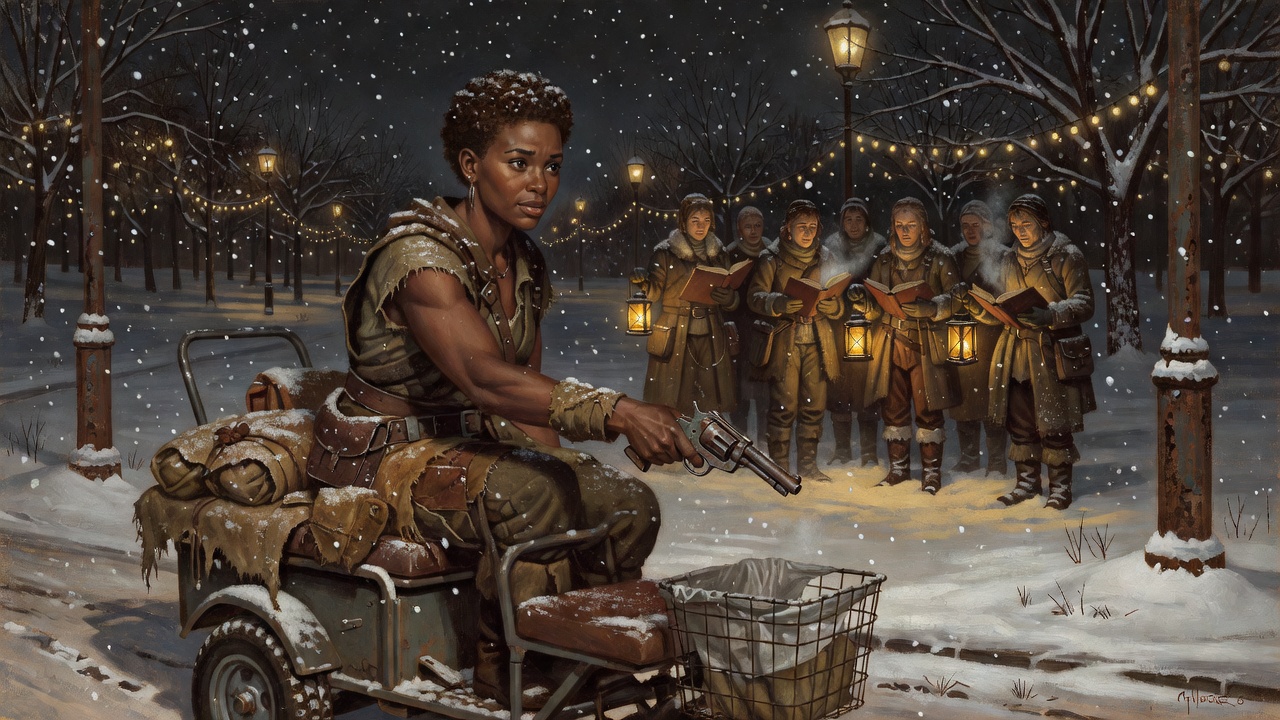
Susannah on a small cart in a snowy city park at night, dropping a rusted revolver into a wire trash basket while carolers sing in the distance.
VII · 43 Susannah in New York The Epilogue. Susannah and her cart come through into Central Park in falling snow, 1987, carolers singing, in a world where the president is Gary Hart. Roland’s gun has arrived plugged and faded, and she drops it in a trash can: the time of the gun is over. Her Mid-World memories are already starting to blur at the edges.
A young man in winter clothes offering a paper cup of hot chocolate to Susannah on her cart in a snowy park, with a boy by a railing behind.
VII · 44 There Was Happiness A young man with a paper cup of hot chocolate turns around. He is Eddie, healthy, never an addict, Eddie Toren of White Plains, in the city to show his brother Jake the polar bears. He has dreamed her and knows her name. King will not say they lived happily ever after, “But there was happiness,” and a dog with gold-ringed eyes is coming. This is where the author tells you to close the book.
Roland on a dark spiral stair looking into a lit room where a dog’s collar and hawk feathers lie on a small table.
VII · 45 The Rooms of His Life The Coda. Roland lays the cross and his last gun at the Tower’s foot; the sign on the ghostwood door changes from UNFOUND to FOUND and it opens on the smell of the pine sachet of his childhood. A spiral stair, a room at every landing, each holding one piece of his life: the cord tied with blue ribbon, his father’s young face, the collar of Ringo, his first dog, the feathers of David the hawk. Some two hundred rooms, and each of them is also a death.
A dark flight of nineteen stone steps rising to a closed door with brilliant sunlight pouring around its edges, Roland small at the bottom.
VII · 46 The Top of the Tower Nineteen steps to the top room and a door with his own name on it, and sunlight. As it hits him he understands that he has been here before, countless times, and that he is being sent back: not to a beginning, where things might have been changed, but to the Mohaine Desert, to the moment he first knew the quest would succeed. The Tower is Gan, and Gan is not finished with him. His memory goes.
The gunslinger seen from behind, walking away across a white desert toward a tiny black figure on the horizon, a hunting horn at his hip.
VII · 47 The Horn of Eld The desert, the apotheosis of all deserts. At the gunslinger’s hip hangs something that was not there the last time: the Horn of Eld, which Cuthbert blew as he died at Jericho Hill and which, this time, Roland stopped to pick up. A voice says it is his promise that things may be different, that there may yet be rest, even salvation, if he stands and is true. He walks. “The man in black fled across the desert, and the gunslinger followed.”

What the 2017 film took from this book

  • By its makers’ account the film’s Roland already carries the Horn of Eld, which in the books he has only in the Coda’s restarted cycle: the film is meant as a continuation of Book VII’s last page, not an adaptation of Book I. The Horn is plain in set photographs; whether it can be made out on screen is uncertain.
  • The children with “shine” strapped into a machine firing a beam at the Tower are the Breakers of the Devar-Toi, literalized as a death-ray chair; the book’s Breakers sit in armchairs and think, dosed with pills refined from the Calla’s children.
  • “Walter Padick” is the birth name this book gives the man in black in Fedic. The film has Roland kill him with a trick shot; the book has Mordred, an infant, make him tear out his own eyes and tongue, and then eat him.
  • Sayre, Walter’s lieutenant in the film, killed by Roland, is in the book the manager of Mordred’s birth, shot in Fedic by Susannah, once for Mia and once for Callahan.
  • Pimli, a technician in the film, is in the book the Master of Blue Heaven and the man who kills Eddie Dean.
  • The film’s Crimson King is graffiti and a red eye. The book puts him in person on the Tower’s balcony and has a mute boy erase everything but the eyes.
  • The film’s ending, in which the Tower is saved and Roland and Jake leave for Mid-World together, inverts the book’s: Jake dies saving the author, Susannah leaves by a drawn door, and Roland reaches the Tower alone and is sent back to the desert.
  • The tagline “There are other worlds than these” is Book I’s line, repeated here by Susannah to Oy at the door.

Continuity notes

  • Roland’s right hand: still short the index and middle fingers from Book II; at the roses a thorn-torn finger is left hanging by a tendon. He is visibly older in this book — the dry twist in his joints and a bad hip that fails him on Route 7 — and he weeps over Jake for the first time in years.
  • The guns: at the farewell Susannah takes one of Roland’s two revolvers through Patrick’s door, where it arrives rusted and useless and she throws it away; Roland lays the other at the Tower’s foot with Aunt Talitha’s cross. In the Coda he is back in the desert as at the start of the cycle, with the Horn of Eld, which he had left at Jericho Hill.
  • Susannah: no wheelchair anywhere in the book. She rides a kitchen cart in Fedic, then the Cruisin Trike left for her at Steek-Tete (used in the battle and again in Fedic), is carried by Roland under Castle Discordia, then rides the dogcart Roland pulls, Ho Fat’s Luxury Taxi, in three editions, the third of them electric. She goes through Patrick’s door on that electric cart. The sore at the corner of her mouth lasts from the Badlands until Patrick erases it.
  • Eddie: shot above the eye by Pimli Prentiss at the Devar-Toi and dead that evening; dressed in white and buried there.
  • Jake: dies June 19, 1999, at about 4:30 p.m., under Bryan Smith’s van near Lovell, Maine; buried in a blue tarp under stones in the woods off Route 7; Irene promises a rose. His third death in the cycle.
  • Oy: dies at the last camp among the roses, back broken by Mordred, and is buried there at first light.
  • Callahan: dies by his own hand in the Dixie Pig; the sköldpadda, Susannah’s ivory turtle, is lost there.
  • Mordred: born in Fedic with the red mark on his left heel; loses part of a leg to Susannah; a boy of about nine at the castle; a young man of about twenty after Dandelo’s larder, poisoned by eating Lippy; shot dead by Roland and burned.
  • Walter: dies in Fedic in Part Two, eaten by Mordred, which closes a pursuit that began on page one of Book I.
  • Deaths in order: Callahan, Mia, Sayre and the Fedic staff, Flaherty’s posse, Walter, Nigel, Finli, Pimli, Eddie, Jake, Sheemie, two of the castle’s three, Rando Thoughtful, Dandelo, Lippy, Mordred, Oy (mortally hurt before Mordred falls, dead just after); the Crimson King erased but for his eyes.
← VI · Song of SusannahThe 2017 Film →