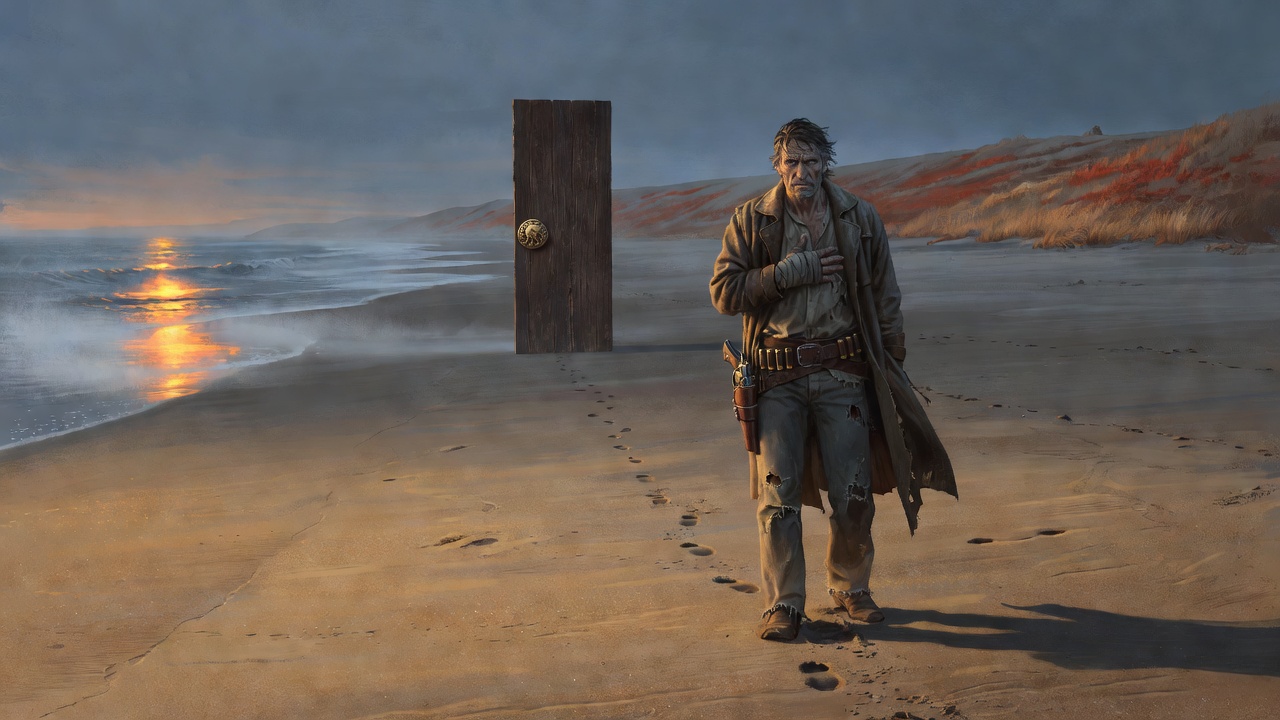
A long grey beach at low sun, a single wooden door standing upright on the sand, and a limping gunslinger with a bandaged hand walking up the beach in front of it.
Three doors wait on the beach of the Western Sea; the first costs two fingers to reach.

The Dark Tower · Book II · 1987

The Drawing of the Three

Three doors on the beach of the Western Sea, and two fingers to pay for the first.

The second Dark Tower book, published by Donald M. Grant in May 1987 with ten colour plates by Phil Hale, five years after The Gunslinger. It opens less than seven hours after the palaver at the golgotha, and it takes two fingers of Roland’s right hand within hours of its first page.

Walter’s tarot reading comes true as furniture: three freestanding doors on the beach of the Western Sea, each opening not on a place but on a mind in New York — a junk-sick cocaine mule in 1987, a legless civil-rights heiress with a second self in 1964, a killer whose hobby is pushing people, in 1977. Roland rides behind their eyes, can step forward and take their bodies, and can carry things through, so the book runs on smuggling: cocaine out, Pepsi in, antibiotics and bullets last of all.

It is the book that turns a lone-wolf Western into an ensemble. Eddie Dean and Susannah Dean, who will carry the next five volumes, are drawn here, and the Jake paradox that opens The Waste Lands is set up in seven seconds on a 1977 school morning.

Part 1

Prologue: The Sailor


Roland wakes at the high-tide line of the Western Sea, less than seven hours after the palaver with the man in black, soaked to the waist by a cold incoming tide. He has been dreaming he was Jake, drowning. His first thought is for his ammunition, which is wet.

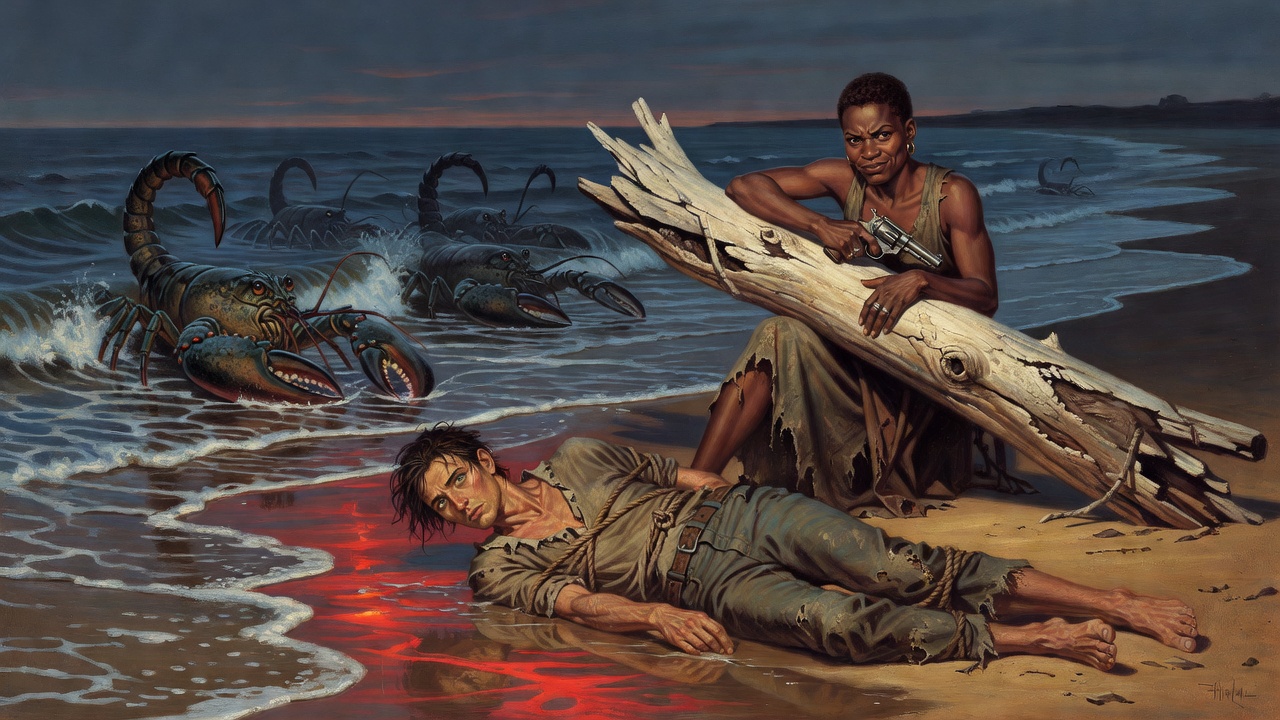
Something comes out of the surf: four feet of lobster-clawed, stalk-eyed, beaked thing with a scorpion’s curl of tail, murmuring what sound like questions — “Did-a-chick? Dum-a-chum?” Each time a wave breaks it freezes and raises its claws, a posture Roland recognises as the Honor Stance Cort drilled into fledgling gunslingers. His shells are wet; the gun will not fire; and the creature takes the index and middle fingers of his right hand, most of his right big toe through the boot, and a piece of his calf. He times its next pause, beats it to death with a rock and grinds the shell under his heel. He names the species: lobstrosities.

Above the tide line he packs the stumps with tobacco, tears up his shirt for bandages and takes inventory: two fingers and a toe gone, boots wrecked, a little water, some jerky, the jawbone from the golgotha, and twenty shells that may or may not fire.

“I am, in short, a man on the edge of everything.”

Red lines of infection are already climbing his arm.
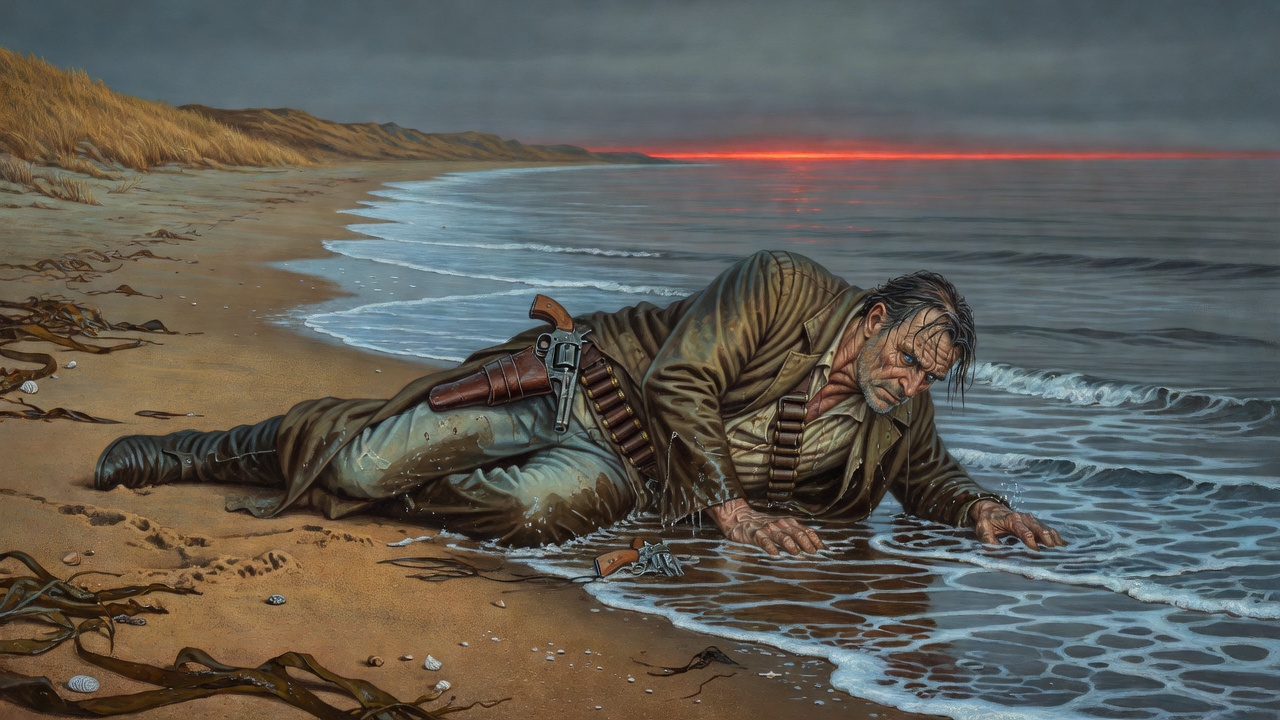
A gunslinger lying face-down at the edge of a grey sea in failing light as a wave slides up around his legs.
II · 1 The Tide Line Roland wakes at the high-tide line of the Western Sea, less than seven hours after the palaver, soaked to the waist by an incoming tide and dreaming he was Jake, drowning. His first thought is for his shells, which are wet. The prologue is called The Sailor. It is the last time in the saga that he has ten fingers.
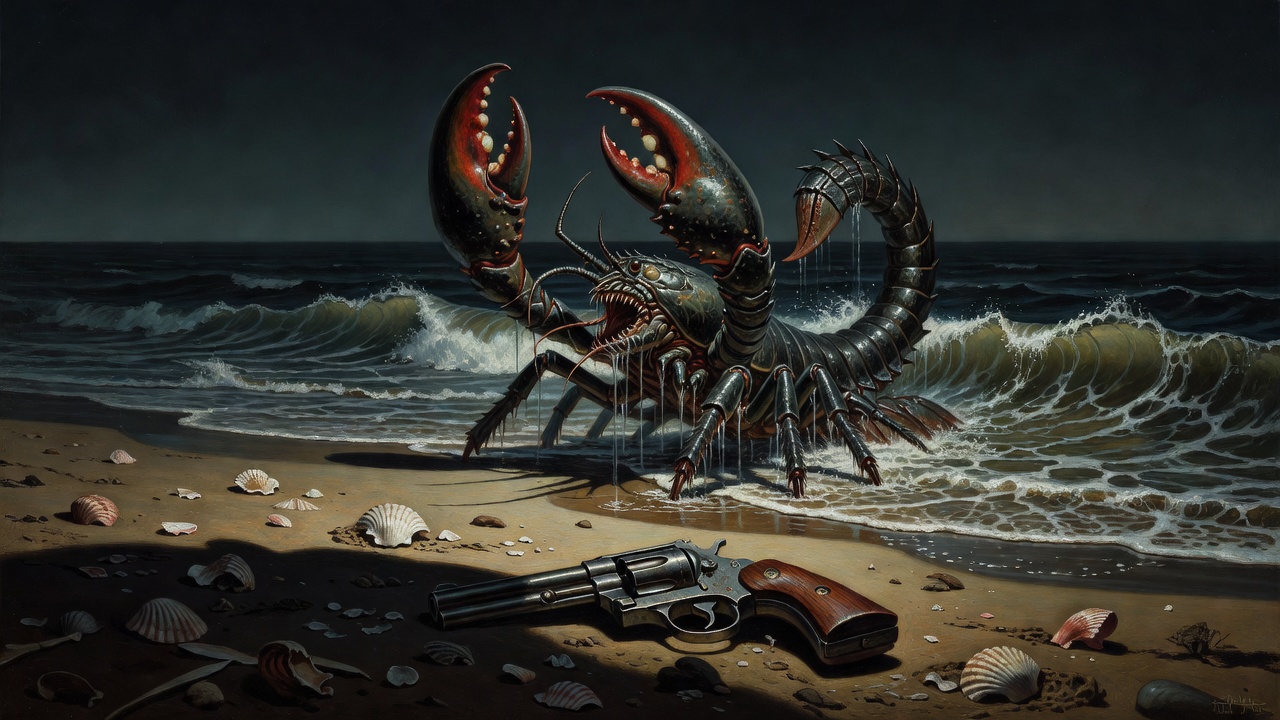
A lobster-like creature rearing out of a breaking wave at night with its claws raised, a revolver lying on the sand in front of it.
II · 2 Did-a-Chick? Dum-a-Chum? The first lobstrosity comes out of the surf asking what sound like questions — “Did-a-chick? Dum-a-chum?” — and freezes with its claws raised each time a wave breaks, a posture Roland recognises as the Honor Stance Cort taught his pupils. His shells are wet and the gun will not fire. In the next moment it takes two of his fingers.
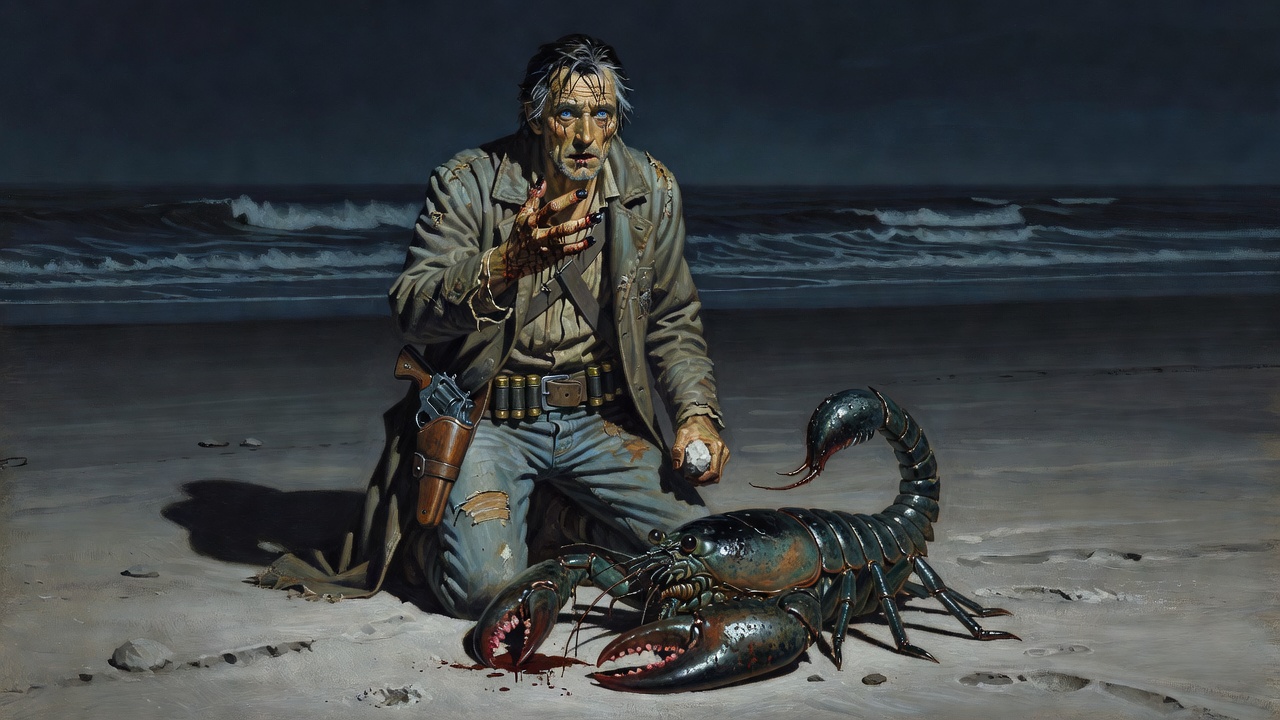
Close view of a man’s right hand on bloody sand with the first two fingers gone, a crushed lobster-like creature under his boot behind.
II · 3 Two Fingers and a Toe Timing his attack to the creature’s next salute, Roland beats it to death with a rock and grinds its shell under his heel, then takes stock: the index and middle fingers of his right hand, most of his right big toe and a piece of calf are gone. He names the species lobstrosities. He will shoot left-handed for the rest of the saga.
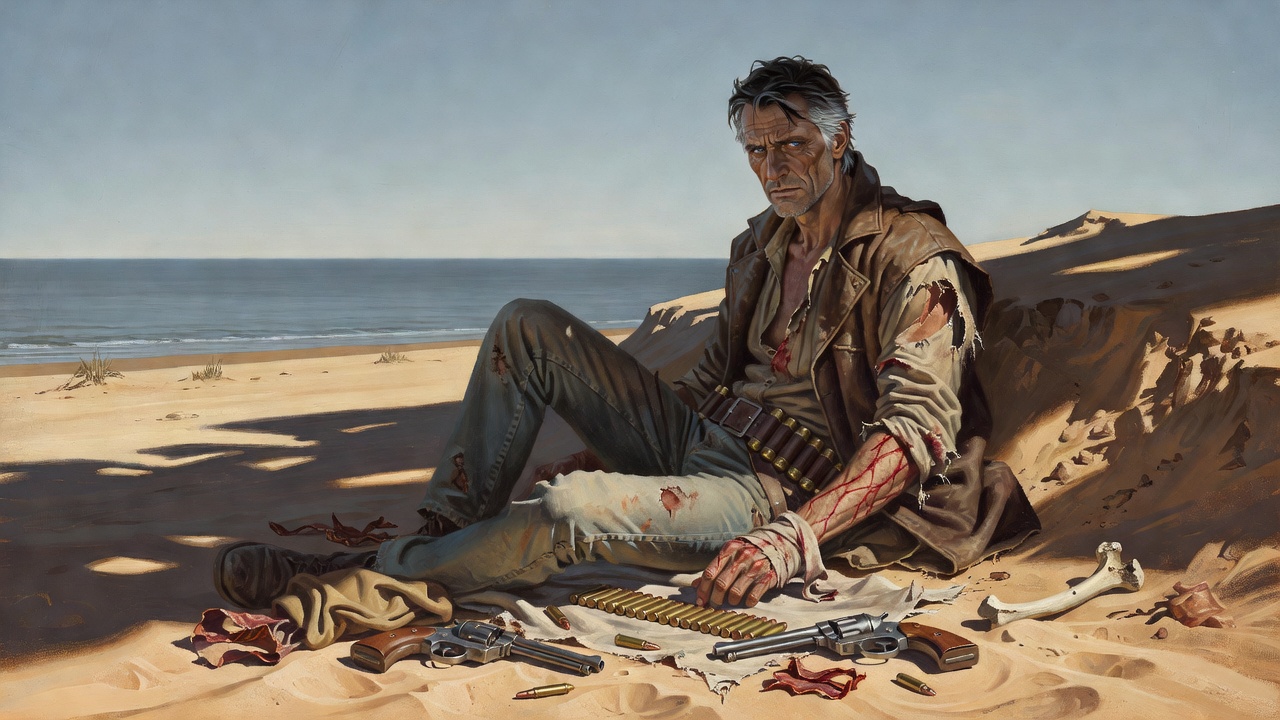
A gunslinger sitting in the shade of a dune laying out cartridges beside a waterskin and a human jawbone, red lines on his forearm.
II · 4 The Edge of Everything Above the tide line he packs the stumps with his last tobacco, tears his shirt into bandages and counts what he has: a little water, some jerky, the jawbone from the golgotha and twenty shells that may or may not fire. “I am, in short, a man on the edge of everything.” Red lines are already climbing his arm. He sleeps sixteen hours.
Part 2

The Prisoner


The first chapter is called The Door. He sleeps sixteen hours, then walks north, feverish and falling, for about three hours and four miles, drains the waterskin, and sees a door standing by itself on the sand. Six and a half feet of ironwood, a gold knob filigreed with a baboon, and two words in black letters: The Prisoner. It has no back; he can walk all the way round it, and from some angles it is not there at all. The knob is deadly cold. He opens it onto the world seen from a great height, then the inside of an aircraft, and understands he is looking out through someone else’s eyes.

The eyes belong to Eddie Dean, twenty-one, in seat 3-G of Delta 901 from Nassau to New York with two pounds of cocaine taped under his arms and the first cramps of heroin withdrawal coming on. He is muling for Balazar, a New York crime boss, in a paisley shirt meant to hide the bulges. Then a stranger is inside his head. Eddie vomits, and a stewardess notices that the nice-looking passenger’s hazel eyes have gone iceberg blue.

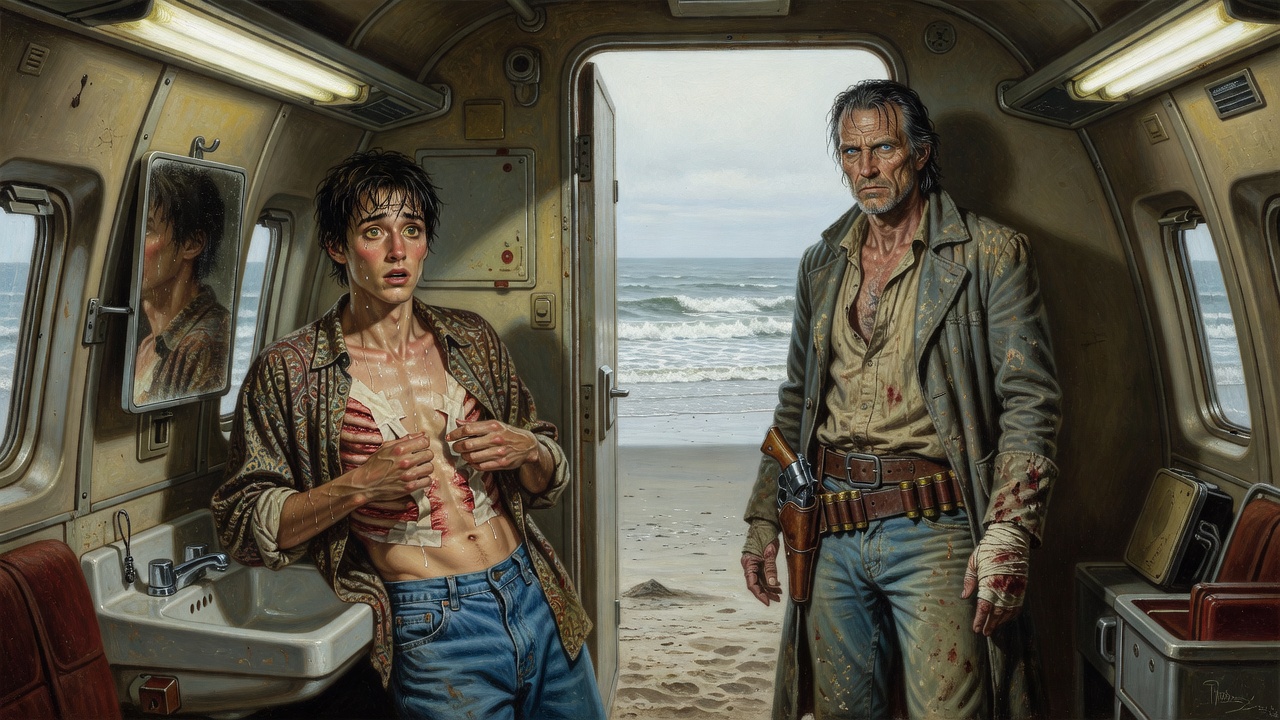
He can come forward and take Eddie’s body; he can carry things back to the beach — a sandwich, a coin. The crew spots the bulges and radios customs, so Roland sends Eddie to the lavatory, where the two men meet face to face: a gaunt scarecrow in homespun with a filthy rag round one hand, standing on a beach where the wall should be. Roland hits him once to focus him; the tape comes off; the bags go through; and the captain breaks the latch to find a sweating young man on the toilet and nothing else.

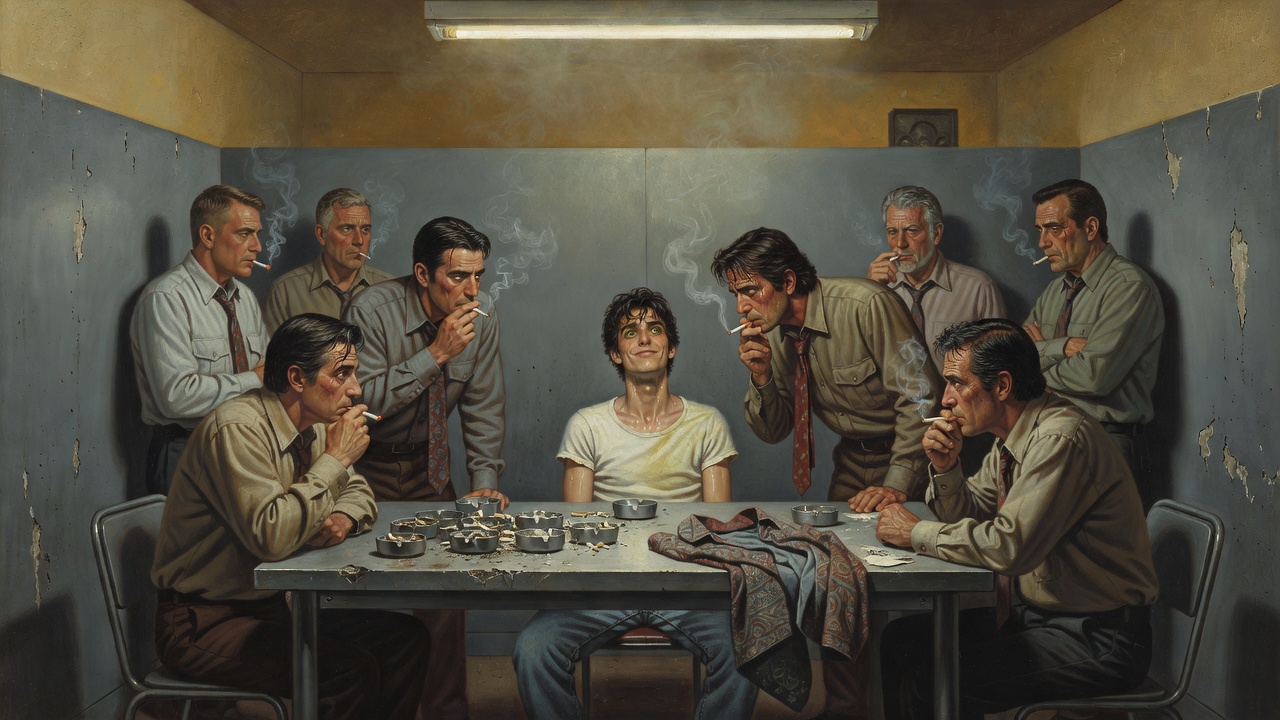
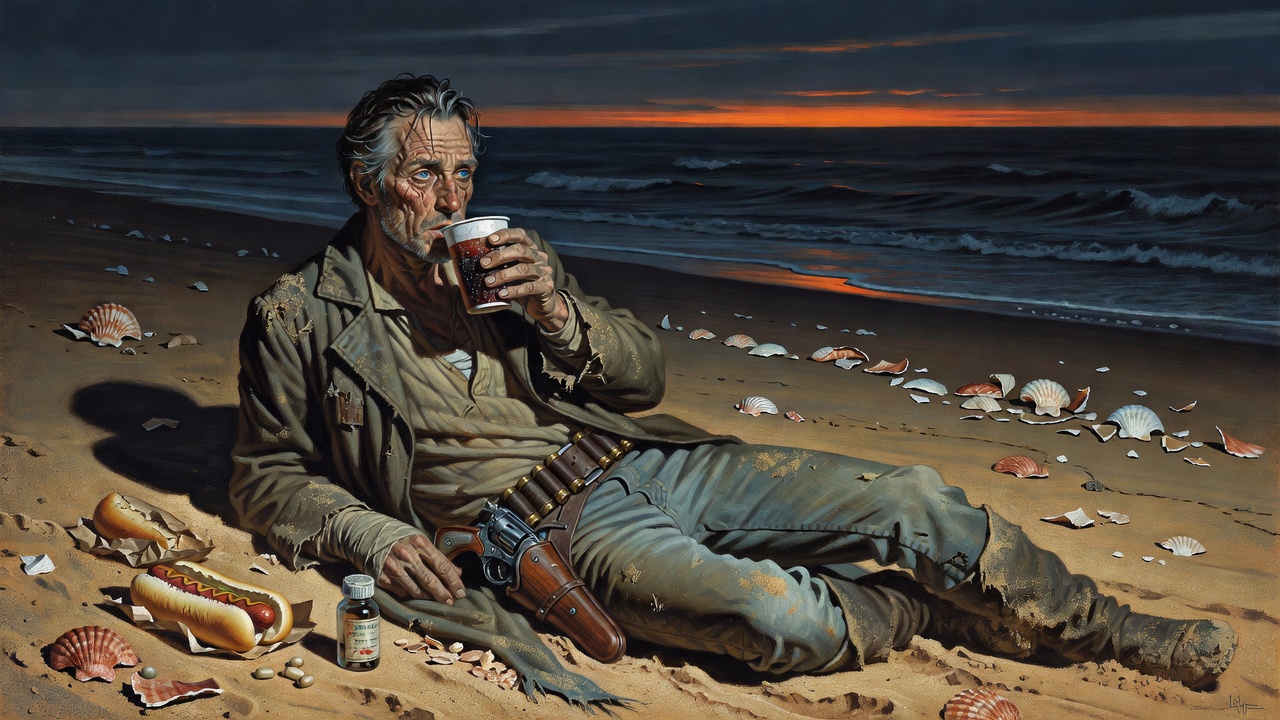
Customs holds Eddie two hours in his underwear and gets an allergy story for the tape marks. He walks out with a tail, buys hot dogs, Anacin and a Pepsi, and passes them through to Roland, who is astonished by the sugar. The door now follows Eddie wherever he goes. Outside the Dean brothers’ building a pizza van is waiting with Jack Andolini at the wheel: Balazar has the stash and he has Henry.

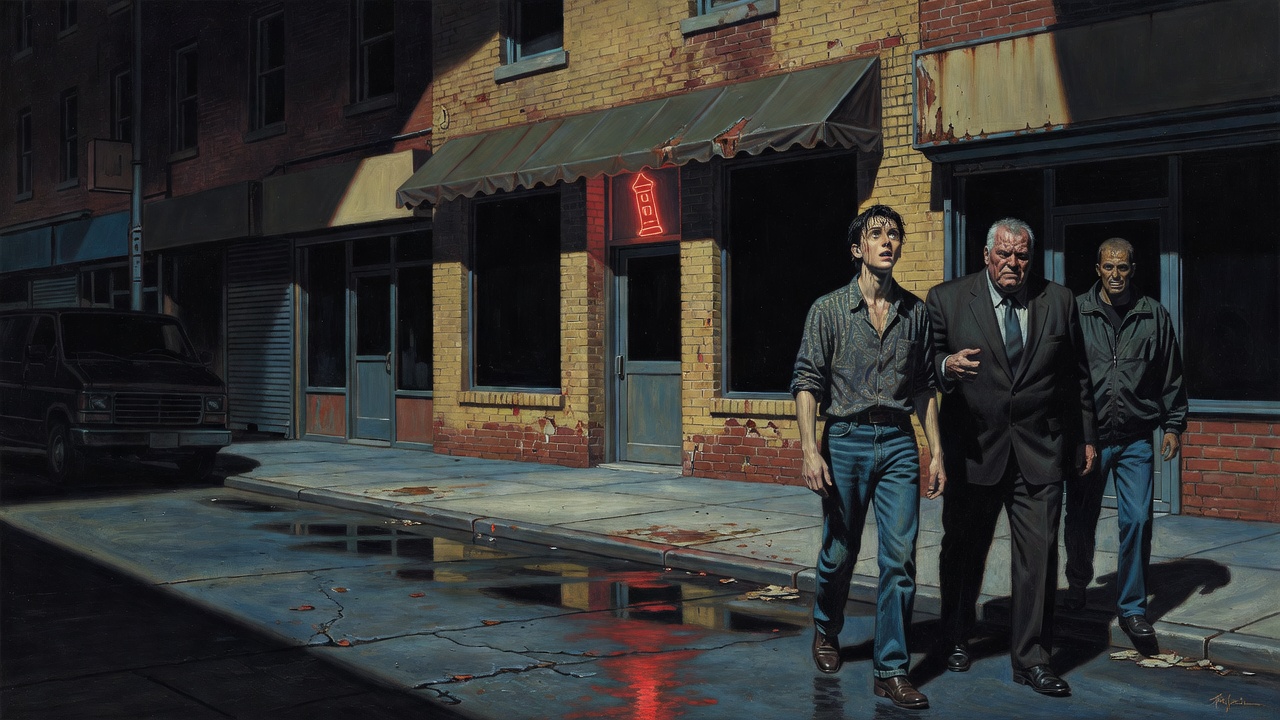
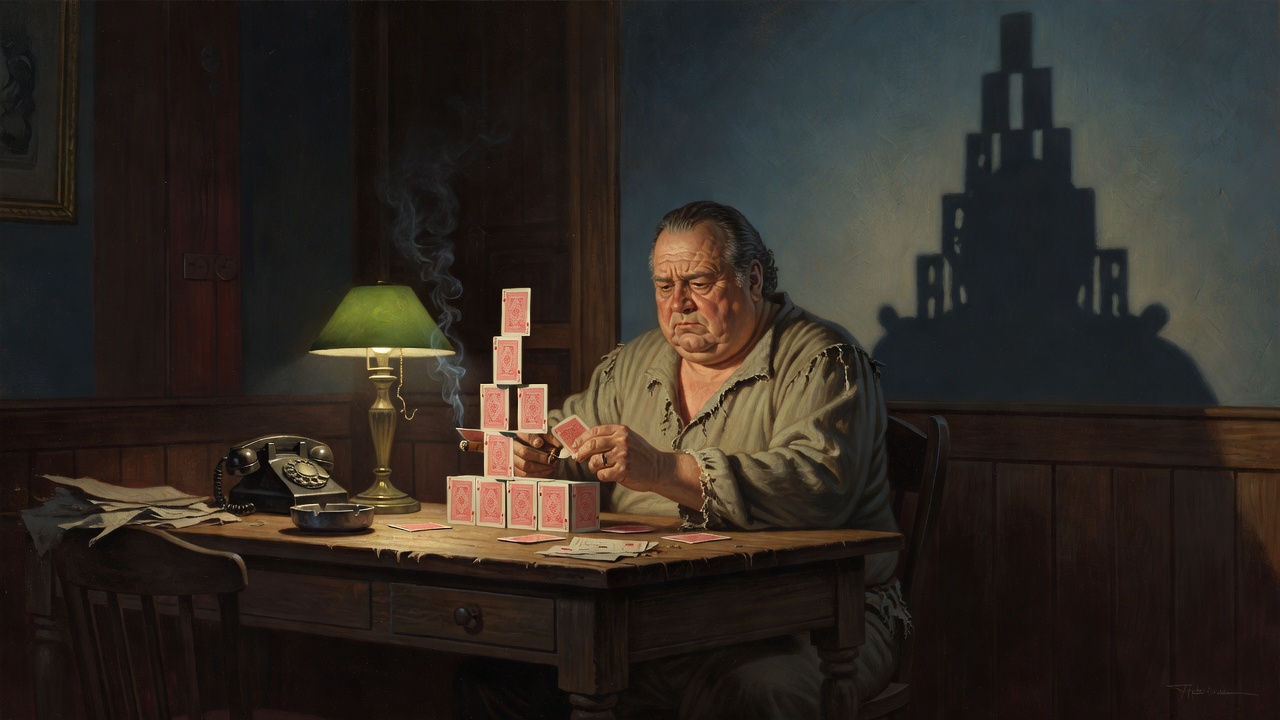
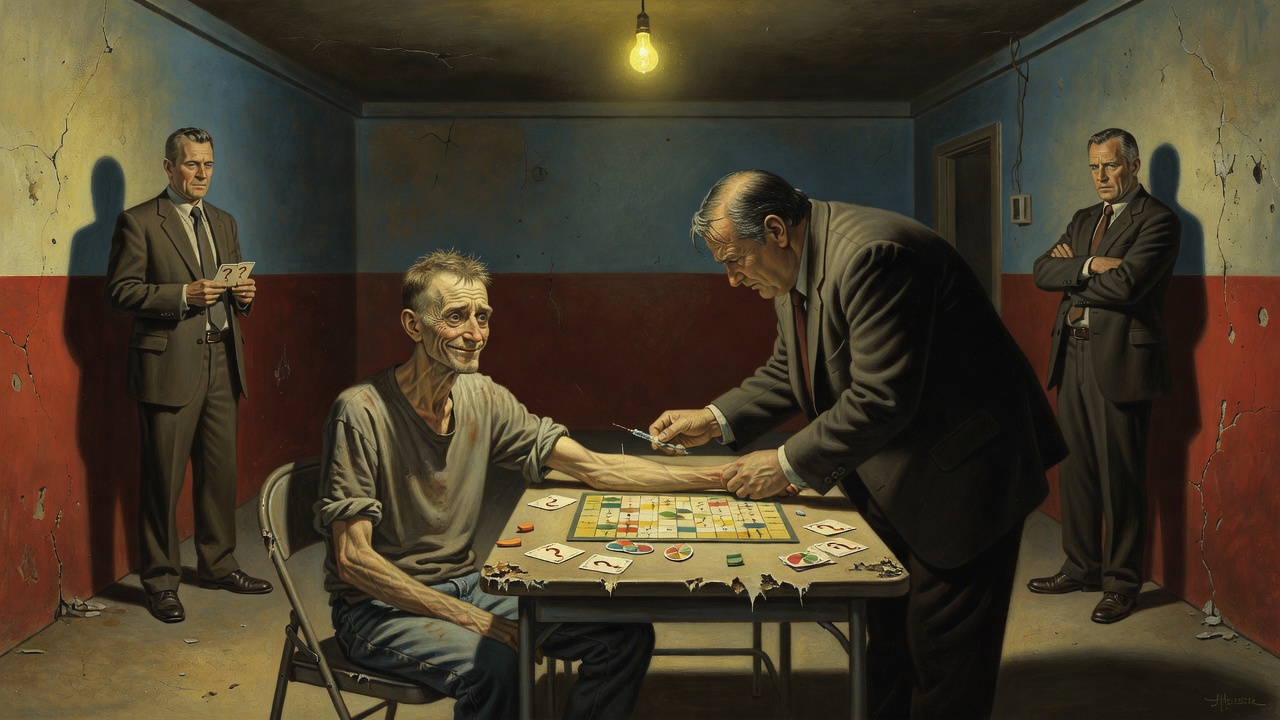
The Leaning Tower is Balazar’s closed bar, under a neon sign that, seen through Eddie’s eyes, looks to Roland like the Tower itself burning red in the sky; he cries out for Cuthbert and Alain before he understands it is a sign. Inside, Balazar sits building a tower of playing cards. Down the hall three of his gentlemen play Trivial Pursuit with Henry, who answers every question “Johnny Cash” and, five minutes before Eddie arrives, asks for a fix. George Biondi gives him one. Henry dies while Balazar works on the third storey.

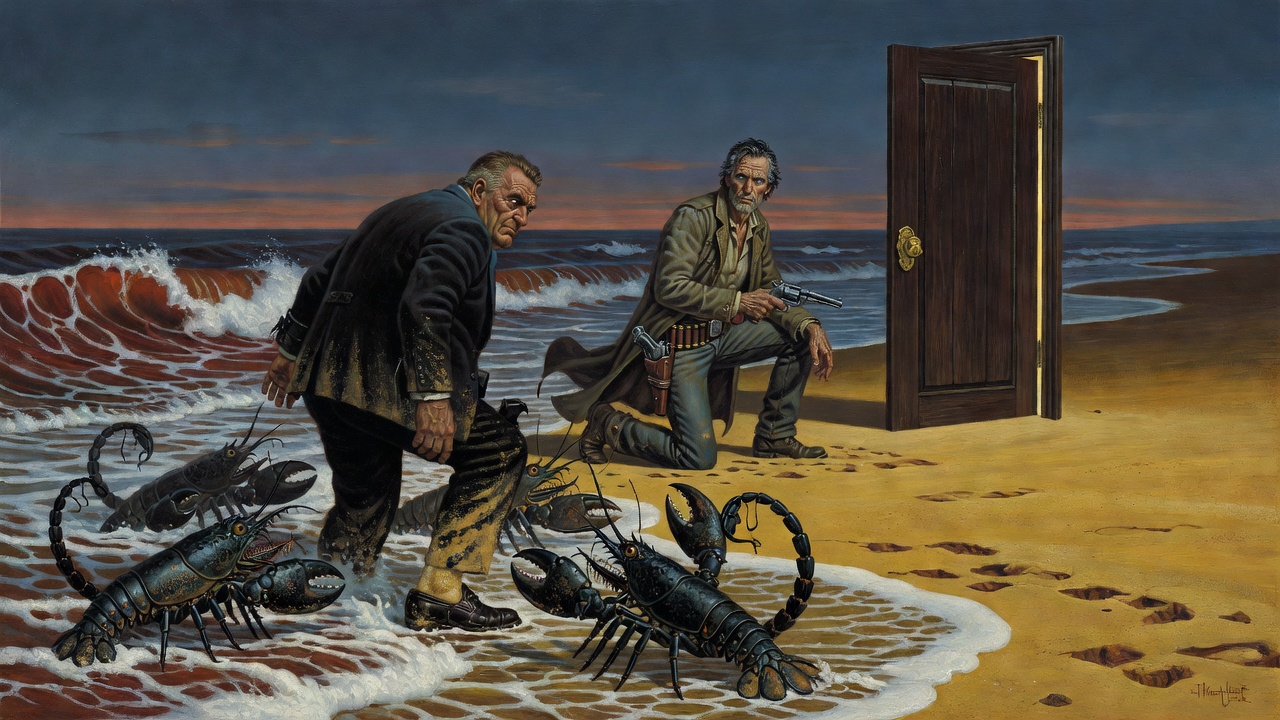
Eddie claims half the coke is hidden in the bathroom; Balazar has him stripped and searched, then sends Jack Andolini in with him. Roland’s voice comes out of Eddie’s mouth, and Eddie grabs Jack and carries them both through the door onto the beach. Roland’s first shot misfires; Eddie, naked, hits Jack with a rock; Roland’s third round strikes Jack’s own gun as it fires, and what is left of Old Double-Ugly staggers to the waterline, where the lobstrosities take him, Gucci loafers and all. Roland cannot fire a gun with his right hand any more. He puts that revolver in Eddie’s and tells him there is going to be shooting.

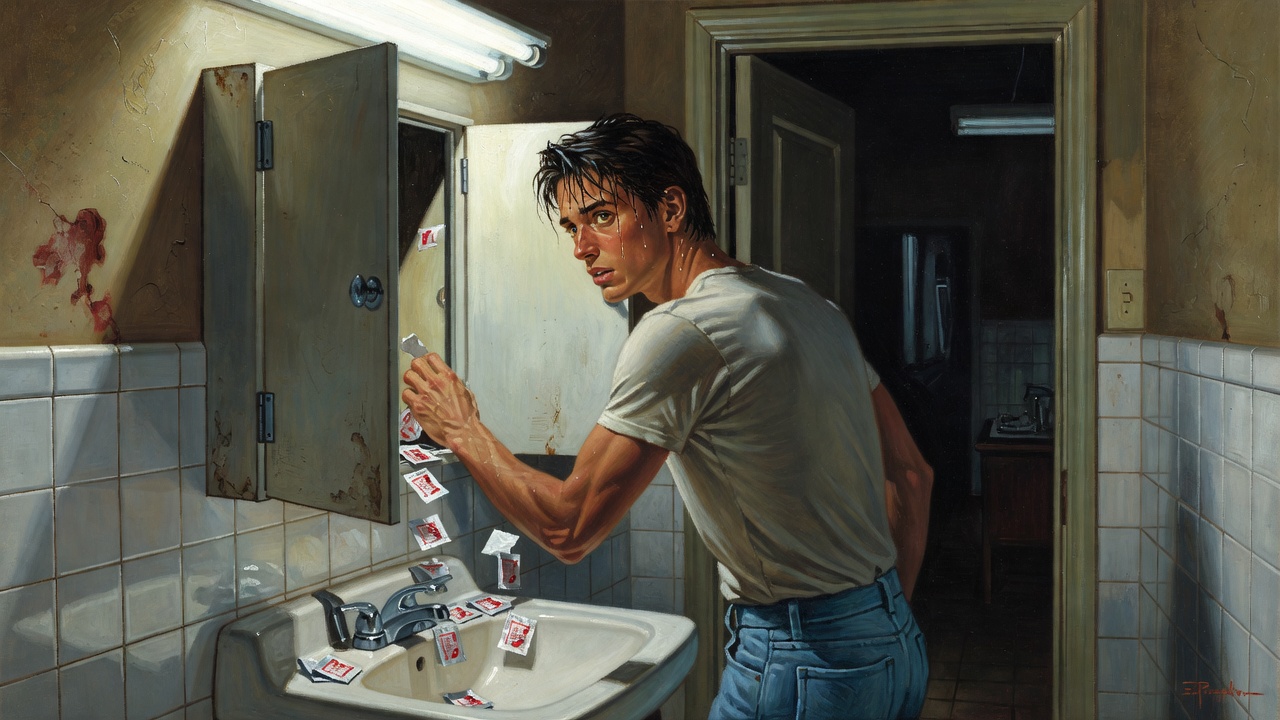
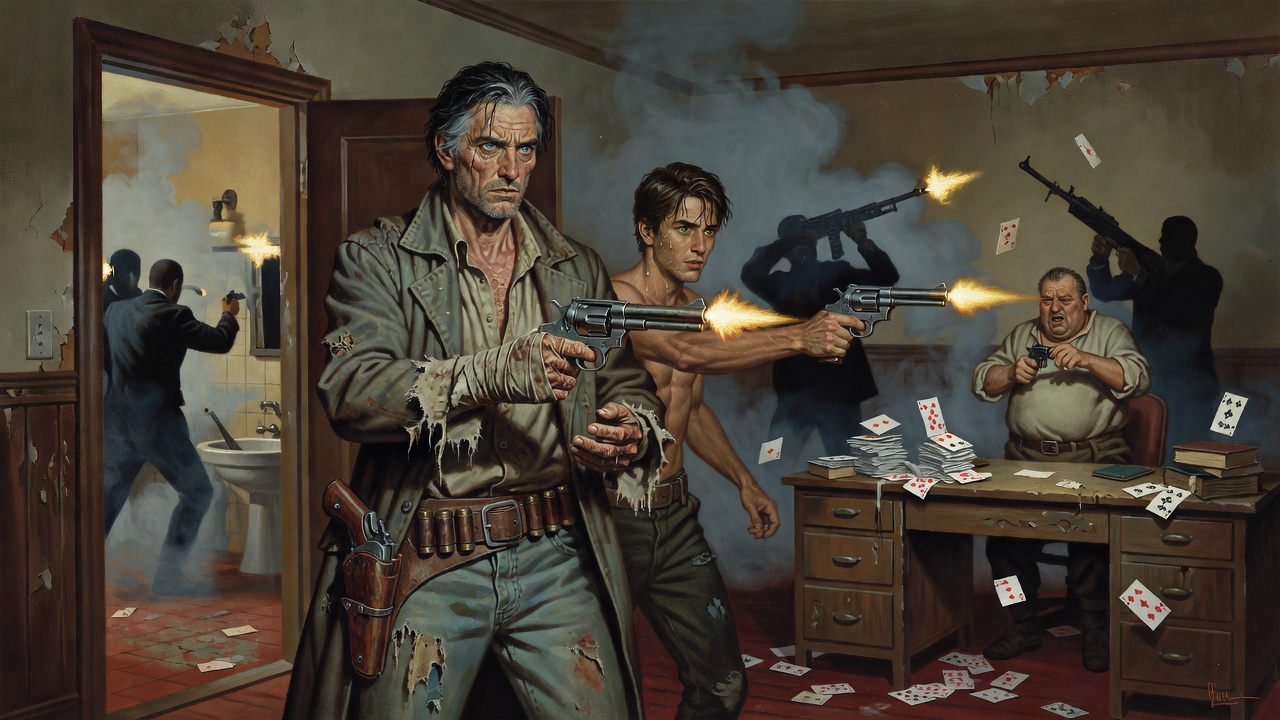
Behind the medicine cabinet Eddie finds the panel: pornography and packets of Keflex, the antibiotic that can save Roland’s life. Through the door he hears a voice tell Balazar that Henry is dead. “I want to go to war,” he says. The office becomes one. Roland kills the first man to fire; Eddie wings Balazar; a gunman with a machine gun sprays his own side; Roland finishes Balazar with four rounds from a dead man’s automatic. The last of them throws Henry’s head through the door at Eddie. Roland, bracing his left hand on his bandaged stump, kills him too. Sirens. Eddie asks what is on the other side of the door.

“Probably death. But before that happens, I don’t think you’ll be bored.”

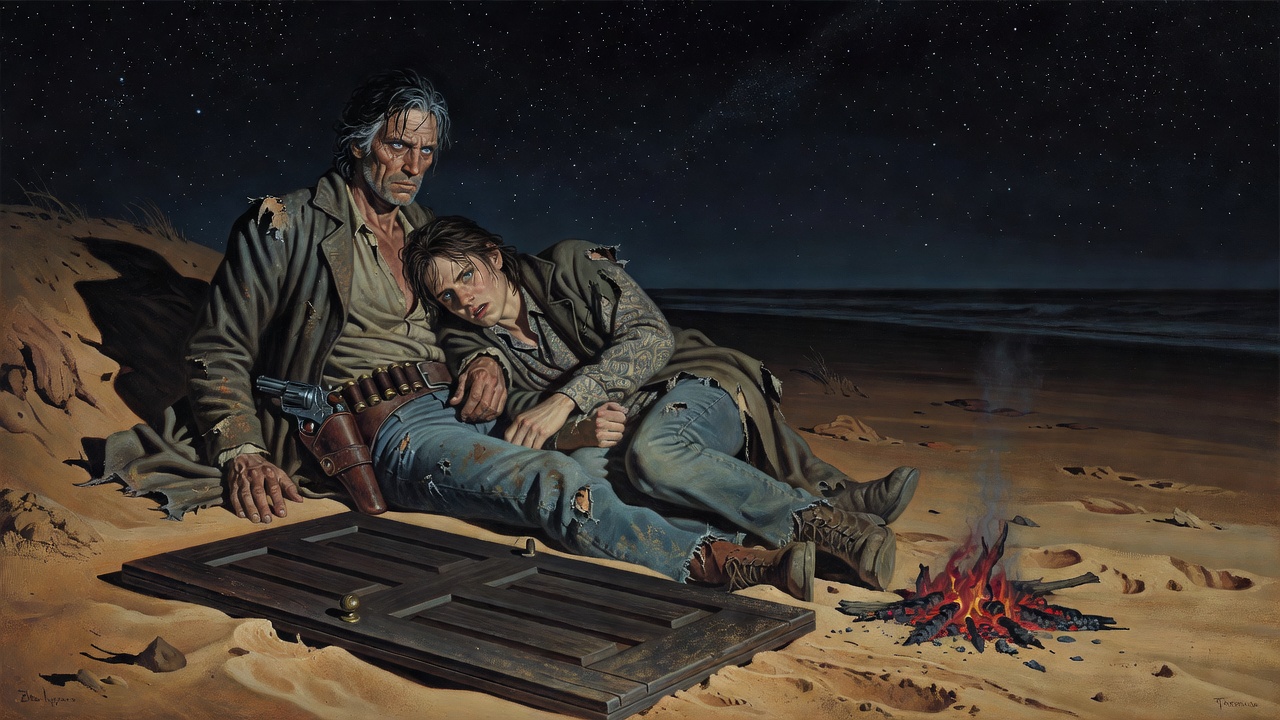
They go through. On the sand withdrawal folds Eddie double and he begs to go back for the heroin in Balazar’s office. “That part of your life is over, Eddie,” Roland tells him, and shuts the door, which falls flat on the beach, closed for good. He dry-swallows two Keflex and sleeps holding the prisoner.

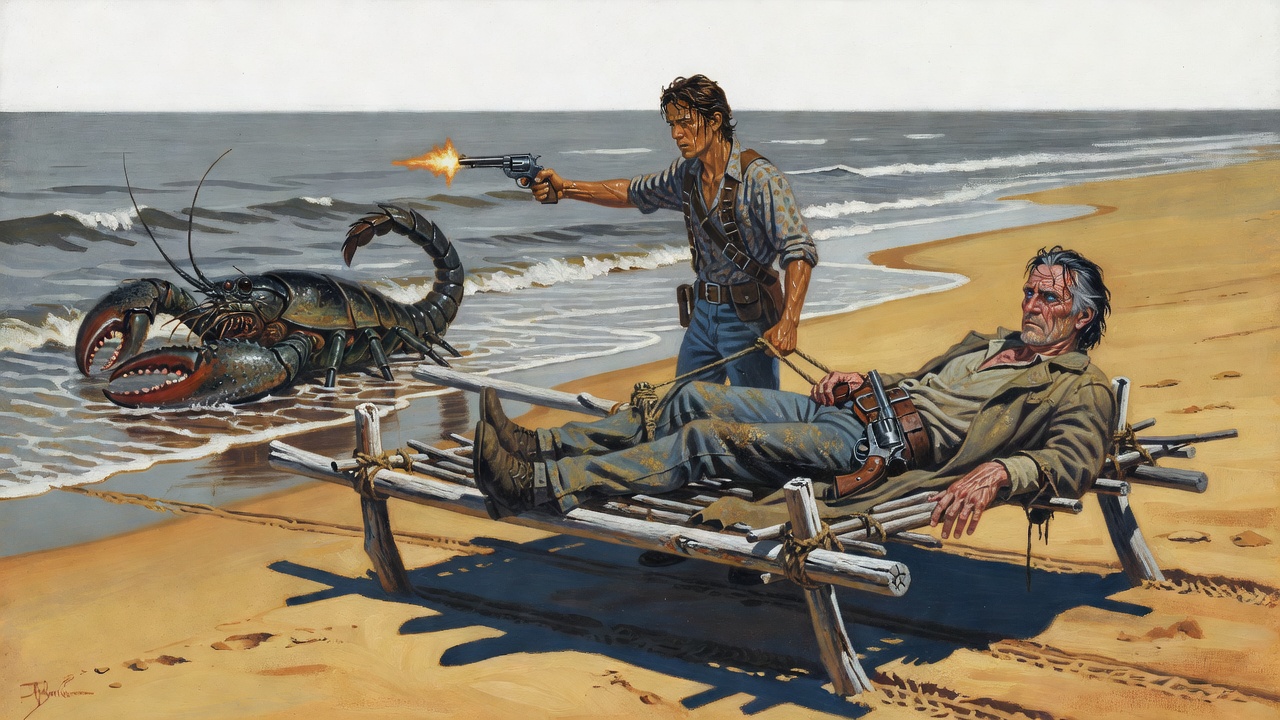
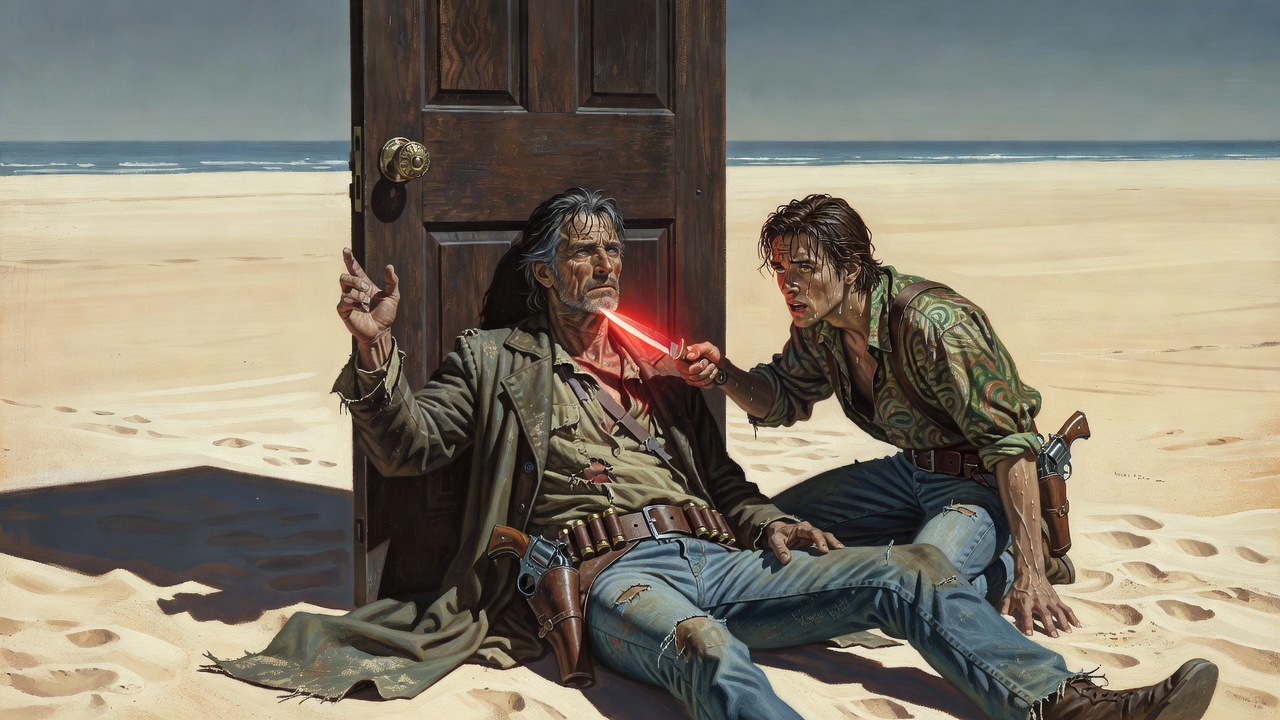
Shuffle is King’s name for the interlude that follows: Roland’s fever breaking in fragments like cards flicked past by a sharp. Eddie, in full withdrawal himself, nurses him for the better part of a week, as long as the Keflex lasts, feeds him lobstrosity — “What did you think I was doing? Calling Red Lobster for take-out?” — holds Roland’s gun to his own head one grey morning and puts it down because the gunslinger needs him, then builds a travois and drags him north, shooting one of the creatures in mid-question. He tells Roland the story of Henry, trust turned to dependency turned to addiction, and Roland hears his own plan for Eddie in it. They come to a second door: THE LADY OF SHADOWS. Through it is New York again, earlier than Eddie’s time. Eddie, desperate, swears he will shoot Roland if he is left behind. Roland tells him that part of his life is done until after the Tower at least, and goes through as Eddie lays a knife against his throat.
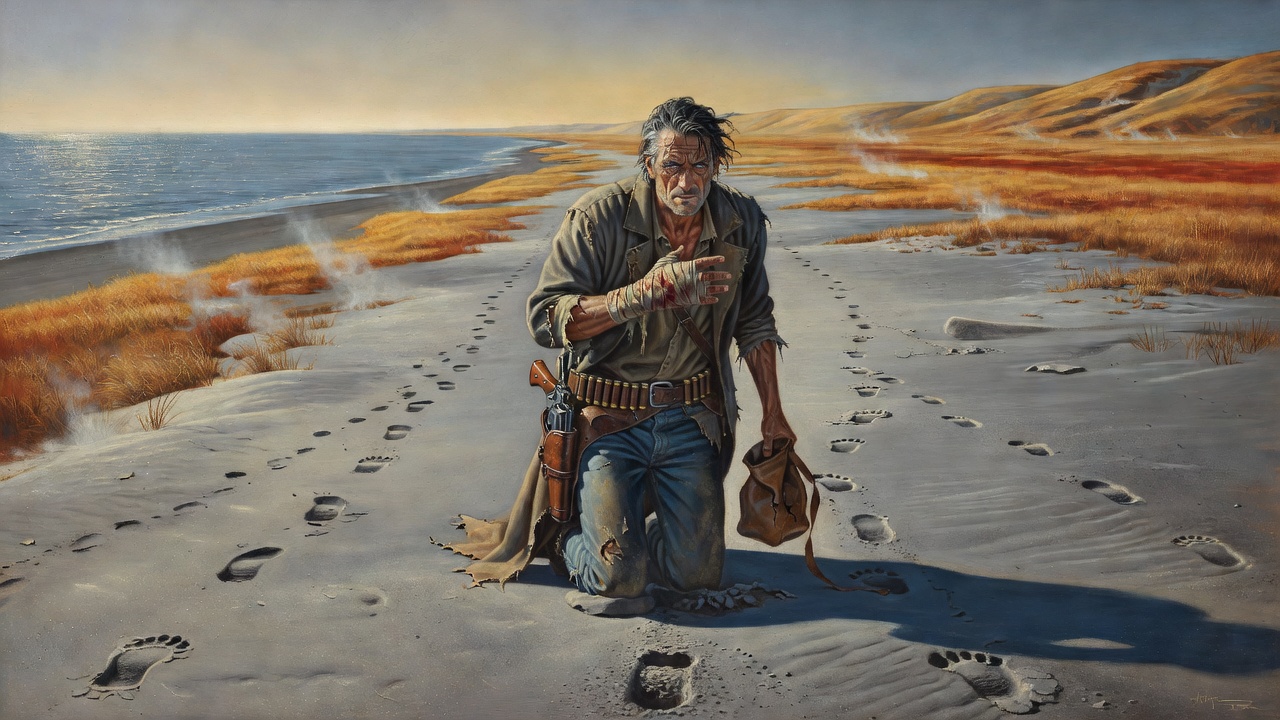
A very wide empty beach with a lone figure fallen to one knee and a long line of footprints behind him.
II · 5 Four Miles North He walks north, feverish, for about three hours and four miles, falling and getting up, and drains the last of his water a mile later. The red lines on his arm are the clock. Then, far ahead on the empty sand, something stands upright that has no business there. This is the first chapter of The Prisoner, called The Door.
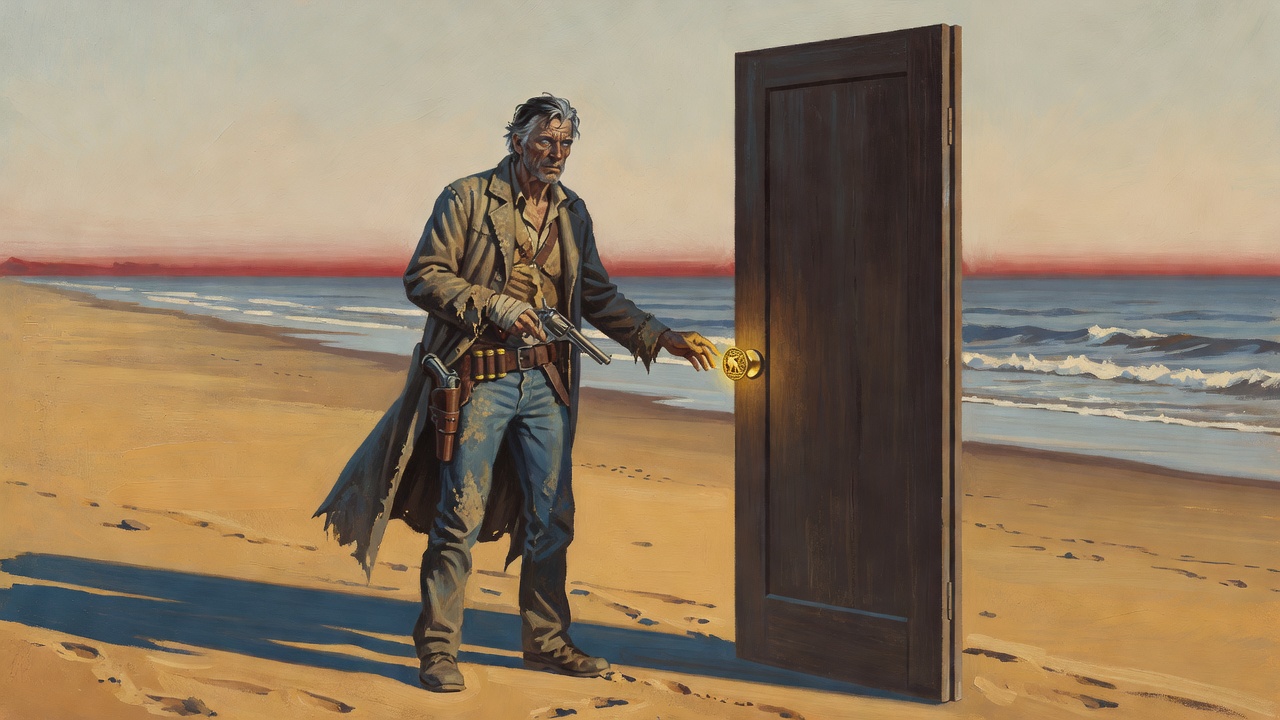
A single door standing alone on a beach with nothing behind it, a gunslinger reaching for its knob.
II · 6 The Prisoner Six and a half feet of ironwood, a gold knob filigreed with a baboon, two words in black letters, and no back: Roland can walk all the way round it, and from some angles it is not there. The knob is deadly cold. Beyond it he sees the earth from a great height, then the cabin of an aircraft, through eyes that are not his. Each of the three doors is a card from Walter’s reading made solid.
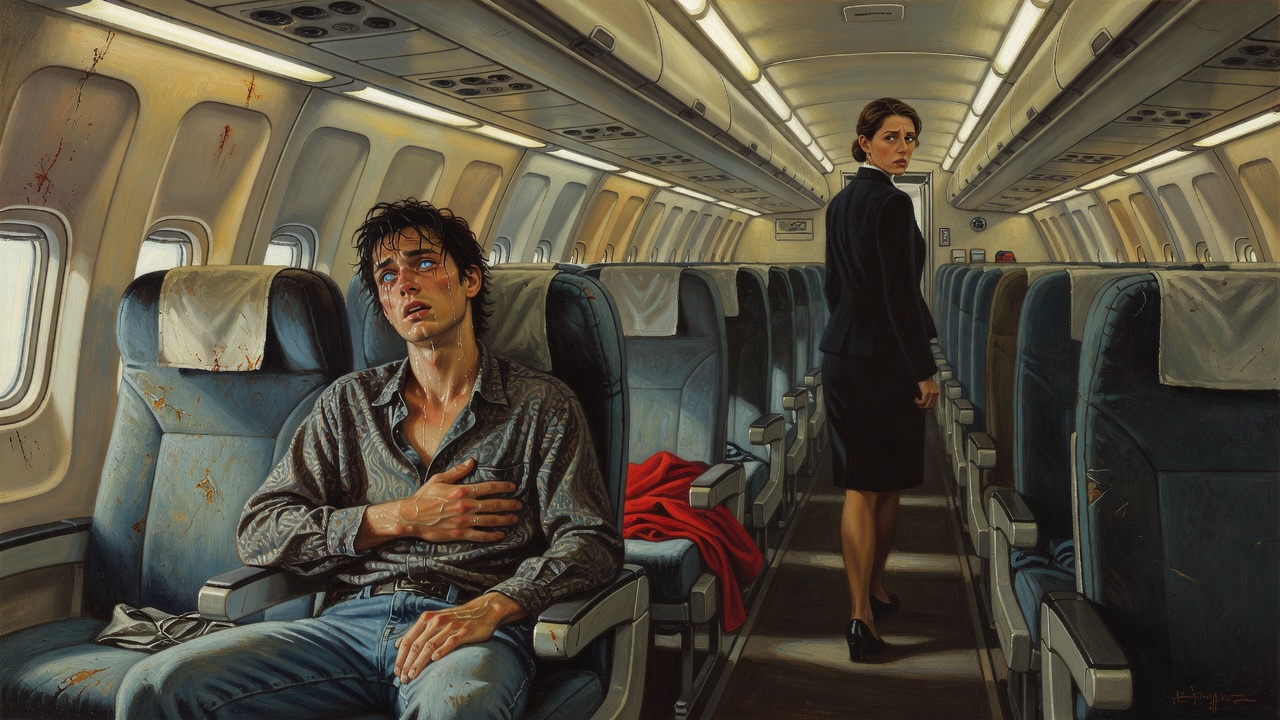
A sweating young man in a paisley shirt in an airliner seat, his eyes an unnatural pale blue, a stewardess looking back at him.
II · 7 Seat 3-G Eddie Dean, twenty-one, dozes in seat 3-G of Delta 901 out of Nassau with two pounds of cocaine taped under his arms and withdrawal coming on, running product for Balazar. Then a stranger is inside his head. He vomits, and a stewardess notices that the nice-looking passenger’s hazel eyes have gone iceberg blue. Roland is learning the first rule of the doors: he can come forward.
A cramped aircraft lavatory whose back wall opens onto a beach, a young man tearing tape from his ribs and a gaunt gunslinger watching from the sand.
II · 8 Two Worlds in a Closet The crew has seen the bulges and radioed customs, so Roland sends Eddie to the lavatory and they meet in person for the first time: a scarecrow in homespun with a filthy rag round one hand, standing on a beach where the wall should be. Roland hits him once to keep him moving. The tape comes off, the bags go through, and when the captain breaks the latch there is nothing to find.
A young man in his underwear on a chair in a windowless room, ringed by seven customs agents who are all smoking.
II · 9 Seven Smoking Men Customs keeps Eddie two hours in his underwear in a room full of smoking agents and gets an allergy story for the tape marks and nothing else; he backs them down. He is twenty-one, the text says here. Walking out with a tail, he buys hot dogs, Anacin and a Pepsi for a man on a beach, and finds the door now follows him wherever he goes.
A fevered gunslinger propped on one elbow in the sand at dusk drinking from a paper cup with wonder on his face.
II · 10 Astonished by Sugar Back in his own failing body, Roland drags himself above the line where the lobstrosities hunt, works out that they come with darkness rather than the tide, and judges he has six or eight hours without medicine. Then he tastes the Pepsi Eddie has passed through and is astonished by the sugar. Eddie’s world, he is learning, is full of wonders.
A young man walked between two gangsters toward a dark bar under a red neon sign shaped like a leaning tower.
II · 11 The Tower, in Red Fire Balazar’s van brings Eddie to The Leaning Tower, a closed bar under a neon sign that, seen through Eddie’s eyes, looks to Roland like the Tower itself burning red in the sky; he cries out for Cuthbert and Alain before he understands it is a sign. Jack Andolini, Old Double-Ugly to the Dean brothers, drove. Balazar has the stash, and Balazar has Henry.
A fat man at a lamplit desk placing a playing card on the third level of a tower of cards.
II · 12 The Third Storey In his office Balazar builds a tower of playing cards and waits. He has two years of business school, dresses like a peasant, and has only ever lost his temper over a card tower knocked down on purpose. Down the hall three of his gentlemen play Trivial Pursuit with Henry Dean, who answers every question “Johnny Cash”. The tower reaches its third storey.
A gaunt man slumped at a board game table with his arm out while a man in a suit holds a hypodermic over the vein.
II · 13 The Great Sage and Eminent Junkie Five minutes before Eddie arrives, Henry asks for a fix. George Biondi gives him one, a hypodermic into the vein above the elbow, and Eddie’s older brother — the one who taught him trust and then the needle — dies at a Trivial Pursuit board while Balazar works on his cards. Nobody in the room is much interested. Eddie will learn of it through a door.
A big man in a suit reeling into the surf at dusk as lobster-like creatures rise around him, a gunslinger kneeling behind with a revolver and an open door standing on the sand.
II · 14 Gucci Loafers Through the bathroom door, with Roland’s voice in his mouth, Eddie carries Jack Andolini onto the beach. Roland’s first shot misfires; Eddie, naked, hits Jack with a rock; Roland’s third round strikes Jack’s own gun as it fires. What is left of Old Double-Ugly staggers into the surf and the lobstrosities take him, Gucci loafers and all. Roland puts his right-hand revolver into Eddie’s hand.
A bare-shouldered young man seen from behind reaching into a secret panel behind a medicine cabinet, pill packets spilling out.
II · 15 Behind the Medicine Cabinet Eddie opens the panel behind the medicine cabinet and finds, among the pornography, packets of Keflex: the antibiotic that can save the gunslinger’s life, the thing the whole smuggling run turns out to have been for. Through the door, from the office, he hears one of the gentlemen tell Balazar that Henry is dead. “I want to go to war,” he says.
A gunslinger and a bare-chested young man firing revolvers from a bathroom doorway into an office where a tower of playing cards lies scattered across a desk.
II · 16 The Shoot-Out at the Leaning Tower Roland steps out of the bathroom into Balazar’s office and the room becomes a war. He kills the first man to fire; Eddie wings Balazar; a gunman with a machine gun sprays his own side; Roland finishes Balazar with four rounds from a dead man’s automatic, and when the last of them throws Henry’s head through the door at Eddie, braces his left hand on his bandaged stump and kills him too. The card tower is already down: Balazar knocked it over himself, reaching for his gun.
A door lying flat on night sand beside a gunslinger holding a shaking young man against him.
II · 17 Closed for Good They cross with the sirens closing. On the sand withdrawal folds Eddie double and he begs to go back for the heroin in Balazar’s office. “That part of your life is over, Eddie,” Roland tells him, and shuts the door, which falls flat on the beach, closed for good. He dry-swallows two Keflex and sleeps holding the prisoner. The first card is drawn, and it has cost both of them.
A young man dragging a fevered gunslinger north on a driftwood travois under hard sun, a revolver in his free hand.
II · 18 Red Lobster Shuffle: Roland’s fever breaks in fragments like cards, and Eddie, sick himself, nurses him for the better part of a week, as long as the Keflex lasts, feeding him lobstrosity — “What did you think I was doing? Calling Red Lobster for take-out?” — and once holding Roland’s gun to his own head before deciding the gunslinger needs him. Then he builds a travois and drags Roland north, shooting one of the creatures in mid-question.
A young man holding a knife to the throat of a slumped, empty-eyed gunslinger beside a door seen edge-on on the sand.
II · 19 The Lady of Shadows The second door reads THE LADY OF SHADOWS, and through it is New York again, earlier than Eddie’s time. Eddie, desperate for the heroin in that city, swears he will shoot Roland if he is left behind. Roland tells him that part of his life is done until after the Tower at least, and goes through, leaving his body to Eddie’s knife. Eddie does not use it.
Part 3

The Lady of Shadows


New York, February 1964. Odetta Holmes — heiress to Holmes Dental Industries, a civil-rights name that has been on the cover of Time — is driven home to a renovated Victorian off Central Park South by Andrew, her white chauffeur, from three days in Oxford, Mississippi, that ended in a cell. Andrew lifts the wheelchair from the trunk. She lost her legs on 19 August 1959, pushed in front of an A train; before that, at five, a brick dropped from a tenement window left her in a coma. Odetta thinks this no world for gunslingers. She does not know about the other woman.

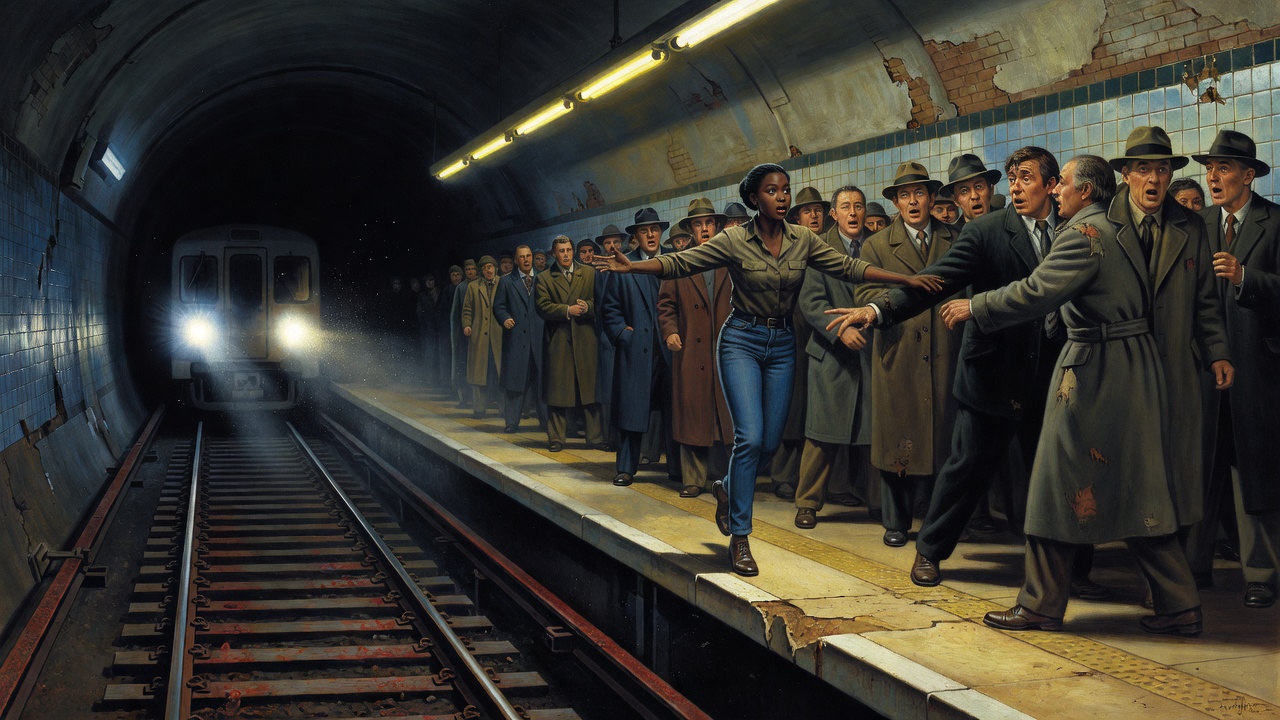
Detta Walker remembers things Odetta does not: a scarf stolen from Macy’s at twenty-three, a roadhouse, a flat in Greenwich Village. It is Detta that Roland and Eddie watch through the door, pocketing paste jewellery at a Macy’s counter, and Roland notes that the viewpoint is too low and moves too smoothly — a wheelchair. The book cuts to 1959: an intern rides in the ambulance with a young woman in jeans and a khaki shirt who crawled far enough from the platform that the train took both legs. She wakes polite, asking what happened; then she wakes screaming for the man who pushed her, in another voice; and the intern realises the two women do not know each other.

A store detective is closing on Detta when Roland comes forward into a mind he experiences as a snakepit, spins the chair, spills her purse under the detective’s feet, and wheels her through a dressing-room door onto the beach.

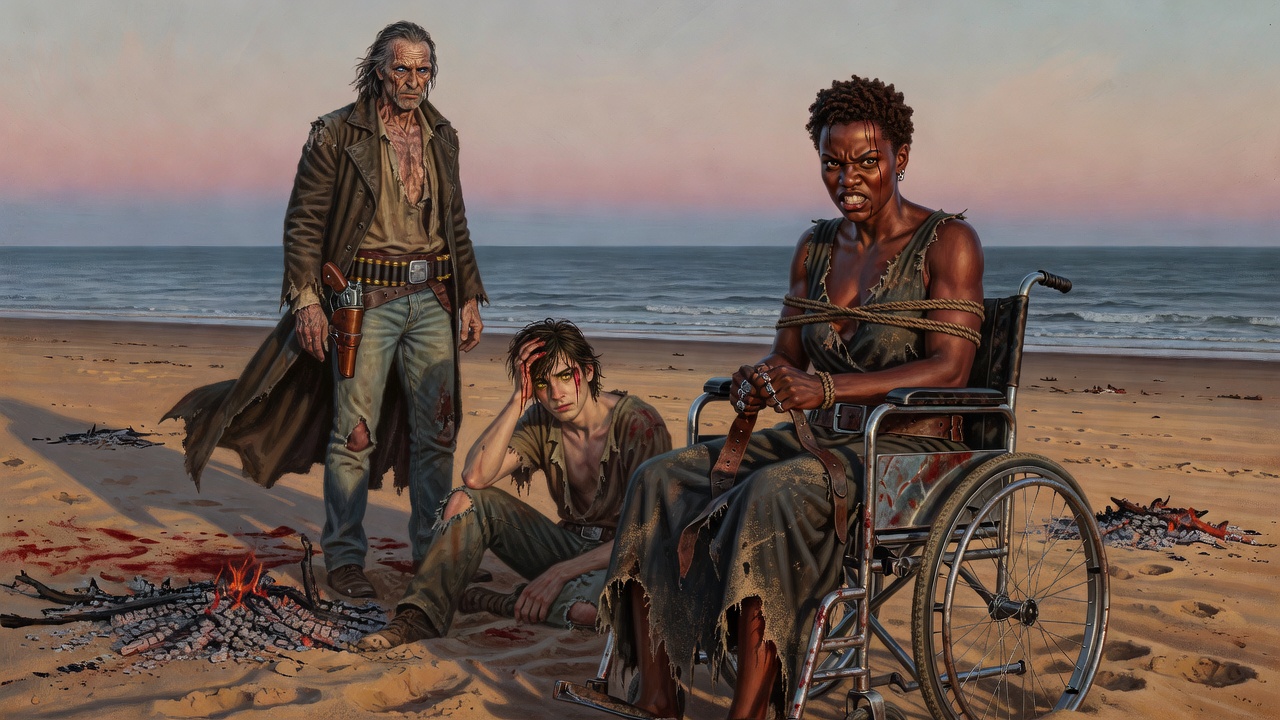
Detta arrives cursing. Then Odetta surfaces, remembers none of it, and decides she is in a coma-dream again. Eddie, trying to comfort her, finds himself falling in love. Roland tells him there are two women in that body and the second is as dangerous as a lobstrosity; his Keflex is gone and the fever is coming back. That night Detta wakes, takes Roland’s revolver and pulls the trigger on the sleeping Eddie. It clicks: Roland has loaded the guns with spent shells. She clubs Eddie with the butt until Roland tackles her, and they lash her into the wheelchair with a gunbelt and slip-knots that tighten when she fights. Roland understands that in the crossing each woman glimpsed the other.

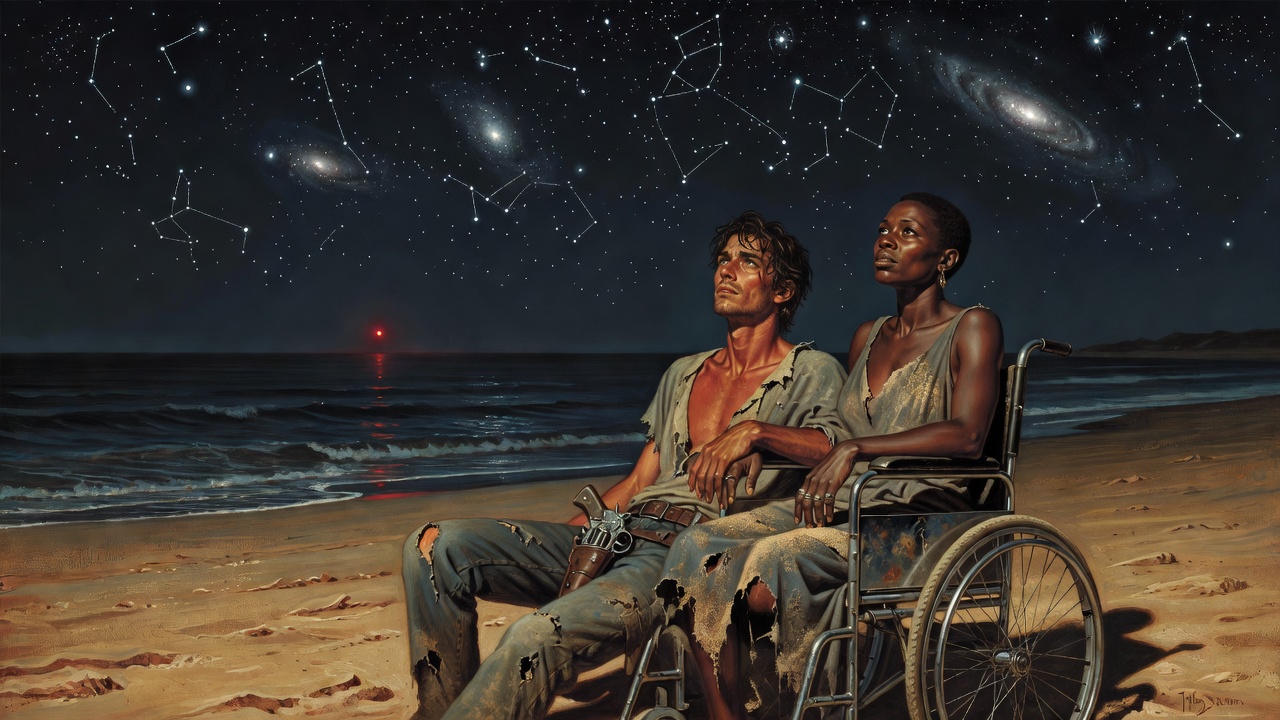
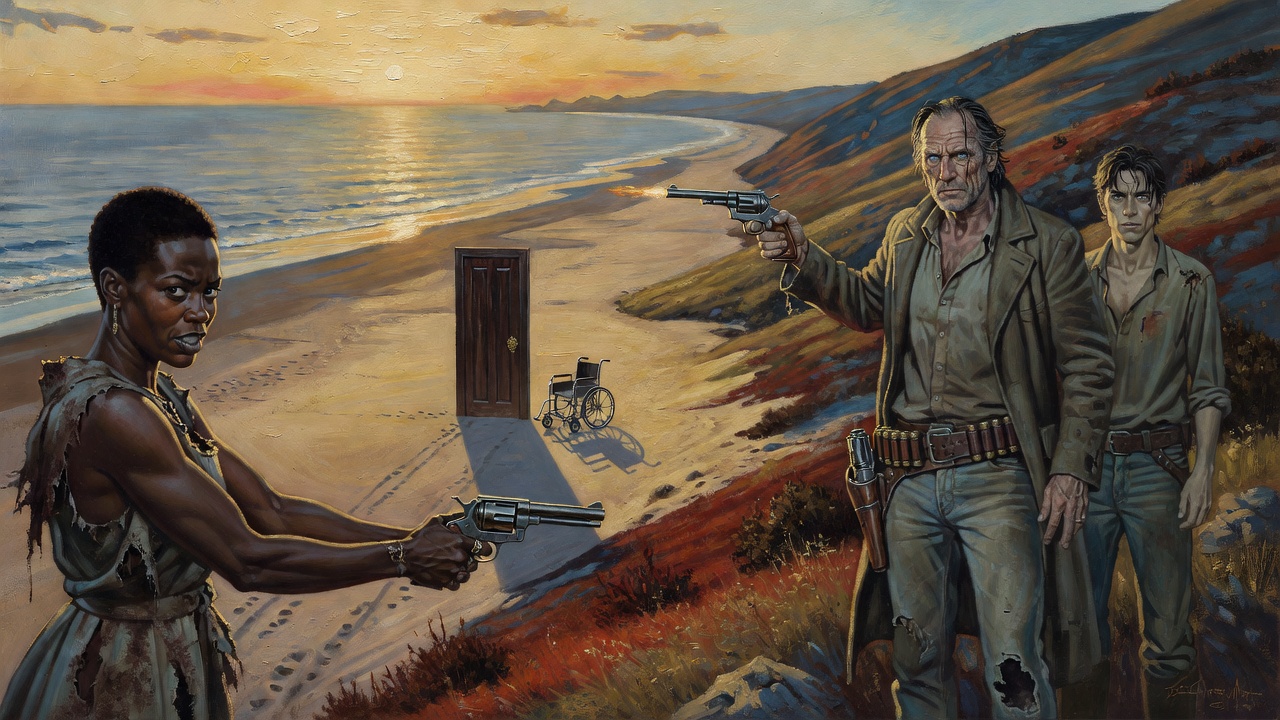
Days of pushing a wheelchair through sand at three miles a day, Detta screaming slurs and tipping the chair, both men showing scurvy. He speaks past Detta to Odetta, and faints thirty miles short of where the beach ends; Odetta comes back. In the Reshuffle that follows, Eddie pushes Odetta ahead to find the third door with one of Roland’s guns in his waistband and orders to brain her if Detta returns. They make love under strange galaxies turning slowly overhead; the door appears; and Eddie, who has read the two words on it, breaks Roland’s order and leaves Odetta the gun while he goes back for the chair. Roland’s first words when he wakes are that Eddie gave her the gun. At sunrise Odetta is gone. The door says THE PUSHER. Roland fires three times to prove some shells are live, two clicks and one shot, reloads, throws the gun to Eddie and goes through — watched from a hundred and fifty yards up the hillside by Detta, with the other revolver.
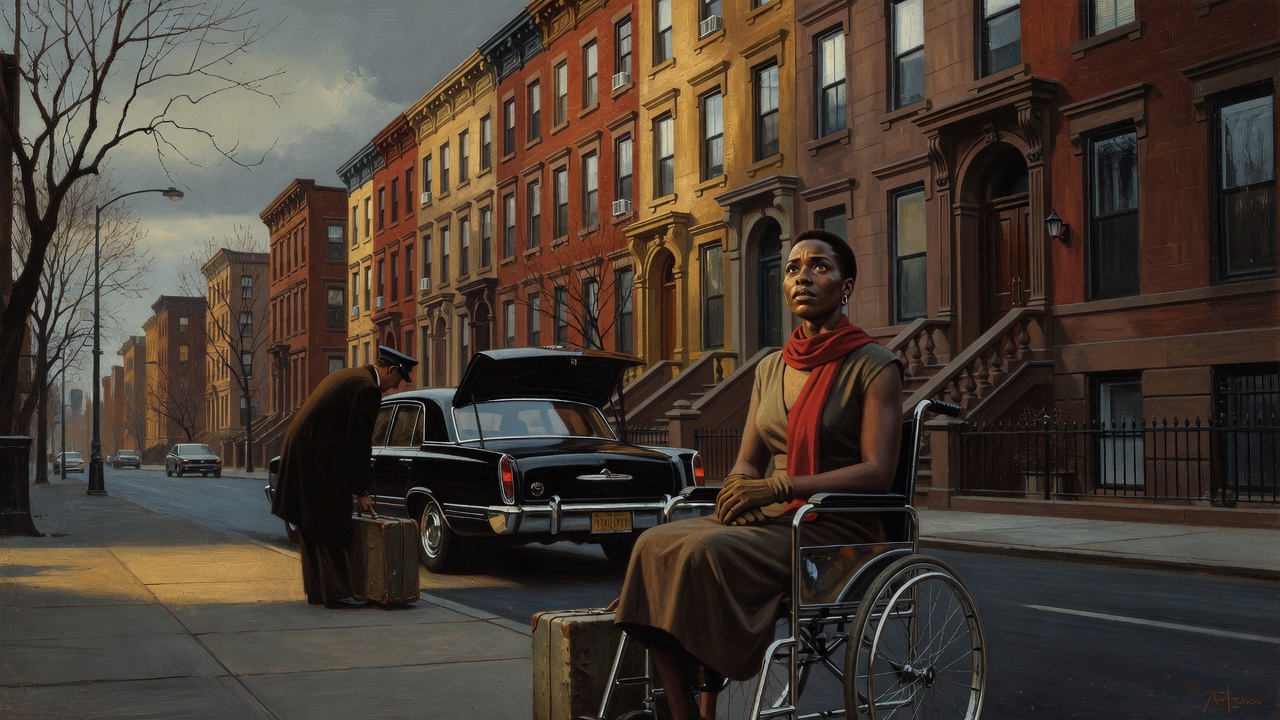
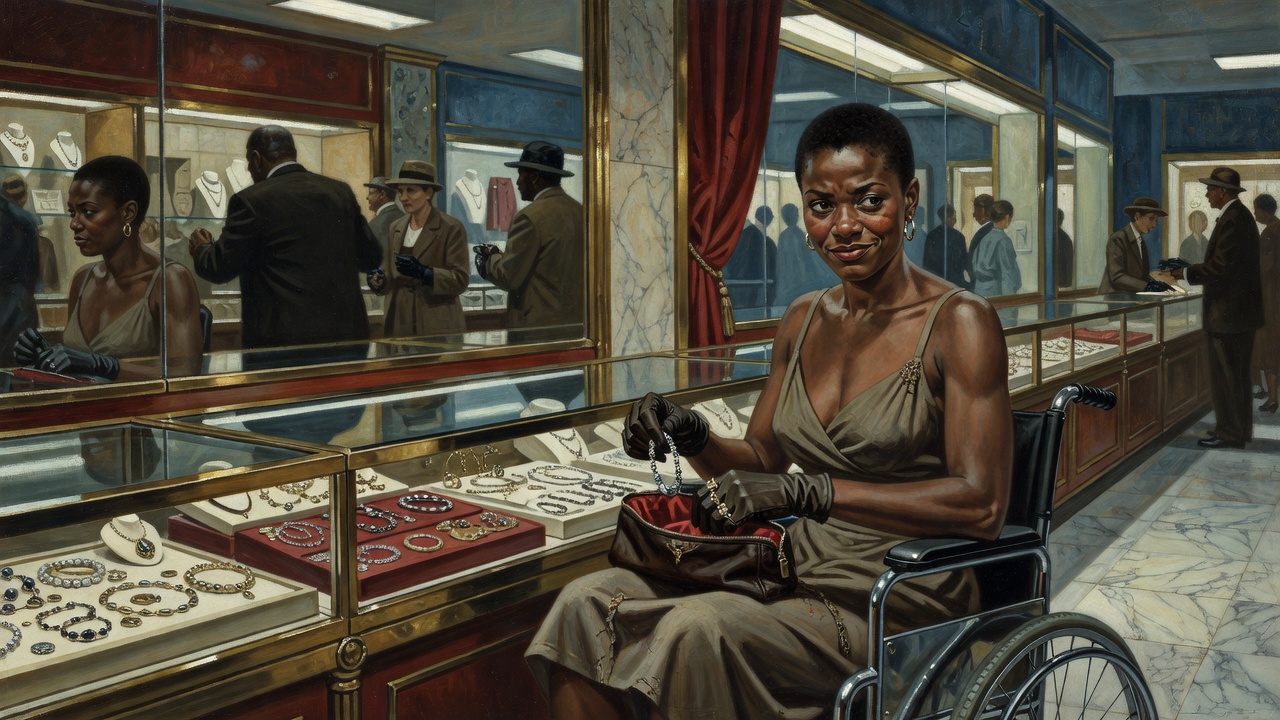
A composed Black woman in a wheelchair at a winter kerb beside a long black car while a chauffeur lifts a suitcase from the trunk.
II · 20 Odetta Holmes, 1964 New York, February 1964. Odetta Holmes — heiress to Holmes Dental Industries, a civil-rights name that has been on the cover of Time — is driven home by her chauffeur Andrew from three days in Oxford, Mississippi, that ended in a cell. She lost her legs on 19 August 1959. She thinks this is no world for gunslingers, and she does not know about the other woman who shares her body.
A sneering Black woman in a wheelchair at a department-store jewellery counter sliding a bracelet into her purse while a detective approaches in the mirror.
II · 21 Miss Walker at the Counter It is not Odetta that Roland and Eddie first watch through the second door but Detta Walker, who shoplifts paste jewellery at Macy’s and remembers what Odetta does not: a stolen scarf at twenty-three, a roadhouse, a flat in the Village. Roland notes that the view is too low and moves too smoothly, and understands the chair. The store detective is already coming.
A young woman in jeans pitching off a 1959 subway platform toward the tracks as a train’s headlamp fills the tunnel.
II · 22 19 August 1959 The book cuts back to 19 August 1959, the Christopher Street station of the A train, and the push that took Odetta’s legs: a young woman in jeans and a khaki shirt who crawled far enough that the train took both. In the ambulance she wakes polite, asking what happened, then wakes screaming in another voice for the man who did it; the intern realises the two women do not know each other.
A sneering woman lashed into a wheelchair with rope at dawn while a bloodied young man sits in the sand and a gaunt gunslinger stands over her.
II · 23 Lashed into the Chair Odetta surfaces on the beach remembering nothing and decides she is dreaming; Eddie, comforting her, begins to fall in love. That night it is Detta who wakes, takes Roland’s revolver and pulls the trigger on the sleeping Eddie. It clicks: the guns are loaded with spent shells. She clubs him with the butt until Roland tackles her. They bind her wrists with a gunbelt and lash her into the chair with knots that tighten when she fights.
A young man and a woman in a wheelchair side by side on a night beach, both faces turned up to a sky of unfamiliar stars.
II · 24 Strange Galaxies Reshuffle: after days of pushing the chair through sand at three miles a day, Roland speaks past Detta to Odetta, faints thirty miles short of where the beach ends, and Odetta comes back. He sends Eddie ahead with her to find the third door, a gun in his waistband and orders to brain her if Detta returns. Under strange galaxies turning slowly overhead, they become lovers. The door appears the next afternoon.
A sunrise beach with a lone door and an empty wheelchair, two small men by it, and a sneering woman lying hidden in hillside grass with a revolver.
II · 25 Watched from the Hillside Against orders Eddie leaves Odetta the gun while he fetches the chair; Roland’s first waking words are that he gave her the gun. At sunrise she is gone. The third door reads THE PUSHER, not the Death the gunslinger expected. He fires three times to prove some shells still live, two clicks and a shot, reloads, throws the gun to Eddie and goes through, watched from a hundred and fifty yards up the hillside by Detta.
Part 4

The Pusher


Roland opens his eyes behind another man’s, on a 1977 street corner, and sees a boy with a lunch bag and a bookbag waiting at a busy crossing: Jake. His first thought is that this is his punishment, to watch Jake die twice. Then reflex: he comes forward, the host loses what feels like an instant and is in fact seven seconds, the light changes, and Jake crosses the street and walks on to school without knowing anything happened. The host is Jack Mort, a thin, sandy-haired accountant in a blue suit who plans his crimes with a schoolroom neatness and dresses baggy to hide his build.

“Pushing was only his hobby.”

In Mort’s memory Roland finds the brick, dropped on a five-year-old girl; the newspaper clippings in a scrapbook; the platform at Christopher Street. The third card was Death, and Roland sees now that Death is himself. He faints inside Mort, and wakes at Mort’s desk after one-thirty. Looking back through the door he sees two shadows on the sand: a wheelchair, and a legless figure moving on her arms, waiting beside his body with one of his guns.

On the beach Detta has watched Eddie call for Odetta for two hours and decided he is worth more as bait than dead. She has slashed Odetta’s dress into holsters. With the rope that held her in the chair she nooses the sleeping Eddie, draws his heels up to his buttocks so that relaxing his legs will strangle him, and drags him below the tide line to wait for dark and the lobstrosities: a honeypot, to bring Roland back into her sights.

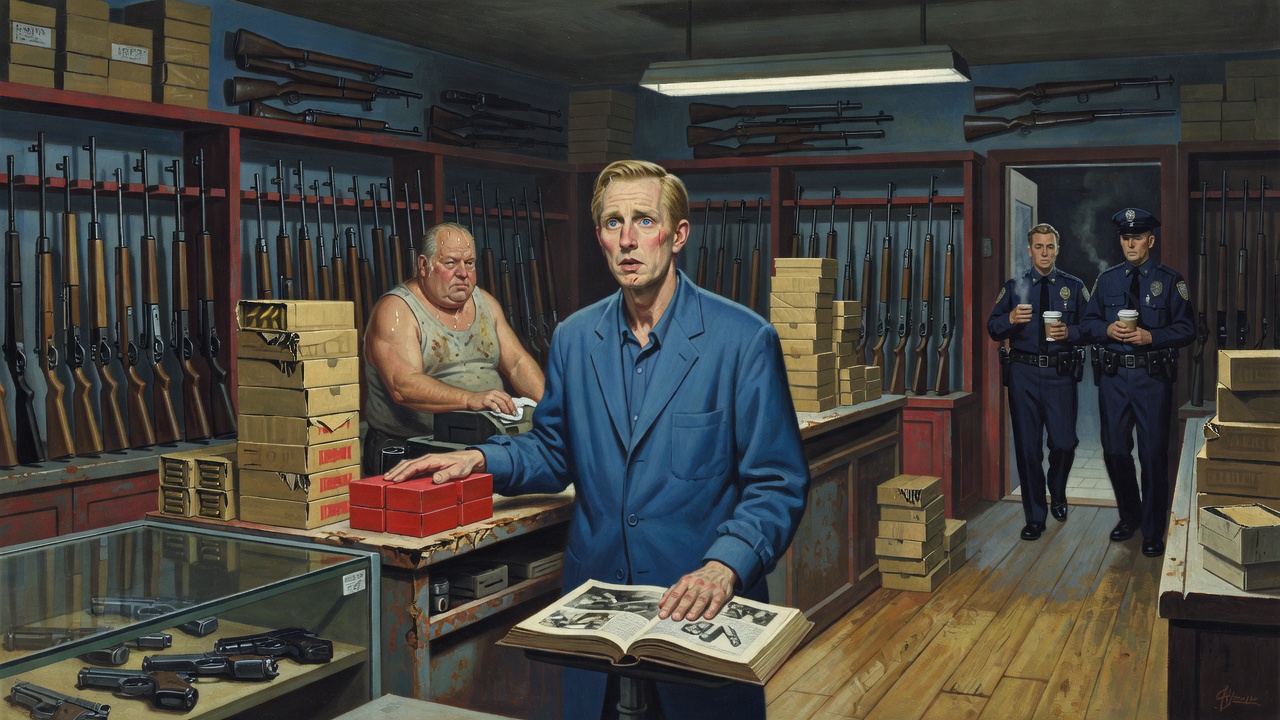
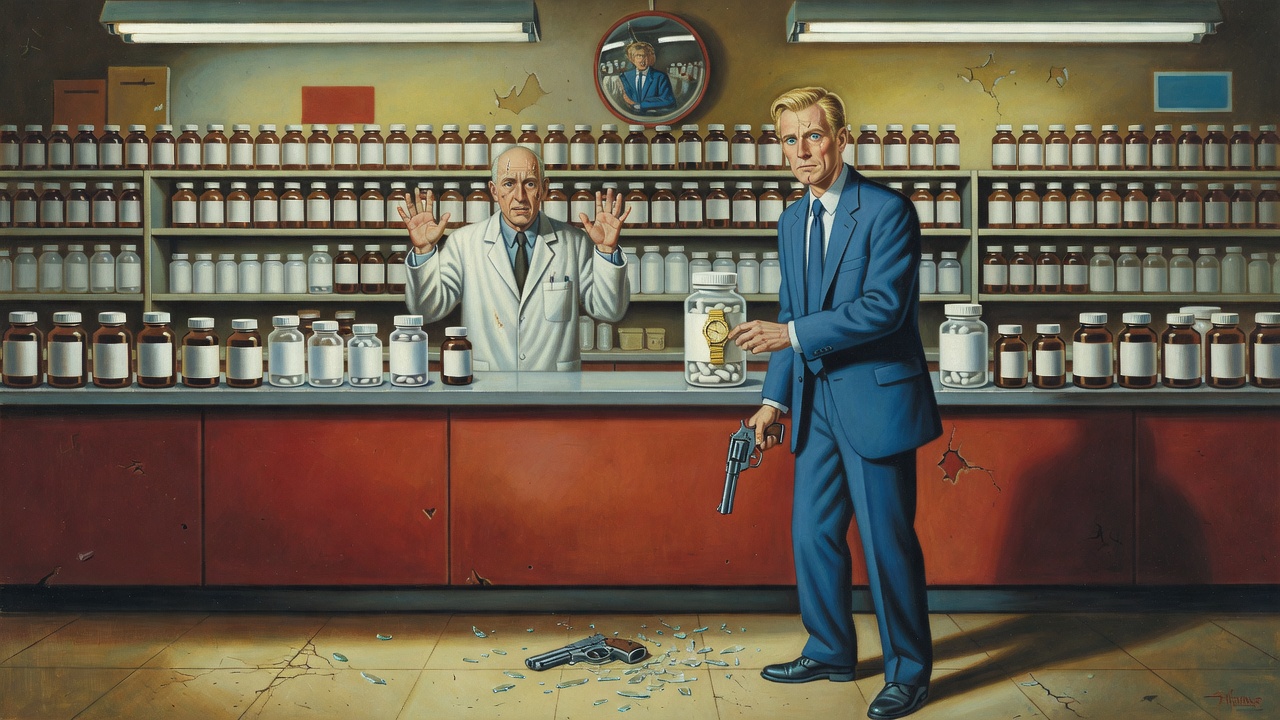
Roland uses Mort as an atlas. He takes a taxi to Clements Guns and Sporting Goods, where a squad car idles outside, learns from a caliber chart that fifty .45 shells come in a box and, having no permit, calls in the two officers to accuse the clerk of theft, cracks their heads together when they bend to look, takes the clerk’s .357, buys and pays for four boxes, handcuffs the clerk and walks out wearing two police gunbelts under Mort’s suit coat. At Katz’s Drugs he shoots a pistol out of a guard’s hand and a knife out of another man’s, and tells the druggist he wants Keflex, a lot of it, now. Out of money, he leaves Mort’s gold Rolex on the counter for a two-hundred-pill bottle. The two officers arrive concussed and furious, one with a shotgun. Roland disarms both without killing either. “You’re a dangerous fool who should be sent west,” he tells the one who fired into a crowd.

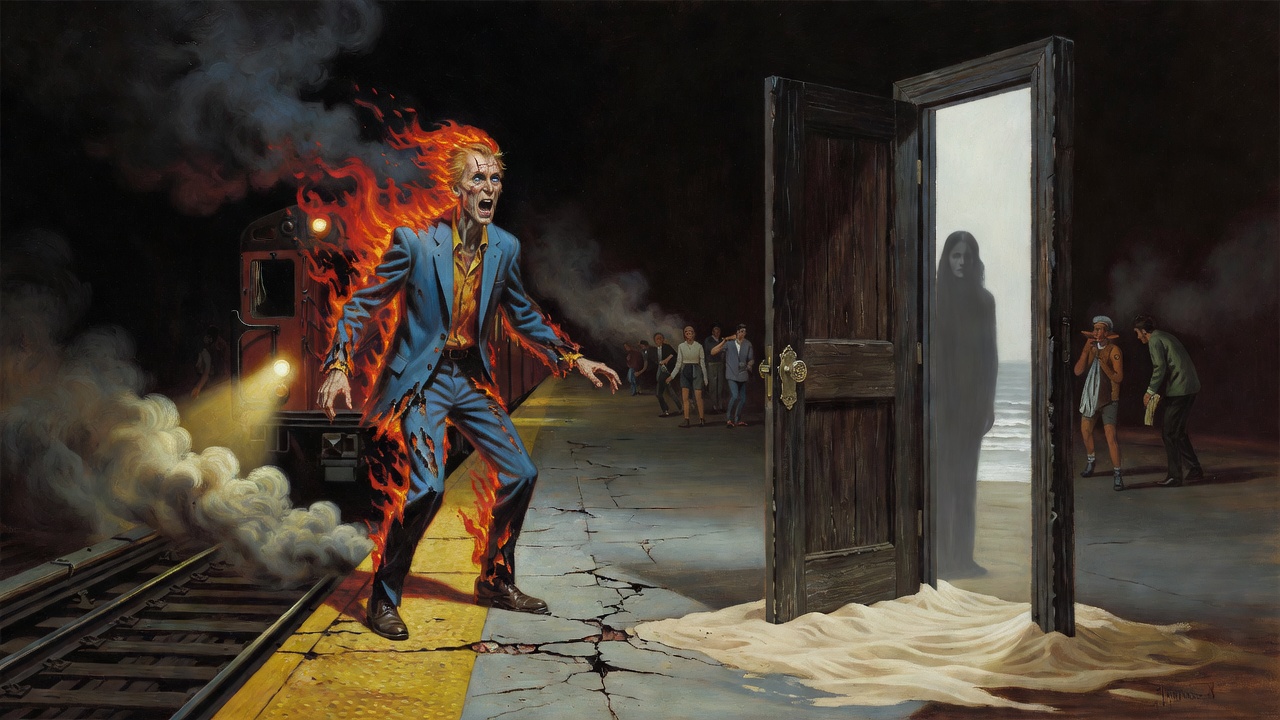
He drives their cruiser to Christopher Street and the A train. A patrolman’s bullet finds the silver lighter Mort carries for his boss’s cigarettes, and Mort catches fire. Burning, he runs down into the station; Roland stuffs the shells and the Keflex into Mort’s underwear, vaults the turnstiles, and, as the train comes in, sends one thought back through the door: look now. Two faces look out of it, the negative and positive of the same woman. Roland pushes Mort under the train, which cuts him in half at the waist, and lunges back through the door with the ammunition and the pills.

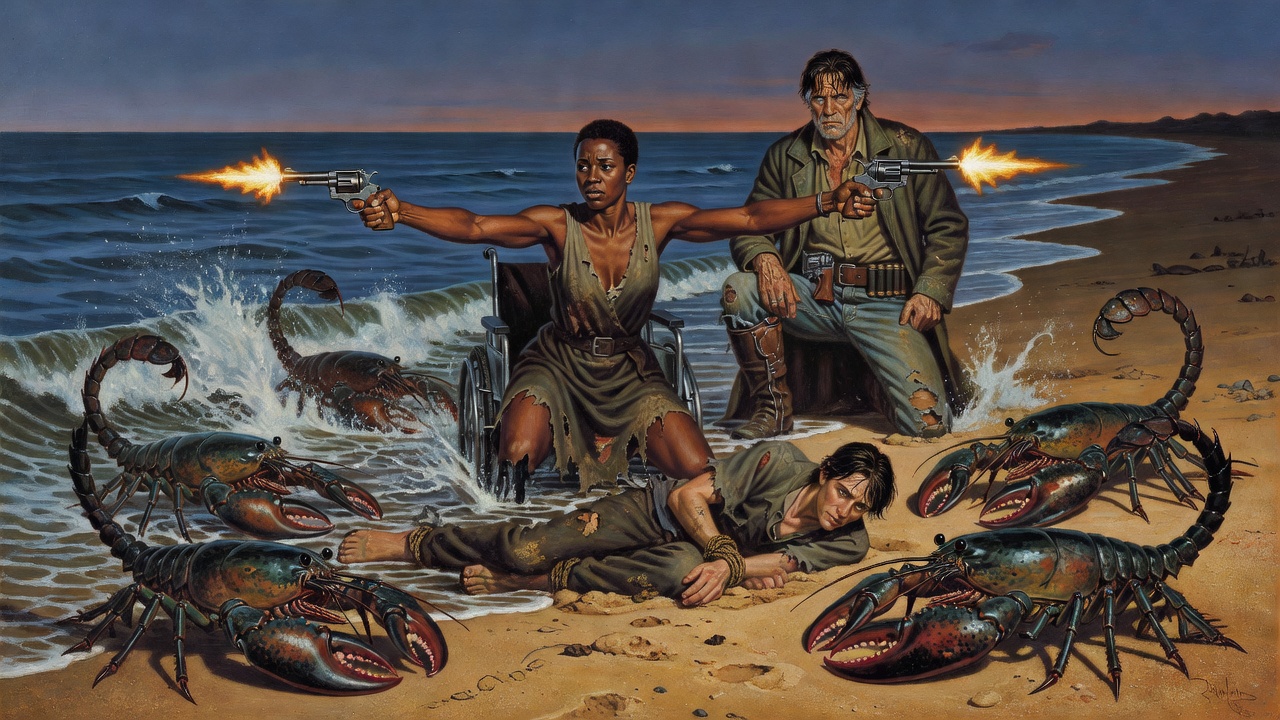
Each woman has seen the other, and both remember the brick and the platform. For the first time since the brick, the woman on the beach is whole. She pulls Roland’s guns. Eddie is at the waterline with lobstrosities on him and Roland too weak to stand; then both of Roland’s revolvers are firing at once, and the new woman shoots the creatures off him.
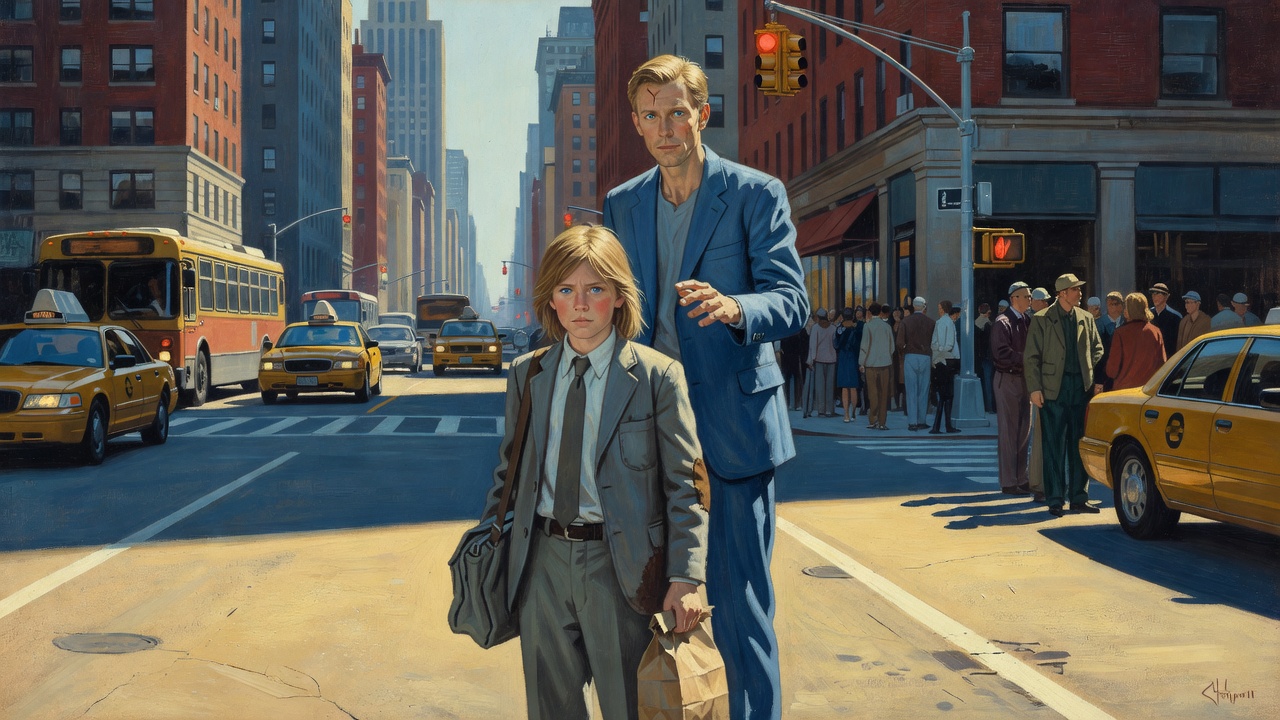
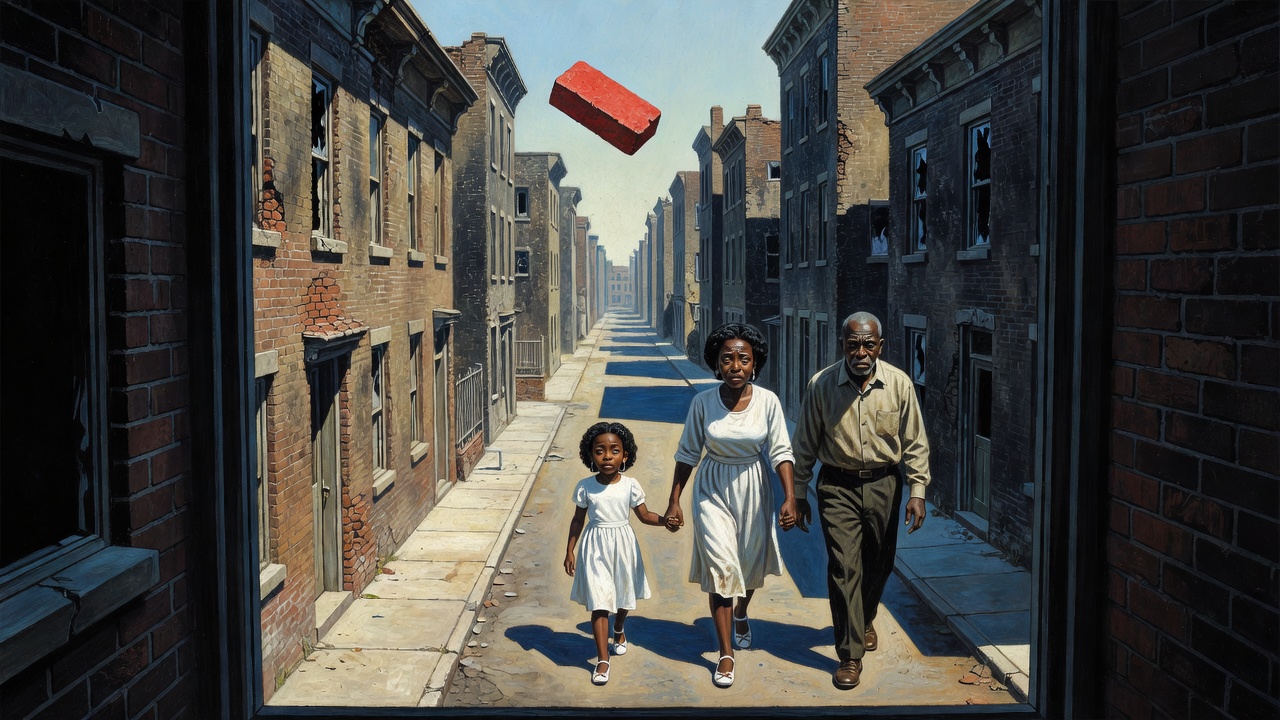
A blond schoolboy with a paper lunch bag at a busy New York kerb, a blank-faced man in a blue suit directly behind him with hands half raised.
II · 26 Seven Seconds Roland opens his eyes behind another man’s, on a 1977 street corner, and sees a boy with a lunch bag and a bookbag waiting to cross: Jake. He thinks this is his punishment, to watch Jake die twice. Then reflex: he comes forward, the host loses what feels like an instant and is in fact seven seconds, the light changes, and Jake crosses to school never knowing anything happened.
A brick falling from a dark tenement window toward a small girl in a good dress walking far below between two adults.
II · 27 The Brick In Jack Mort’s memory Roland finds a brick dropped from a derelict tenement window onto a five-year-old girl on a family trip, the newspaper clippings kept in a scrapbook, and, years later, the platform at Christopher Street. The same man made Odetta and Detta, and Roland understands that the third card, Death, was never a companion. It was himself. He faints inside Mort and wakes at an accountant’s desk.
A young man bound and noosed on wet sand at dusk while a sneering legless woman with a revolver drags herself back up the beach and lobster-like creatures stir in the surf.
II · 28 The Honeypot On the beach Detta has watched Eddie call for Odetta for two hours and decided he is worth more as bait than dead. She has slashed Odetta’s dress into holsters. With the rope that held her in the chair she nooses the sleeping Eddie, draws his heels up to his buttocks so that relaxing his legs will choke him, and drags him below the tide line to wait for dark: a honeypot, to bring Roland back into her sights.
A thin man in a blue suit at a gun-shop counter staring in wonder at a catalogue, boxes of cartridges before him, two police officers entering behind.
II · 29 Fifty to a Box Roland uses Mort as an atlas. At Clements Guns he learns from a picture in a caliber chart that fifty .45 shells come to a box, and that the wallet in his pocket will buy a hundred and fifty. Lacking a permit, he calls in the two officers parked outside, accuses the clerk of theft, cracks their heads together when they bend to look, takes the clerk’s .357, buys four boxes, pays for them, and leaves wearing both police gunbelts under Mort’s coat.
A man in a blue suit setting a gold watch on a drugstore counter beside a large bottle of capsules, a frightened druggist with hands raised.
II · 30 The First Penicillin Robbery At Katz’s Drugs he shoots a pistol out of the guard’s hand and a knife out of a would-be hero’s, and tells the druggist he wants Keflex, a great deal of it, now; Katz thinks it the first penicillin robbery in history. Out of cash, Roland leaves Mort’s gold Rolex on the counter for a two-hundred-pill bottle. Balazar’s thirty-six nearly cured him. Then the two concussed officers arrive, one with a shotgun.
A burning man in a blue suit teetering at a subway platform’s edge as a train’s headlamp fills the tunnel, a lone open door standing in the air beside him.
II · 31 Look Through the Door Now A patrolman’s bullet strikes the silver lighter Mort carries for his boss’s cigarettes, and he catches fire. Burning, he runs into the station; Roland stuffs the shells and the Keflex into Mort’s underwear, vaults the turnstiles, and as the train comes in sends one thought back through the door: look now. Two faces look out, the negative and positive of one woman. He pushes, and lunges back through the door with the pills and the ammunition.
A legless Black woman up on her stumps in the surf firing two revolvers at once, driving lobster-like creatures off a bound young man while a kneeling gunslinger watches.
II · 32 One Woman, Whole Each woman has seen the other, and both remember the brick and the platform. For the first time since Jack Mort dropped a brick on a child, the woman on the beach is whole. She pulls Roland’s guns. The lobstrosities are already on Eddie and Roland cannot stand; then both revolvers are speaking at once, and the new woman shoots the creatures off him. Three are drawn, and the third card was the gunslinger.
Part 5

Final Shuffle


Six days inland on lobstrosity meat and brackish water. Roland is delirious, calling Eddie “Alain” and “Cuthbert” and the woman “Susan”; the Keflex works. They reach woods and leave the sea behind. Roland shoots a deer, and the woman takes the knife from him and dresses it. She is Susannah now — Odetta’s middle name, joined to Eddie’s surname by ka rather than by any ceremony. Roland takes the jawbone out of his purse: it will tell them which way to go.

Eddie says he followed Henry to poison and may be following Roland to something worse. Roland does not argue. They will go on, he says, and fight, and be hurt, and in the end they will stand. The book ends with no Tower in sight and a paradox planted: Jake is alive in 1977 and dead in Roland’s memory, and The Waste Lands opens on what that does to him.

“He would come to the Dark Tower and there he would sing their names.”
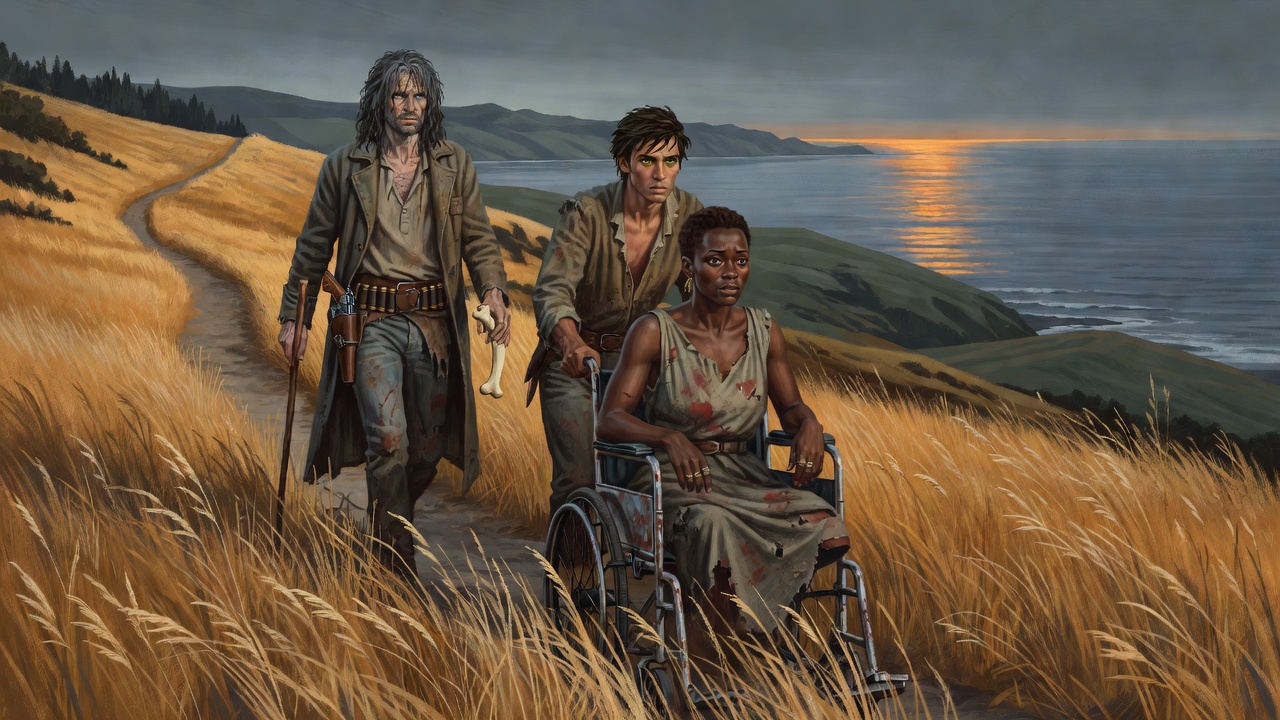
A young man pushing a woman in a wheelchair up a grassy hillside toward woods, a gaunt gunslinger walking ahead with a stick and a jawbone, the sea far below.
II · 33 Leaving the Western Sea Six days inland on lobstrosity meat and brackish water, Roland delirious and calling Eddie “Cuthbert” and the woman “Susan”, the Keflex working. They reach woods and leave the sea behind. She is Susannah now: Odetta’s middle name, Eddie’s surname, married by ka and nothing else. Roland takes the jawbone from his purse; it will show the way. “He would come to the Dark Tower and there he would sing their names.”

What the 2017 film took from this book

  • The 2017 film is framed as a sequel and draws mainly on Books I and III. From this book it takes architecture only: portals between New York and Mid-World (the boy’s portal in an abandoned house, the gunslinger’s trip to New York), the idea that the Tower’s enemy works through New York children, and an eleven-year-old Manhattan schoolboy moved from 1977 to the present.
  • Eddie Dean, Odetta/Detta/Susannah, Balazar, Jack Mort and the lobstrosities are absent. The director said they might appear in a sequel; King said he hoped a sequel would open with the lobstrosities.
  • With no beach and no lobstrosities, the film never stages the loss of Roland’s fingers; its gunslinger is intact-handed, the most visible break from this book, and both King and the director wanted the beach for a sequel.

Continuity notes

  • Roland’s right hand: the index and middle fingers go to a lobstrosity within hours of the opening page, with most of the right big toe and a bite from the calf. He shoots left-handed from here on, bracing on the stump when he must.
  • Infection: septic within a day. Balazar’s thirty-six Keflex check it; it returns on the beach; the two-hundred-pill bottle from Katz’s beats it over six days inland.
  • Guns: both revolvers remain Roland’s. He puts one in Eddie’s hand for the shoot-out, Eddie carries one on the beach, Odetta is left one and Detta takes it, and Susannah fires both at the end, but no gun is formally given to anyone in this book; that handover opens The Waste Lands. About twenty doubtful shells at the start; four boxes of .45 from 1977 at the end. No police weapons come through the door.
  • Susannah’s chair: came through the Macy’s door with her, is the group’s only transport for Roland when he collapses, and is still with them inland. Her legs are lost “from the knees down” in one passage and “from just above the knee” in another; the frames keep the stumps covered.
  • Eddie’s age: the text says twenty-one in 1987 (the interrogation chapter). The Dark Tower Wiki and later canon put him at twenty-three. This page follows the text.
  • Names that change later: Balazar is Emilio in this book and Enrico afterwards; Eddie’s dead sister is Selina here and Gloria later. Co-Op City is in Brooklyn in Eddie’s world.
  • Hat: no source for this book mentions Roland’s hat. The frames keep it because the global character token does; nothing on this page claims it either way.
  • The doors: the first falls flat and dies when shut from the beach side; the fates of the second and third are not recorded on this page.
  • The paradox: Jake is alive in 1977 and dead in Roland’s memory. The Waste Lands opens on what that does to both of them.
  • Still carried: the jawbone of the man in black, in Roland’s purse.
← I · The GunslingerIII · The Waste Lands →