The Dark Tower · Book I · 1982, revised 2003
The Gunslinger
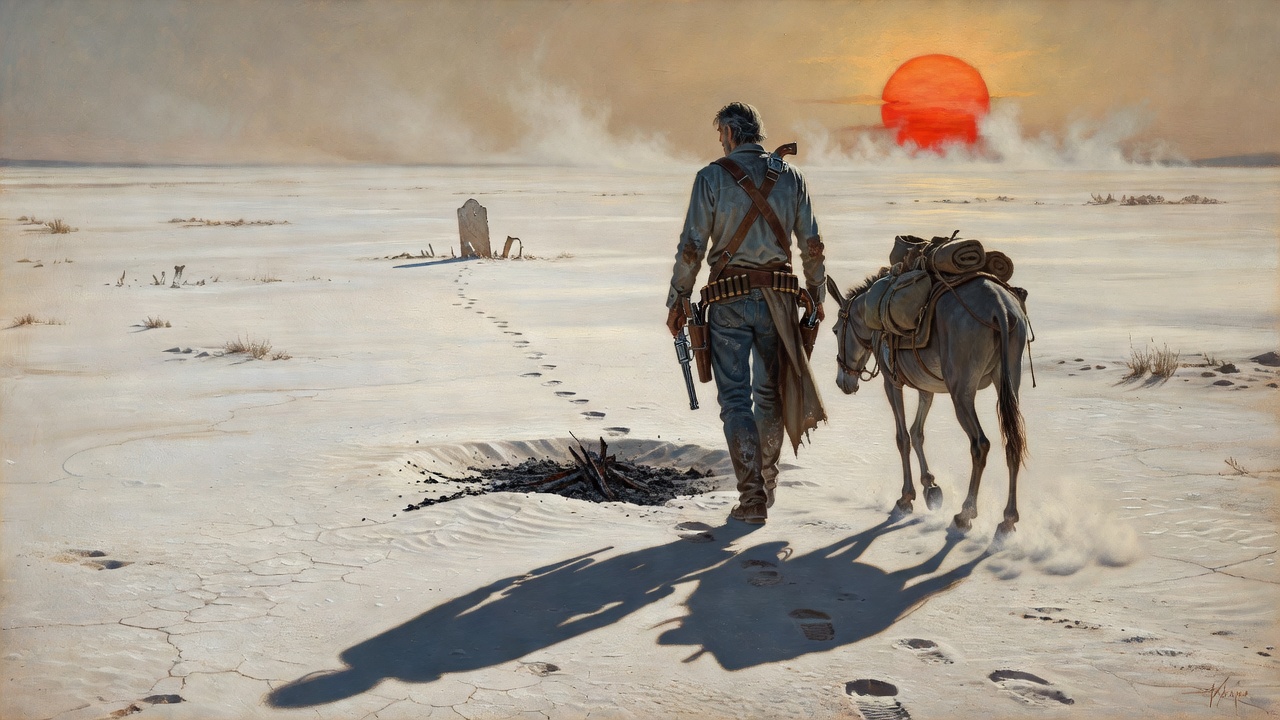
The man in black fled across the desert, and the gunslinger followed.
The first of the seven is the odd one: a short, hard, strange book assembled from five novellas King published in The Magazine of Fantasy and Science Fiction between 1978 and 1981, begun in 1970 on a ream of green library paper and finished twelve and a half years later. Donald M. Grant printed it in June 1982 as a limited edition with Michael Whelan’s paintings, because King doubted anyone would want it; the jacket of Pet Sematary listed it the next year, readers came looking, and Grant ran ten thousand more. Its plot is one sentence long — a man follows another man across a desert — and the Tower is only a rumour at the far end of it.
There are two texts. In 2003, with the last three books written, King revised and expanded this one by more than nine thousand words so that it would agree with where the story had gone: the man in black and Marten became plausibly one person, the Beast became the Crimson King, Jake aged from nine to ten or eleven, Allie’s death turned from a shot she begged against into one she begged for, a crowd of adverbs died, and “parsecs” became “eternity.” This page follows the 2003 text and says where the 1982 one differs.
Why it matters: it sets the saga’s method — a nested flashback, a world that has moved on, relics of our century half-buried in a Leone desert — and it ends on the moral hinge of the whole series, a boy let go of over a chasm so that a man can keep walking.
The Gunslinger
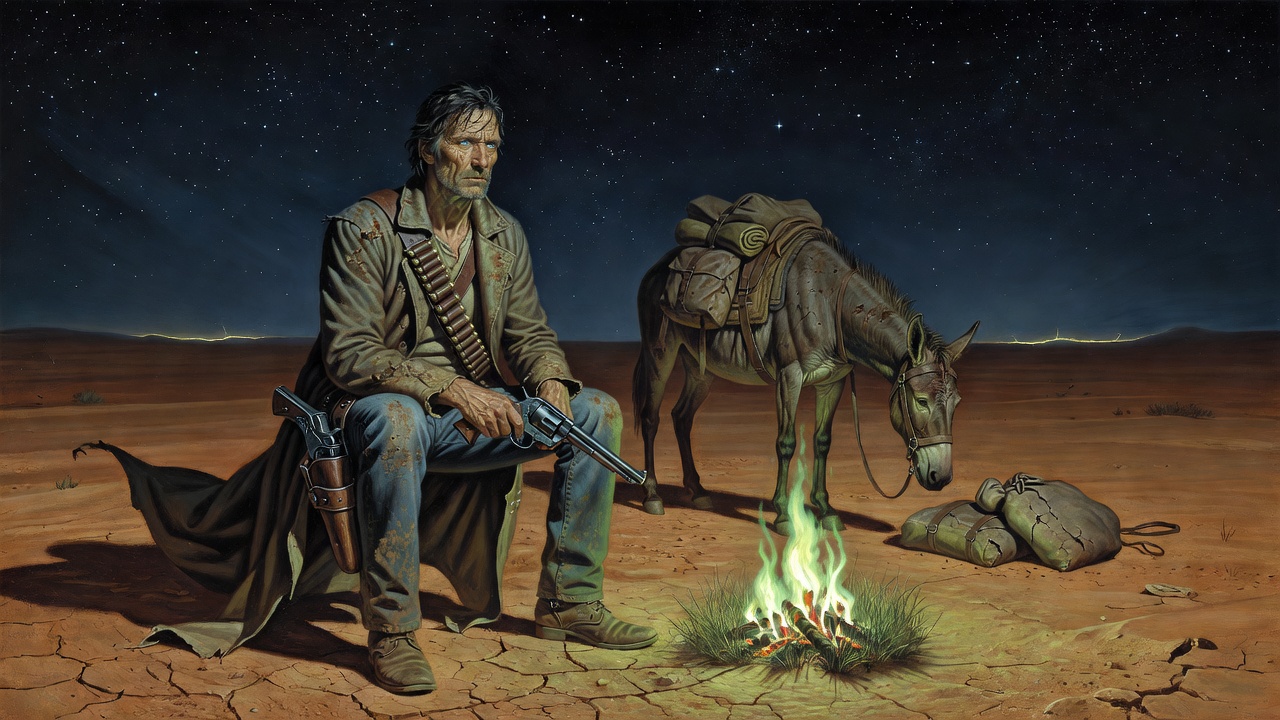
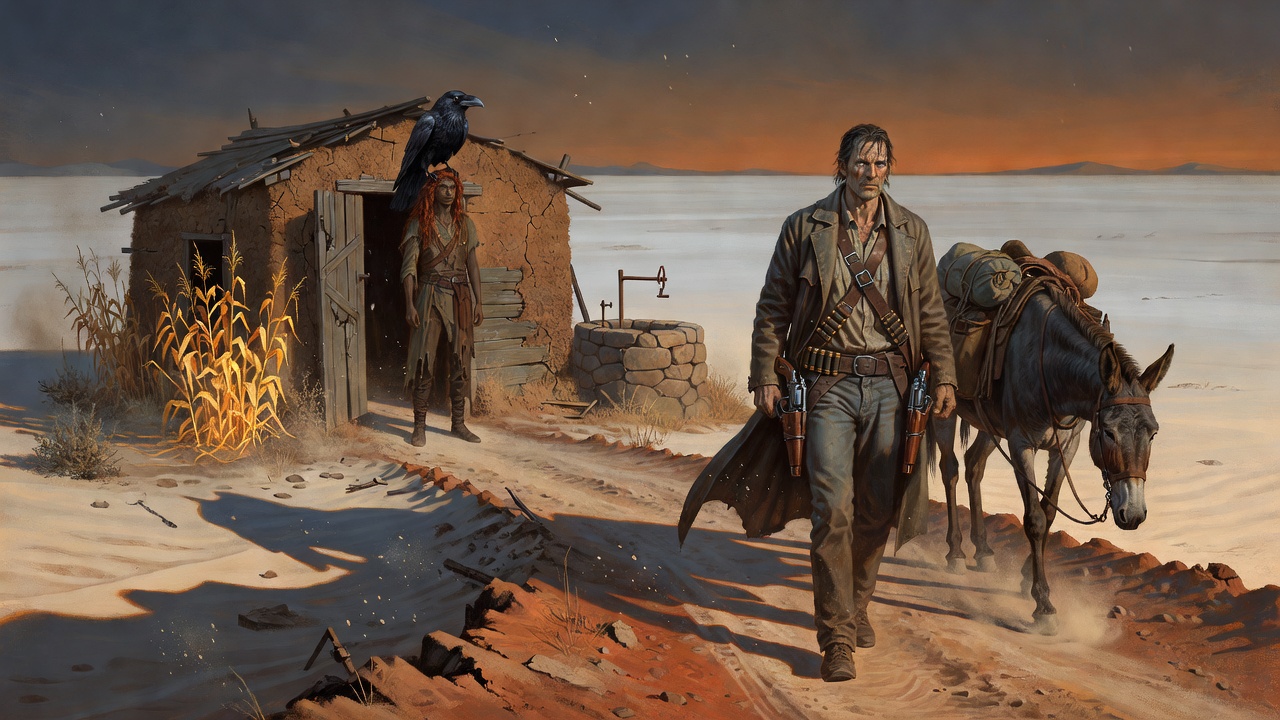
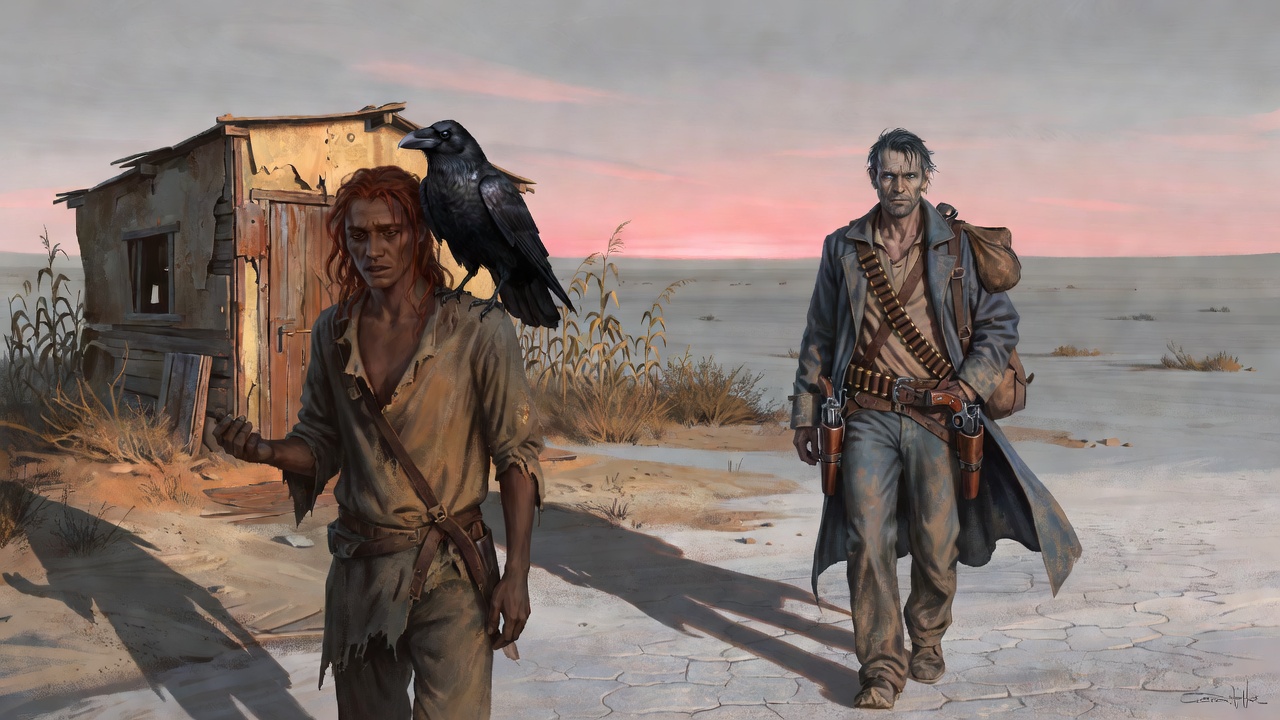
Roland walks the Mohaine Desert on the trail of the man in black, leading a mule bought in Pricetown that is dying by inches. He burns devil-grass at night and sleeps upwind of its smoke. The sun no longer sets quite in the west; the trail is a line of cold campfires. At the desert’s edge he comes to the hut of Brown, a young border dweller with red hair to his waist, a scrub of corn, a well and a raven called Zoltan who recites “Beans, beans, the musical fruit, the more you eat, the more you toot.” The man in black stopped here about a month before and pulled a dressed rabbit out of his sleeve; Brown calls him a sorcerer. The mule dies in the night and Zoltan takes its eyes. Over beans Brown asks about the last town, and Roland says Tull is dead and he killed it. The rest of the part is him telling it.
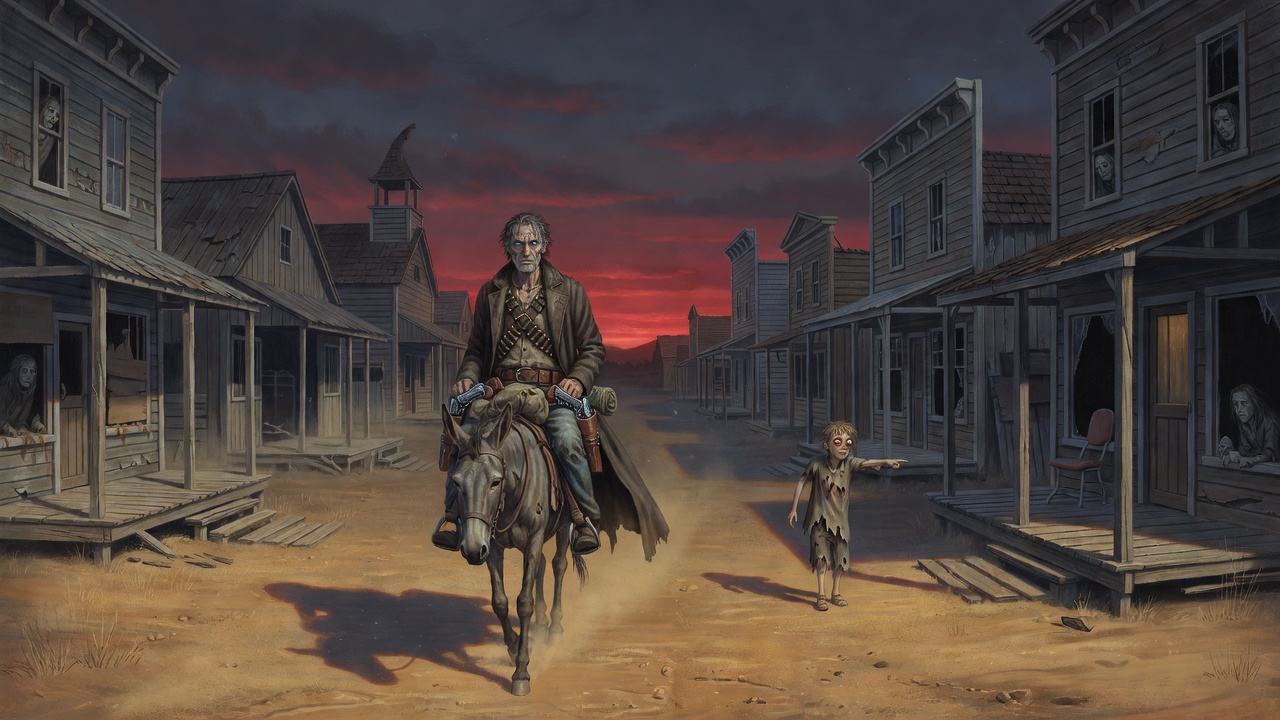
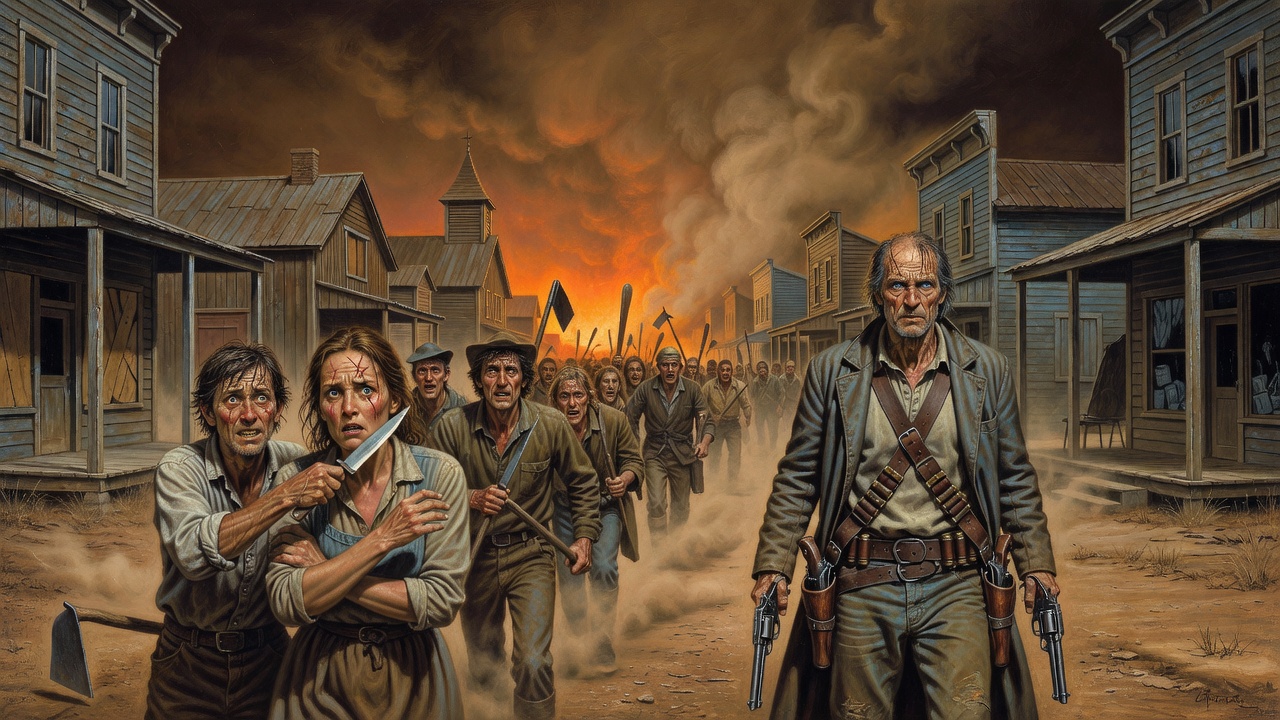
Tull is one dirt street an hour after sundown: boarded grocery, livery, barber, church, a honky-tonk with a piano. Faces watch from windows. A boy with a swollen, bulging eye points him to Sheb’s. Inside, Sheb, small and gold-toothed, hammers out “Hey Jude”; Roland eats three hamburgers under hungry stares; and a man named Nort, teeth green from eating devil-grass, speaks the High Speech to him. Nort should be dead. Allie, who owns the bar and has a long scar across her forehead, takes Roland to bed for the price of the story: Nort died in his own vomit on the boardwalk, and at the wake a hooded man in black paid in silver, grinned, leapt over the corpse, and Nort sat up. The man left Allie a note signed Walter o’Dim. Say the word “nineteen” to Nort and he will tell her what death holds; she will also go mad. Roland sees the trap for the perfect thing it is.
If you can, teach yourself that the number after eighteen is twenty.
Nobody has a map of the desert, because nobody crosses it. Kennerly the hostler, who beats his daughter Soobie, offers rumours of demons and the Last Times. Sheb comes at Roland with a knife and leaves with both wrists broken; in the 2003 text he knew Roland years ago in Mejis, one of three boys with a girl named Susan. Sylvia Pittston preaches — a mountainous, magnetic woman who came out of the desert about twelve years before, Allie thinks, and lives in a shack behind the church — and the town sways to her warnings of the Interloper and, in 2003, of a crimson king with bloody eyes. With a dust storm building Roland visits her. She says she carries the man in black’s child; he puts his gun to her and ends it. She tells him, before he goes, that the man in black stops beyond the mountains to make his strength.
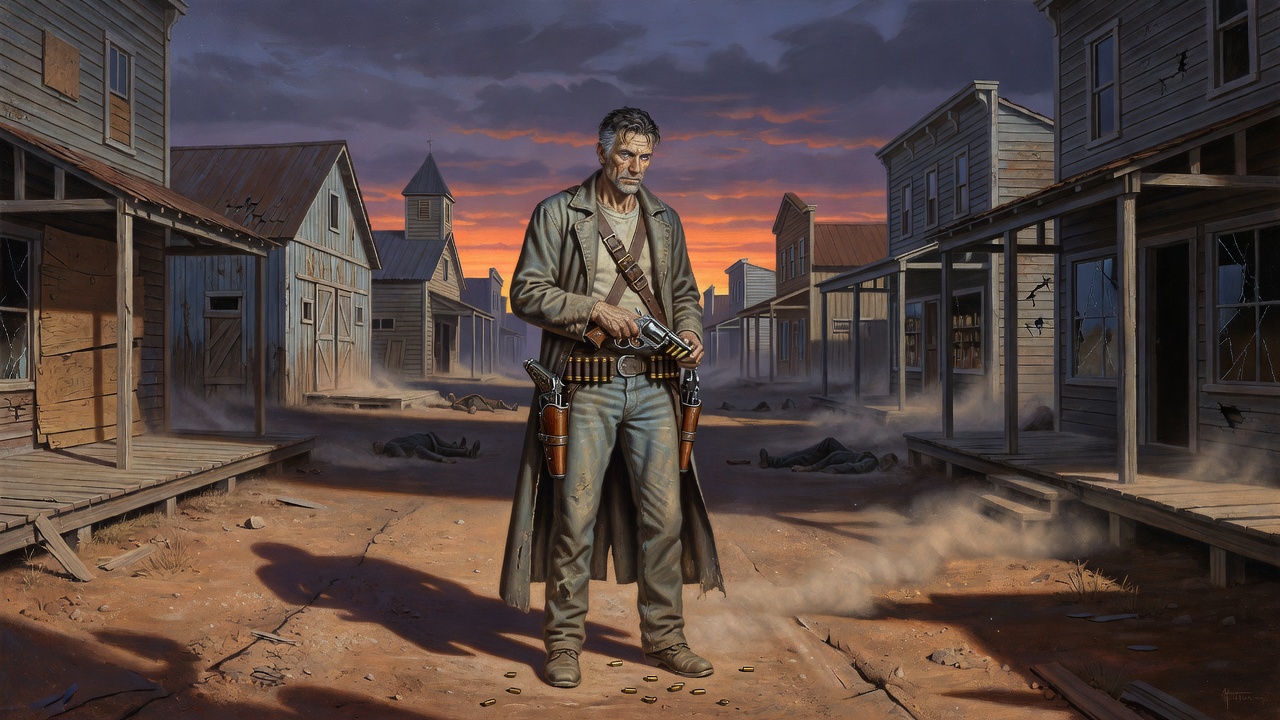
Then the town comes, with hoes and sharpened stakes and kitchen knives, in a rising dust storm, and Allie is at the front. In 1982 she is a hostage, a shield held up to him, begging him not to shoot, and dies with the man holding her. In 2003 she has already said “nineteen” to Nort and is mad, and begs him to kill her as Sheb holds a knife to her throat. He shoots his way through fifty-eight people — thirty-nine men, fourteen women, five children — reloading until his fingertips burn, taking several stab wounds, one from a child. Nort is already dead again, nailed to the roof of the honky-tonk; Roland cuts him down, eats, and sleeps in Allie’s bed. Back in the hut Brown asks if the telling helped and says only that Roland is closer to the man he follows. At dawn they shake hands and Roland walks into the desert with his guns and his waterbags, and dreams, later, of Cort.
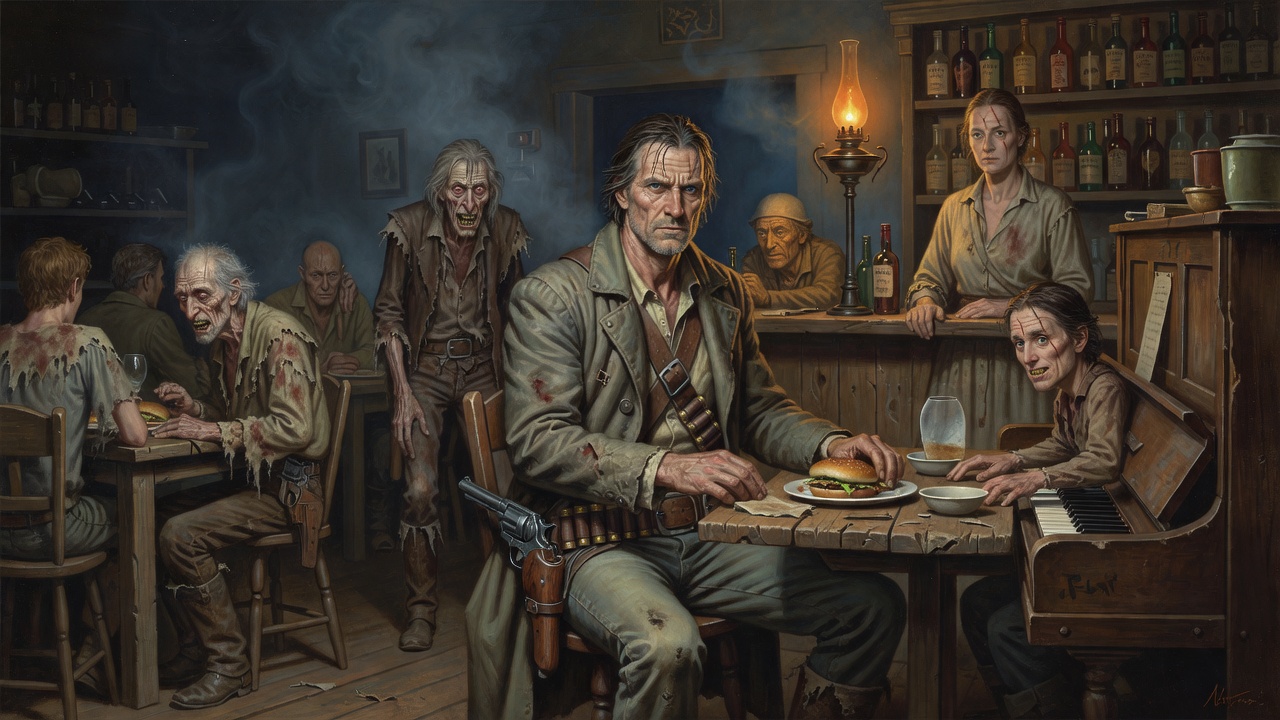
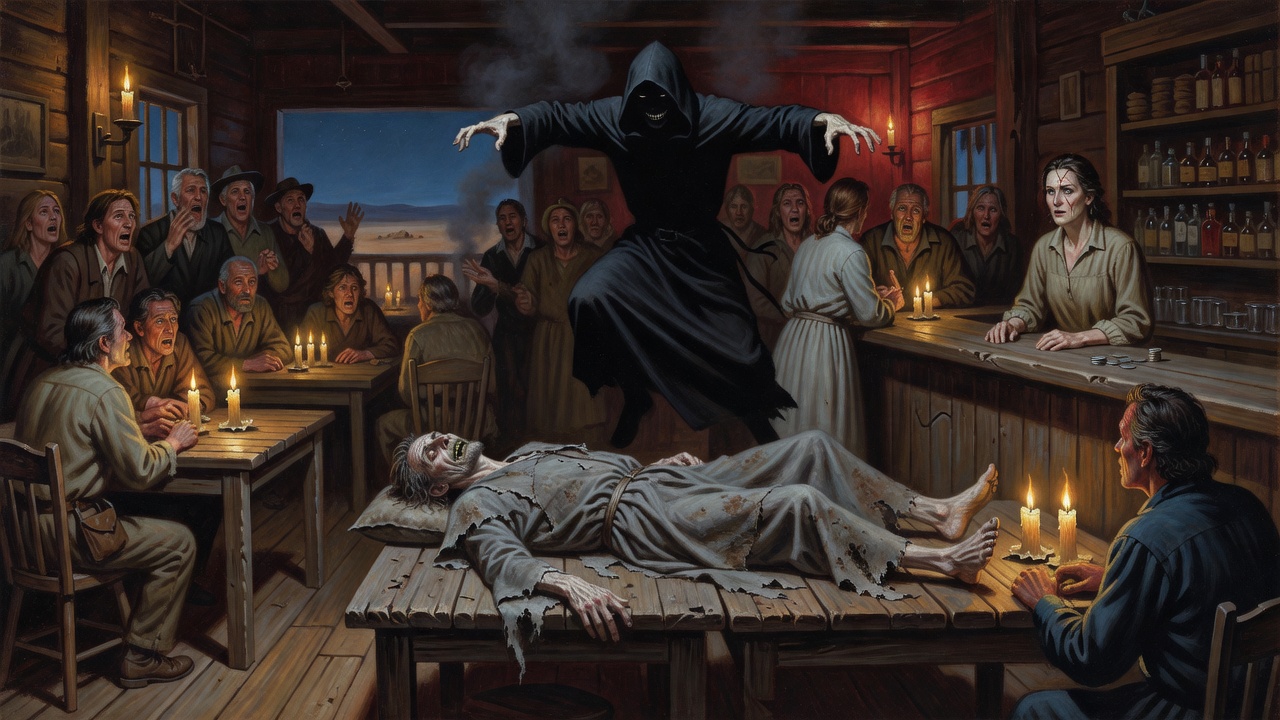
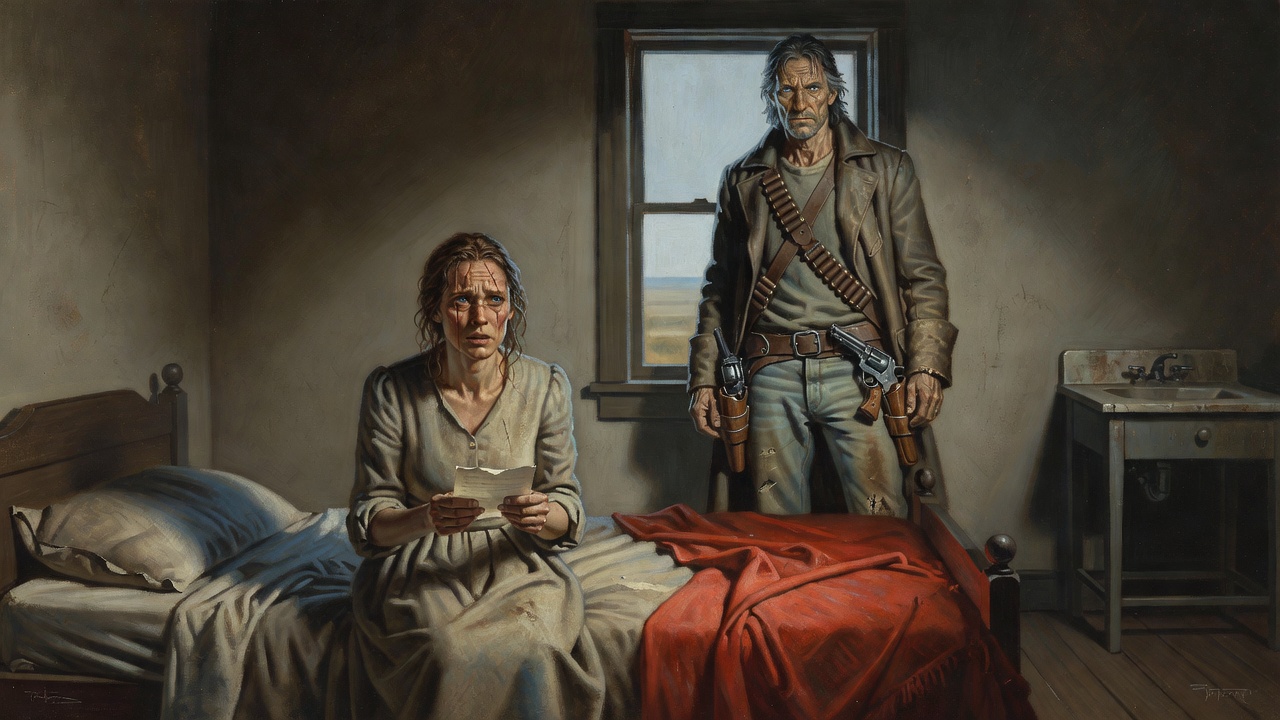
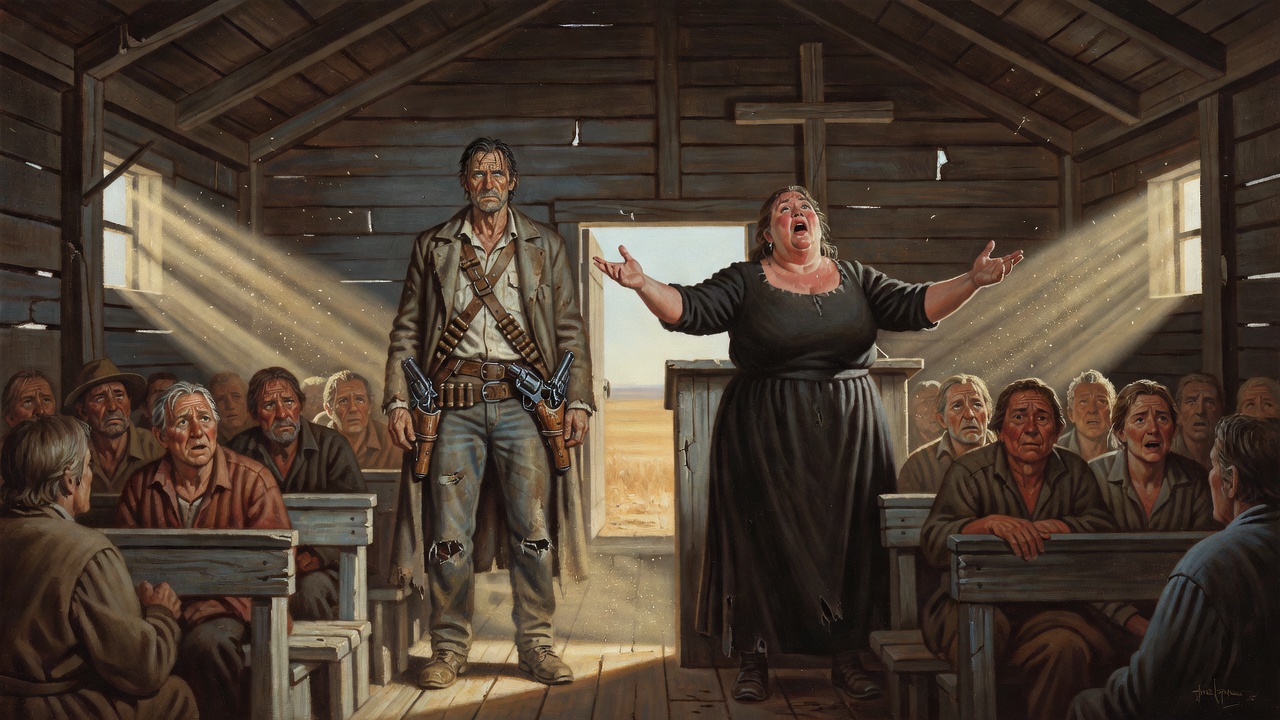
The Way Station
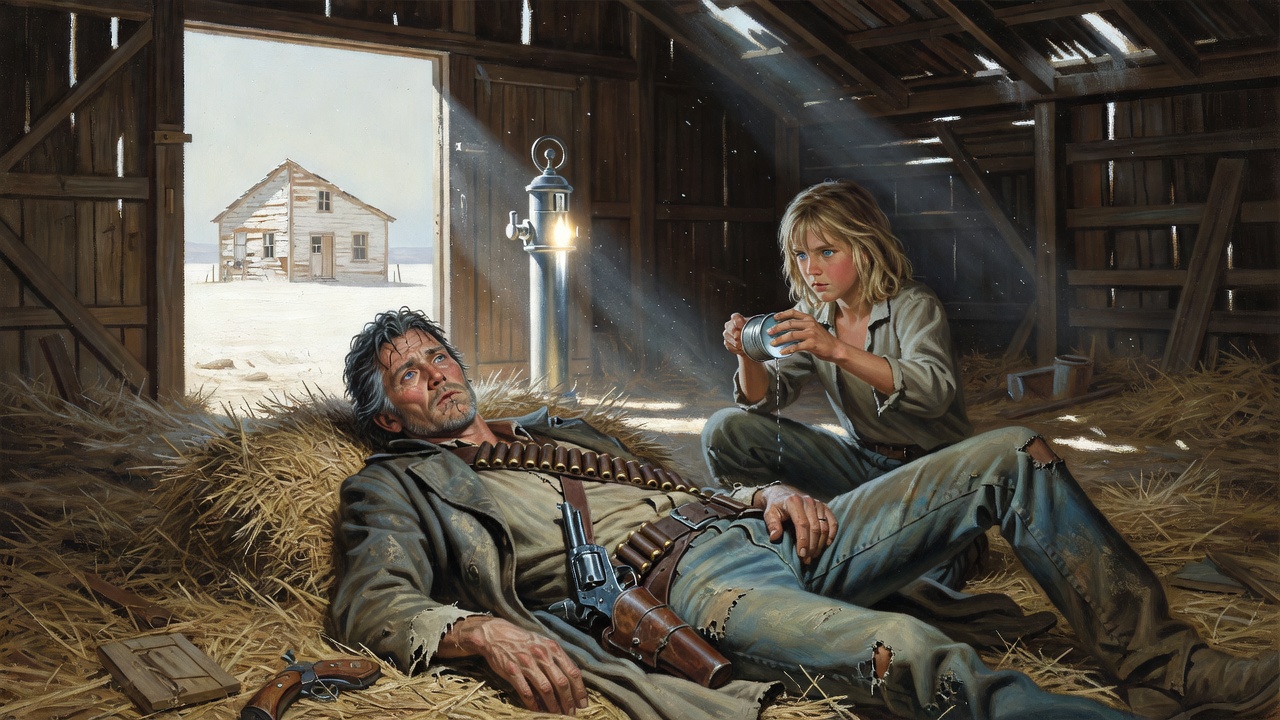
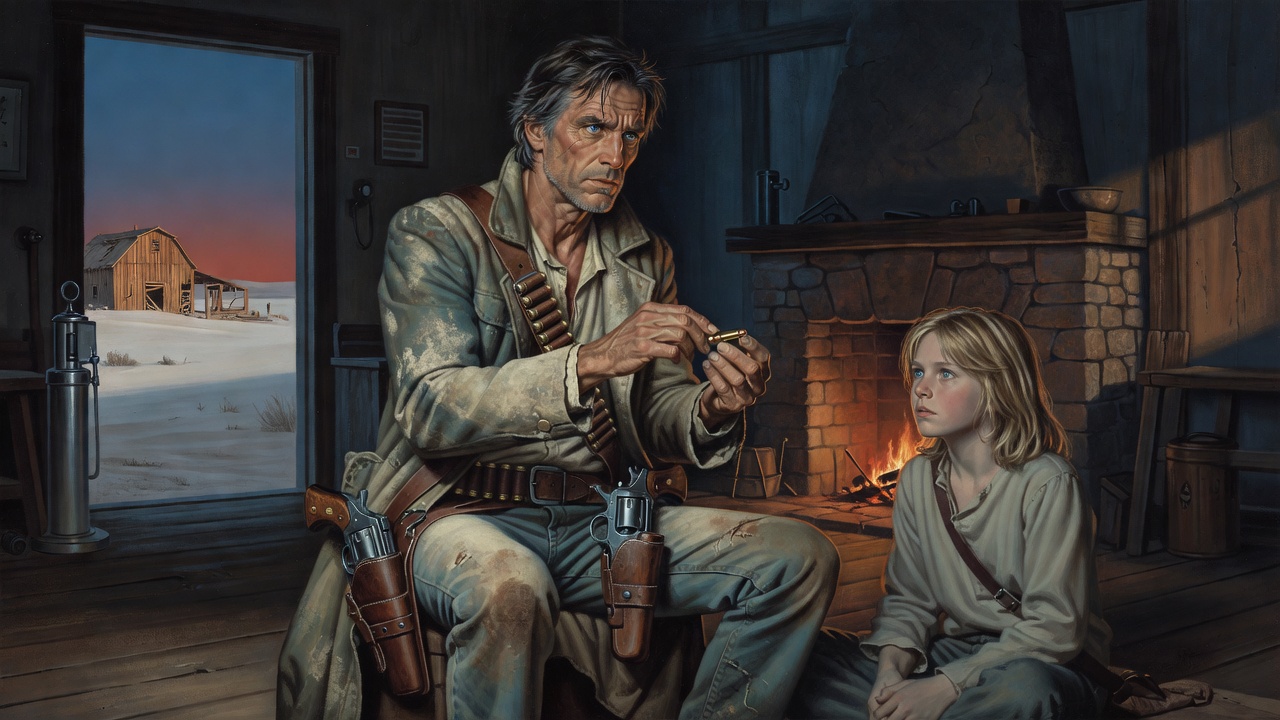
Sixteen days later, waterless and sunstruck, Roland sees a figure in black standing at a far building, and it is a boy, and he faints in the barn. The boy is Jake Chambers, tow-headed and blue-eyed, who brings him water from a stainless-steel pump that runs, impossibly, on an “atomic slug” — stamped, in 2003, North Central Positronics — and then jerky. A “priest” in black passed through without drinking or sleeping; Jake hid from him. Jake remembers New York and nothing about how he came here.
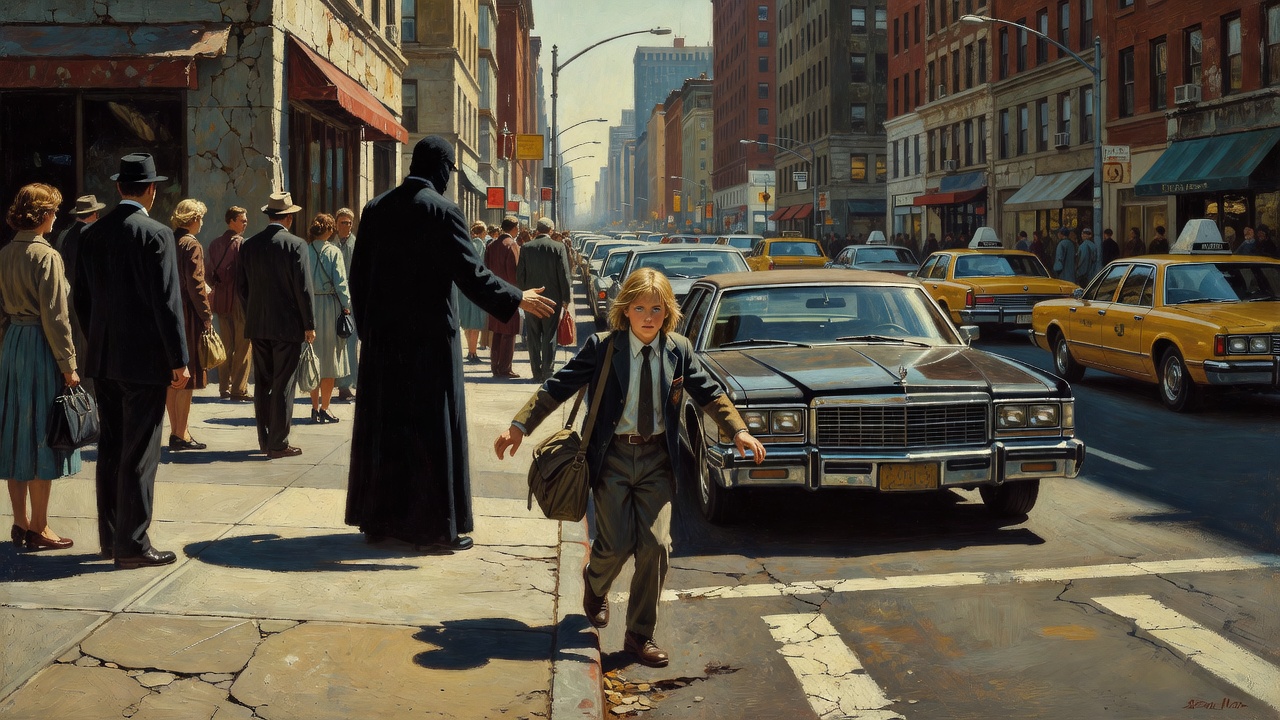
Roland hypnotises him by walking a cartridge across his knuckles, and under it the boy tells it: 1977, the Piper School, a housekeeper named Greta Shaw who cuts the crusts off his sandwiches, a father in television and a mother who is elsewhere; walking to school; being shoved into traffic; dying on the pavement to a priest’s voice and a rock song on somebody’s radio. Roland tells him he will not remember, and he does not. (Later books will name the pusher Jack Mort, a man who dressed as a priest, and establish that Roland and Jake both mistook him for the man in black.) They will leave together at dawn. Asked what he wants of the man in black, Roland says, “I have to make him tell me something.”
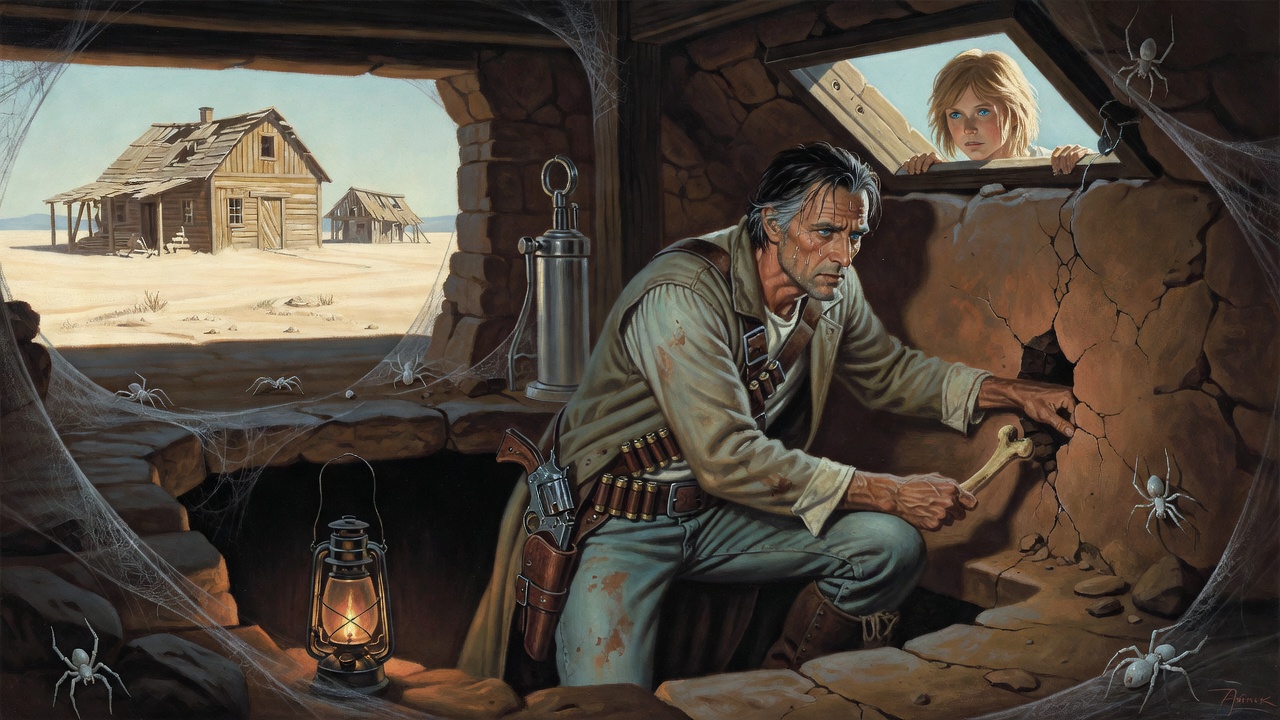
Under the station is a cellar with mutant spiders in its corners and a crack in the sandstone foundation, and from the crack a voice speaks in Allie’s voice. It says the man in black travels with Roland’s soul in his pocket. Taught as a boy that only the dead prophesy, Roland shoves his arm into the wall and tears a jawbone out of it, to carry as a ward.
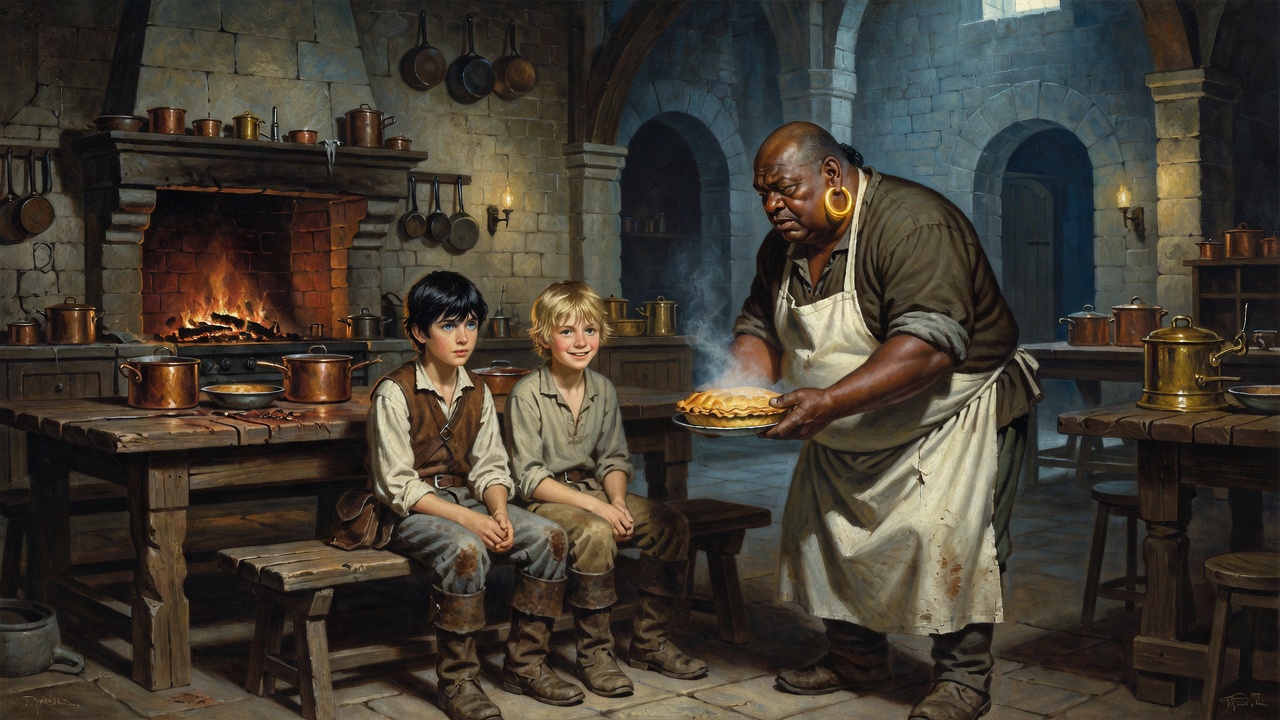
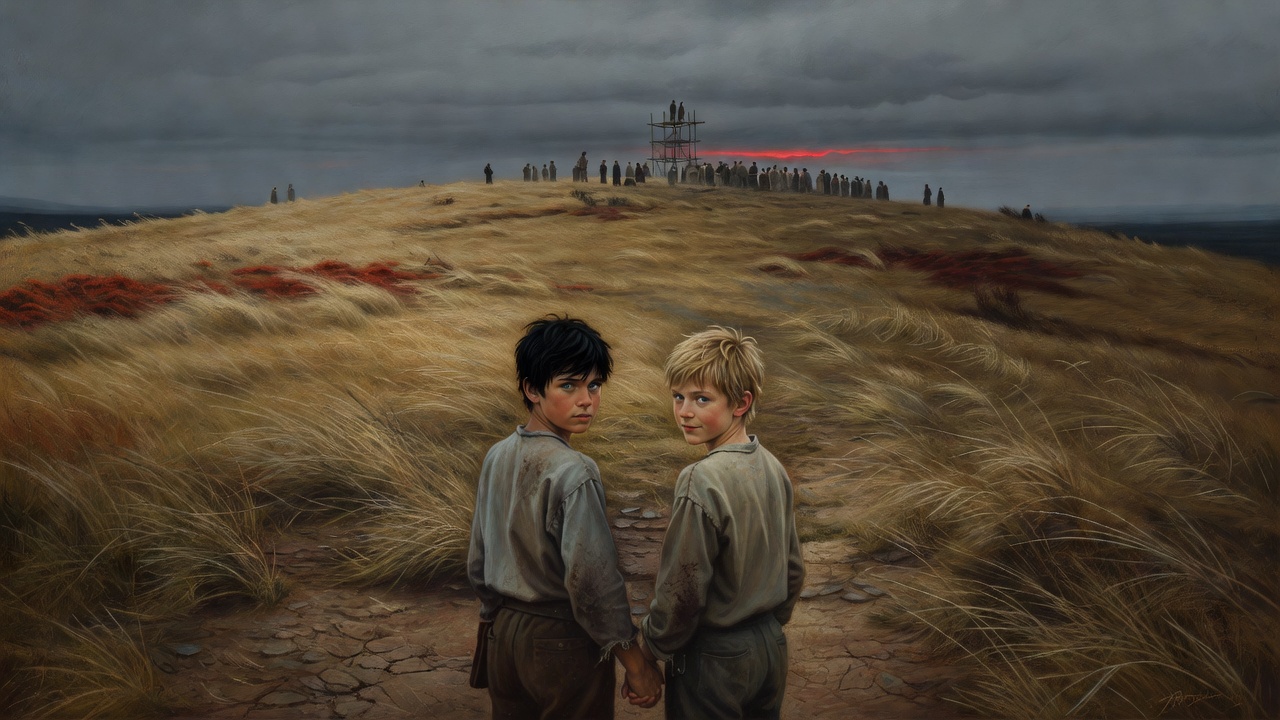
Waiting for morning, he remembers Gilead. He and Cuthbert Allgood, about eleven, are fasting as punishment for Bert’s sloppy release of the hawk David, and Hax the cook — huge, gold-earringed, South Islands blood in him — feeds them pie in the west kitchen. Through the kitchen’s steam they overhear Hax and a guard named Robeson plotting to poison the meat bound for Taunton (Farson, in 1982) on behalf of the Good Man. They tell their fathers. Hax, unrepentant, hangs on Gallows Hill at the hands of a gunslinger named Charles Champignon, and the two boys, given leave to watch, hold hands at the drop. In the morning Roland and Jake walk out toward the mountains.
The Oracle and the Mountains
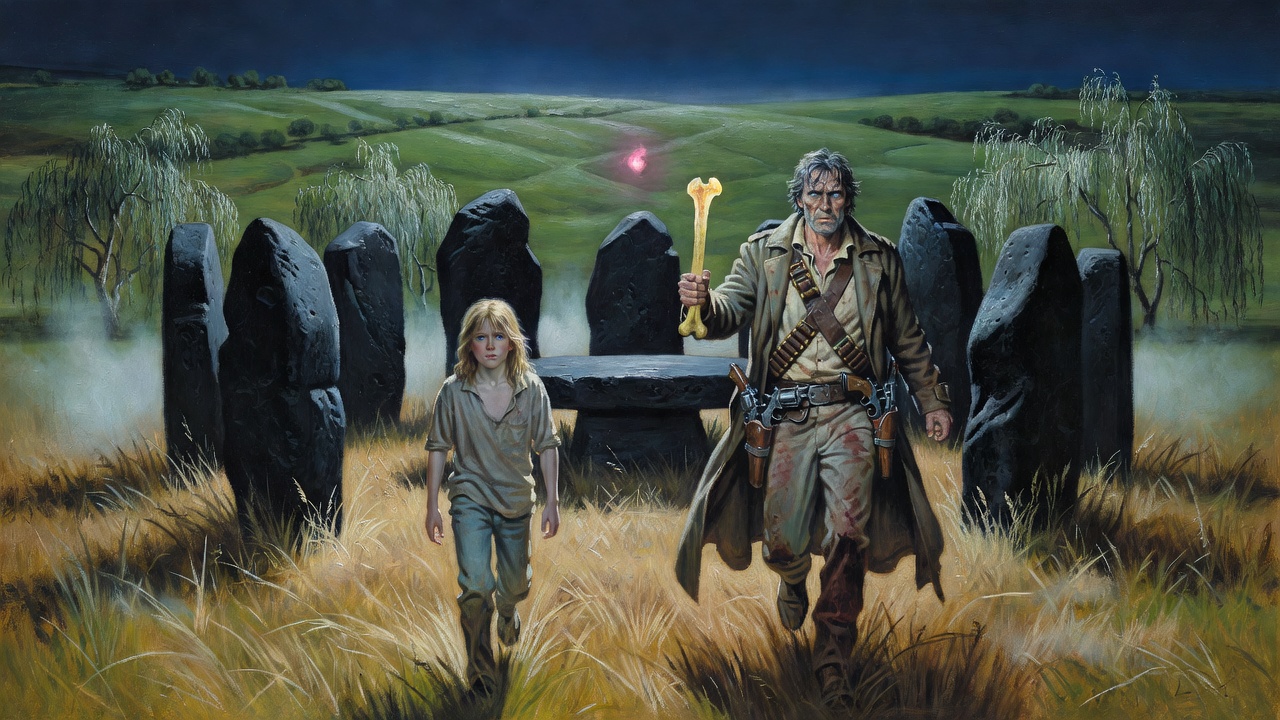
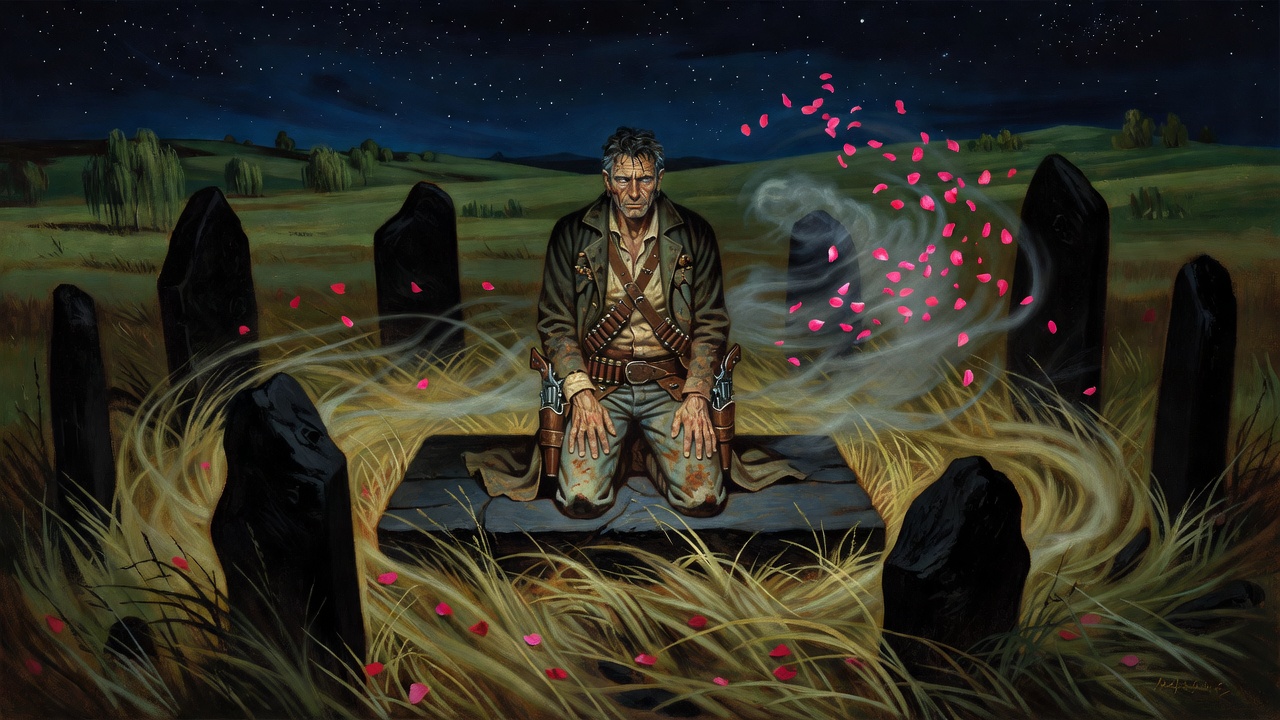
The foothills are the first green thing in the book: grass, running water, willows. At night Jake is drawn out of camp into a ring of black standing stones around a flat altar. Roland names what lives there a succubus and hauls him out with the jawbone held before him. Then he ties Jake to a bush with the jawbone in his hands for a ward, swallows a mescaline pill from his purse, and walks back into the circle alone.
The oracle has no body — it is a wind with a scent of jasmine, rose and honeysuckle — and it will prophesy for one price only, and he pays it. Three will be drawn: a dark-haired young man in the grip of heroin, the Prisoner; a woman on wheels, the Lady of Shadows; and a third who is death. The boy is Roland’s gate to the man in black, and the man in black is the gate to the three. He walks out of the ring haunted by Sylvia, by Allie, by a girl named Susan. Jake, when he reaches him, is chanting a rhyme he says Roland taught him, which Roland does not remember; told he can let go of the jawbone, he drops it as if it had bitten him, and it stays behind.
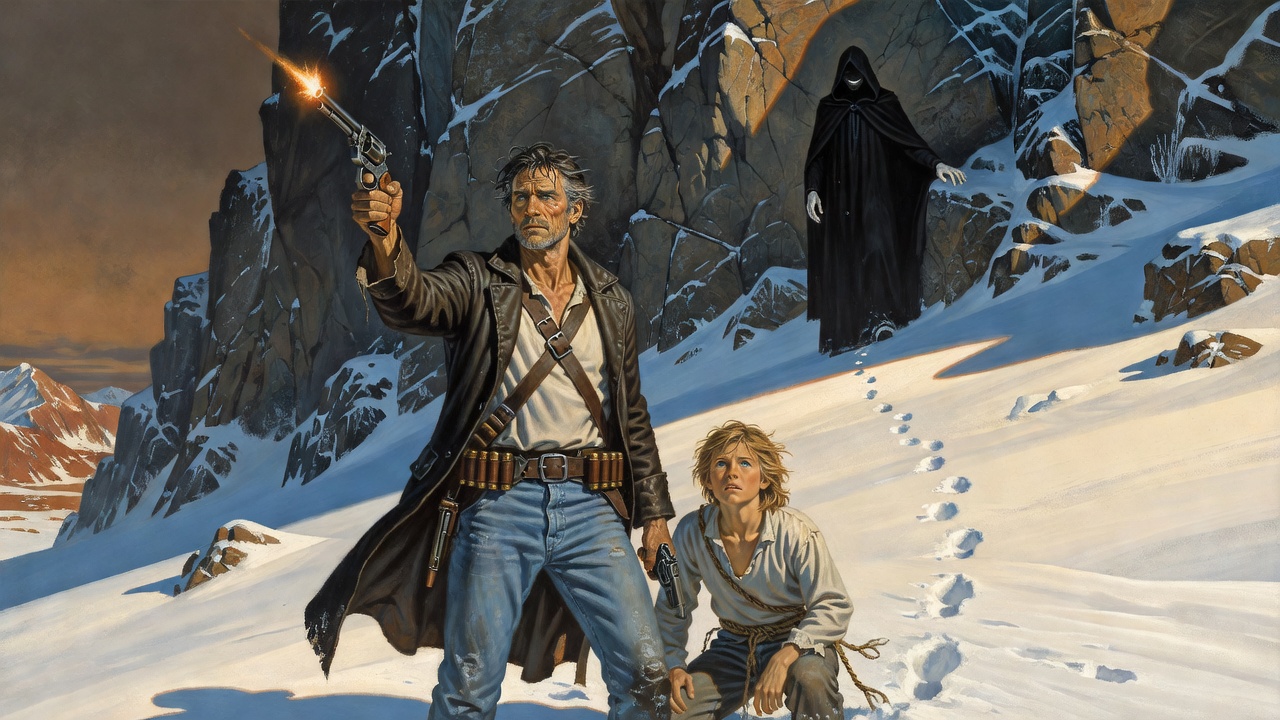
Roland plaits rope from vines and they climb. He tells Jake about New Canaan, once lovely, now rotting with Slow Mutants, ended by a revolution. There is a footprint in the snow and an oily, sardonic smell, and after a week there is the man in black himself, standing at ease on a granite face above them. Jake says, “You’re going to kill me this time.” The man in black calls down that beyond this point only he and Roland will speak. Roland fires at him and misses. He asks Jake whether he will go on, and Jake goes on.
The Slow Mutants
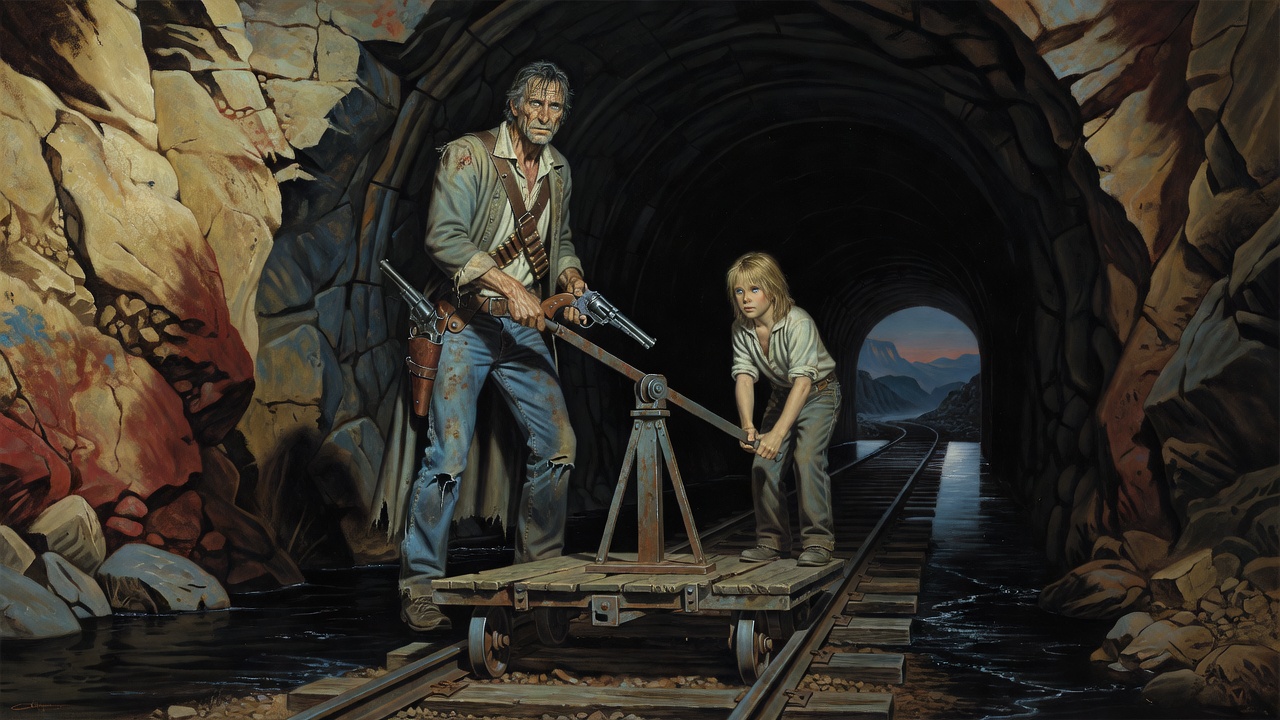
Under the mountain it is wet and black. Roland, talking while the boy pretends to sleep, tells of spying with Cuthbert and Alain on the Sowing Night Cotillion in the Hall of Grandfathers, and watching Marten the magician dance with his mother, Gabrielle. Three days in, Jake finds rails and a working handcar, and they pump along at ten or fifteen miles an hour beside an underground river. Jake asks about Cort, and Roland rambles — an invisible man hanged for rape, a girl left behind in King’s Town — and then tells it properly.
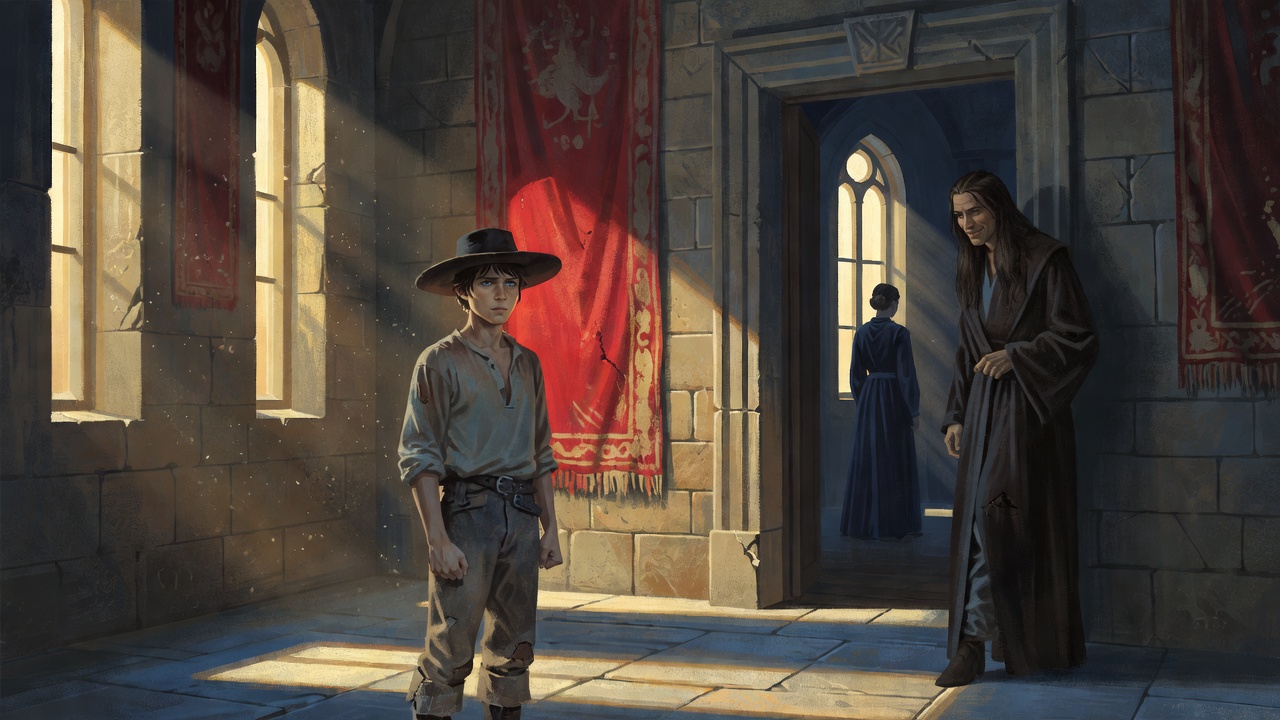
He is fourteen, in a hot Full Earth. Marten comes out of his mother’s apartment with his shirt unbuttoned, and behind him her gown has slipped from one white shoulder, and Marten invites the boy in and baits him until Roland gives the formal challenge. Marten tells him to go and find his hand, and strikes Gabrielle as he leaves. Roland goes to Cort — squat, bald, scarred, paunched, a man who never laughed — and demands the test years early. Cort warns him that failure means exile west, reads the terrible smile on the boy’s face, and gives him an hour. Roland spends it in the cellar hooding David, knowing the hawk will die.
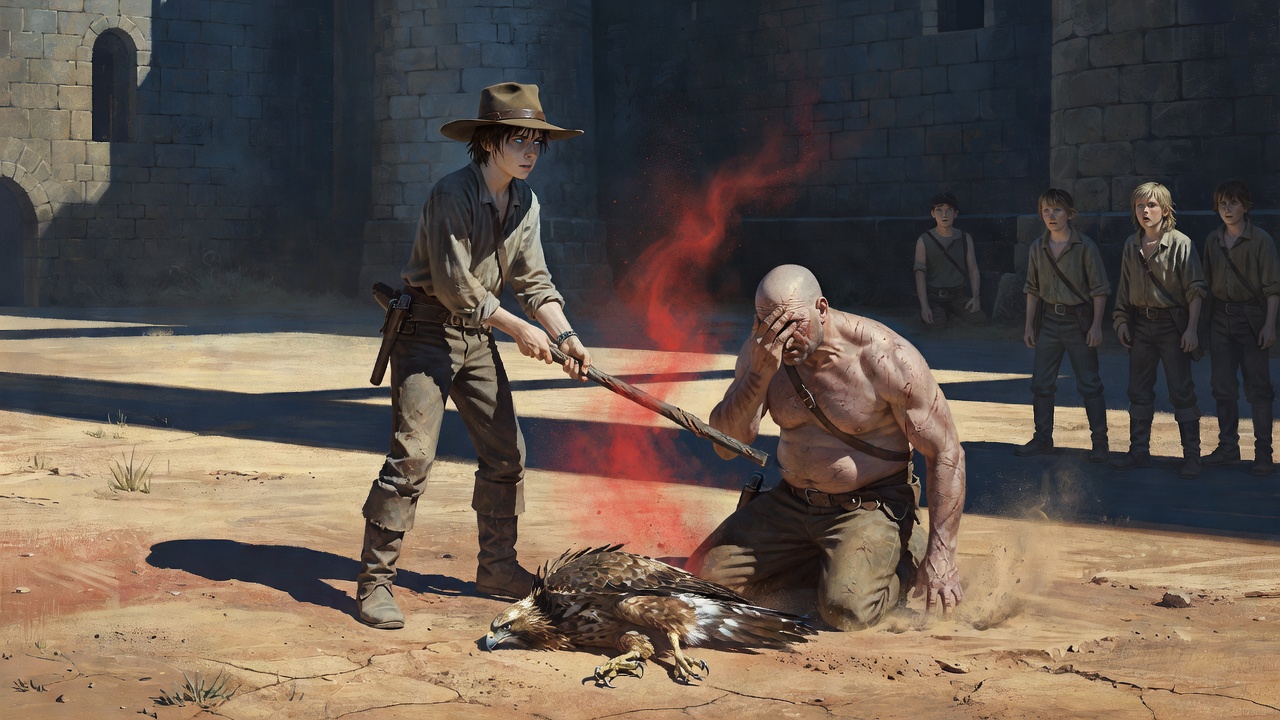
In the Square Yard he names his weapon: David. The hawk goes for Cort’s face and takes an eye. Roland trips, hurls the dying bird at Cort, and they grapple in the dust; the hawk is killed in the struggle; the boy comes up with Cort’s own ironwood stick. “I yield, gunslinger.” He is handed the key to the apprentice guns, the youngest ever to win them — his father Steven got his at sixteen. Cort lies a week in a coma. Roland and Cuthbert bury David, and Roland swears him a shot every year. That night he buys a prostitute, and his father finds him there and tells him two things: that he has forgotten the face of his father — Roland says it was with him in the Yard — and that Marten meant him to lose.
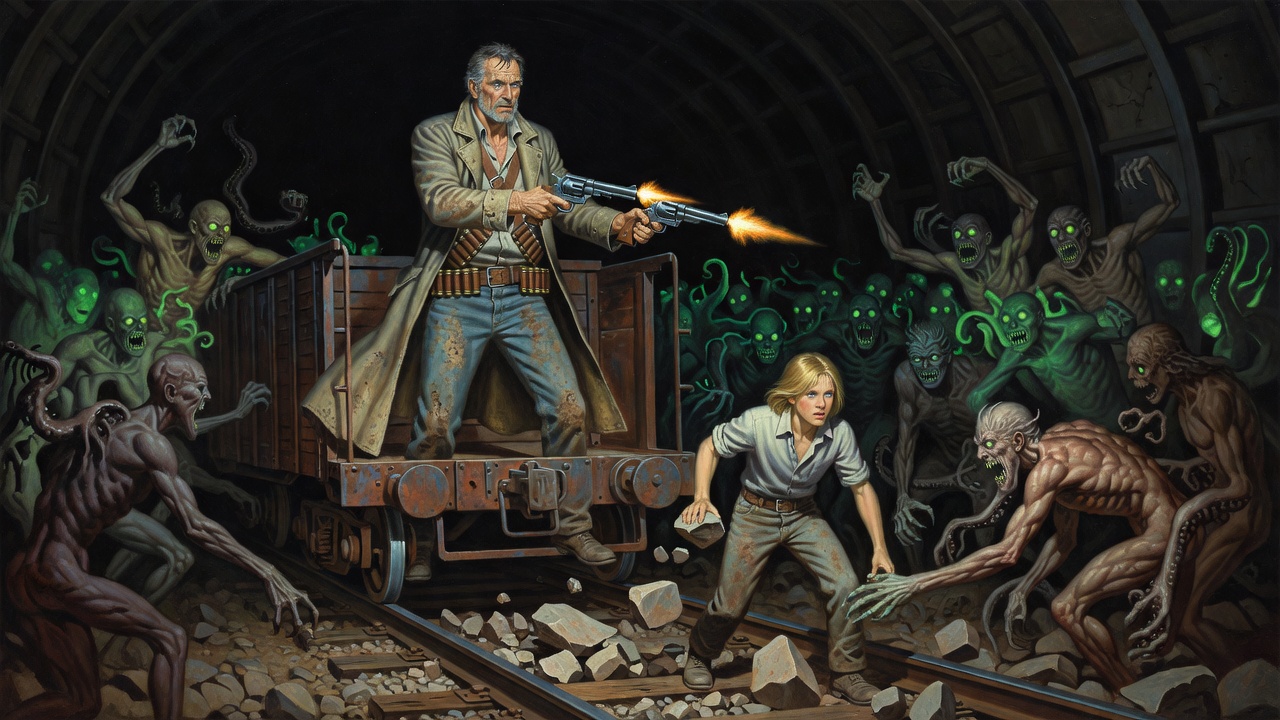
Jake, listening, understands what he is to Roland: a counter in a game. Then the Slow Mutants come, dimly phosphorescent green, knotted and suckered and tentacled, the ruin the Old Ones’ poisons made of people, piling rocks across the rails. Roland shoots a dozen or more. One takes Jake by the foot and Roland hesitates — a measurable hesitation — before he saves him. Jake clears the track himself. One whole section of the book then reads, in full: “They went on for three ‘days’ without incident.”
A dead terminal: boxcars, coaches, stalls still lit, a kiosk of ancient guns, trainmen mummified at their posts by some old gas, a newspaper that crumbles when it is touched. Jake balks, and Roland pretends to leave him there. Beyond it is daylight across a chasm, and a trestle rotten with age, and they walk it. The man in black appears above them, cheerful. Jake slips and hangs from the timbers. Roland looks at the boy and at the man in black and at the light, and goes toward the light.
Go then. There are other worlds than these.
He falls without a scream.
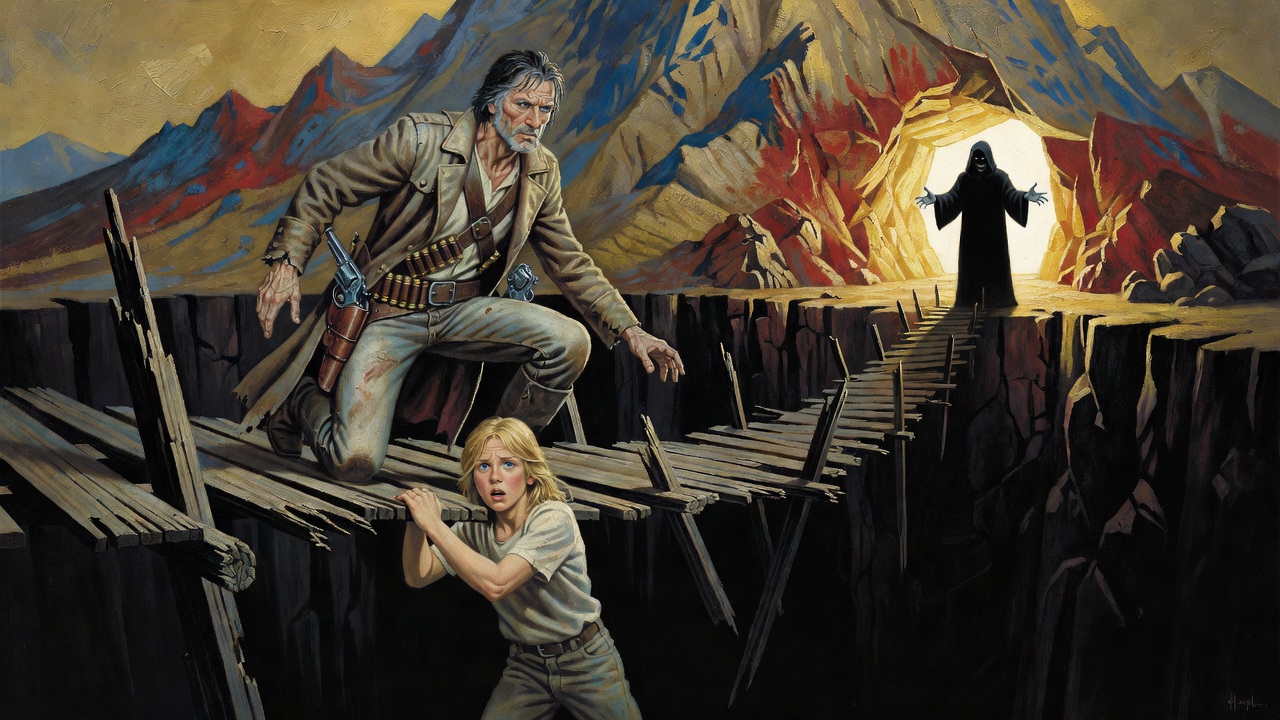
The Gunslinger and the Man in Black
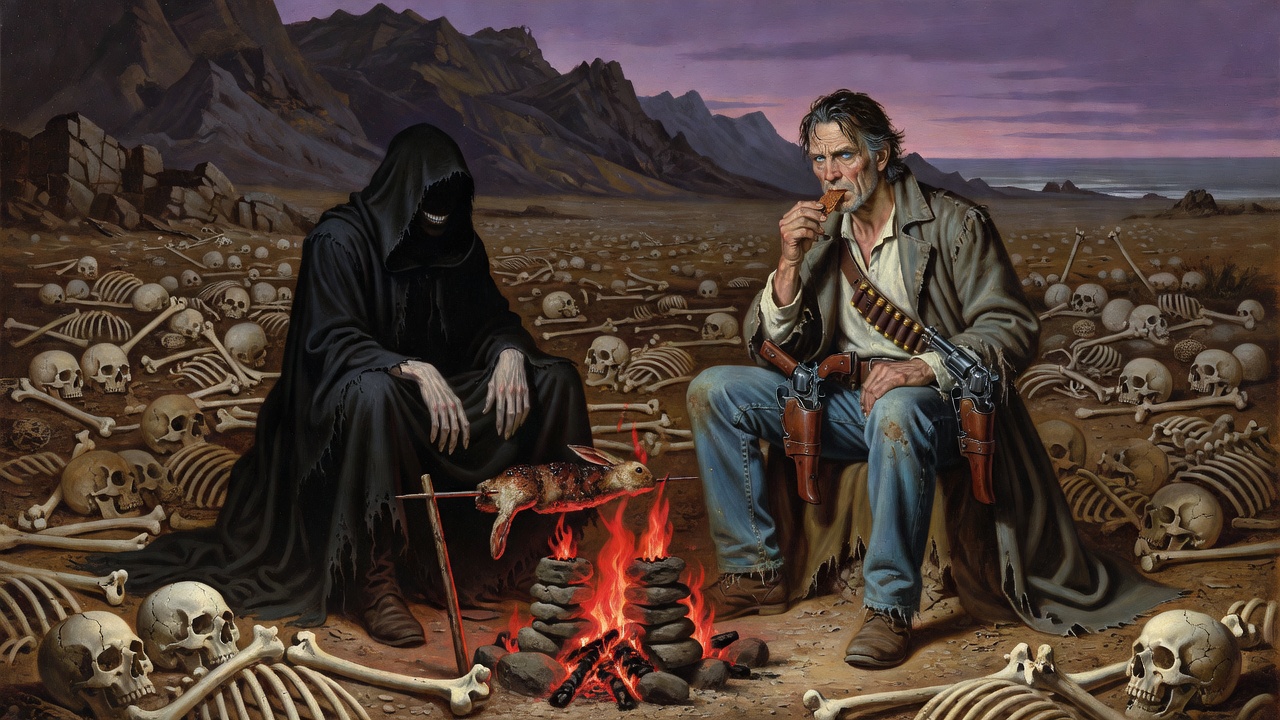
The golgotha is a place of skulls between the mountains and the sea. The man in black builds a fire with two chimneys and lights it with the sign of the evil eye, and conjures a gutted rabbit for his supper; Roland eats jerky. Then he puts back his hood, and he is younger than Roland expected, square-jawed and handsome, with shaggy black hair and brilliant dark eyes. In 1982 the man in black is nearly immortal; in 2003 so are they both. He proposes truth between them: “Only enemies speak the truth.”
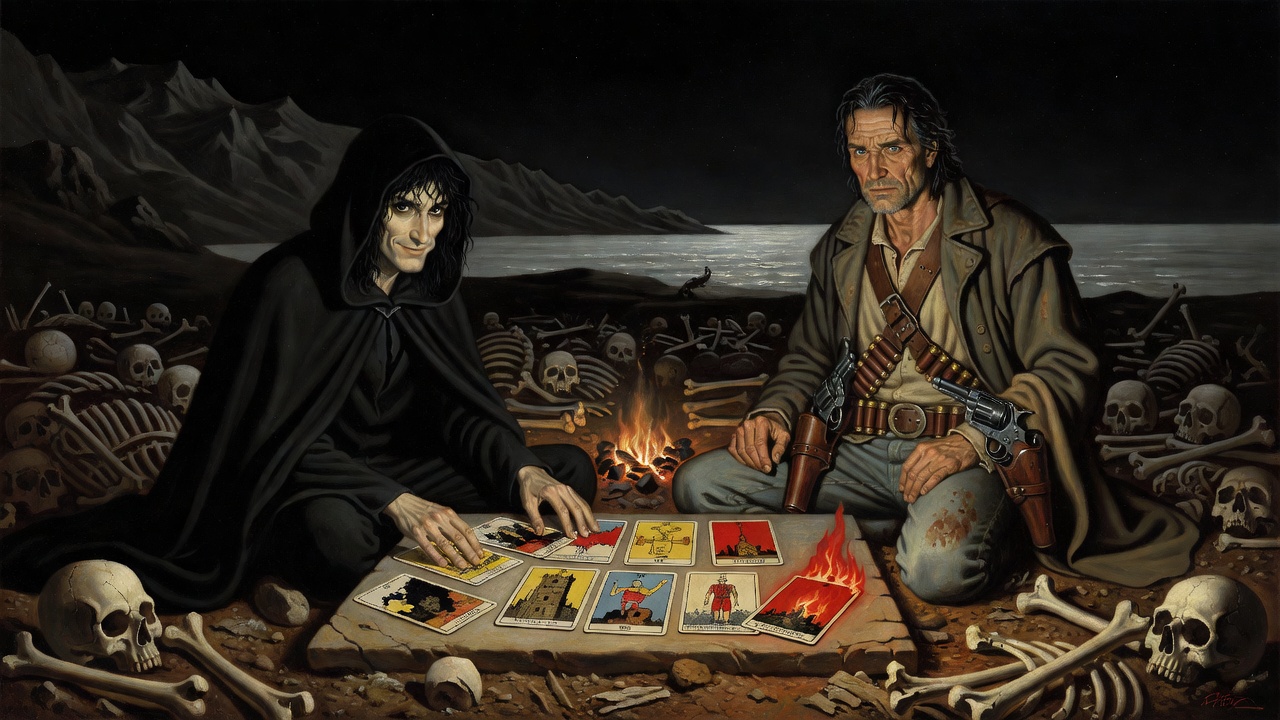
He deals cards from a deck that is part Tarot and part his own. The Hanged Man is Roland. The Sailor is Jake: “He drowns, gunslinger, and no one throws out the line.” The Prisoner is a baboon riding a young man’s shoulders. The Lady of Shadows has two faces. Death comes up and is not, the dealer says, for Roland. The Tower is laid across the Hanged Man. The last card is Life, a sunrise over a field of red, and he says it is not for Roland, and burns it.
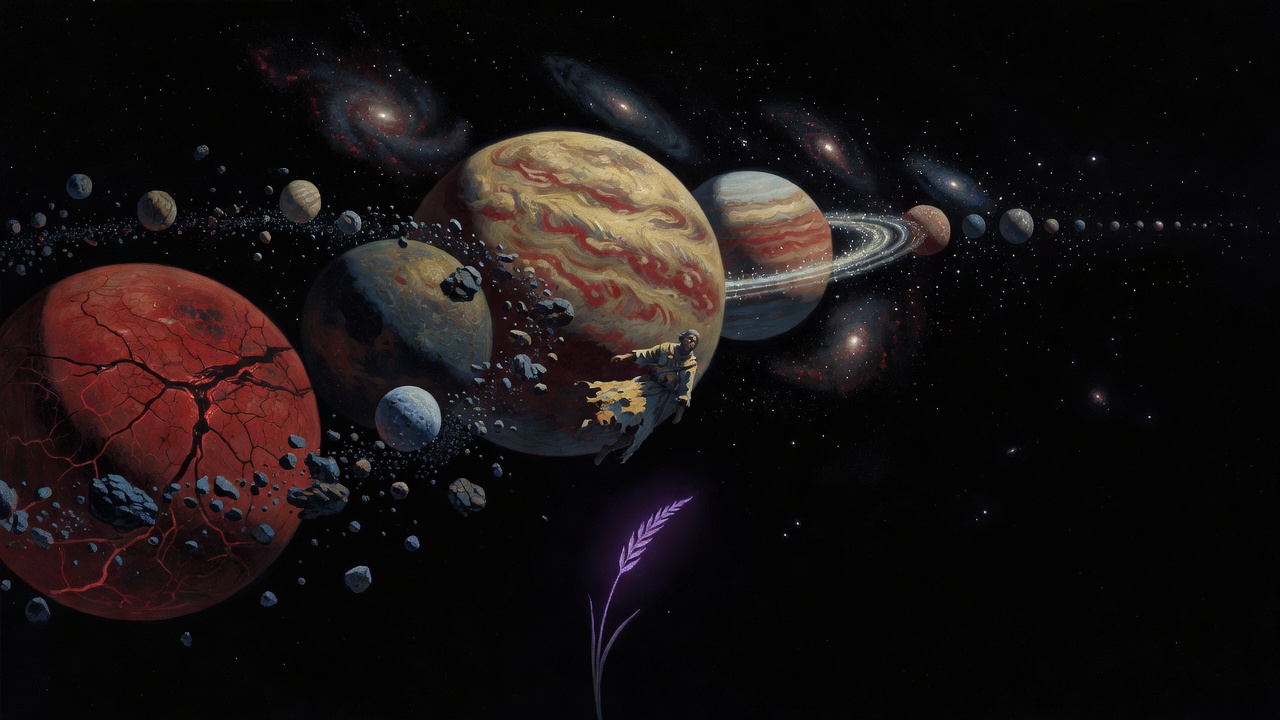
Roland lunges at him and is thrown into a dream instead: a void, light, dinosaurs, men, and then outward, past a red planet laced with canals, a ring of rocks, a storm-planet, a ringed planet, out through galaxies to a place with no name. “The greatest mystery the universe offers is not life but size.” “Size encompasses life, and the Tower encompasses size.” A single blade of grass, purple with life, is the last thing he sees before he breaks.
Waking, he is told he did fairly well; his father would have come back drooling. The man in black admits he came to Gabrielle as Marten. He calls himself “the furthest minion of he who now rules the Dark Tower” — the Beast in 1982, the Crimson King in 2003. The Ageless Stranger Roland must face is Maerlyn in 1982 and “Legion” of End-World in 2003; of him the man in black says, “He darkles. He tincts. He is in all times.” Roland must wait for the drawing of his three and then go west. Offered the chance to turn back, he refuses, and is put to sleep.
He wakes ten years older by a dead fire, beside a skeleton in black rags that in 1982 he takes without question for Walter’s and in 2003 is quite possibly a trick. He takes its jawbone in place of the one Jake threw away, and walks west, and at dusk sits down on the strand of the Western Sea and dreams of the three he will draw and of the Tower, and of coming to it at last “winding his horn, to do some unimaginable final battle.” He has no horn; he lost it at Jericho Hill, long before this book. The last page of Book VII will send him back to the first page of this one with the horn in his hand.
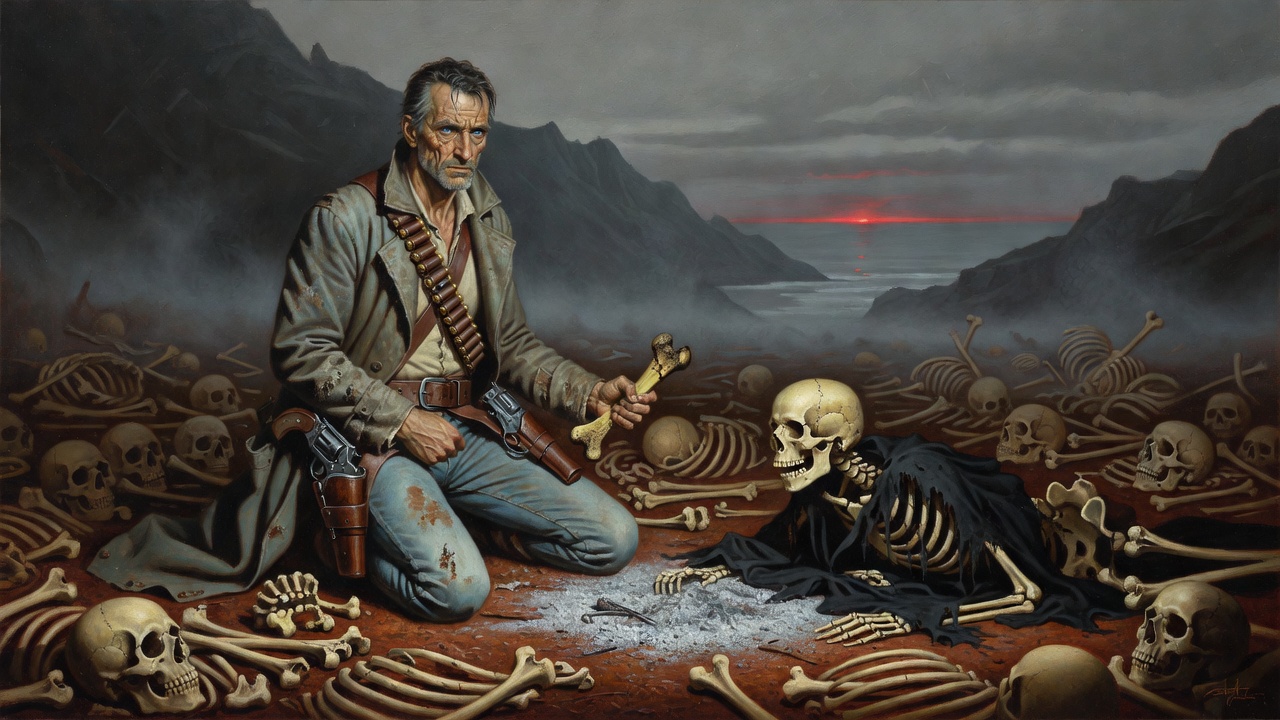
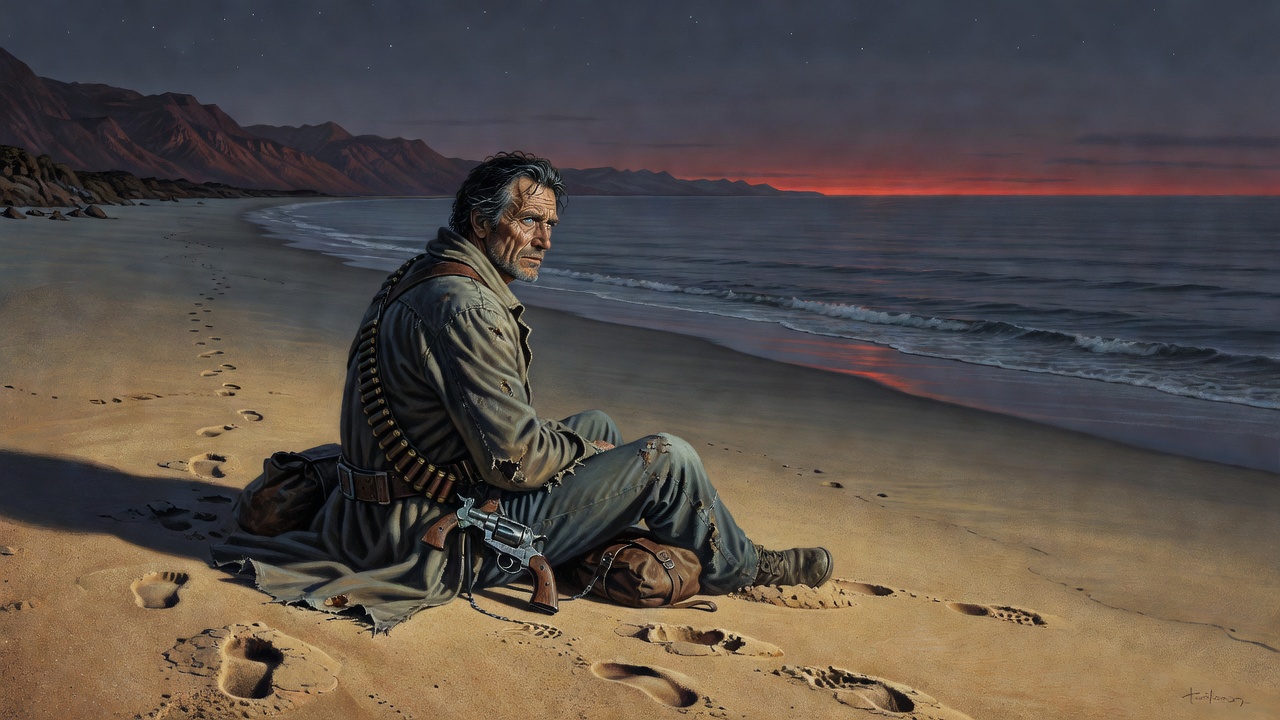
What the 2017 film took from this book
- The 2017 film is framed by King and its director as a sequel — Roland’s next turn of the wheel, carrying the Horn of Eld he does not have here — rather than as an adaptation of this book.
- Kept from Book I: the man in black as a sorcerer who kills with a word and raises the dead; the pursuit across Mid-World; an eleven-year-old Manhattan boy who crosses to a desert world and finds the gunslinger; the opening sentence, spoken in Jake’s dream; and the number nineteen, as “19-19” drawings.
- The catechism Roland recites and Jake throws back at him (“I aim with my eye.” “I shoot with my mind.” “I kill with my heart.”) is the series’ creed, spelled out in full in Book III; what this book has is its refrain, Steven’s rebuke that his son has forgotten the face of his father.
- Dropped: Tull, Allie, Nort, Sylvia Pittston, the way-station cellar, the oracle, the Slow Mutants, Jake’s fall, the palaver and the cards. Its plot machinery — psychic children, Breakers, the Devar-Toi, the Dixie Pig — comes from Books III and VII.
- New: the man in black kills Roland’s father on screen. In this book Steven Deschain appears only in memory.
- King said a sequel would be R-rated, open with the lobstrosities, and give Roland a hat.
Continuity notes
- Roland’s right hand: whole throughout Book I. On the first morning of Book II a lobstrosity takes the index and middle fingers, the right big toe and a piece of calf; he shoots left-handed from then on, and one of the two guns passes to the people he draws. Every frame on this page is a two-handed, two-gun Roland.
- Hat: the 2003 opening says outright that his hat is gone, lost somewhere behind him; the frames give him one anyway, a bible choice for continuity with the later books, where he has one again. Where that hat comes from is unverified.
- The mule: bought in Pricetown; dies at Brown’s hut. He walks from there on.
- Jake: dead in New York in 1977 before the book opens; alive in Mid-World from the way station to the trestle; dead again at the end of Part IV. Roland undoes the first death in Book II and draws him back in Book III. Nine years old in the 1982 text, ten to eleven in 2003, eleven in later canon. He carries no weapon in this book.
- Tull: fifty-eight shot, the whole town, among them Allie, Sheb, Sylvia Pittston, Kennerly and Soobie; Nort, dead twice over, hangs nailed to Sheb’s roof. Brown and Zoltan survive.
- The Gilead dead (flashback): Hax, hanged; David the hawk, killed in the Square Yard. Cort survives the test with one eye; the 2003 text makes clear he is dead by the time of the main story.
- Jawbones: the speaking demon’s, taken in the way-station cellar, given to Jake as a ward, dropped and left at the camp below the mountains; the golgotha skeleton’s, taken on waking, carried into Book II and burned in Book III.
- The man in black: hooded until the golgotha; in 1982 the skeleton is his beyond doubt; in 2003 the bones are very likely a ruse, and Book IV confirms him as Marten and as Randall Flagg.
- Time: about a month behind him at Brown’s; sixteen days to the way station; a week’s climb; three “days” twice under the mountain; then ten years asleep. He is ten years older on the beach than on the first page.
- The Horn of Eld: lost at Jericho Hill before this book; the horn in the last sentence is a dream. Book VII’s coda returns him to the desert carrying it.
- 1982 → 2003, the list: more than 9,000 words added; Walter and Marten merged; the town Farson renamed Taunton; the Beast became the Crimson King; Maerlyn became “Legion” as the Ageless Stranger; twelve years since Gilead became an unknown number; Jake 9 became 10–11; Allie’s death made a mercy; Walter’s death made doubtful; Part V retitled from “The Gunslinger and the Dark Man”; Mejis, Susan, North Central Positronics, a taheen and the Crimson King seeded; England, Mars, Jesus, Easter and other earthly references removed so the world is only vaguely like ours; “parsecs” became “eternity”; most adverbs cut. King’s own account: the original was dry and hard on newcomers, and the finished series needed its first book to agree with its last.
- Nineteen: already Tull’s trigger word in 1982; the 2003 introduction, “On Being Nineteen,” makes it King’s own number, and it recurs through Books V–VII.