The Dark Tower · Book VI · 2004
Song of Susannah
One day in three worlds: Susannah’s body walks 1999 New York under another woman’s will, while Roland and Eddie drive across Maine in 1977 to knock on their author’s door.
Song of Susannah is the sixth of the seven Dark Tower novels and the quickest of them, in story time if not in pages: about 415–430 pages, published by Donald M. Grant in June 2004 with ten paintings by Darrel Anderson, a few months ahead of the last book. It spans a little more than a day. The Calla thread picks up the night Wolves of the Calla ends; the New York thread is one afternoon and evening, June 1, 1999; the Maine thread is one summer day in 1977. There is no road and no journey. The ka-tet is split through a door and the book cuts among the pieces.
Its thirteen chapters are called stanzas, each closed with a Commala verse, and the song of the title is Susannah’s: her body is walking Manhattan under the control of Mia, the demon who wants the child in it, and the book is the fight for the wheel. The other half is stranger. Roland and Eddie land in Maine and drive to Bridgton, where a twenty-nine-year-old named Stephen King comes around the side of his house, sees the gunslinger from a story he abandoned, and runs into the lake. King writes himself in, has himself hypnotized and ordered back to work, and in the Coda kills himself off in a newspaper clipping dated June 1999 — his real accident, rewritten as a death.
Readers who call it a bridge book are not wrong; it exists to move the pieces into position for The Dark Tower. But it buys the lot and its rose for the Tet Corporation for one dollar, puts Black Thirteen in a locker under the World Trade Center, delivers Jake and Callahan to the door of the Dixie Pig, and ends with Mordred Deschain, son of Roland and one other, coming into the world.
The Beamquake and the Door
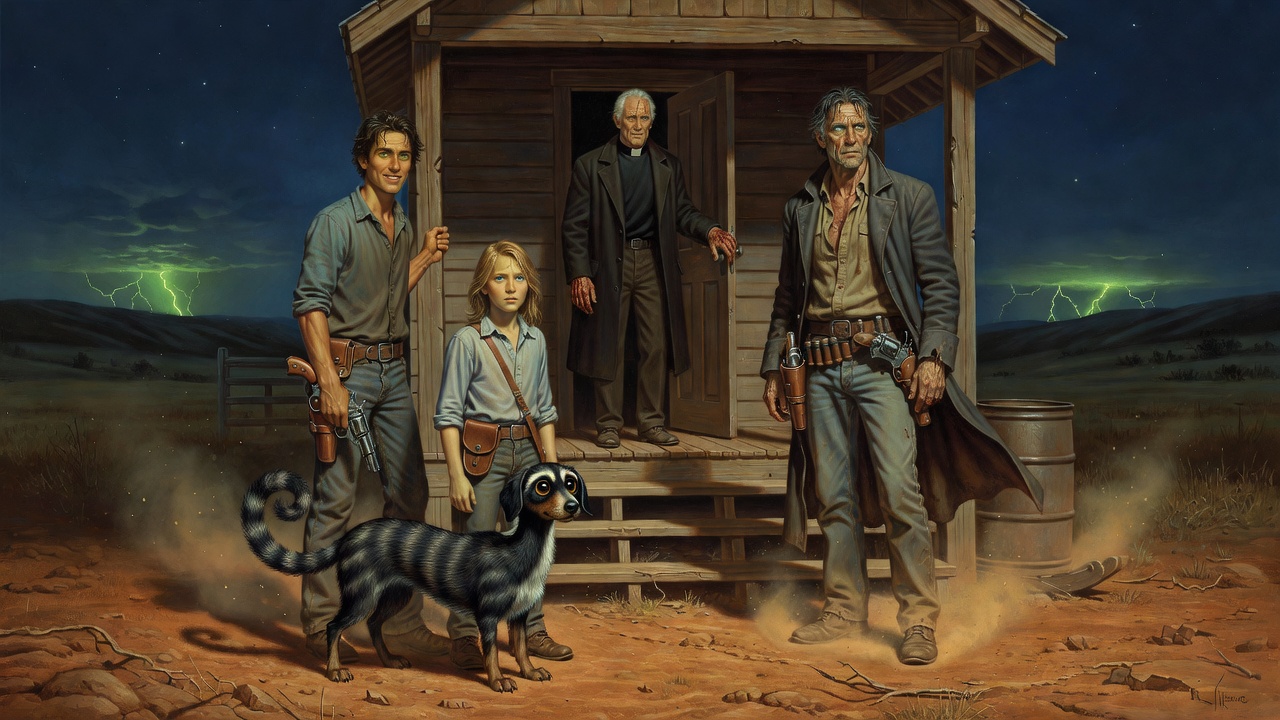
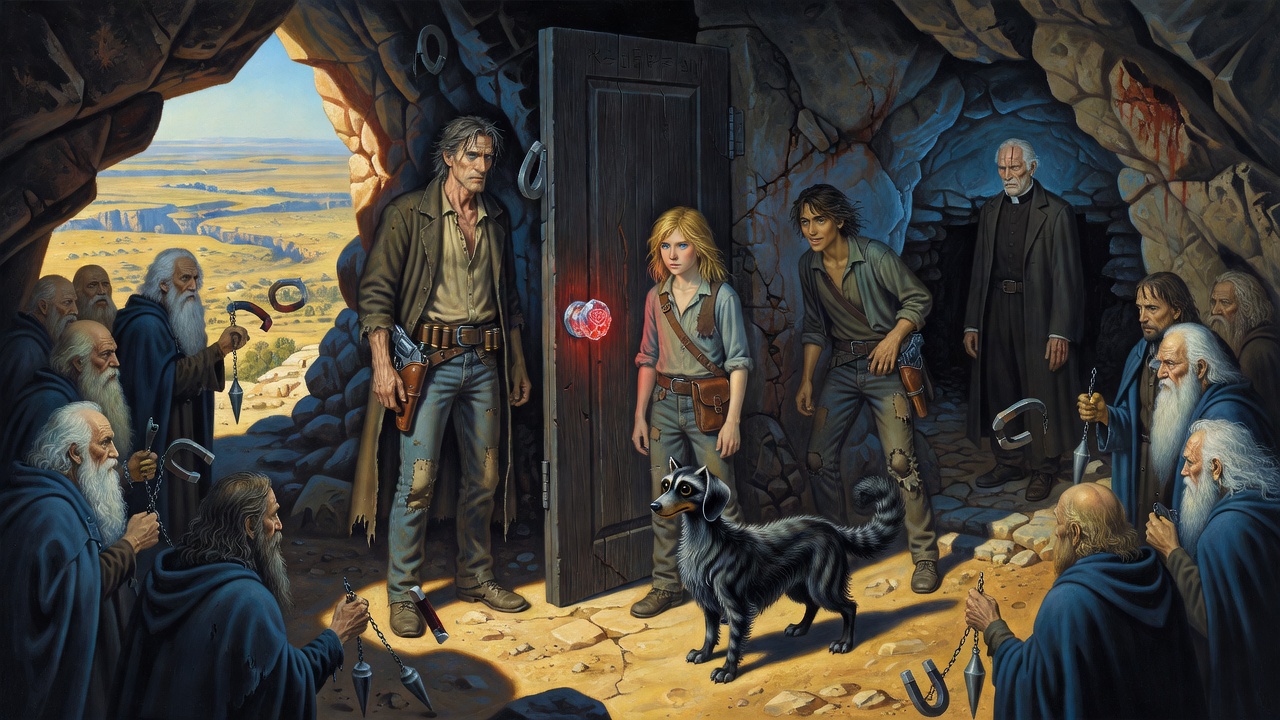
The night after the Wolves are beaten, Roland, Eddie, Jake, Oy and Pere Callahan sit with Henchick and Cantab of the Manni, working out how to force the Unfound Door in the Cave of Voices. Susannah is already gone through it. Mia, the demon who wants the child conceived in the speaking ring in The Waste Lands, took the legs she needed, took Black Thirteen in its bowling bag, and left Susannah’s wheelchair broken on the cave path and Eddie’s ring, on its rawhide string, at the foot of the path.
At midnight Eddie is on the back porch of Callahan’s rectory when the ground heaves and silent green lightning bursts low in the east. The first stanza, “Beamquake,” is named for it: one of the Beams that hold up the Tower has snapped. Roland reads the damage: not their own Beam, the Bear–Turtle, or nothing within a thousand miles would still be standing, and perhaps only two Beams remain. In the same hours he feels a deep ache lurking in his hip and says nothing. It is the dry twist, the fast arthritis that first showed itself in Wolves, and from here on it is part of his gait.
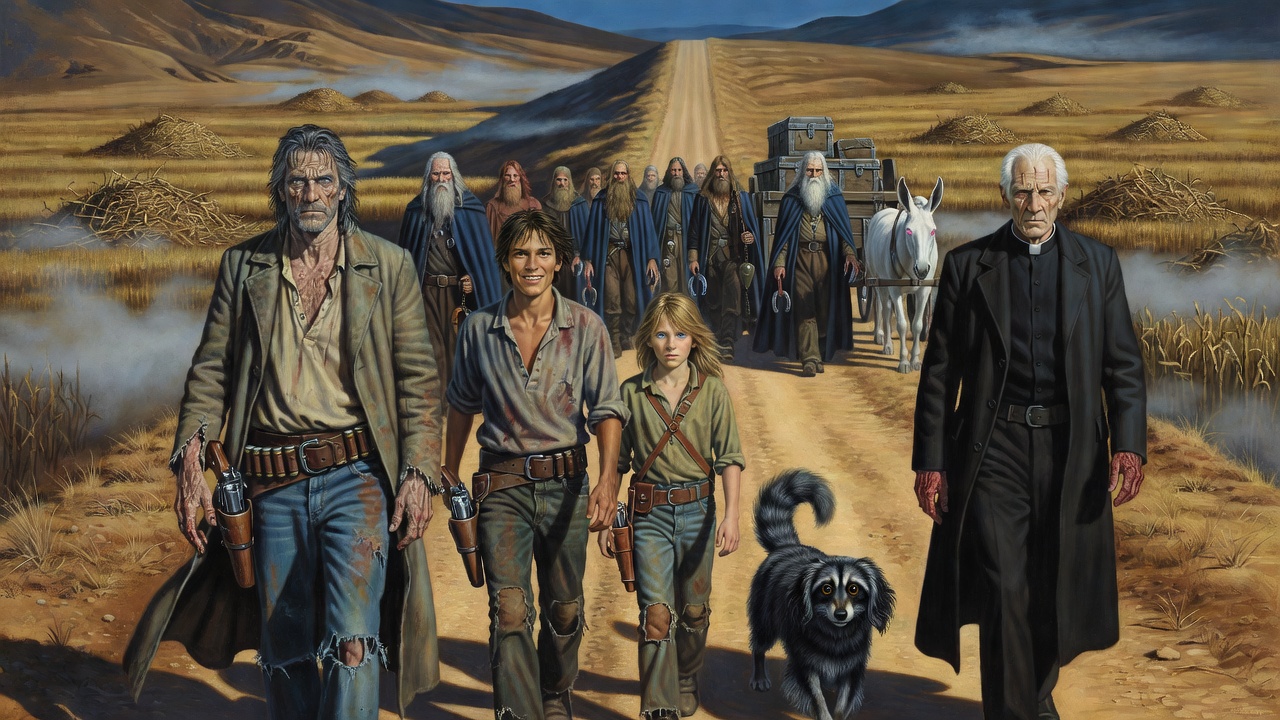
The plan is to open the door twice. Roland and Eddie will follow Susannah; Jake and Callahan will go to 1977 to secure Calvin Tower and the vacant lot with the rose, which Tower must sell them before Sombra’s option runs out on July 15. “The Persistence of Magic,” the second stanza, is the climb. Fewer Manni gather the next morning than Henchick said would come, with a two-wheeled wagon drawn by a pair of long-eared, pink-eyed albino asses carrying the coffs, chests of oversized plumb-bobs and magnets they use to lean on the world. At the foot of the path Eddie passes Susannah’s battered wheelchair; on the East Road the dead Wolves lie heaped under uprooted corn plants. In the cave Henchick prays for kraven, the persistence of magic; Callahan has already found, in Tower’s bookcase, a paperback of ’Salem’s Lot with himself in it. Jake, strongest in the touch, stands before the door as the focus.
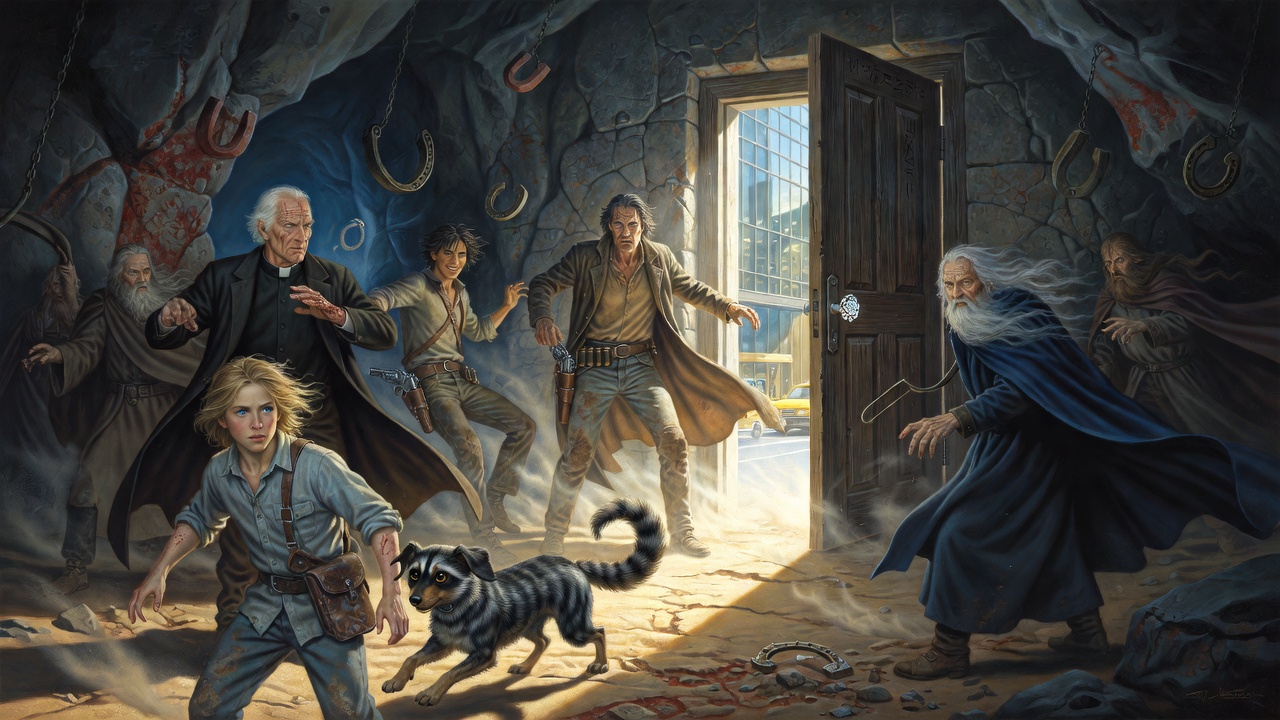
Ka reverses the order. The door opens on New York and pulls Jake, Oy and Callahan through; Eddie lunges after them and is thrown back; then he and Roland are sucked through together, into gunfire. The ka-tet is in three pieces, in three whens.
Susannah-Mio in New York
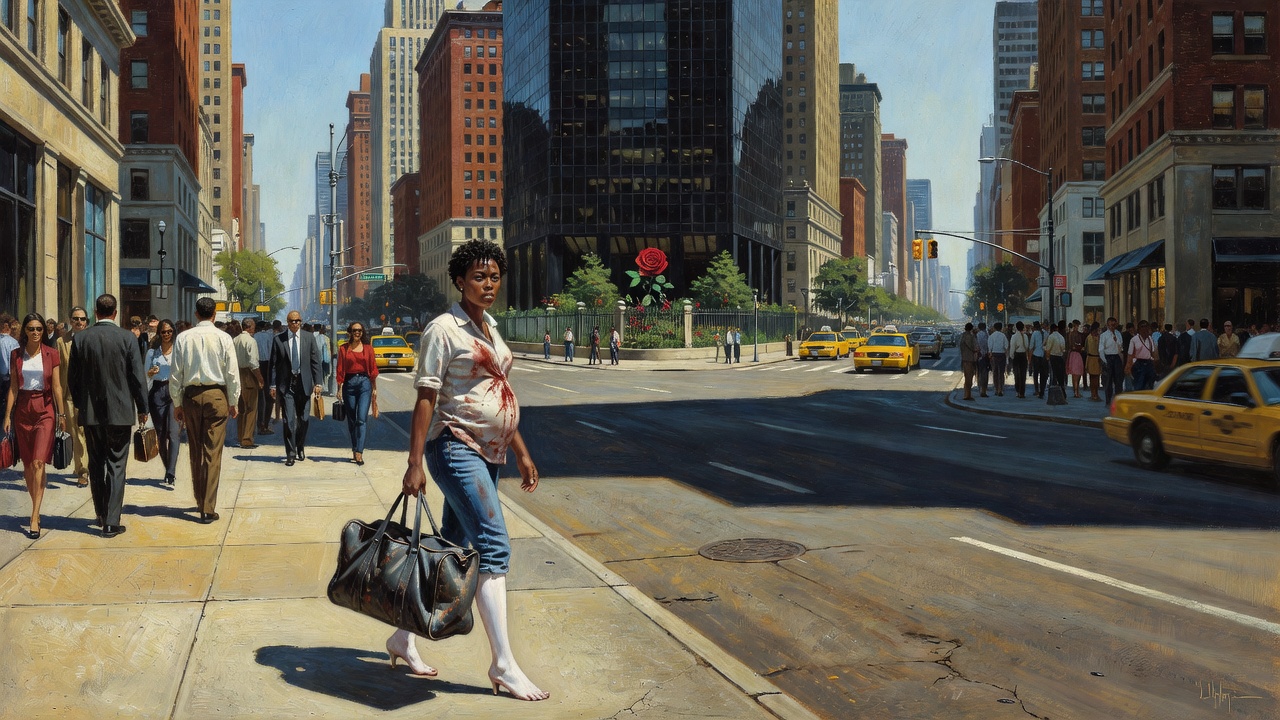
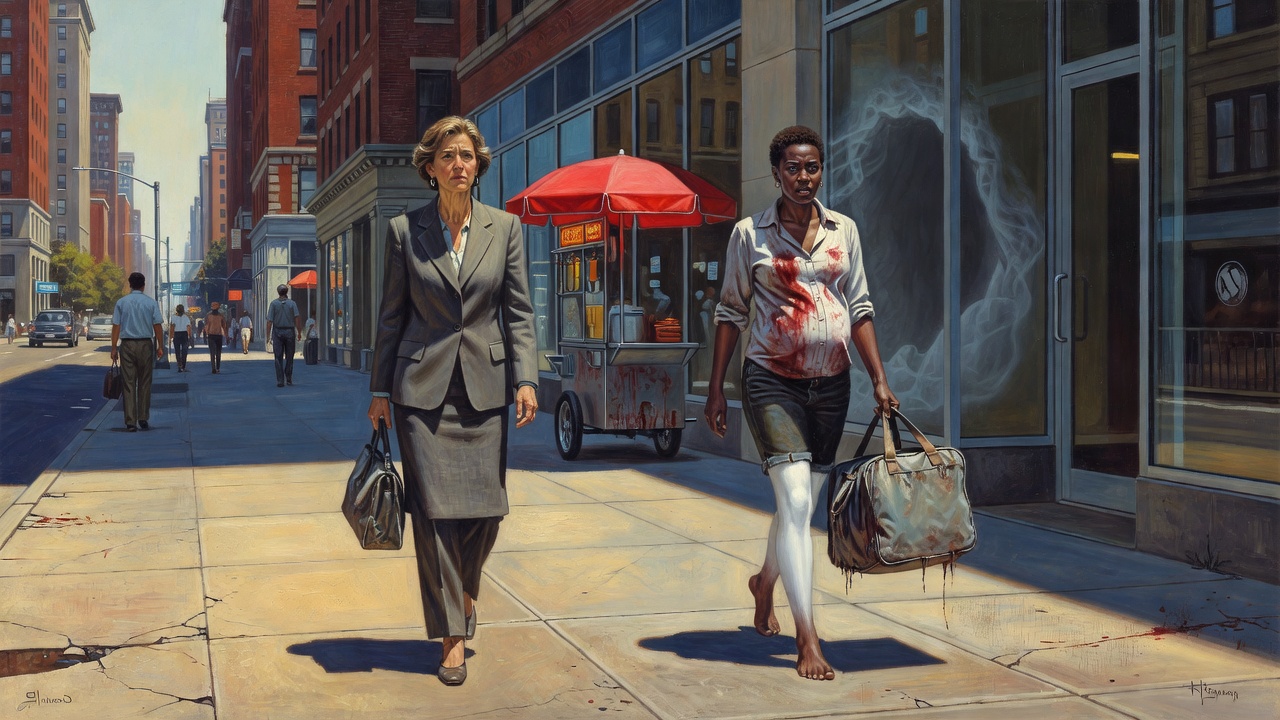
June 1, 1999, 1:19 in the afternoon, Second Avenue at Forty-Sixth. An accountant named Trudy Damascus watches a Black woman four foot eight materialize on the sidewalk with the mouth of a cave hanging in the air behind her, her jeans empty below the knee. Then legs grow in, and the bare feet are white. The woman shows Trudy the sharpened plates in her bag and takes her shoes. “Trudy and Mia,” the third stanza, is the one outside view of the arrival; back at the corner Trudy hears humming from the garden where the vacant lot used to be, at the foot of the black glass tower that stands there now.
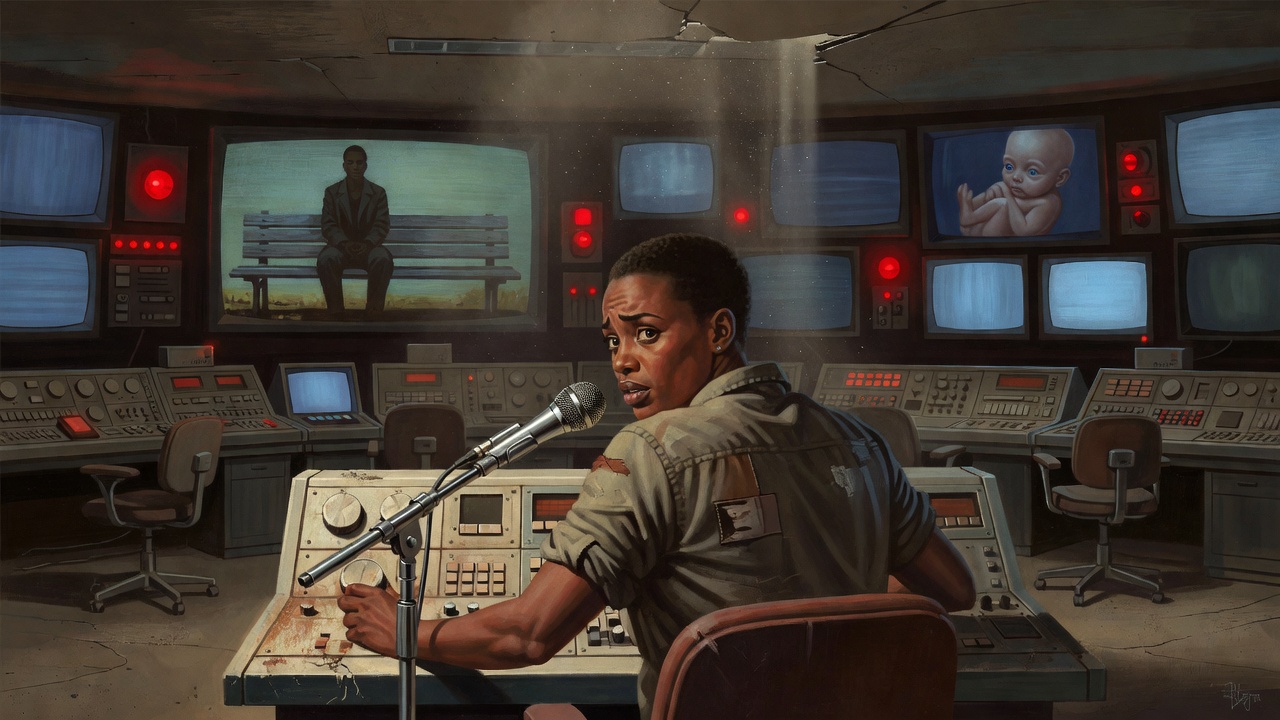
Inside the body it is a contest. Susannah learns the year from a newspaper on a park bench, feels labor begin, and answers by building a Dogan in her mind, modelled on the one Jake described in the Calla: dust, rolling chairs, blinking consoles, monitors showing her own body and a blue-eyed male fetus. She imagines dials for emotional temperature and labor force, turns the labor down and pays for it in alarms, red lights and real pain, flips the chap to sleep with a toggle, and records a message for Eddie, with the date and the place, into a microphone stamped North Central Positronics. When muscle is needed, Detta surfaces to bully Mia. “Susannah’s Dogan,” the fourth stanza, is the book’s central image: a woman at a control panel in her own head, losing the dials one at a time.
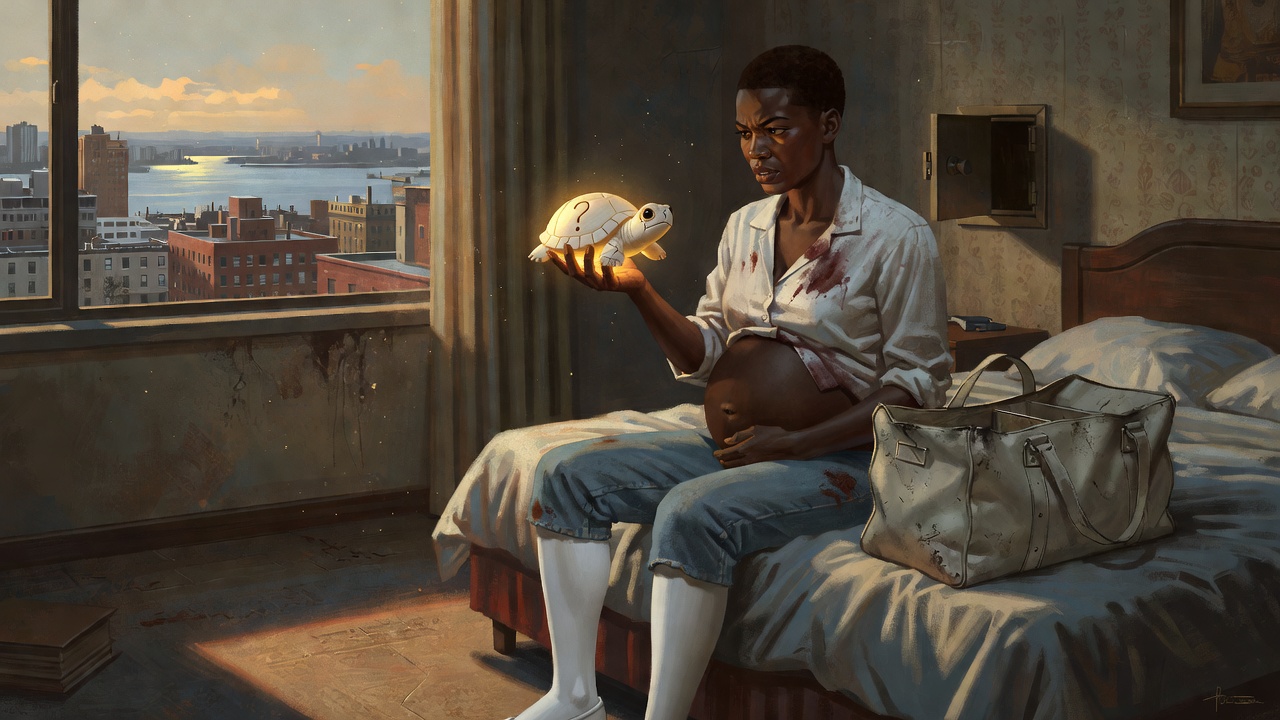
“The Turtle”: prompted by a vision of Eddie in the cave, Mia finds in the bag’s lining a small ivory scrimshaw turtle, a scratch like a question mark on its shell, a cracked beak, eyes of black tar. Whoever looks at it is hers. A Swedish UN attaché, Mathiessen van Wyck, names it a sköldpadda, hands over cash and books a hotel room in his name. The hotel is about to become another Sombra/North Central project; a dazed clerk gives her key 1919 and says, “Soon comes the King, he of the Eye.” The bag with Black Thirteen goes into the room safe, code 1999.
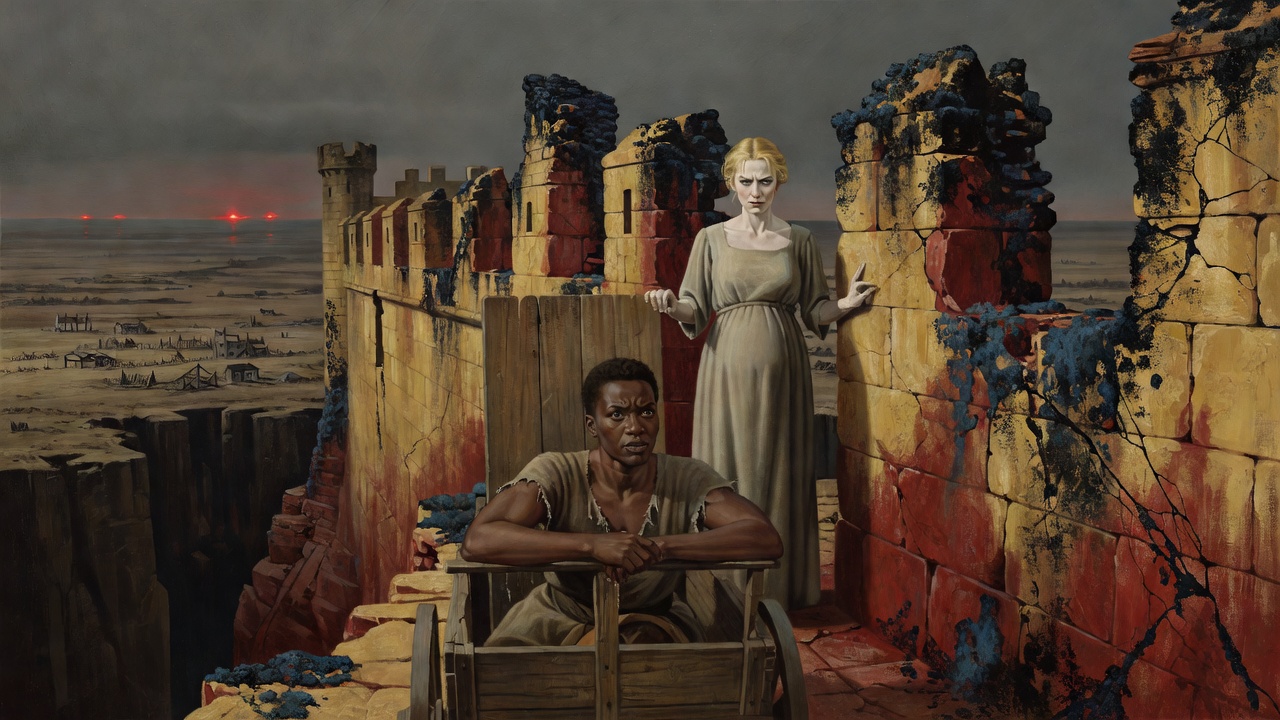
In “The Castle Allure” Mia carries Susannah’s mind to the wall-walk of Castle Discordia: merlons, ancient rot, barren land, a crimson light pulsing far off, the dead town of Fedic below. Here Mia has her own shape, a tall attractive white woman, and Susannah is legless again, in a crude cart. Mia tells the cosmology as she knows it: six Beams out of the Prim, propped as magic ebbed with the Old Ones’ machines, now running down; twelve Guardians, six Demon Elementals; the Oracle of The Gunslinger taking Roland’s seed as female and giving it to Susannah as male in the speaking ring. The child will be Mordred, fated to kill his father. Then the hotel phone rings: Richard P. Sayre tells Mia to come to the Dixie Pig, and adds that Eddie is already dead and Roland dying. Mia, Susannah understands, sold their arrival point.
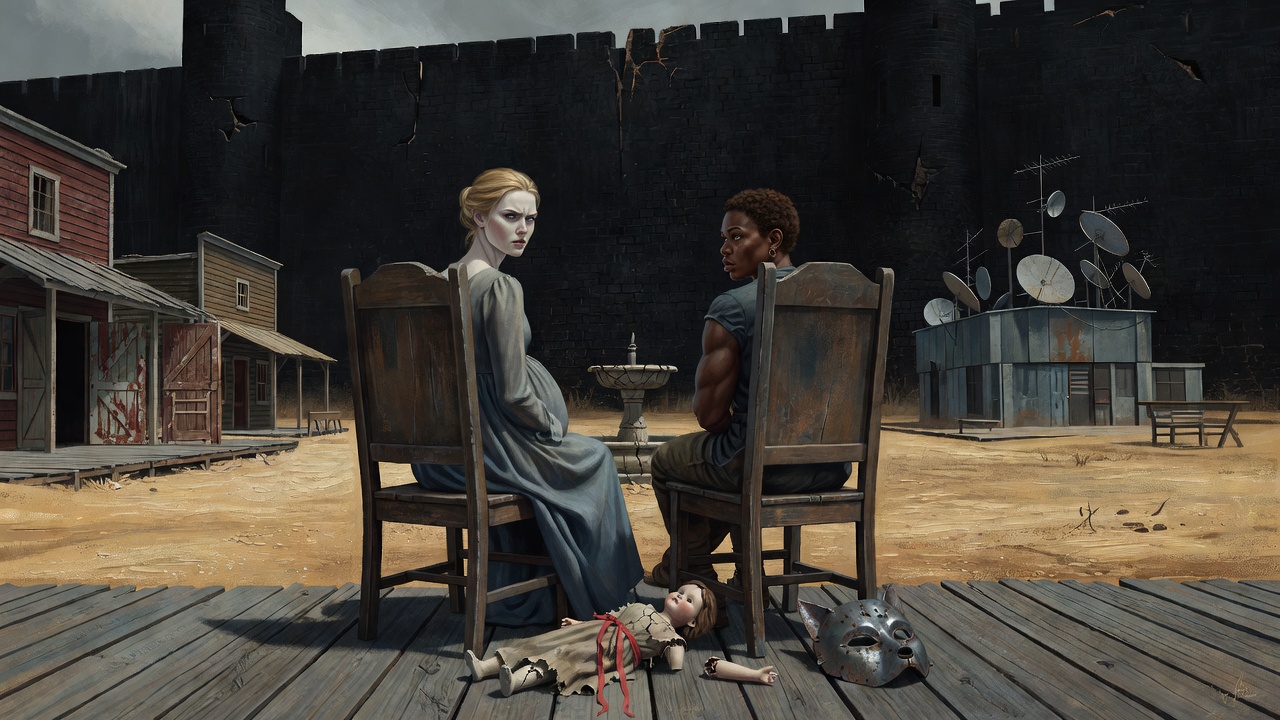
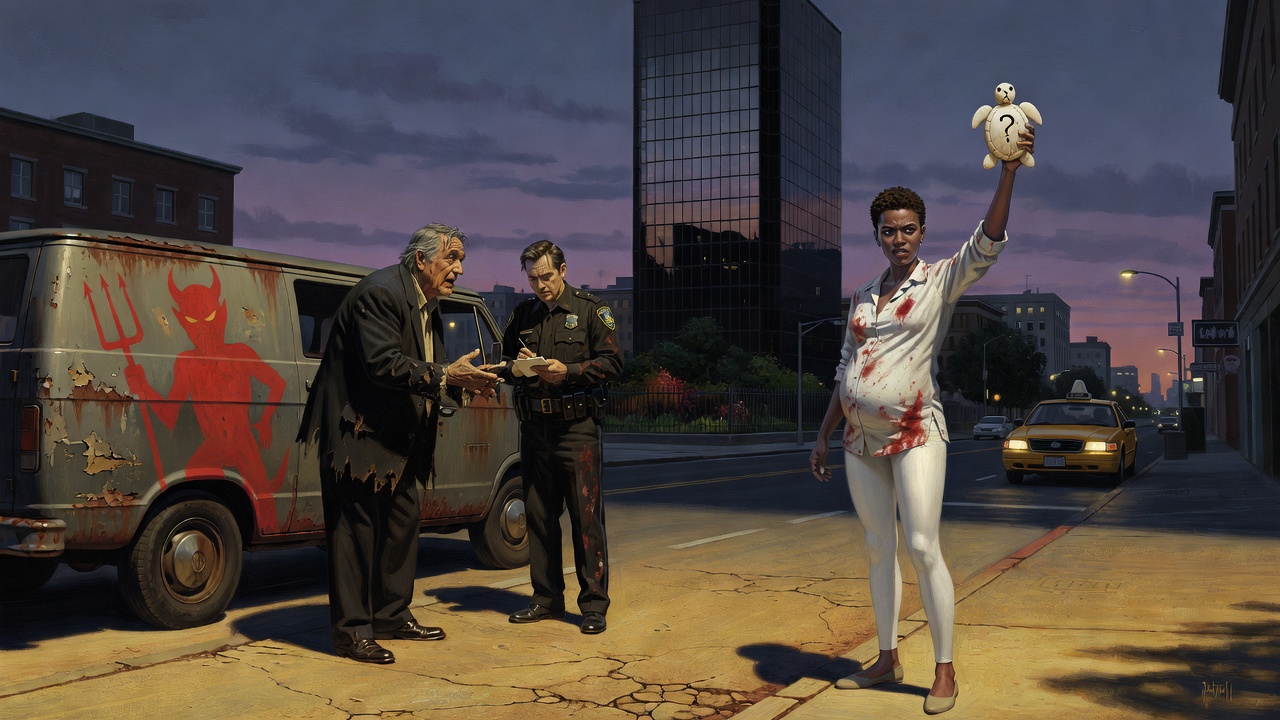
The tenth stanza, “Susannah-Mio, Divided Girl of Mine,” takes its title from a graffito. Mia leaves 1919 and Susannah swoons into a newsreel dream: Cronkite on Kennedy, Odetta’s arrest in Oxford, Mississippi, Stephen King killed by a minivan. In the Dogan the labor dial still reads 2 under red lights, but the Susannah–Mio dial has moved from yellow into red, and Mia has locked the settings; in a hotel restroom the whiteness has spread up to the thighs. They drop through to Fedic, a Western ghost town under the castle wall — a broken doll, a Wolf mask, the station of Arc 16 — and on chairs dragged out of a saloon onto the boardwalk Mia tells her own history: an elemental who loved men to death, undone by the sight of a perfect baby; when the King’s men opened Arc 16, Walter offered her mortality and a child, and the pregnancy was transmitted into Susannah cell by cell, like a fax. A prophecy names a red-heeled child who will stop the breath of the last warrior. They surface at dusk. At Second and Forty-Sixth, where the Rev. Earl Harrigan, Henchick’s twinner, is being ticketed beside his devil-painted van, Mia hails a cab with the turtle in her hand, and from the Dogan Susannah calls Harrigan with a message for whoever comes after.
Roland and Eddie in Maine, 1977
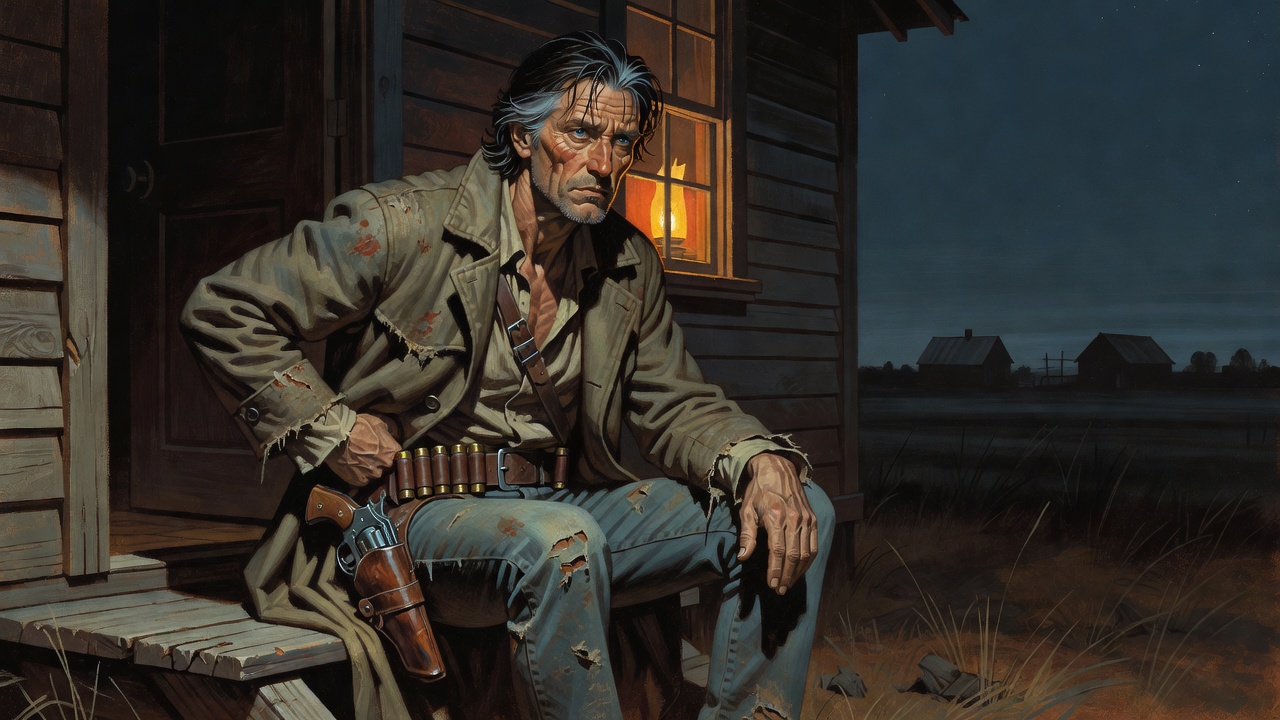
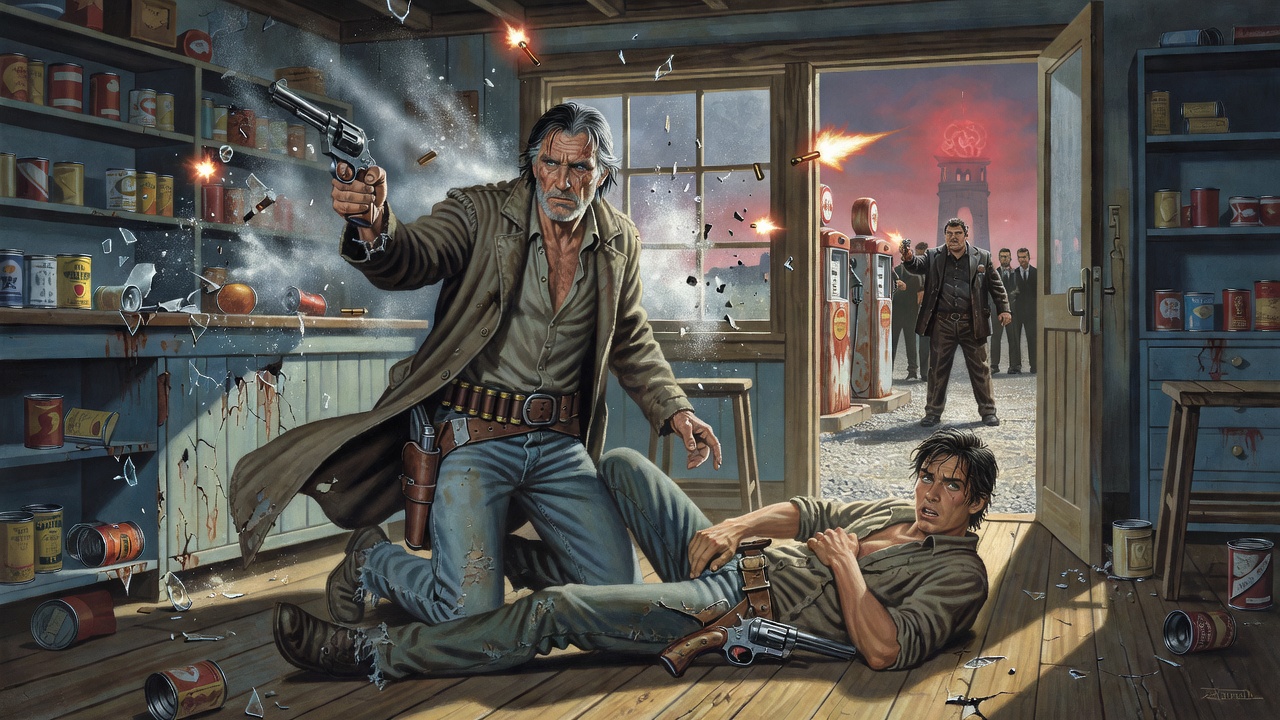
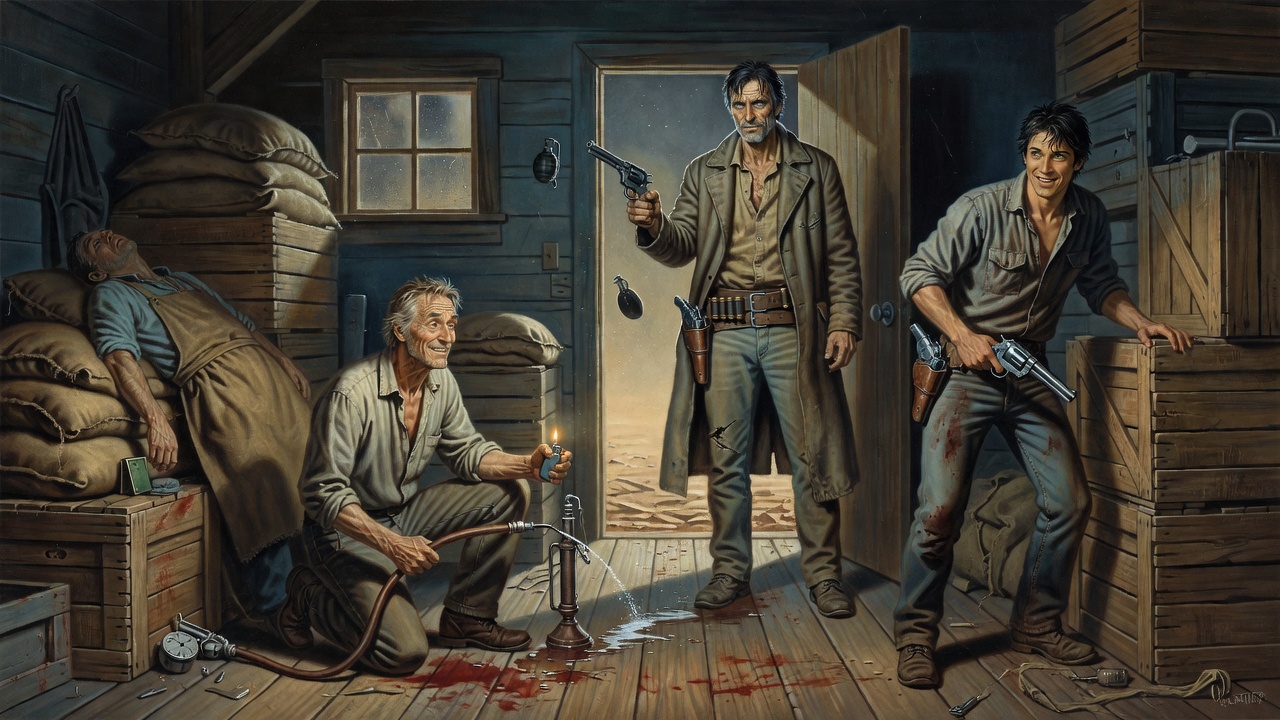
“The Ambush.” Roland hears Eddie’s head hit the door frame and ducks the first shot as they fall into the East Stoneham General Store, Maine, summer of 1977. Jack Andolini, Old Double Ugly, who was lobstrosity food in Eddie’s 1987 and is alive in this 1977, leads the shooters with Tricks Postino; two women customers die; Eddie is hit in the arm and the leg. A timber truck jackknifes into the gunmen and a tire crushes Postino. In the storeroom a stranger, John Cullum, pumps diesel across the floor while Roland shoots a grenade out of the air; Cullum’s lighter does the rest. They go out the back along the Path of the Beam to Cullum’s dock. Roland taps his throat three times before crossing water and Eddie means to ask why. “Before the question occurred to him again, death had slipped between them.” On Keywadin Pond, Cullum’s handshake sets off Susannah’s recorded sending inside Eddie’s head: “Mia’s locked Susannah away. Locked her away in the year of ‘99.”
“A Game of Toss” is Cullum’s cabin, a case of signed baseballs, a Yastrzemski ball passed hand to hand while they talk. He knows where Tower is hiding, knows of the writer over in Bridgton, Stephen King, says the walk-ins picked up after King moved in, and lends them his Ford Galaxie.
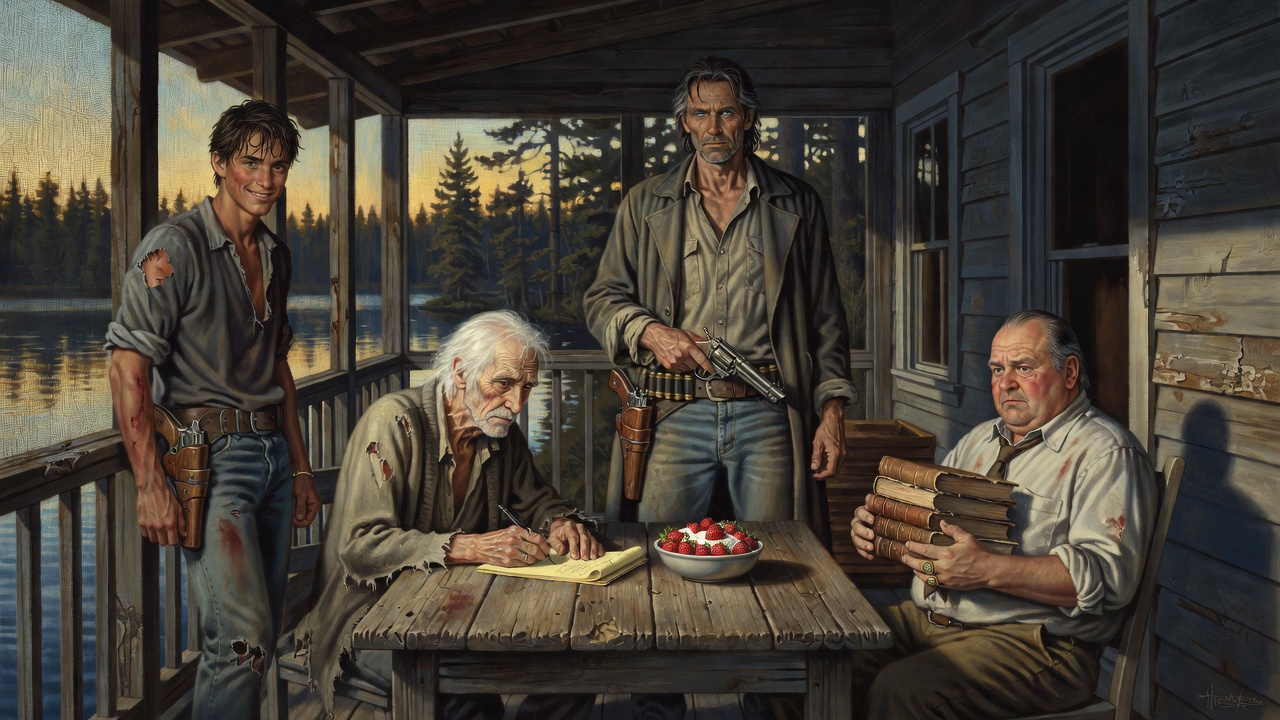
In “Eddie Bites His Tongue,” Tower has been strolling about town despite Callahan’s warning note. Cullum drives them to Jaffords Rentals, Cabin Nineteen, names Turtleback Lane in Lovell as walk-in central, and is sent toward Vermont for his own safety. Aaron Deepneau, old and ill, greets them with an unloaded pistol and, over strawberries and cream, says Tower means to renege. Tower arrives with his books. Eddie bites his tongue, then unloads about the burned bookstore; Roland takes Tower aside, murmurs something in a tongue that sounds like Dutch, and Tower flinches and signs. Deepneau drafts the bill of sale: the lot for one dollar to the Tet Corporation, Eddie’s name for the firm of Deschain, Dean, Dean, Chambers and Oy. Tower’s one condition is that his books be kept safe. Then Roland digs the bullet out of Eddie’s leg with pliers and a paring knife while Eddie bites a belt. Eddie sends Susannah word to stall Mia, learns that Co-Op City is in the Bronx, not Brooklyn, and wonders which world is real. They decide they must see King.
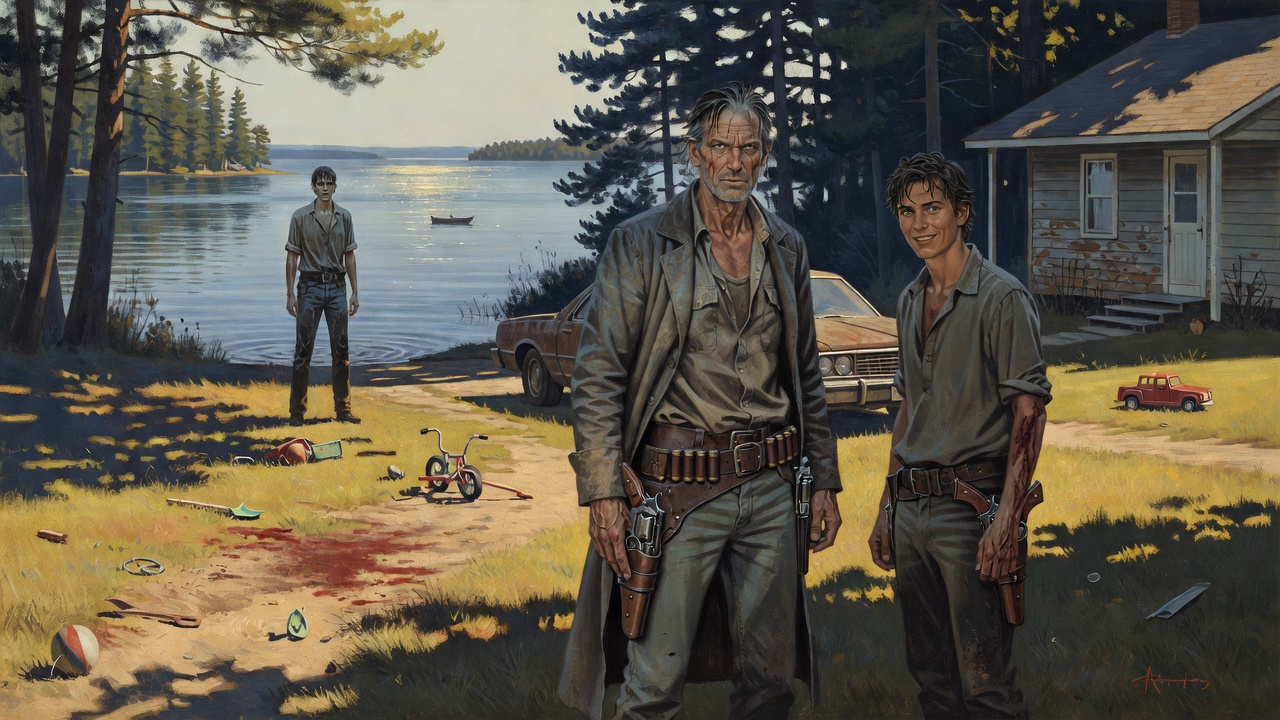
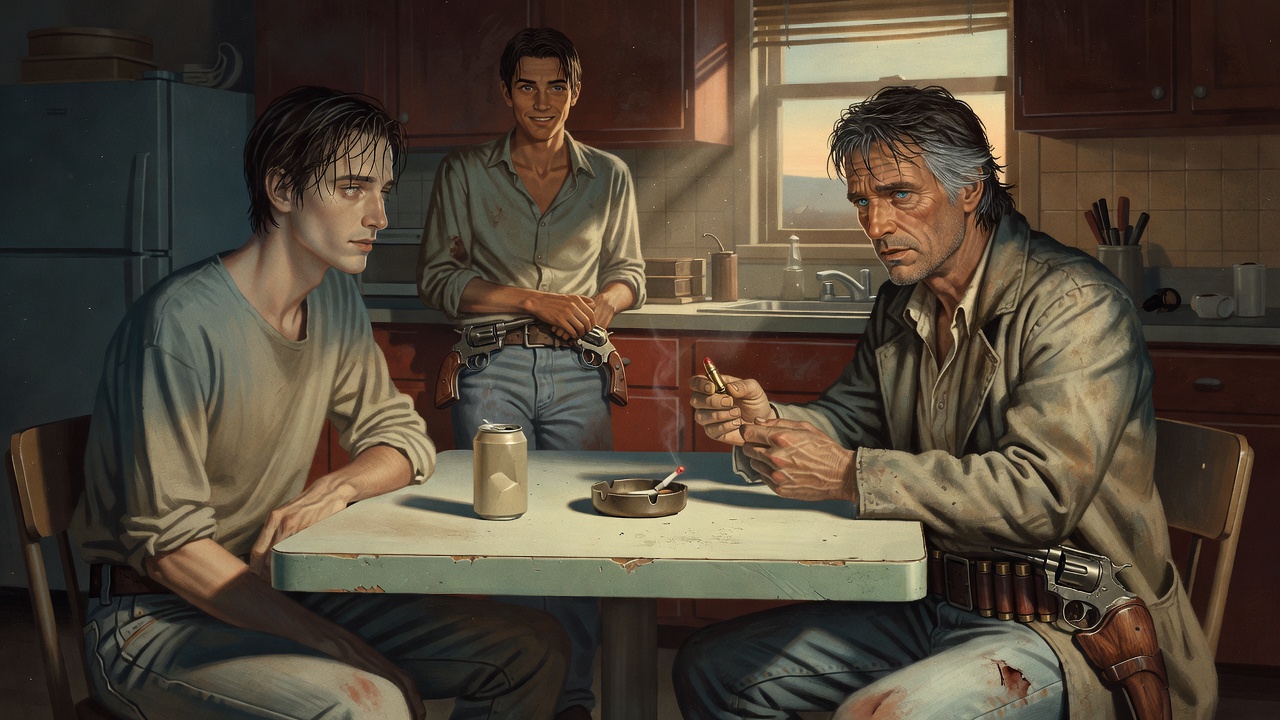
“The Writer.” Driving toward Bridgton the world grows too crisp, and Eddie finds the unmarked road without trying; Roland is afraid. A modest ranch house by a lake, toys on the lawn, the wife and children away in Bangor. The man who comes around the side of the house sees Roland, bolts into the lake, and faints. Dried off, with beer and Pall Malls, he admits he abandoned The Gunslinger after losing his outline and after Roland let Jake fall, afraid of the story and of the man in it. He is twenty-nine. Roland hypnotizes him with a spinning bullet, and under it King says he is not the maker; the story comes through him from Gan, and he has felt the Crimson King watching since he was a boy shut in a barn. Roland gives him orders: write when you hear the song of the Turtle or the cry of the Bear, and forget we were here. Alone, King writes a few cryptic lines on a pad, eats the paper, and thinks that bringing Jake back might be fun.

Jake and Callahan at the Dixie Pig, and the Coda
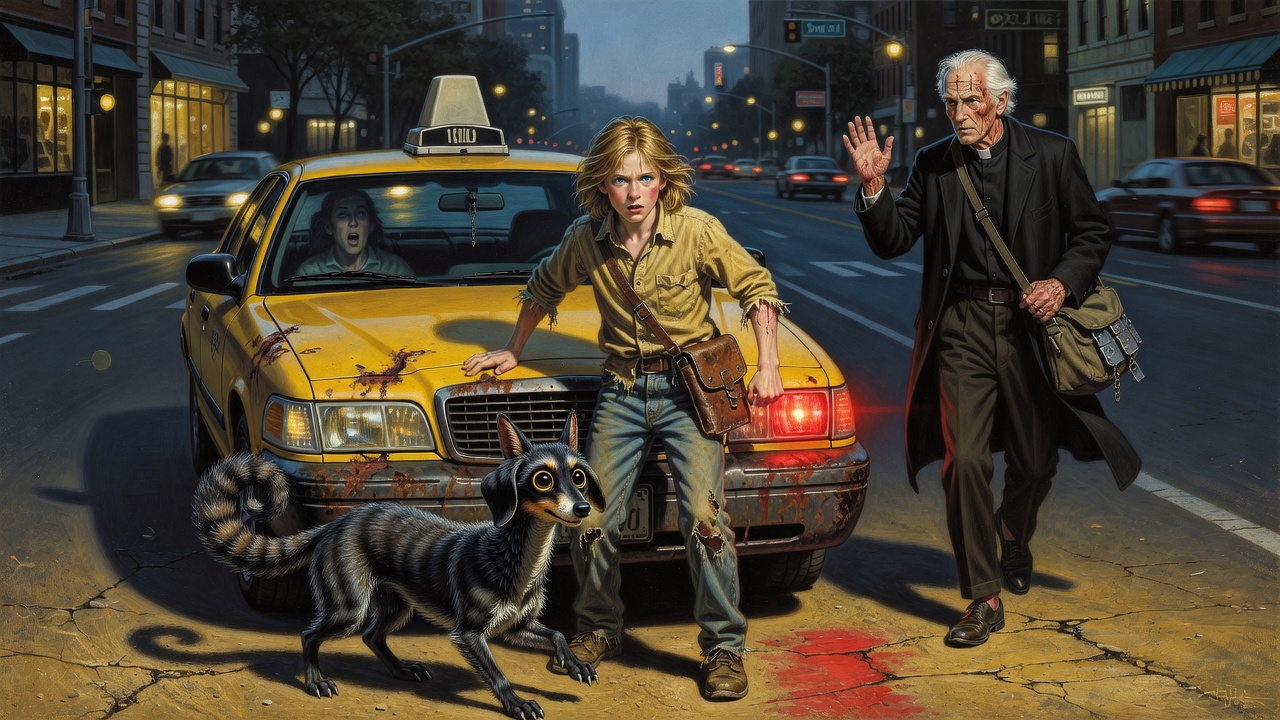
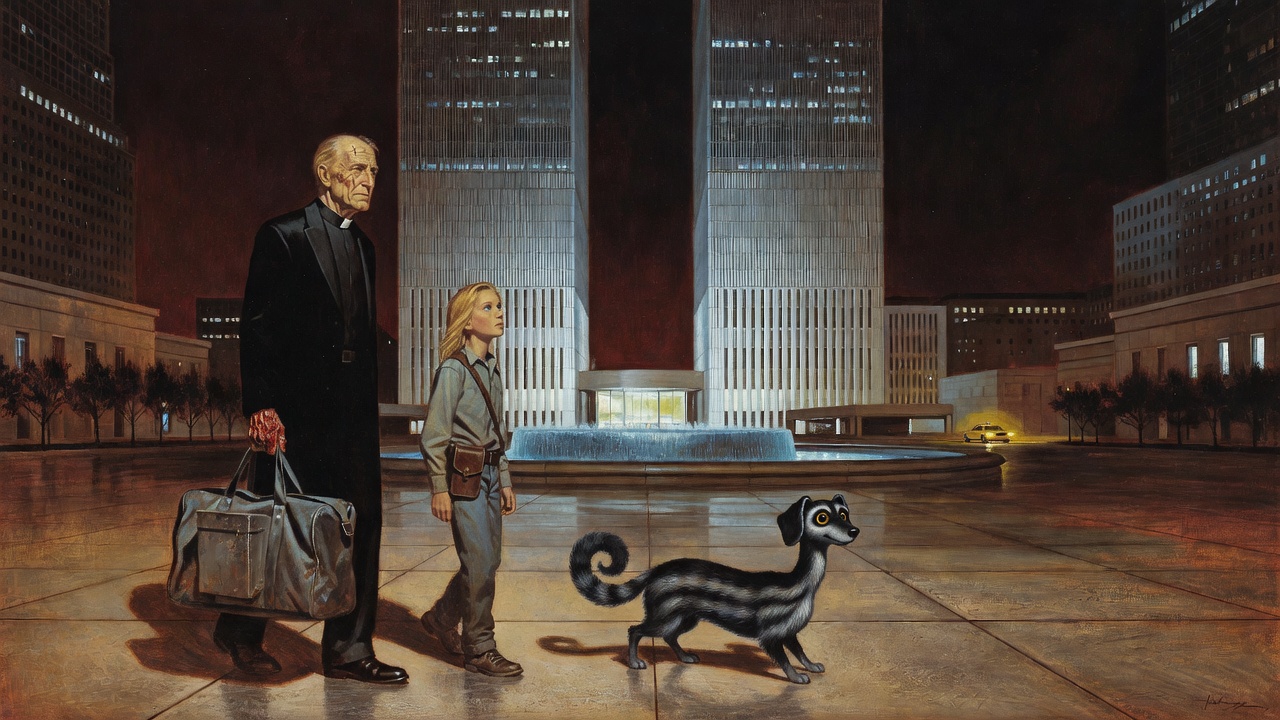
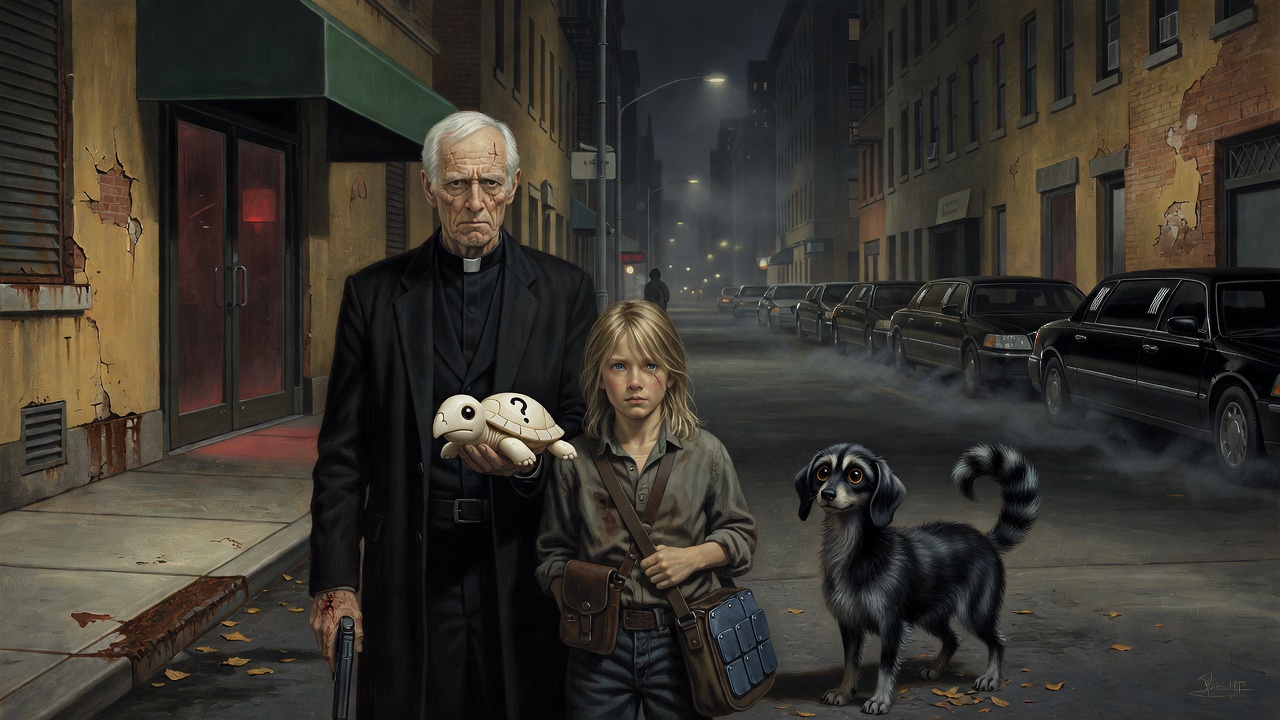
“Jake and Callahan.” They tumble onto Second Avenue at evening. Callahan turns an ankle; a cab nearly kills Oy; Jake pounds its hood and draws the Ruger, and Callahan pays the driver ten dollars and calls the gun a toy. Harrigan gives Callahan size-12 shoes and the message: she left by cab half an hour ago, try the hotel first. At the hotel desk a note left under Stephen King’s name says the key is red, and the card turns red in Jake’s hand: room 1919. In the safe, Black Thirteen wakes and whispers murder. Callahan prays — “God, if you still hear me, this is Callahan. Please still this thing.” — Jake adds the name of the White, and it sleeps. They lock the bag in a long-term locker under the World Trade Center, and Jake says it is safe there unless the building falls down on top of it. Cabs uptown to Lexington Avenue in the low Sixties: five black limousines, a black mist down the avenue, Oy nosing an ivory turtle out of the gutter. Callahan takes the Ruger; Jake keeps the Orizas. “Shoot whatever asks to be shot, and without hesitation.”
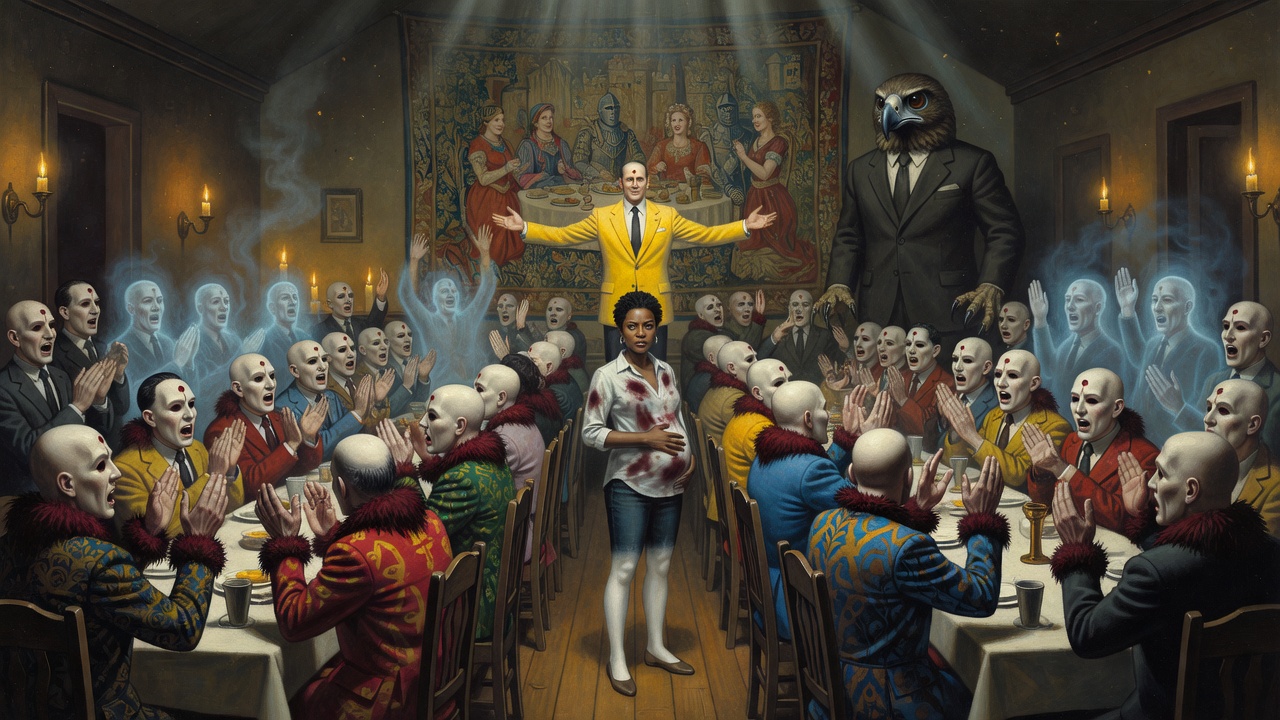
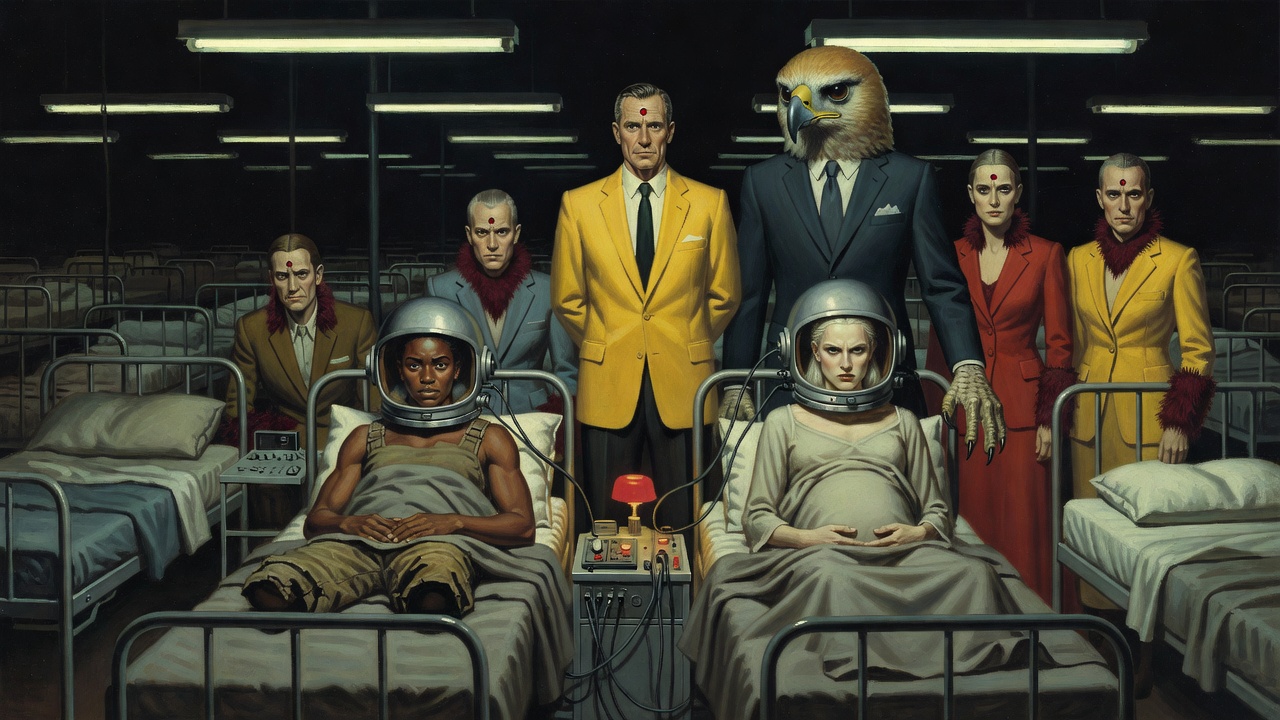
“Hile, Mia, Hile, Mother.” Dropped a block short, Mia hears a street guitarist play “Man of Constant Sorrow”; Susannah sings along inside her and relives Oxford, Mississippi, 1964, and the murdered CORE workers Chaney, Goodman and Schwerner. She feeds Mia the memory of her mother’s gingerbread, October 1946, to show her what mothering is. With Mia softened, Susannah gets the turtle dropped into the gutter for whoever follows. Inside the Pig are some seventy-five guests in a narrow room: low men and women in human masks over dark red fur, vampires with blue auras, a bird-headed taheen with talons, and Richard Sayre in a yellow blazer with a red hole in his forehead, leading the chant of the title. Detta tears a low woman’s mask away and finds a huge mutant rat. Sayre makes Mia lick his boots. Behind a tapestry of Arthur Eld’s feast, a rotisserie turns a human baby. Downstairs a door opens on Fedic, and the extraction room beyond is an old ward of hundreds of beds. Susannah and Mia, two bodies now, are laid side by side under helmets like a cross between a hair dryer and a space helmet. A voice says, “Stand by for the up-link.” Sayre tells Susannah that afterward they can kill her and eat her. The last line of the story proper, on the wings of Susannah’s song, is the birth: Mordred Deschain, son of Roland and one other, comes into the world. What he does next is Book VII’s first business.
The Coda, “Pages from a Writer’s Journal,” is diary entries from 1977 to 1999: the visitors forgotten, Pet Sematary, the Tower books coming faster than anything else he writes, a growing fear of the story and of the number nineteen. It closes with a clipping from Lovell, Maine, dated June 20, 1999, reporting that Stephen King was struck and killed by a van the day before. The real accident, which nearly killed him, rewritten as a death — and the next book’s first job is to get there before the van does.

What the 2017 film took from this book
- The 2017 film draws “mostly from the first and third volumes,” but its villain apparatus is this book’s: a present-day New York front for the Crimson King, with a smooth fixer named Sayre as Walter’s enforcer. In the books Sayre serves the King through the Sombra Corporation and Walter is a separate power; the film folds Sombra, Sayre and the Devar-Toi under Walter.
- The film’s skin-masked henchmen, grey rat fur under torn human faces, are the low men of this book’s Dixie Pig; its animal-headed technicians are Book VII’s taheen.
- The film’s New York base recalls this book’s Dixie Pig, a restaurant front for the Red; whether the film’s building is meant to be the Pig is not confirmed on the record we used.
- Nothing else crossed over: no Susannah, no Mia, no Dogan, no Mordred, no Callahan, no Black Thirteen, no 1977 Maine, and no Stephen King as a character.
Continuity notes
- Roland: right hand still short two fingers; one sandalwood revolver; the dry twist in the hip, first felt in Wolves, now a lurking ache he hides.
- Eddie: one sandalwood revolver; shot in the arm and the leg at East Stoneham; the leg bullet dug out with pliers and a paring knife at Cabin Nineteen.
- Susannah: no wheelchair (wrecked on the cave path in Wolves; Eddie passes it at the foot of the path in the second stanza); white legs whenever Mia drives, the whiteness up to the upper thighs by late afternoon; legless again, in a crude cart, in the Castle Allure vision; in Fedic she and Mia become two bodies and her lower legs are gone again.
- Jake: carries the Ruger and a bag of Orizas through the door; hands the Ruger to Callahan at the Dixie Pig and keeps the plates. Oy present throughout.
- Callahan: turns an ankle on arrival; size-12 shoes from Harrigan; carries the Ruger and the sköldpadda into the Pig, where he dies in Book VII.
- Black Thirteen: through the door with Mia; the safe in room 1919 (code 1999); then a long-term locker under the World Trade Center.
- The sköldpadda: from the bag’s lining to Mia, to the gutter outside the Pig, to Oy, to Callahan.
- The Beams: one snaps at the Beamquake; Roland judges that perhaps two remain.
- The lot and the Tet Corporation: deeded for one dollar to Deschain, Dean, Dean, Chambers and Oy, on Tower’s condition that his books be kept safe.
- Deaths: two customers at East Stoneham and Tricks Postino; Andolini survives. Births: Mordred Deschain, on the last page of the story proper. Stephen King, 29 in Bridgton, is hypnotized and ordered to write; the Coda kills him on paper on June 19, 1999.