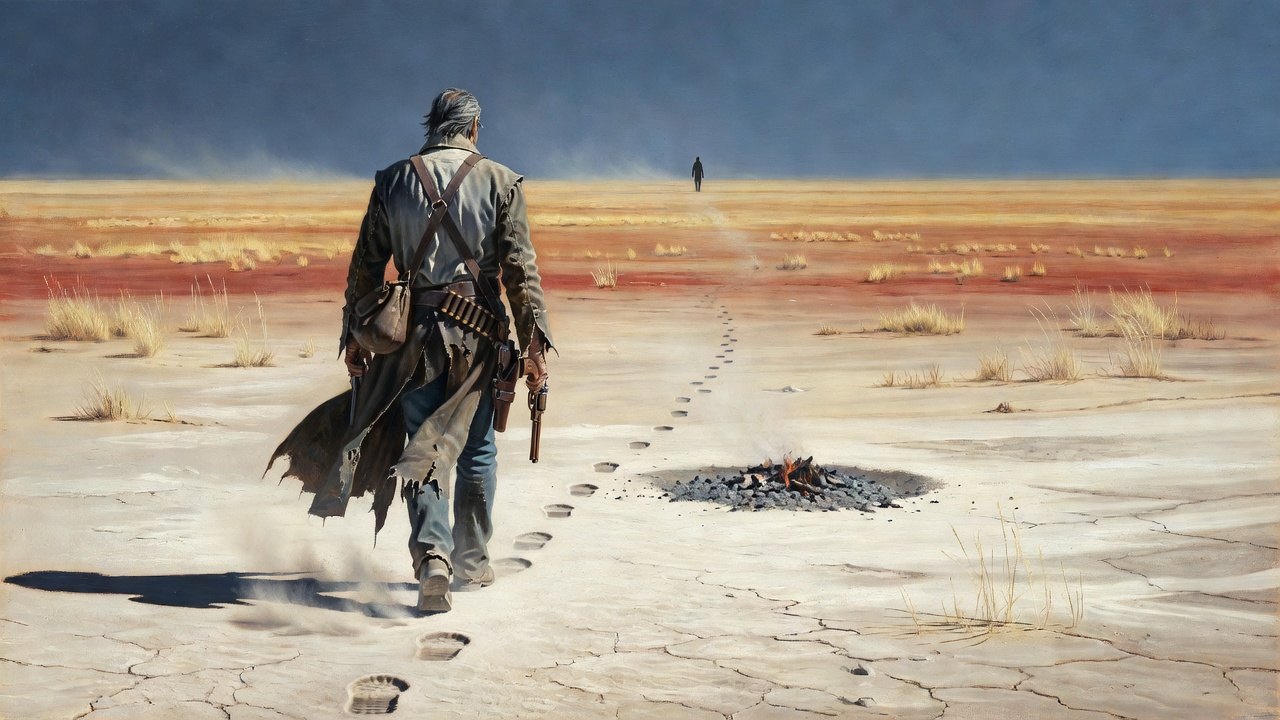
Stephen King · The Dark Tower · 1982 – 2012 · and the 2017 film
The Dark Tower, walked
Eight novels and one film, summarized in detail and set side by side, in about 340 painted frames.
This is a reader’s companion to Stephen King’s Dark Tower: the eight novels (1982–2012) and the 2017 film, summarized in detail, set against each other, and walked in about 340 painted frames. The captions carry the words; the paintings carry the dust. It is unofficial, and it spoils everything.
It is organized the way the shelf is. One page per book, each with a long summary split by the book’s own parts and thirty-odd frames; a page for the film, scene by scene; a page that sets the film beside the books it borrowed from, in paired frames; and a page for the adaptations that were never made, from the Amazon pilot that was shot and shelved to the series Mike Flanagan has been building since 2022. This page is the whole saga in nine frames, a cast list, and the map.
Read it straight through in an hour, or go book by book. Today, 6 October 2026, happens to be the day Scribner publishes Other Worlds Than These, credited to King and Peter Straub — the third Talisman book, which King frames as a return to Mid-World, and the first new Mid-World novel since 2012. This companion covers the eight Tower novels and the film.
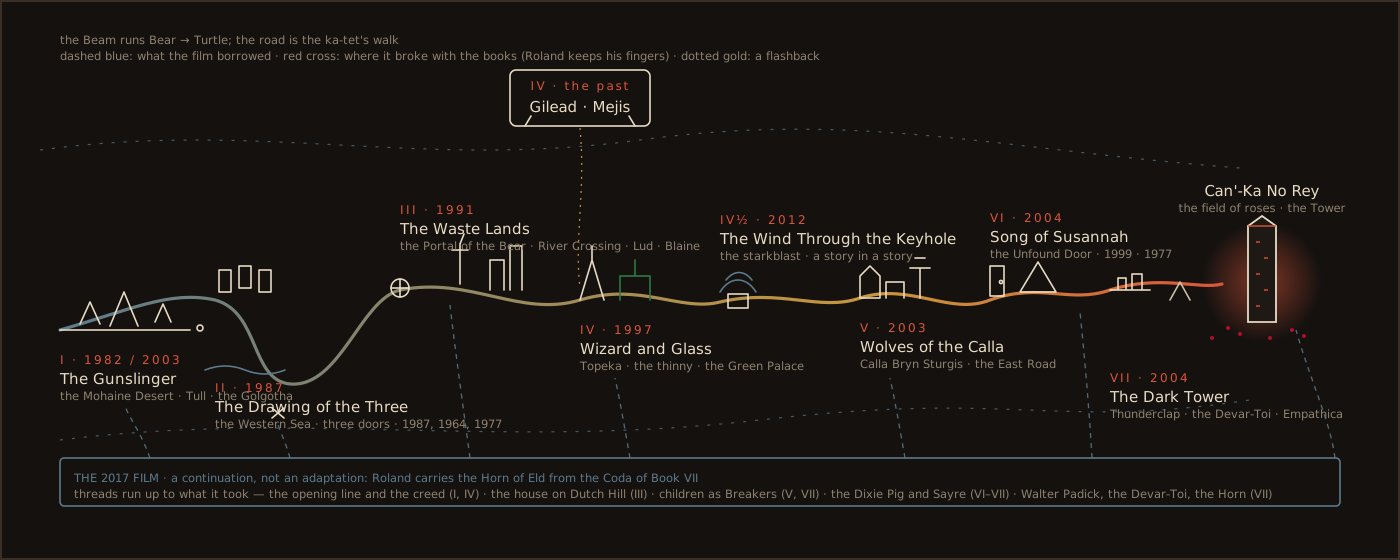
A living map, hand-authored as SVG rather than painted: each book is a landmark group along the Beam, and the film strip at the bottom sends dashed threads to the books it drew from. Tap or click it to open it full size.
The shape of the thing
The Tower stands at the centre of everything, and everything else is arranged around it. Twelve Portals ring the edge of the world, each kept by a Guardian the Great Old Ones built — Bear and Turtle, Horse and Dog, Fish and Rat, Elephant and Wolf, Lion and Eagle, Bat and Hare — and six Beams run from each Portal to its opposite, crossing at the Tower, which holds them as a hub holds spokes. Roland draws it in the dirt in The Waste Lands: twelve X’s in a circle, lines meeting in the middle. The Beams were magic once, out of the Prim; as the magic ebbed the Old Ones propped them with machines (North Central Positronics is the name stamped on everything), and the machines are running down. That is what “the world has moved on” means: the sun no longer sets quite in the west, time stretches, directions drift, and in a prison in Thunderclap a few hundred telepaths are being fed and flattered so that they will chew the Beams through. When the last Beam snaps the Tower falls, and every world threaded on it goes into the chaos the books call Discordia.
Ka is the word for what pulls people along those lines: fate, duty, the wheel, the thing you cannot refuse. A ka-tet is a group bound by it — “We are ka-tet—one from many,” Roland says on the road to Lud — and the saga is the story of one: a gunslinger, a junkie, a legless woman, a boy and a billy-bumbler, drawn from three New Yorks and one dying world. Everything that happens to them is ka, which is not the same as saying it is fair.
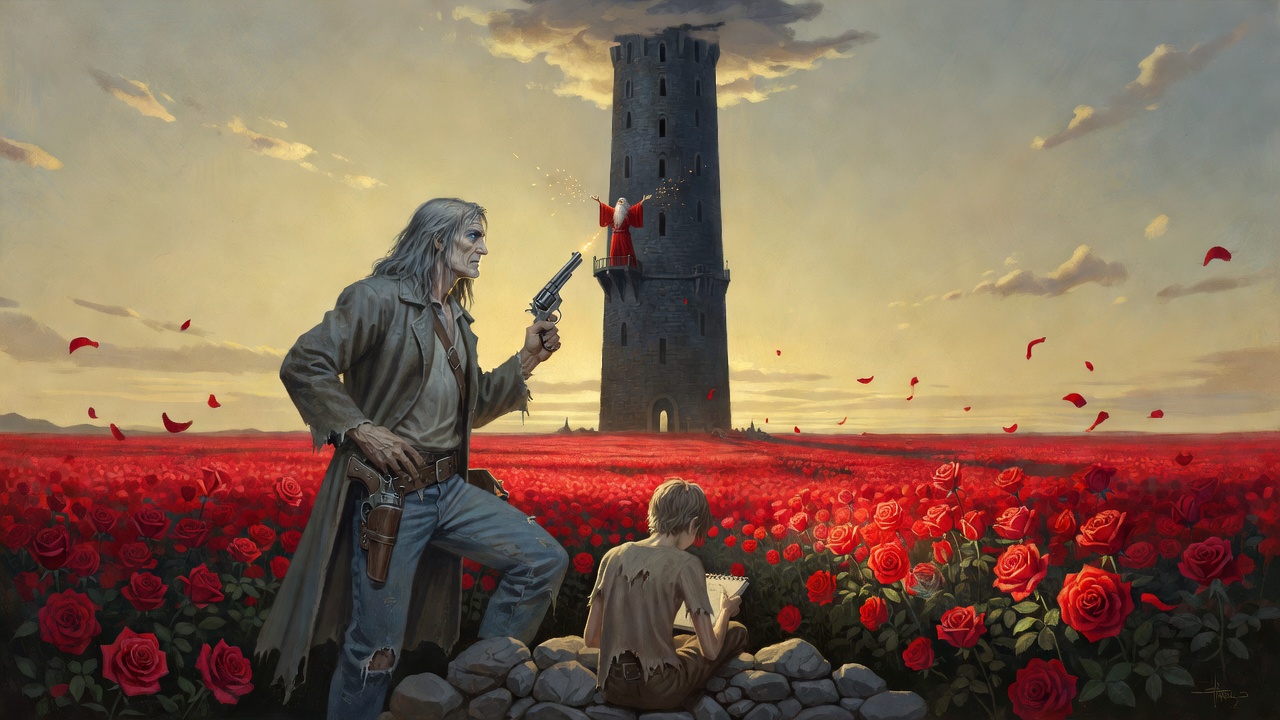
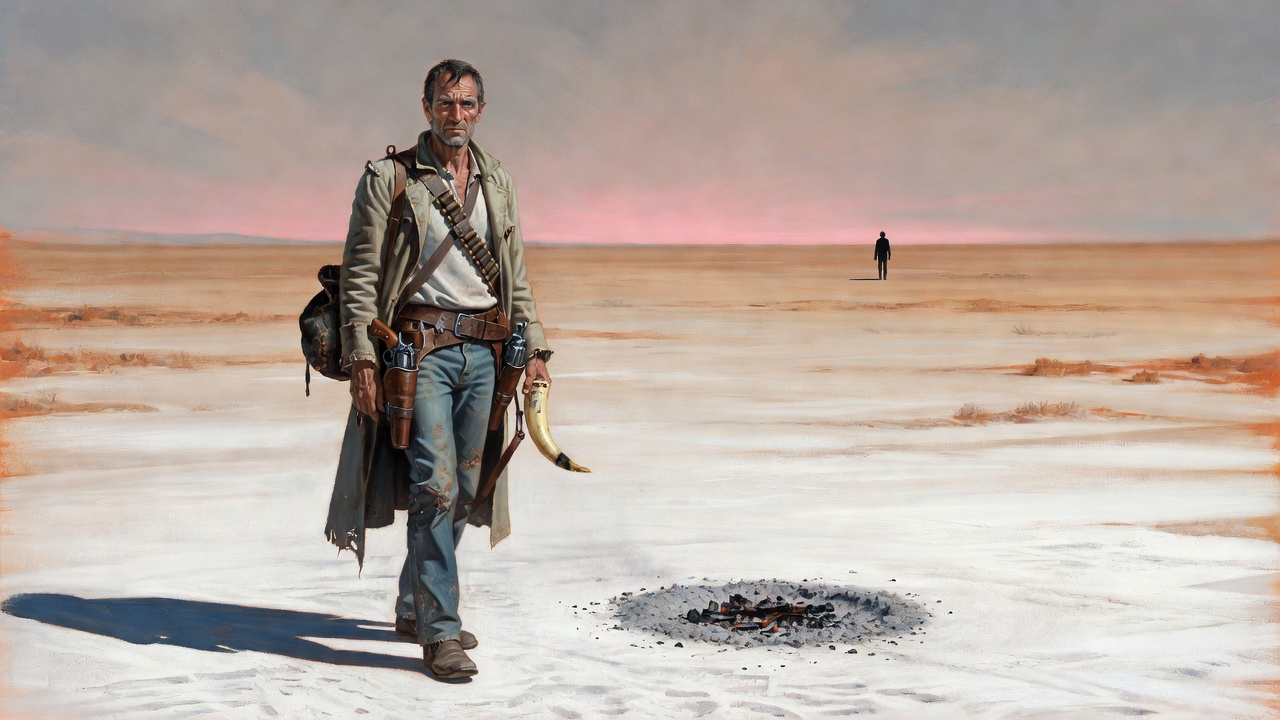
The books are a loop, and the last line is the first. Roland reaches the Tower, climbs it, and is put back in the Mohaine Desert with his memory wiped, to begin again — carrying, this time, the Horn of Eld he left in the dust at Jericho Hill on the turn before. “Ka is a wheel,” the books keep saying. Whether the wheel is a punishment or a path is the argument readers have been having since 2004.
Nineteen is the saga’s number. It is the word that drives a Tull barkeep mad in the revised first book (“If you can, teach yourself that the number after eighteen is twenty,” Roland tells her); it is the age at which King began, by his 2003 introduction “On Being Nineteen”; and from Wolves of the Calla on it is the ka-tet’s shorthand for the sense that the story is tightening around them: room 1919, a robot’s password of 1999, a priest’s nineteen-letter name, nineteen steps at the top of the Tower.
As for where it came from: King began the thing in 1970 on a ream of bright green library paper and took twelve and a half years to finish the first volume. He wanted Tolkien’s quest set against the Western landscapes of Sergio Leone, whose The Good, the Bad and the Ugly he had seen in Bangor that year, and he has said Roland started as a version of Leone’s Man With No Name. The title, the knight and the horn are Robert Browning’s, from “Childe Roland to the Dark Tower Came.” The rest — Eliot’s The Waste Land for Book III’s titles, The Wizard of Oz for the end of Book IV, Seven Samurai and The Magnificent Seven for Book V, Harry Potter’s snitches renamed sneetches — King takes as he passes, usually with a wink.
The eight books, in order
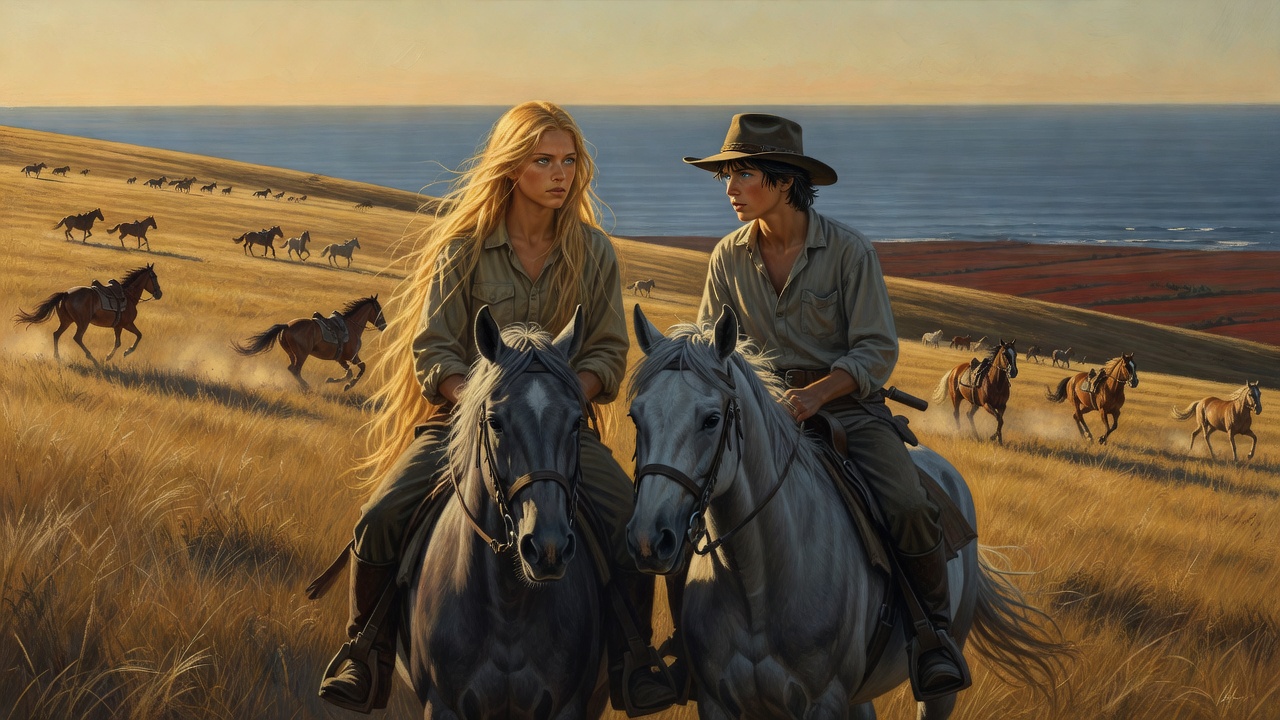
I · The Gunslinger (1982; revised 2003). Five novellas from The Magazine of Fantasy and Science Fiction (1978–81), stitched into a book Donald M. Grant printed as a limited edition in June 1982 because King doubted anyone would want it; readers found it listed on the jacket of Pet Sematary and besieged him. Roland, the last gunslinger of fallen Gilead, trails the man in black across the Mohaine Desert. He tells a farmer named Brown how he killed the town of Tull, fifty-eight people, after the man in black raised a dead weed-eater named Nort and left a trap baited with the word “nineteen.” At an abandoned way station he finds a boy, Jake Chambers, who died in 1977 Manhattan under the wheels of a car and woke here. They cross the mountains together; an oracle in a ring of stones promises Roland three companions; under the mountains Jake hangs from a trestle and Roland, with the man in black waiting above, chooses the quest and lets him fall: “Go then. There are other worlds than these.” At the golgotha by the Western Sea the man in black reads Roland’s tarot, shows him the universe, and puts him to sleep for ten years. The 2003 revision added some 9,000 words to make the book agree with its sequels: Walter and Marten become one man, the Crimson King is named, and Jake gets older.
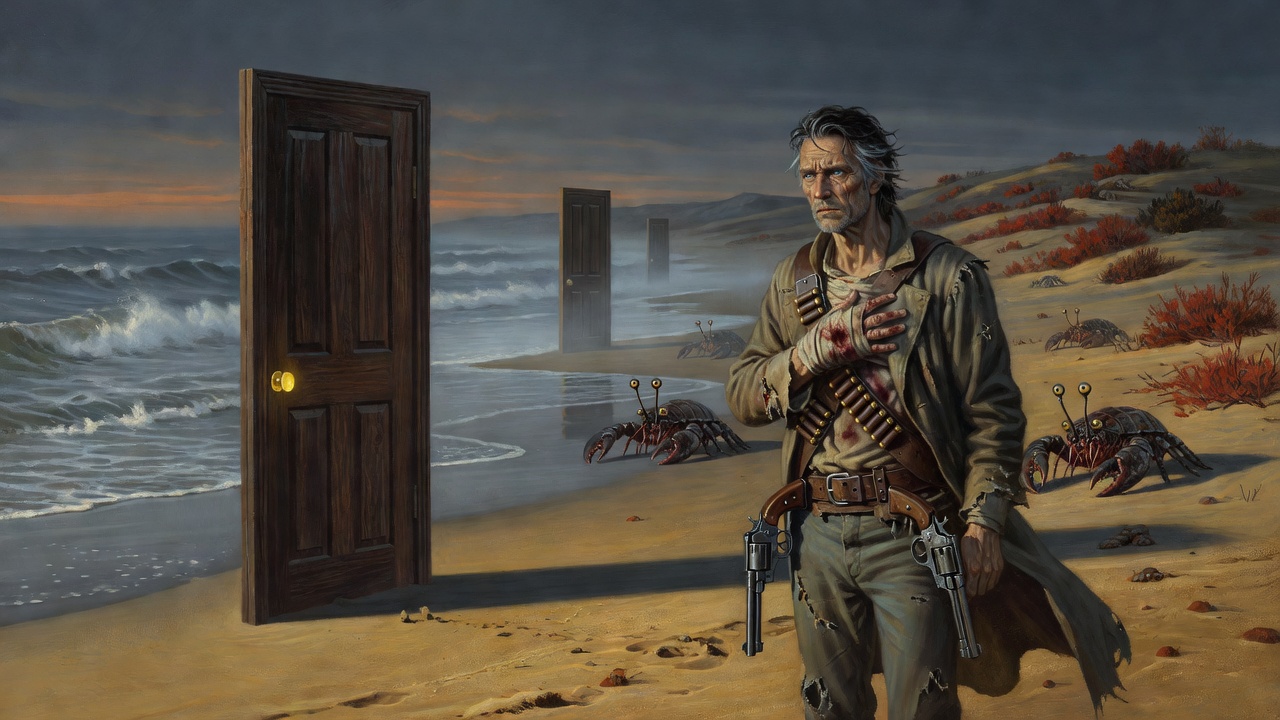
II · The Drawing of the Three (1987). Less than seven hours later Roland wakes on the beach of the Western Sea and a lobstrosity takes the first two fingers of his right hand and most of a big toe; the rest of the book is a race between the infection and the three doors standing up the beach. Each opens into a head in New York. THE PRISONER is Eddie Dean, twenty-one, flying home from Nassau in 1987 with two pounds of cocaine taped under his arms for the gangster Balazar; Roland rides behind his eyes, gets him past customs, and the two shoot their way out of Balazar’s bar after Balazar’s men have killed Eddie’s brother Henry. THE LADY OF SHADOWS is Odetta Holmes, a civil-rights heiress of 1964 who lost her legs under a subway train in 1959 and does not know that a second, murderous self, Detta Walker, shares her body. THE PUSHER is Jack Mort, the man who dropped a brick on Odetta as a child, pushed her under the train as a woman, and is about to push Jake Chambers into traffic; Roland uses Mort’s body to buy ammunition at a gun shop and take antibiotics from a pharmacy at gunpoint, then puts him under a train at the same station. The two women see each other through the door and fuse into Susannah. Three become a company at the forest’s edge, and the book closes on the gunslinger: “He would come to the Dark Tower and there he would sing their names.”
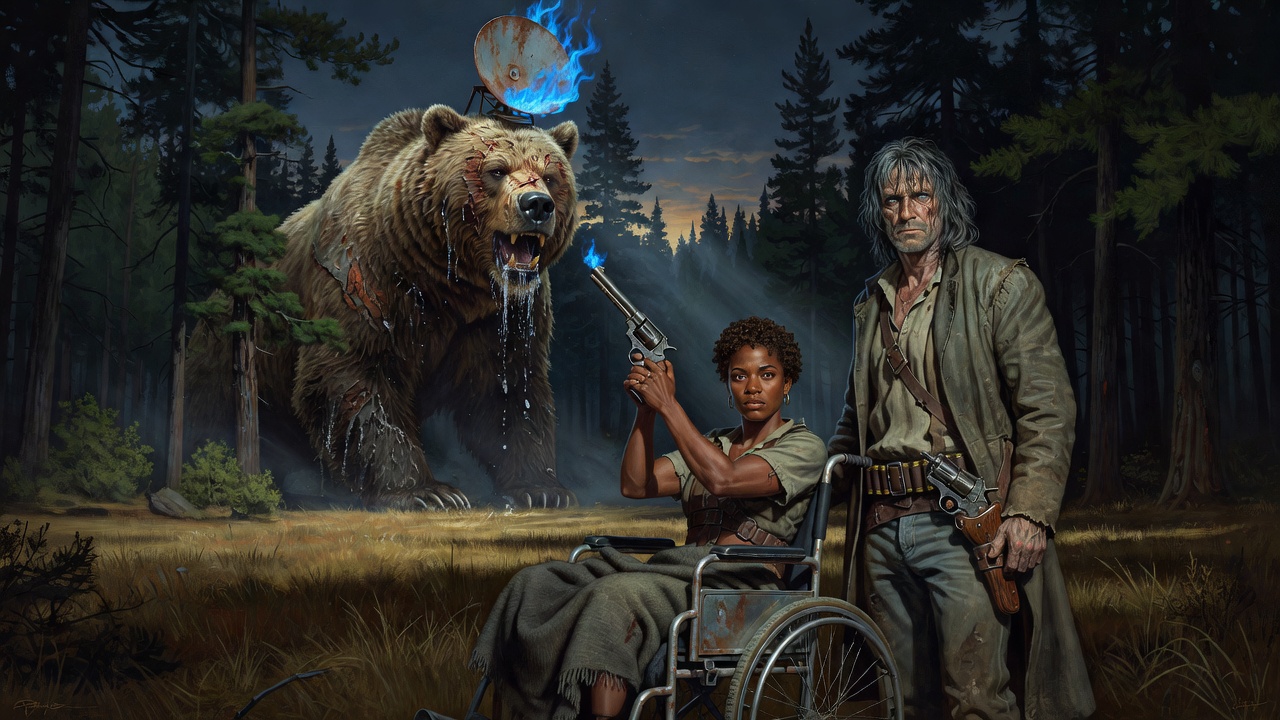
III · The Waste Lands (1991). The book of the ka-tet’s making, and the one reader polls put first. Weeks later Susannah shoots a seventy-foot cyborg bear, Roland draws the Beams in the dirt, and the paradox of Jake — dead under the mountains, alive in 1977 because Roland stopped Mort — splits Roland’s mind and the boy’s. In Manhattan, Jake walks out of school, buys Charlie the Choo-Choo and a riddle book from Calvin Tower, and finds a single rose growing in a vacant lot at Second Avenue and Forty-Sixth. Eddie carves a key; Jake finds its twin; in a haunted house in Brooklyn, with Susannah holding a demon inside herself in a ring of stones, Roland pulls the boy through a door drawn in the mud. A billy-bumbler called Oy joins on the road. Beyond River Crossing, a tiny town of the very old where Aunt Talitha gives Roland a cross to lay at the Tower’s foot, the city of Lud rots under its war drums; a dying pirate named Gasher takes Jake to the Tick-Tock Man, Roland and Oy take him back, and the five board Blaine, a mad pink monorail, as poison gas rolls over the city. Blaine will carry them to Topeka if they can stump him with a riddle. “Cast your nets, wanderers!” he says, and the book stops there for six years.
IV · Wizard and Glass (1997). Eddie kills Blaine with a dead-baby joke, and the ka-tet walks out of a Topeka emptied by the superflu of The Stand onto an interstate where a glass palace waits. By a campfire Roland tells the story he has owed them: at fourteen, having won his guns early, he is sent east out of Marten’s reach to the barony of Mejis with Cuthbert Allgood and Alain Johns, under false names, and there meets Susan Delgado, sixteen, promised by her aunt to the old mayor as his gilly. Mejis is quietly supplying horses and oil to the rebel John Farson; three hired guns, the Big Coffin Hunters, run the town; a witch on the hill, Rhea of the Cöos, has been given a pink glass ball from Maerlyn’s Rainbow to keep. Roland and Susan become lovers in a willow grove. At Reaping the boys kill Jonas, blow up Farson’s tankers and drive his soldiers into a thinny; Roland looks into the glass, sees the Tower, and chooses it; the town burns Susan on the Reap bonfire with her aunt leading the chant. Back in Kansas, red shoes on the road lead to an Emerald City of green glass where Randall Flagg — Marten, Walter, the man in black — taunts them, vanishes, and leaves the ball behind to show them one more thing: Roland, home from Mejis, shooting his own mother.
IV½ · The Wind Through the Keyhole (2012). Written eight years after the ending and set between the Green Palace and the Calla, this is the last easy time the ka-tet has. A ferryman named Bix warns of a starkblast, a storm that freezes birds out of the air, and the five shelter in the stone meeting hall of a ghost town while Roland tells two stories, one inside the other. The first is his: within a year of his mother’s death he and his ka-mate Jamie DeCurry are sent to the salt town of Debaria to kill a skin-man, a shape-changer that has been slaughtering people; after it tears a ranch apart, Roland hides the one surviving boy in a jail cell and tells him a story to pass the night. That story is the second, “The Wind Through the Keyhole”: a fairy tale about a woodcutter’s son, Tim Ross, whose stepfather murdered his father; a tax collector in a black cloak who is Marten under another name; a swamp, a dragon, a lying fairy, a talking compass, a tyger in a cage who turns out to be Maerlyn, and an ax. Back in Debaria a silver bullet settles the skin-man, and a prioress hands Roland the letter his mother left for him: “I forgive you everything. Can you forgive me?” King read the audiobook himself, his first in more than a decade.
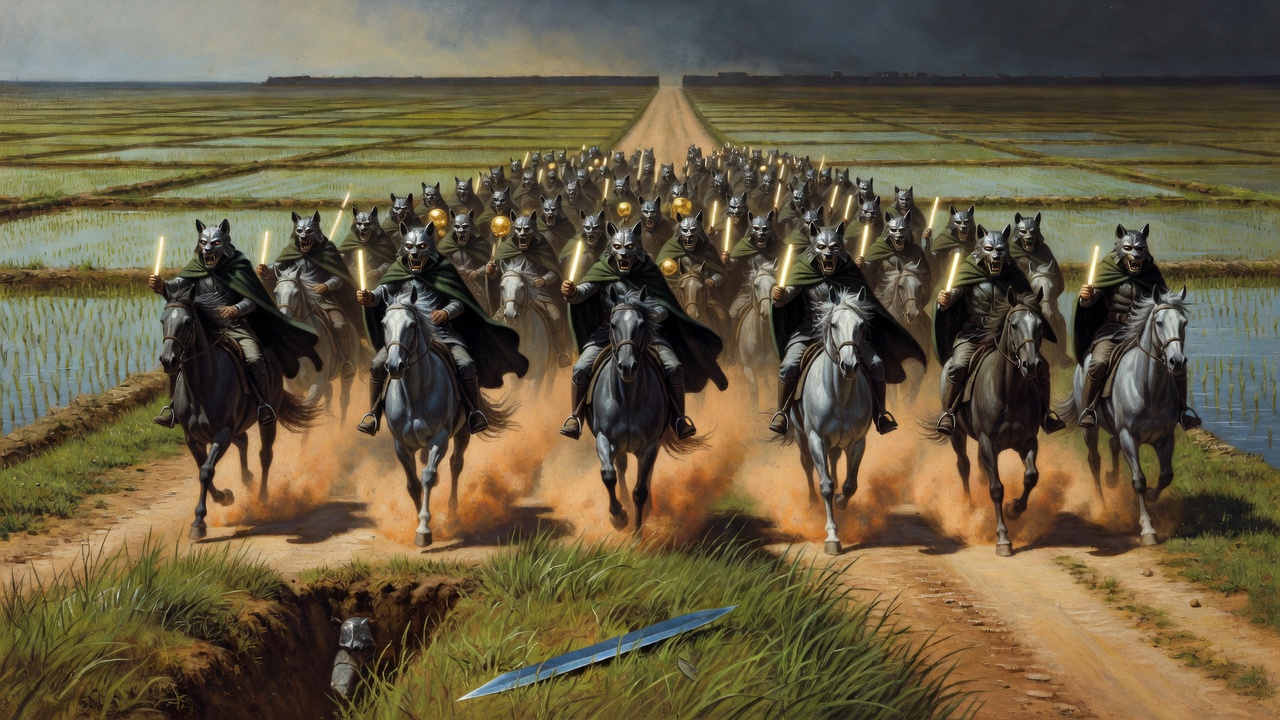
V · Wolves of the Calla (2003). Some six weeks past the Emerald City, farmers from Calla Bryn Sturgis come up the road to hire gunslingers. Once a generation riders called the Wolves come out of Thunderclap on grey horses, take one child from every pair of twins and send them back “roont,” mindless and giant; they are due in thirty days. With the farmers is Father Callahan, the priest who fled the vampire of ’Salem’s Lot in 1975, drank his way across several Americas and died in Detroit in 1983 — to wake in Mid-World, where the man in black put Black Thirteen, the blackest ball of Maerlyn’s Rainbow, into his hands; it is hidden now under his church. The book runs two clocks. In the Calla the ka-tet maps the town, enlists the women who throw the sharpened plates of the Sisters of Oriza, finds the traitor (a foreman who sold the town for his son’s sake, through the robot Andy), and ambushes sixty Wolves from a ditch beside the East Road. In New York, 1977, reached first in dreams and then through the door the ball opens, Calvin Tower must sell the vacant lot and its rose before Sombra’s option expires on July 15. Susannah is pregnant by the demon of the speaking ring, and a fourth personality, Mia, is carrying the child; on the day of the battle Mia takes the body and the ball through the door. Roland is left holding a paperback: ’Salem’s Lot, by Stephen King. “First comes smiles, then lies. Last is gunfire.”
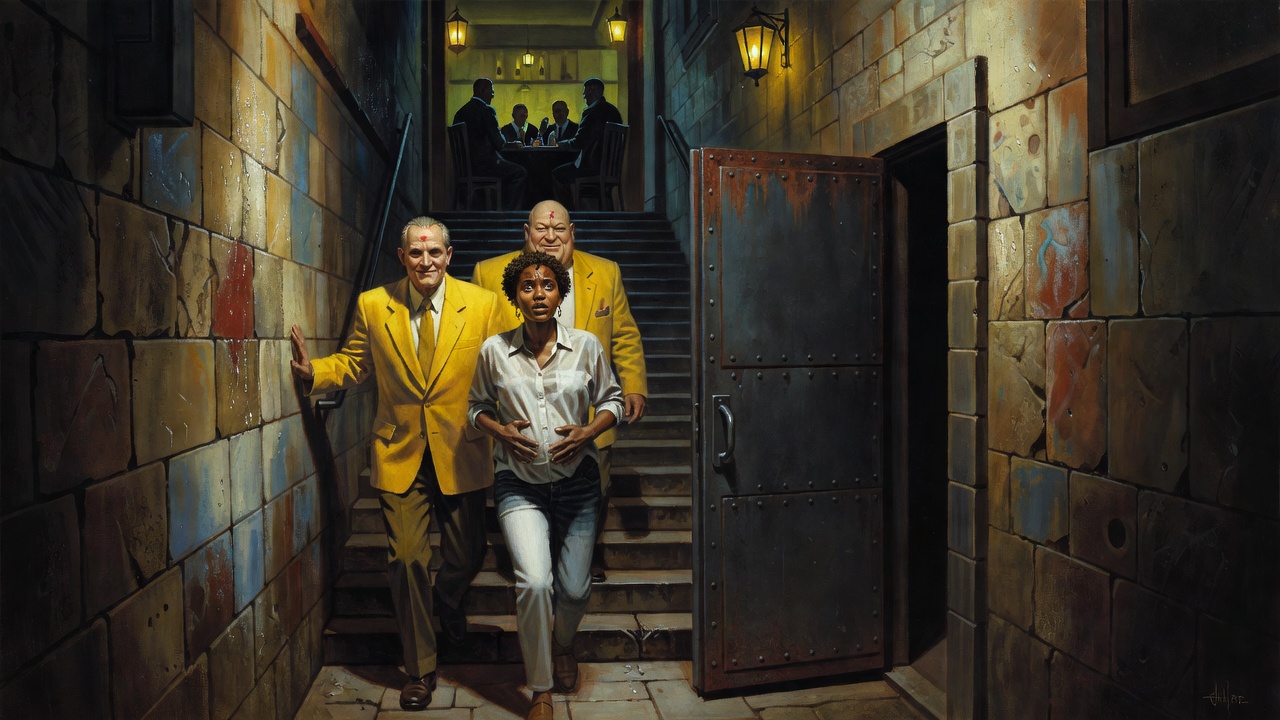
VI · Song of Susannah (2004). A day and a night, told in thirteen “stanzas” that each end with a verse of the commala; the quickest book of the seven. The Manni force the door open and ka splits the party the wrong way: Jake, Oy and Callahan land on Second Avenue in 1999, Roland and Eddie in a Maine general store in 1977, straight into an ambush by Balazar’s men. Mia, driving Susannah’s body on legs that are not hers, walks New York on June 1, 1999 with a labour she has to hold back, a scrimshaw turtle that stuns anyone who looks at it and a hotel room numbered 1919, while Susannah fights her from a control room she builds inside her own head. In Maine, Eddie and Roland get the lot signed over to the Tet Corporation for one dollar and then drive to Bridgton to meet a 29-year-old writer named Stephen King, who abandoned a book called The Gunslinger and does not care to be reminded; Roland hypnotizes him and tells him to finish it. Jake and Callahan reach the Dixie Pig, a restaurant full of low men and vampires, with a gun and a turtle, as Mia is led below to the bed where Mordred — Roland’s son, and the Crimson King’s — is born on the last page. A coda of invented journal entries ends with a newspaper clipping: Stephen King, killed by a van, June 19, 1999.
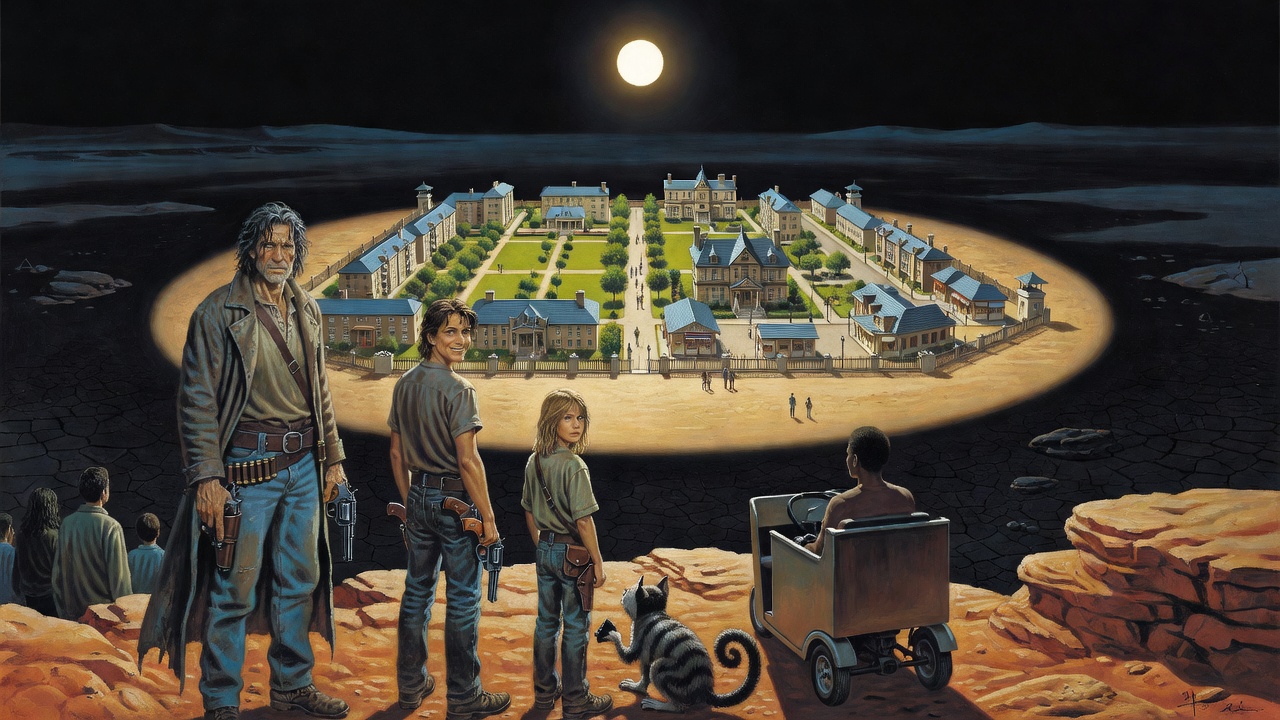
VII · The Dark Tower (2004). Published on King’s fifty-seventh birthday, 845 pages long, and it kills nearly everyone. Callahan dies in the Dixie Pig buying Jake time. Mordred is born in Fedic with a full set of teeth, becomes a spider and eats his mother; Susannah shoots her way out; the ka-tet is whole again for a night before Mordred, four levels down, eats Walter too. In Thunderclap they find Sheemie, the slow boy from Mejis, among the Breakers of the Devar-Toi, and with Ted Brautigan’s help storm the prison at shift change. The Tower is saved and Eddie is shot in the head. Roland and Jake step into Maine on June 19, 1999 to stop a van from killing Stephen King, and Jake dies doing it; Roland buries him in the woods with his hands. Then the long walk: Susannah pulled in a cart across the Badlands, the Crimson King’s emptied castle, a shape-shifter called Dandelo who nearly laughs Roland to death, and a mute boy, Patrick Danville, who can draw things into being. Susannah leaves through a door Patrick draws; Mordred kills Oy and Roland kills Mordred; the Crimson King is rubbed out on his balcony with an eraser. Roland enters the Tower, climbs, and is sent back to the desert with the Horn of Eld at his hip, to begin again. Before the coda King steps in to tell readers they may stop there. “Endings are heartless.” Few stop.
The film, and the ones that were never made
The rights went round for a decade — J. J. Abrams and the Lost writers optioned the books for a reported $19 in 2007 and gave them back; Ron Howard and Akiva Goldsman planned three films and two television seasons for Universal, which cancelled over cost in 2011; Warner Bros. passed in 2012 — before Sony and Media Rights Capital made a single 95-minute, PG-13 film, directed by Nikolaj Arcel and released on 4 August 2017. It is not an adaptation of any one book. Goldsman proposed, and King agreed, that Roland already carry the Horn of Eld, which makes the film the next turn of the wheel after Book VII; what it then tells is mostly The Gunslinger and The Waste Lands (a Manhattan boy with visions, the man in black, a door in a Brooklyn house) bolted to Book VII’s Devar-Toi, with the Breakers rewritten as kidnapped children strapped into a machine. Roland has all his fingers, no hat and no ka-tet. It cost about $66 million, took $113 million, and sits at 16 percent on Rotten Tomatoes, whose consensus line is “Go then, there are other Stephen King adaptations than these.” King blamed the compression and the rating; Howard later said it should have been horror. The companion series announced for 2018 died with it.
Amazon ordered a pilot in March 2019 from Glen Mazzara, built on Wizard and Glass — young Roland, Susan, the man in black — shot it in Croatia that summer, and passed in January 2020; a finished copy reached one fan site, which reviewed it, and it has never been released. Mike Flanagan has held the television rights since before his December 2022 Amazon deal, with a plan for five seasons and two films; the season-one scripts are written and approved by King as of February 2026, Flanagan says the show is “very much on the table” at Amazon, and as of today there is no series order, no cast and no date. The most of the saga anyone has adapted is on paper: Marvel’s comics (2007–2017), plotted by Robin Furth and scripted almost entirely by Peter David, with Jae Lee’s pencils and Richard Isanove’s painted colour on the first five arcs, which told Roland’s youth, then The Gunslinger, and stopped partway through The Drawing of the Three.
How to read them
Publication order is reading order: The Gunslinger (1982), The Drawing of the Three (1987), The Waste Lands (1991), Wizard and Glass (1997), Wolves of the Calla (2003), Song of Susannah (2004), The Dark Tower (2004). The Wind Through the Keyhole (2012) is set between IV and V, and King calls it 4.5; read it there on a first pass, or afterward as a visit, since nothing in V–VII depends on it. Read The Gunslinger in the 2003 text: King added about 9,000 words and cut most of the adverbs, to make the first book agree with the last three and to make it readable, and its introduction, “On Being Nineteen,” is the best short account of the series there is. “The Little Sisters of Eluria” (in Legends, 1998, and Everything’s Eventual, 2002) is a novella set before Tull; slot it after Book I or skip it. Marvel’s comics (2007–2017) are a prequel and a retelling, not a shortcut: Robin Furth, who plotted them, holds that only King’s prose is canon and that the comics sit on a slightly different level of the Tower. The crossovers readers argue about: The Stand (1978), whose Randall Flagg is the man in black and whose superflu has emptied the Topeka the ka-tet walks through in IV; ’Salem’s Lot (1975), for Father Callahan; Insomnia (1994), for Patrick Danville and the first long look at the Crimson King; and Hearts in Atlantis (1999), for Ted Brautigan and the low men. None is required; Insomnia repays the detour most. On audio, King himself read the original Gunslinger (1988) and The Drawing of the Three (1989); Frank Muller recorded I–IV; George Guidall recorded the revised Gunslinger (2003) and V–VII; King narrates Keyhole (2012).
The ka-tet and the rest
Roland Deschain
Eddie Dean
Susannah Dean (Odetta Holmes / Detta Walker)
Jake Chambers
Oy
Walter o’Dim (the man in black / Marten / Flagg)
The Crimson King
Mordred Deschain
Father Callahan
Blaine the Mono
Susan Delgado
Cuthbert Allgood and Alain Johns
Mia
Ted Brautigan
Patrick Danville
Stephen King (the character)
The 2017 film, in one paragraph’s worth of bullets
- A continuation, not an adaptation: Roland carries the Horn of Eld from the start, so the film is the next turn of the wheel after Book VII. Akiva Goldsman proposed it; King agreed.
- Its story is mostly Books I and III: a Manhattan boy with visions, a haunted house in Brooklyn with a door in it, the man in black who kills by word, the desert.
- Its villain’s machinery is Book VII: the Devar-Toi, the Breakers (recast as kidnapped children strapped into a machine), Sayre and Pimli shrunk to henchman and technician, taheen in human skins.
- Dropped: Eddie, Susannah, Oy, Blaine, Mejis, Callahan, the Calla, the Crimson King (graffiti only), Roland’s missing fingers and his hat.
- 95 minutes, PG-13, released 4 August 2017; about $66 million to make, $113 million worldwide, 16 percent on Rotten Tomatoes. King’s verdict: compressing some 3,000 pages into a PG-13 feature was the mistake.
- The sequel and Glen Mazzara’s television companion died with it; Amazon’s 2019 pilot and Mike Flanagan’s planned series both start over from the books.
Reading order
- I The Gunslinger — 1982; revised and expanded 2003. Read the 2003 text.
- II The Drawing of the Three — 1987.
- III The Waste Lands — 1991. It ends mid-contest; have IV ready.
- IV Wizard and Glass — 1997. Mostly a flashback to Mejis, told in one night.
- IV½ The Wind Through the Keyhole — 2012; set between IV and V. Read it here, or last.
- V Wolves of the Calla — 2003 · VI Song of Susannah — 2004 · VII The Dark Tower — 2004. One story in three volumes, published within a year.
- Side reading: “The Little Sisters of Eluria” (1998); The Stand (1978), ’Salem’s Lot (1975), Insomnia (1994) and Hearts in Atlantis (1999) for the crossovers.
- Reference: Robin Furth’s Stephen King’s The Dark Tower: The Complete Concordance (2006; revised 2012 to add Keyhole).